Kirjojen hintavertailu. Mukana 11 699 587 kirjaa ja 12 kauppaa.

Kirjahaku

Etsi kirjoja tekijän nimen, kirjan nimen tai ISBN:n perusteella.

4 kirjaa tekijältä John van Wyhe

Charles Darwin

Charles Darwin

John van Wyhe

Welbeck Publishing Group
2020
pokkari
The Compact Guide: Charles Darwin reveals the famous scientist's life in compelling detail. From his expedition aboard the Beagle and his legendary research in the Galapagos Islands, to his marriage and illness and the publication of his groundbreaking works, this book sheds fascinating light on the most remarkable aspects of Darwin's life - the extraordinary adventure of discovery that led Darwin to some of his greatest breakthroughs; the controversy with Alfred Russel Wallace on who first originated the idea of evolution by natural selection; and the Darwin family's prosperous but often tragic home life, and how Charles became one of the first Victorians to reject religion and God.
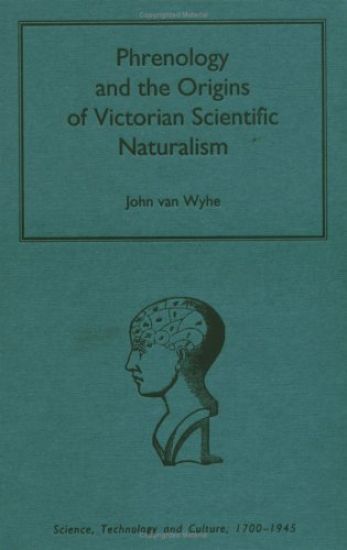
Phrenology and the Origins of Victorian Scientific Naturalism
Through a reassessment of phrenology, Phrenology and the Origins of Victorian Scientific Naturalism sheds light on all kinds of works in Victorian Britain and America which have previously been unnoticed or were simply referred to with a vague 'naturalism of the times' explanation. It is often assumed that the scientific naturalism familiar in late nineteenth century writers such as T.H. Huxley and John Tyndall are the effects of a 'Darwinian revolution' unleashed in 1859 on an unsuspecting world following the publication of The Origin of Species. Yet it can be misleading to view Darwin's work in isolation, without locating it in the context of a well established and vigorous debate concerning scientific naturalism. Throughout the nineteenth century intellectuals and societies had been discussing the relationship between nature and man, and the scientific and religious implications thereof. At the forefront of these debates were the advocates of phrenology, who sought to apply their theories to a wide range of subjects, from medicine and the treatment of the insane, to education, theology and even economic theories. Showing how ideas about naturalism and the doctrine of natural laws were born in the early phrenology controversies in the 1820s, this book charts the spread of such views. It argues that one book in particular, The Constitution of Man in Relation to External Objects (1828) by George Combe, had an enormous influence on scientific thinking and the popularity of the 'naturalistic movement'. The Constitution was one of the best-selling books of the nineteenth century, being published continuously from 1828 to 1899, and selling more than 350,000 copies throughout the world, many times more than Dawin's The Origin of Species. By restoring Combe and his work to centre stage it provides modern scholars with a more accurate picture of the Victorians' view of their place in Nature.
Phrenology and the Origins of Victorian Scientific Naturalism
Through a reassessment of phrenology, Phrenology and the Origins of Victorian Scientific Naturalism sheds light on all kinds of works in Victorian Britain and America which have previously been unnoticed or were simply referred to with a vague 'naturalism of the times' explanation. It is often assumed that the scientific naturalism familiar in late nineteenth century writers such as T.H. Huxley and John Tyndall are the effects of a 'Darwinian revolution' unleashed in 1859 on an unsuspecting world following the publication of The Origin of Species. Yet it can be misleading to view Darwin's work in isolation, without locating it in the context of a well established and vigorous debate concerning scientific naturalism. Throughout the nineteenth century intellectuals and societies had been discussing the relationship between nature and man, and the scientific and religious implications thereof. At the forefront of these debates were the advocates of phrenology, who sought to apply their theories to a wide range of subjects, from medicine and the treatment of the insane, to education, theology and even economic theories. Showing how ideas about naturalism and the doctrine of natural laws were born in the early phrenology controversies in the 1820s, this book charts the spread of such views. It argues that one book in particular, The Constitution of Man in Relation to External Objects (1828) by George Combe, had an enormous influence on scientific thinking and the popularity of the 'naturalistic movement'. The Constitution was one of the best-selling books of the nineteenth century, being published continuously from 1828 to 1899, and selling more than 350,000 copies throughout the world, many times more than Dawin's The Origin of Species. By restoring Combe and his work to centre stage it provides modern scholars with a more accurate picture of the Victorians' view of their place in Nature.
Wanderlust

Wanderlust

John van Wyhe

Ridge Books
2019
nidottu
Wanderlust is the true story of Ida Pfeiffer (1797-1858), one of the most remarkable female travellers who ever lived - a housewife who decided to follow her dreams despite the strong disapproval of society. At a time when it was considered utterly impossible, Pfeiffer set off alone to travel the world. Along the way, she survived storms at sea, parched deserts, plague, malaria, drowning, earthquakes, robbers, murderers, head hunters and cannibals. She became the first woman to circle the globe alone - and then the first to do so twice. As a result of her incredible exploits and her best-selling travel books, Pfeiffer became one of the most famous women in the world in the nineteenth century. Hers is a tale that culminates in spies, intrigue, a botched revolution and a remarkable career cut tragically short by one voyage too many.