Kirjojen hintavertailu. Mukana 11 717 486 kirjaa ja 12 kauppaa.

Kirjahaku

Etsi kirjoja tekijän nimen, kirjan nimen tai ISBN:n perusteella.

10 kirjaa tekijältä Jon C. Teaford

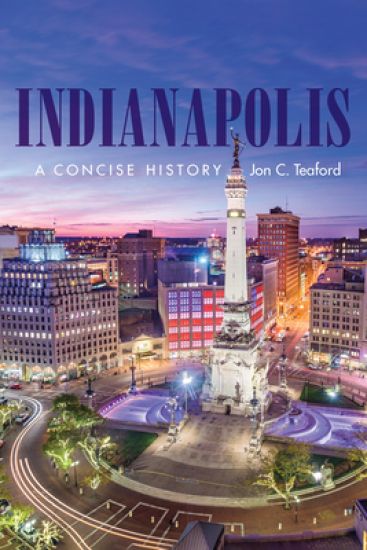
Indianapolis

Indianapolis

Jon C. Teaford

INDIANA UNIVERSITY PRESS
2024
sidottu
As its name denotes, Indianapolis is without question Indiana's city. Known as the Crossroads of America, Indianapolis and the surrounding communities have and continue to play an important role in politics, logistics, and commerce for both the state and the country. Indianapolis: A Concise History looks at the development of the city from a frontier village to a major railroad city in the late nineteenth century and through its continued growth in the twentieth century. Author and historian Jon C. Teaford reveals the origins of the Indianapolis Speedway, the rise and fall of the Ku Klux Klan, the persistent racial tension in the city, and the revitalization efforts under Mayor William Hudnut and his successors. Since 1824 Indianapolis has been the state's largest city, its political center, and the home of Indiana's state government, and it continues to be a center for urban growth.
Indianapolis

Indianapolis

Jon C. Teaford

INDIANA UNIVERSITY PRESS
2024
pokkari
As its name denotes, Indianapolis is without question Indiana's city. Known as the Crossroads of America, Indianapolis and the surrounding communities have and continue to play an important role in politics, logistics, and commerce for both the state and the country. Indianapolis: A Concise History looks at the development of the city from a frontier village to a major railroad city in the late nineteenth century and through its continued growth in the twentieth century. Author and historian Jon C. Teaford reveals the origins of the Indianapolis Speedway, the rise and fall of the Ku Klux Klan, the persistent racial tension in the city, and the revitalization efforts under Mayor William Hudnut and his successors. Since 1824 Indianapolis has been the state's largest city, its political center, and the home of Indiana's state government, and it continues to be a center for urban growth.
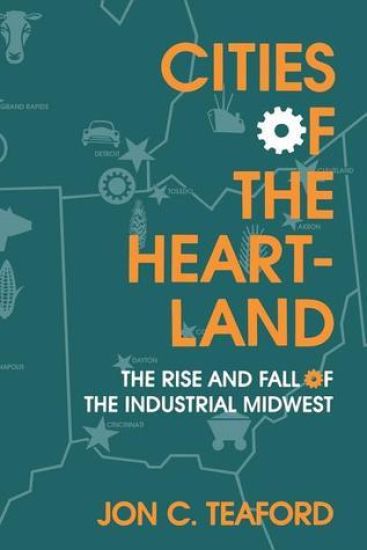
Cities of the Heartland

Cities of the Heartland

Jon C. Teaford

Indiana University Press
1993
pokkari
"Recommended for all who want to learn about the origins of the contemporary urban crisis." —Library Journal Teaford writes a definitive history of the transformation of "America's heartland" into the "Rust Belt," chronicling the development of the cities of the industrial Midwest as they challenged the urban supremacy of the East, from their heyday to the trying times of the 1970s and '80s. The early part of this century brought wealth and promise to the heartland: automobile production made Detroit a boomtown, and automobile-related industries enriched communities; Frank Lloyd Wright and the Prairie School of architects asserted the Midwest's aesthetic independence; Sherwood Anderson and Carl Sandburg established Chicago as a literary mecca; Jane Addams made the Illinois metropolis an urban laboratory for experiments in social justice. Soon, however, emerging Sunbelt cities began to rob such cities as Cincinnati, Saint Louis, and Chicago of their distinction as boom areas, foreshadowing urban crisis.
The American Suburb

The American Suburb

Jon C. Teaford

Routledge
2007
sidottu
The American Suburb: The Basics is a compact, readable introduction to the origins and contemporary realities of the American suburb. Teaford provides an account of contemporary American suburbia, examining its rise, its diversity, its commercial life, its government, and its housing issues. While offering a wide-ranging yet detailed account of the dominant way of life in America today, Teaford also explores current debates regarding suburbia’s future. Americans live in suburbia, and this essential survey explains the all-important world in which they live, shop, play, and work.
The American Suburb

The American Suburb

Jon C. Teaford

Routledge
2007
nidottu
The American Suburb: The Basics is a compact, readable introduction to the origins and contemporary realities of the American suburb. Teaford provides an account of contemporary American suburbia, examining its rise, its diversity, its commercial life, its government, and its housing issues. While offering a wide-ranging yet detailed account of the dominant way of life in America today, Teaford also explores current debates regarding suburbia’s future. Americans live in suburbia, and this essential survey explains the all-important world in which they live, shop, play, and work.
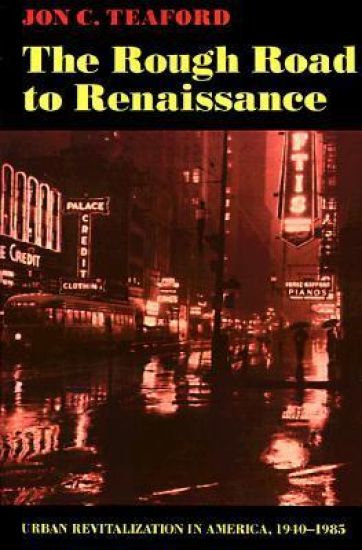
The Rough Road to Renaissance

The Rough Road to Renaissance

Jon C. Teaford

Johns Hopkins University Press
1990
pokkari
After prospering in the nineteenth and early twentieth centuries, America's great urban centers faced economic, demographic, and political decline during the depression of the 1930s. When the Second World War brought economic recovery, politicians and planners of the 1940s confidently anticipated a new golden age for big cities. But the postwar boom never came, and urban America has been waiting for the "renaissance" ever since. In"The Rough Road to Renaissance", Jon C. Teaford describes efforts in twelve older central cities in the Northeast and Midwest to achieve revitalization during the period from 1940 to 1985. Focusing on the "view from City Hall" rather than on state or federal perspectives, Teaford explores the changing trends in city politics and municipal finance as well as the policies that pursued the elusive goal of urban renaissance. He also considers the environmental, transportation, rehabilitation, and reconstruction programs undertaken to create better cities and to close the widening competitive gap with suburbia. In the early fifties, Teaford explains, big cities were planning for a bright future. Crosstown highways, low-income highrises, and vigorous demolition drastically altered the urban landscape and confidently anticipated new development. But the automobile culture was already derailing urban renewal as city dwellers sought the good life in the suburbs. By the late sixties, rising crime, racial tension, labor militancy, and a wave of abandonment seemed to offer further evidence of impending urban demise. Yet in the 1980s, "messiah mayors" and visionary planners boosted the hopes and morale of urban residents. Once again there was talk of renaissance, but beneath the facade of revival serious problems persisted. In "The Rough Road to Renaissance", Jon Teaford tells a story that residents of Boston, Minneapolis, Chicago, New York, St. Louis, and other famous urban centers will recognize-- a story that is still being written
Rise of the States

Rise of the States

Jon C. Teaford

John Hopkins University Press
2002
pokkari
Urban historian Jon C. Teaford explores the development of state government in the United States from the end of the 19th century to the "renaissance" of states at the end of the 20th. Refuting that the governments were lethargic until the 1980s, he shows how they continually adapted and expanded.
The Twentieth-Century American City

The Twentieth-Century American City

Jon C. Teaford

Johns Hopkins University Press
2016
pokkari
Throughout the twentieth century, the city was deemed a problematic space, one that Americans urgently needed to improve. Although cities from New York to Los Angeles served as grand monuments to wealth and enterprise, they also reflected the social and economic fragmentation of the nation. Race, ethnicity, and class splintered the metropolis both literally and figuratively, thwarting efforts to create a harmonious whole. The urban landscape revealed what was right-and wrong-with both the country and its citizens' way of life. In this thoroughly revised edition of his highly acclaimed book, Jon C. Teaford updates the story of urban America by expanding his discussion to cover the end of the twentieth century and the first years of the next millennium. A new chapter on urban revival initiatives at the close of the century focuses on the fight over suburban sprawl as well as the mixed success of reimagining historic urban cores as hip new residential and cultural hubs. The book also explores the effects of the late-century immigration boom from Latin America and Asia, which has complicated the metropolitan ethnic portrait. Drawing on wide-ranging primary and secondary sources, Teaford describes the complex social, political, economic, and physical development of US urban areas over the course of the long twentieth century. Touching on aging central cities, technoburbs, and the ongoing conflict between inner-city poverty and urban boosterism, The Twentieth-Century American City offers a broad, accessible overview of America's persistent struggle for a better city.
Post-Suburbia

Post-Suburbia

Jon C. Teaford

Johns Hopkins University Press
2020
pokkari
The years shortly after the end of World War II saw the beginnings of a new kind of community that blended the characteristics of suburbia with those of the central city. Over the decades these "edge cities"have become permanent features of the regional landscape.Originally published in 1996. The years shortly after the end of World War II saw the beginnings of a new kind of community that blended the characteristics of suburbia with those of the central city. Over the decades these "edge cities" have become permanent features of the regional landscape. In Post-Suburbia, historian Jon Teaford charts the emergence of these areas and explains why and how they developed. Teaford begins by describing the adaptation of traditional units of government to the ideals and demands of the changing world along the metropolitan fringe. He shows how these post-suburban municipalities had to fashion a government that perpetuated the ideals of small-scale village life and yet, at the same time, provided for a large tax base to pay for needed municipal services. To tell this story, Teaford follows six counties that were among the pioneers of the post-suburban world: Suffolk and Nassau counties in New York; Oakland County, Michigan; DuPage County, Illinois; Saint Louis County, Missouri; and Orange County, California. Although county governments took on new coordinating functions, Teaford concludes, the many municipalities along the metropolitan fringe continued to retain their independence and authority. Underlying this balance of power was the persistent adherence to the long-standing suburban tradition of grassroots rule. Despite changes in the economy and appearance of the metropolitan fringe, this ideology retained its appeal among post-suburban voters, who rebelled at the prospect of thorough centralization of authority. Thus the fringe may have appeared post-suburban, but traditional suburban attitudes continued to influence the course of governmental development.
The Unheralded Triumph

The Unheralded Triumph

Jon C. Teaford

Johns Hopkins University Press
2020
pokkari
Originally published in 1984. In 1888 the British observer James Bryce declared "the government of cities" to be "the one conspicuous failure of the United States." During the following two decades, urban reformers would repeat Bryce's words with ritualistic regularity; nearly a century later, his comment continues to set the tone for most assessments of nineteenth-century city government. Yet by the end of the century, as Jon Teaford argues in this important reappraisal, American cities boasted the most abundant water supplies, brightest street lights, grandest parks, largest public libraries, and most efficient systems of transportation in the world. Far from being a "conspicuous failure," municipal governments of the late nineteenth century had successfully met challenges of an unprecedented magnitude and complexity. The Unheralded Triumph draws together the histories of the most important cities of the Gilded Age—especially New York, Chicago, Boston, Philadelphia, St. Louis, and Baltimore—to chart the expansion of services and the improvement of urban environments between 1870 and 1900. It examines the ways in which cities were transformed, in a period of rapid population growth and increased social unrest, into places suitable for living. Teaford demonstrates how, during the last decades of the nineteenth century, municipal governments adapted to societal change with the aid of generally compliant state legislatures. These were the years that saw the professionalization of city government and the political accommodation of the diverse ethnic, economic, and social elements that compose America's heterogeneous urban society. Teaford acknowledges that the expansion of urban services dangerously strained city budgets and that graft, embezzlement, overcharging, and payroll-padding presented serious problems throughout the period. The dissatisfaction with city governments arose, however, not so much from any failure to achieve concrete results as from the conflicts between those hostile groups accommodated within the newly created system: "For persons of principle and gentlemen who prized honor, it seemed a failure yet American municipal government left as a legacy such achievements as Central Park, the new Croton Aqueduct, and the Brooklyn Bridge, monuments of public enterprise that offered new pleasures and conveniences for millions of urban citizens."