Kirjojen hintavertailu. Mukana 12 055 869 kirjaa ja 12 kauppaa.

Kirjahaku

Etsi kirjoja tekijän nimen, kirjan nimen tai ISBN:n perusteella.

13 kirjaa tekijältä Jon D. Levenson

The Death and Resurrection of the Beloved Son

The Death and Resurrection of the Beloved Son

Jon D. Levenson

Yale University Press
1995
pokkari
The near-sacrifice and miraculous restoration of a beloved son is a central but largely overlooked theme in both Judaism and Christianity, celebrated in biblical texts on Isaac, Ishmael, Jacob, Joseph, and Jesus. In this highly original book, Jon D. Levenson explores how this notion of child sacrifice constitutes an overlooked bond between the two religions.Levenson argues that although the practice of child sacrifice was eradicated during the late seventh and sixth centuries B.C.E, the idea of sacrificing the first-born son (or the late-born son whose preferential treatment promotes him to that exalted rank) remained potent in religious literature. Analyzing texts from the ancient Near East, the Hebrew Bible, the New Testament, and rabbinic literature, Levenson shows how tales of the son handed over to death by his loving father in the Hebrew Bible influenced the Church's identification of Jesus as sacrificial victim. According to Levenson, the transformation of the idea of child sacrifice was central to the accounts given by the people Israel and the early Church of their respective origins, and it also underlay the theologies of chosenness embraced, in their differing ways, by the two religions. Furthermore, the longstanding claim of the Church that it supersedes the Jews, says Levenson, both continues and transforms elements of the old narrative pattern in which a late-born son dislodges his first-born brothers. Levenson's book, which offers novel interpretations of several areas crucial to biblical studies, will be essential reading for scholars in the field.

Resurrection and the Restoration of Israel

Resurrection and the Restoration of Israel

Jon D. Levenson

Yale University Press
2008
pokkari
This provocative volume explores the origins of the Jewish doctrine of the resurrection of the dead. Jon D. Levenson argues that, contrary to a very widespread misconception, the ancient rabbis were keenly committed to the belief that at the end of time, God would restore the deserving dead to life. In fact, Levenson points out, the rabbis saw the Hebrew Bible itself as committed to that idea.The author meticulously traces the belief in resurrection backward from its undoubted attestations in rabbinic literature and in the Book of Daniel, showing where the belief stands in continuity with earlier Israelite culture and where it departs from that culture. Focusing on the biblical roots of resurrection, Levenson challenges the notion that it was a foreign import into Judaism, and in the process he develops a neglected continuity between Judaism and Christianity. His book will shake the thinking of scholars and lay readers alike, revising the way we understand the history of Jewish ideas about life, death, and the destiny of the Jewish people.
Esther (OTL)

Esther (OTL)

Jon D. Levenson

WESTMINSTER JOHN KNOX PRESS
2014
sidottu
The book of Esther has been preserved in ancient texts that diverge greatly from each other. As a result, Jews and Protestants usually read a version which is shorter than that of most Catholic or Orthodox Bibles. In this volume, now available in a new casebound edition, Levenson capably guides readers through both versions, demonstrating their coherence and their differences.The Old Testament Library provides fresh and authoritative treatments of important aspects of Old Testament study through commentaries and general surveys. The contributors are scholars of international standing.
Esther

Esther

Jon D. Levenson

Westminster/John Knox Press,U.S.
1997
nidottu
The book of Esther has been preserved in ancient texts that diverge greatly from each other; as a result, Jews and Protestants usually read a version which is shorter than that of most Catholic or Orthodox Bibles. Jon Levenson capably guides readers through both versions, demonstrating their coherence and their differences.The Old Testament Library provides fresh and authoritative treatments of important aspects of Old Testament study through commentaries and general surveys. The contributors are scholars of international standing.
The Hebrew Bible, the Old Testament, and Historical Criticism

The Hebrew Bible, the Old Testament, and Historical Criticism

Jon D. Levenson

Westminster/John Knox Press,U.S.
1993
nidottu
Writing from a Jewish perspective, Jon Levenson reviews many often neglected theoretical questions. He focuses on the relationship between two interpretive communities--the community of scholars who are committed to the historical-critical method of biblical interpretation and the community responsible for the canonization and preservation of the Bible.
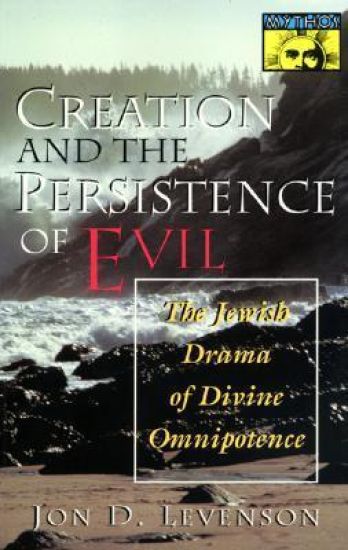
Creation and the Persistence of Evil

Creation and the Persistence of Evil

Jon D. Levenson

Princeton University Press
1994
pokkari
This paperback edition brings to a wide audience one of the most innovative and meaningful models of God for this post-Auschwitz era. In a thought-provoking return to the original Hebrew conception of God, which questions accepted conceptions of divine omnipotence, Jon Levenson defines God's authorship of the world as a consequence of his victory in his struggle with evil. He traces a flexible conception of God to the earliest Hebrew sources, arguing, for example, that Genesis 1 does not describe the banishment of evil but the attempt to contain the menace of evil in the world, a struggle that continues today.
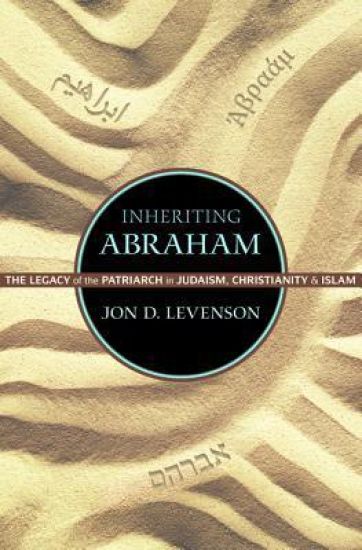
Inheriting Abraham

Inheriting Abraham

Jon D. Levenson

Princeton University Press
2012
sidottu
Jews, Christians, and Muslims supposedly share a common religious heritage in the patriarch Abraham, and the idea that he should serve only as a source of unity among the three traditions has become widespread in both scholarly and popular circles. But in Inheriting Abraham, Jon Levenson reveals how the increasingly conventional notion of the three equally "Abrahamic" religions derives from a dangerous misunderstanding of key biblical and Qur'anic texts, fails to do full justice to any of the traditions, and is often biased against Judaism in subtle and pernicious ways.
Inheriting Abraham

Inheriting Abraham

Jon D. Levenson

Princeton University Press
2014
pokkari
Jews, Christians, and Muslims supposedly share a common religious heritage in the patriarch Abraham, and the idea that he should serve only as a source of unity among the three traditions has become widespread in both scholarly and popular circles. But in Inheriting Abraham, Jon Levenson reveals how the increasingly conventional notion of the three equally "Abrahamic" religions derives from a dangerous misunderstanding of key biblical and Qur'anic texts, fails to do full justice to any of the traditions, and is often biased against Judaism in subtle and pernicious ways.
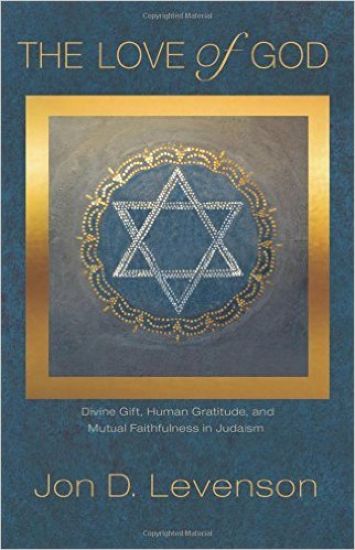
The Love of God

The Love of God

Jon D. Levenson

Princeton University Press
2015
sidottu
The love of God is perhaps the most essential element in Judaism--but also one of the most confounding. In biblical and rabbinic literature, the obligation to love God appears as a formal commandment. Yet most people today think of love as a feeling. How can an emotion be commanded? How could one ever fulfill such a requirement? The Love of God places these scholarly and existential questions in a new light. Jon Levenson traces the origins of the concept to the ancient institution of covenant, showing how covenantal love is a matter neither of sentiment nor of dry legalism. The love of God is instead a deeply personal two-way relationship that finds expression in God's mysterious love for the people of Israel, who in turn observe God's laws out of profound gratitude for his acts of deliverance. Levenson explores how this bond has survived episodes in which God's love appears to be painfully absent--as in the brutal persecutions of Talmudic times--and describes the intensely erotic portrayals of the relationship by biblical prophets and rabbinic interpreters of the Song of Songs. He examines the love of God as a spiritual discipline in the Middle Ages as well as efforts by two influential modern Jewish thinkers--Martin Buber and Franz Rosenzweig--to recover this vital but endangered aspect of their tradition. A breathtaking work of scholarship and spirituality alike that is certain to provoke debate, The Love of God develops fascinating insights into the foundations of religious life in the classical Jewish tradition.
The Love of God

The Love of God

Jon D. Levenson

Princeton University Press
2020
pokkari
A compelling interpretation of a foundational concept of Jewish religious lifeThe love of God is arguably the most essential element in Judaism—but also one of the most confounding. In biblical and rabbinic literature, the obligation to love God appears as a formal commandment. Yet most people today think of love as a feeling and wonder how an emotion can be commanded. Jon Levenson traces the origins of the concept to the ancient institution of covenant, showing how covenantal love is a matter neither of sentiment nor of dry legalism. In origin, the love of God is, instead, thoroughly relational in nature, inseparable from the deeply personal two-way relationship that finds expression in God's mysterious love for the people of Israel, who in turn observe God's laws out of profound gratitude for his acts of deliverance and continuing faithfulness to him in the face of temptations to abandon the relationship.
Israel’s Day of Light and Joy

Israel’s Day of Light and Joy

Jon D. Levenson

Pennsylvania State University Press
2024
sidottu
This book begins by exploring the mysterious origins of an institution so familiar that most of us never wonder where it came from—the seven-day week. Jon D. Levenson then focuses on the historical development of the Jewish Sabbath and the rich range of theological and ethical meanings it has acquired over the centuries.Levenson evaluates the theory that the Hebrew word šabbat derives from Akkadian and that the Sabbath may have begun as a day of ill omen, only later to be reinterpreted as the joyous festival that consummates the seven-day week. He explores the quasi-magical character of the number seven in ancient Near Eastern and Mediterranean compositions and examines the revealing variation of the Sabbath commandment between the two biblical versions of the Decalogue in Exodus and Deuteronomy. He also treats sabbatical law in the Second Temple and rabbinic periods, critiquing contemporary efforts to extract a spirituality from the Sabbath that is divorced from larger questions of communal identity, normative practice, and religious affirmation. Levenson concludes by discussing modern challenges to Sabbath observance and the surprising prospects for its continuation.Written by an eminent scholar in the field, this sophisticated inquiry bridges the gap between studies that explore the spiritual meaning of Jewish Sabbath observance and those that focus strictly on the history of the tradition. It will appeal to a wide audience of academics and lay readers.
Israel’s Day of Light and Joy

Israel’s Day of Light and Joy

Jon D. Levenson

Pennsylvania State University Press
2024
pokkari
This book begins by exploring the mysterious origins of an institution so familiar that most of us never wonder where it came from—the seven-day week. Jon D. Levenson then focuses on the historical development of the Jewish Sabbath and the rich range of theological and ethical meanings it has acquired over the centuries.Levenson evaluates the theory that the Hebrew word šabbat derives from Akkadian and that the Sabbath may have begun as a day of ill omen, only later to be reinterpreted as the joyous festival that consummates the seven-day week. He explores the quasi-magical character of the number seven in ancient Near Eastern and Mediterranean compositions and examines the revealing variation of the Sabbath commandment between the two biblical versions of the Decalogue in Exodus and Deuteronomy. He also treats sabbatical law in the Second Temple and rabbinic periods, critiquing contemporary efforts to extract a spirituality from the Sabbath that is divorced from larger questions of communal identity, normative practice, and religious affirmation. Levenson concludes by discussing modern challenges to Sabbath observance and the surprising prospects for its continuation.Written by an eminent scholar in the field, this sophisticated inquiry bridges the gap between studies that explore the spiritual meaning of Jewish Sabbath observance and those that focus strictly on the history of the tradition. It will appeal to a wide audience of academics and lay readers.