Kirjojen hintavertailu. Mukana 11 717 486 kirjaa ja 12 kauppaa.

Kirjahaku

Etsi kirjoja tekijän nimen, kirjan nimen tai ISBN:n perusteella.

23 kirjaa tekijältä Jon E. Lewis

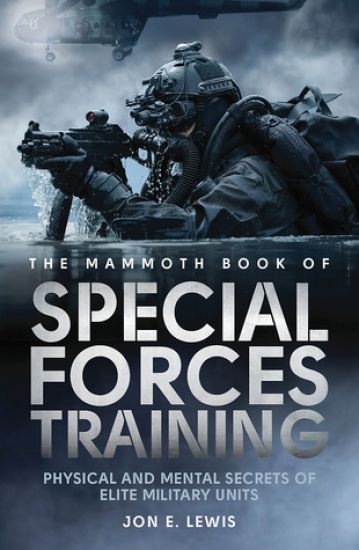
The Mammoth Book of Special Forces Training

The Mammoth Book of Special Forces Training

Jon E. Lewis

Running Press Adult
2015
nidottu
What does it take, both physically and mentally, to join the world's most respected -- and feared -- military units? Lewis looks at the origins, training, tactics, weapons, and achievements of regiments such as Britain's SAS and Paratroopers, the US Navy SEALS, Delta Force, Army Rangers and Green Berets, Russia's Spetsnaz, and the Israeli Special Forces, as well as the codes that bind their members together. He looks at training in everything from wilderness survival to hand-to-hand combat.
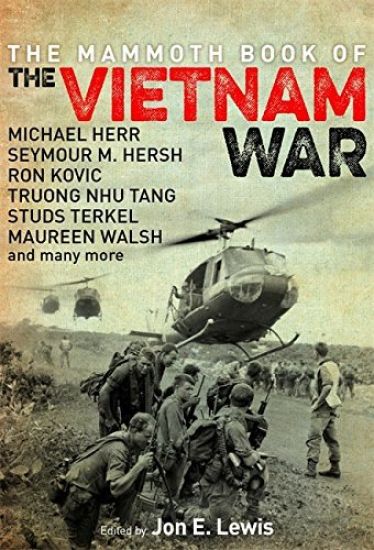
The Mammoth Book of the Vietnam War
By 1969, following the French defeat at Dien Bien Phu, over 500,000 US troops were ‘in country’ in Vietnam. Before America’s longest war had ended with the fall of Saigon in 1975, 450,000 Vietnamese had died, along with 36,000 Americans. The Vietnam War was the first rock ’n’ roll war, the first helicopter war with its doctrine of ‘airmobility’, and the first television war; it made napalm and the defoliant Agent Orange infamous, and gave us the New Journalism of Michael Herr and others. It also saw the establishment of the Navy SEALs and Delta Force. At home, America fractured, with the peace movement protesting against the war; at Kent State University, Ohio National Guardsmen fired on unarmed students, killing four and injuring nine. Lewis’s compelling selection of the best writing to come out of a war covered by some truly outstanding writers, both journalists and combatants, includes an eyewitness account of the first major battle between the US Army and the People’s Army of Vietnam at Ia Drang; a selection of letters home; Nicholas Tomalin’s famous ‘The General Goes Zapping Charlie Cong’; Robert Mason’s ‘R&R’, Studs Terkel’s account of the police breaking up an anti-war protest; John Kifner on the shootings at Kent State; Ron Kovic’s ‘Born on the Fourth of July’; John T. Wheeler’s ‘Khe Sanh: Live in the V Ring’; Pulitzer Prize-winner Seymour Hersh on the massacre at My Lai; Michael Herr’s ‘It Made You Feel Omni’; Viet Cong Truong Nhu Tang’s memoir; naval nurse Maureen Walsh’s memoir, ‘Burning Flesh’; John Pilger on the fall of Saigon; and Tim O’Brien’s ‘If I Die in a Combat Zone’.
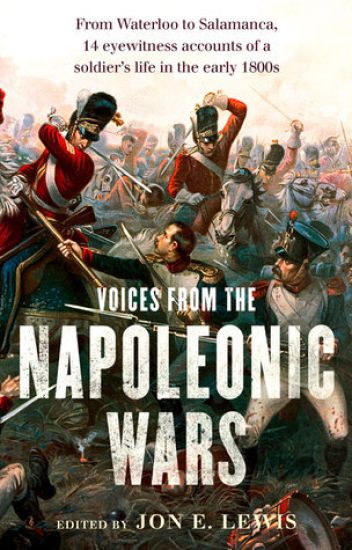
Voices From the Napoleonic Wars

Voices From the Napoleonic Wars

Jon E. Lewis

Robinson
2015
pokkari
Voices from the Napoleonic Wars reveals in telling detail the harsh lives of soldiers at the turn of the eighteenth century and in the early years of the nineteenth - the poor food and brutal discipline they endured, along with the forced marches and bloody, hand-to-hand combat. Contemporaries were mesmerised by Napoleon, and with good reason: in 1812, he had an unprecedented million men and more under arms. His new model army of volunteers and conscripts at epic battles such as Austerlitz, Salamanca, Borodino, Jena and, of course, Waterloo marked the beginning of modern warfare, the road to the Sommes and Stalingrad. The citizen-in-arms of Napoleon's Grande Armée and other armies of the time gave rise to a distinct body of soldiers' personal memoirs. The personal accounts that Jon E. Lewis has selected from these memoirs, as well as from letters and diaries, include those of Rifleman Harris fighting in the Peninsular Wars, and Captain Alexander Cavalie Mercer of the Royal Horse Artillery at Waterloo. They cover the land campaigns of the French Revolutionary Wars (1739-1802), the Napoleonic Wars (1803-1815) and the War of 1812 (1812-1815), in North America. This was the age of cavalry charges, of horse-drawn artillery, of muskets and hand-to-hand combat with sabres and bayonets. It was an era in which inspirational leadership and patriotic common cause counted for much at close quarters on chaotic and bloody battlefields. The men who wrote these accounts were directly involved in the sweeping campaigns and climactic battles that set Europe and America alight at the turn of the eighteenth century and in the years that followed. Alongside recollections of the ferocity of hard-fought battles are the equally telling details of the common soldier's daily life - short rations, forced marches in the searing heat of the Iberian summer and the bitter cold of the Russian winter, debilitating illnesses and crippling wounds, looting and the lash, but also the compensations of hard-won comradeship in the face of ever-present death. Collectively, these personal accounts give us the most vivid picture of warfare 200 and more years ago, in the evocative language of those who knew it at first hand - the men and officers of the British, French and American armies. They let us know exactly what it was like to be an infantryman, a cavalryman, an artilleryman of the time.
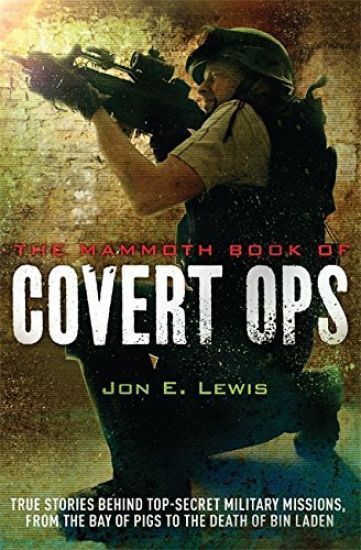
Mammoth Book of Covert Ops

Mammoth Book of Covert Ops

Jon E. Lewis

Constable Robinson
2014
pokkari
Twenty true stories of covert military operations, from raids into Laos by elite unit MAC-V-SOG to cut the Ho Chi Minh trail during the Vietnam War to the US Navy SEAL 6 operation Neptune's Spear in Abbottabad which resulted in the death of Osama bin Laden.
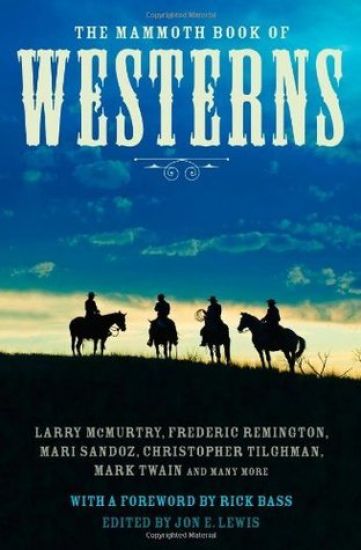
Mammoth Book of Westerns

Mammoth Book of Westerns

Jon E. Lewis

Constable And Robinson
2013
pokkari
An outstanding collection Westerns from across the genre, which includes stories by Rick Bass, Walter Van Tilburg Clark, Larry McMurtry, Mari Sandoz, Christopher Tilghman, and Mark Twain, among many others.
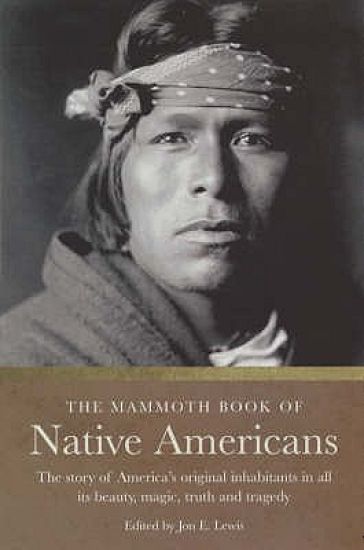
The Mammoth Book of Native Americans

The Mammoth Book of Native Americans

Jon E. Lewis

Robinson Publishing
2004
nidottu
Native Americans make up less than one per cent of the total US population but represent half the nation's languages and cultures. Here, in one grand sweep, is the full story of Native American society, culture and religion. Here is everything from the land-based spirituality of their early creation myths and the late rise of Indian Pride, to the 88 uses to which the Sioux put the flesh and bones of the buffalo and the practice of berdache (men adopted as women). The book offers a chronological history of America's indigenous peoples. It covers their dramatic early entry into North America, out of the now submerged continent of Beringia, then in more recent times the 'forgotten wars' of the 16th and 17th centuries, which wiped many tribes from the face of the East Coast, and finally describes to the last struggles of the Cheyenne and the Comanche. Celebrating these peoples' way of life rather than focusing narrowly on the manner of their genocide, it does not ignore uncomfortable facts of the Amerindian past - including the cannibalism believed to have been practised by some tribes and the Native Americans' part in the decimation of North America's buffalo herds.
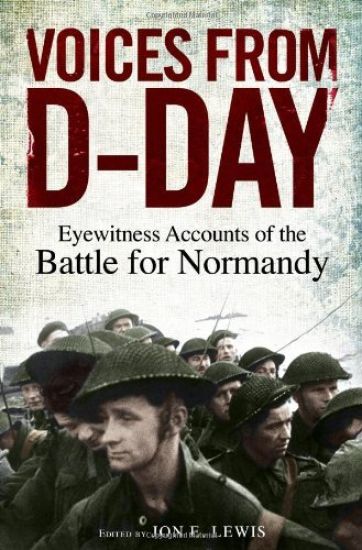
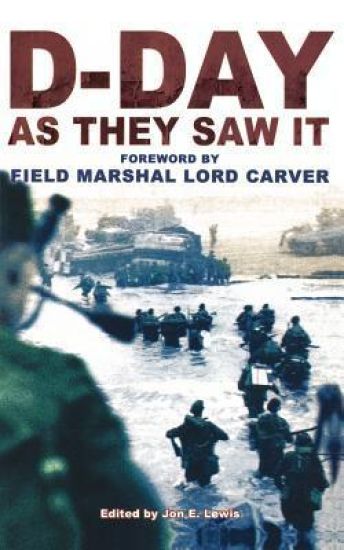
D-Day As They Saw It

D-Day As They Saw It

Jon E. Lewis

Robinson Publishing
2004
nidottu
It was going to be the greatest amphibious operation of all time claimed Admiral Sir Bertram Ramsay, the naval commander of the Allied invasion of Normandy. He did not exaggerate, for the Allied fleet consisted of over 5,000 craft and had by the end of 'the longest day' landed 156,000 men and breached Hitler's much vaunted defensive wall. Yet dramatic and historic though the events of D-Day were, they were just the opening round of a much bigger and equally remarkable battle for the whole of Normandy that followed for the next ten weeks. Sixty years on, this collection of rare, first-hand accounts tells the story of D-Day and the subsequent battle, in the words of soldiers and civilians on both sides of the war. There are classic soldiers' accounts from the likes of Rommel and Bradley, together with front line reports by the best war correspondents such as Hemingway and Alan Melville.
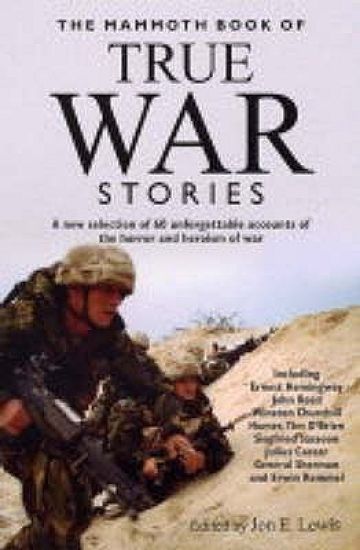
The Mammoth Book of True War Stories

The Mammoth Book of True War Stories

Jon E. Lewis

Robinson Publishing
2005
nidottu
War, as the general said, is hell. But in a few it also brings out the best. Heroism and horror are the keynotes of this gripping new collection of war writing. From the Siege of Troy to the present day, The Mammoth Book of True War Stories includes battle analyses by celebrated historians, letters home by ordinary Gis, high-adrenaline memoirs by frontline combatants and memorable reportage by master chroniclers such as Ernest Hemingway and John Reed.
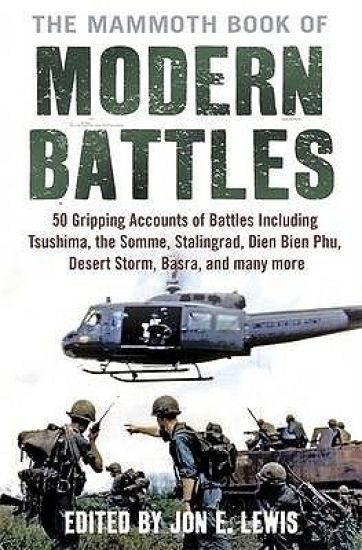
The Mammoth Book of Modern Battles

The Mammoth Book of Modern Battles

Jon E. Lewis

Robinson Publishing
2009
nidottu
From the start of the 20th century to the most recent major offensives, here are fifty accounts of the battles that made the modern world, described in superb detail by historians and writers including John Keegan, Alan Clark, John Strawson, Charles Mey, John Pimlott, and John Laffin.All the major conflicts are covered, from two world wars, through Korea, Vietnam, Bosnia, Chechnya, to Iraq and Afghanistan. Among the battles featured are: the Somme, Passchendaele, Battle of Britain, Stalingrad, El Alamein, Monte Cassino, Omaha Beach, Iwa Jima, Dien Bien Phu, Ia Drang, Hamburger Hill, Desert Storm, Kabul, Baghdad, and Basra.
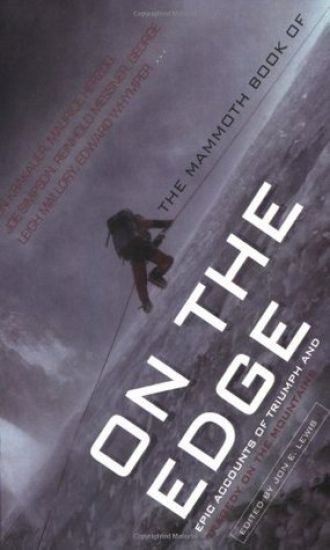
The Mammoth Book of On The Edge

The Mammoth Book of On The Edge

Jon E. Lewis

Robinson Publishing
2009
pokkari
No one sees clearer than an individual whose life is hanging by the finger tips on the edge of an abyss. Probing the furthest reaches of human daring and endurance, here are 28 of the great first-hand accounts of extreme mountaineering, from legendary names. Featuring: *Heinrich Harrer - first conqueror of the notorious Eigerwand. *Robert Bates - the classic account of the ill-fated American 1953 expedition to K2. *Maurice Herzog - his unstoppable ascent of Annapurna at the cost of frostbite. *Walter Bonatti - tragedy on the Central Pillar of Freney on Mont Blanc. *George Leigh Mallory - surviving an avalanche on the 1922 Everest expedition. *Rene Desmaison - his epic story of 14 days stuck on The Grandes Jorasses in winter. *Jon Krakauer - recalling his solo ascent of The Devil's Thumb in Alaska. The price of the summit is often measured in human suffering, yet for those who succeed the rewards can be incalculable. Nerve-wracking and unputdownable.
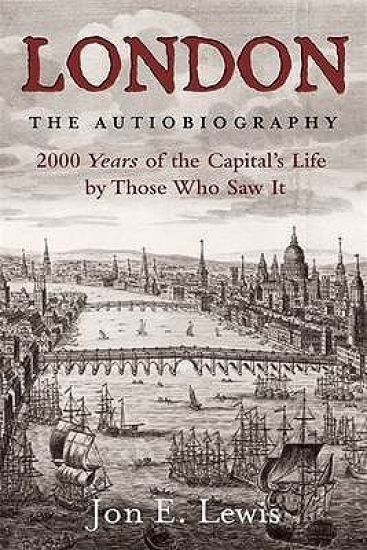
London: the Autobiography

London: the Autobiography

Jon E. Lewis

Constable And Robinson
2009
pokkari
London: The Autobiography tells the story of the world's greatest city through the people who were there. From Boudicca's savage raid on Roman London in 60AD to the bombing of 7/7, London speaks for itself.
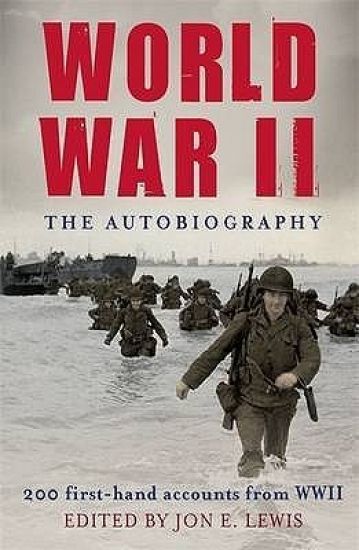
World War II: The Autobiography

World War II: The Autobiography

Jon E. Lewis

Robinson
2009
nidottu
A remarkable series of over 200 eye-witness accounts taken from diaries, letters, speeches, interviews and memoirs of those who were there: pilots, sailors, generals, infantrymen, war correspondents and leaders. These include Spitfire pilot Richard Hillary's account of bailing out of his plane in the Battle of Britain; a German sailor's view of HMS Royal Oak being torpedoed at Scapa Flow; insights into Rommel's ailing health from a lieutenant in the Afrika Korps; famous war correspondent Ernie Pyle's account of GI meals during Operation Torch; Anne Frank's recollection of the rounding up of Jews in Amsterdam; the last letters home from anonymous German soldiers in Stalingrad; the view from a Japanese cockpit over Pearl Harbor on 7 December 1941; a German officer's memories of the airborne assault on Crete in May 1941; the firestorm following the bombing of Dresden in July 1943 in the words of a German woman; a lieutenant in the 1st Airborne Divsion's eyewitness account of the fighting in Arnhem; Martha Gellhorn on the aftermath of the Battle of the Bulge; a British tank officer crossing the German border on 28 February 1945; on the Kokoda Trail in New Guinea; an Allied intelligence officer being executed by the Japanese; the tunnels of Iwo Jima; and a kamikaze pilot's final letter.
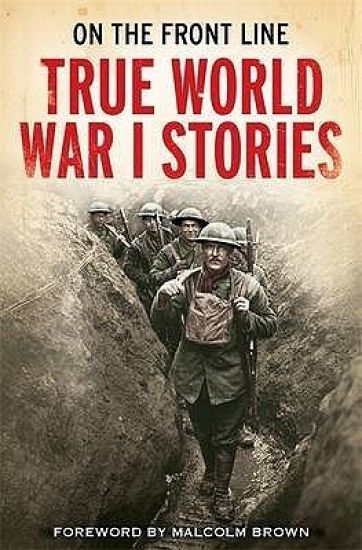
On the Front Line

On the Front Line

Jon E. Lewis

Constable
2009
nidottu
In 1930, the editor of Everyman Magazine requested entries for a new anthology of Great War accounts. The result was a revolutionary book unlike any other of the period; for as Malcolm Brown notes in his introduction 'I believe it might fairly be described as a rediscovered classic'. It was the very first collection to reveal the many dimensions of the war through the eyes of the ordinary soldier and offers heart-stopping renditions of the very first gas attack; aerial dogfights above the trenches; the moment of going over the top. Told chronologically, from the first scrambles of 1914, the drudgery of the war of attrition once the trenches had been dug, to the final joy of Armistice.
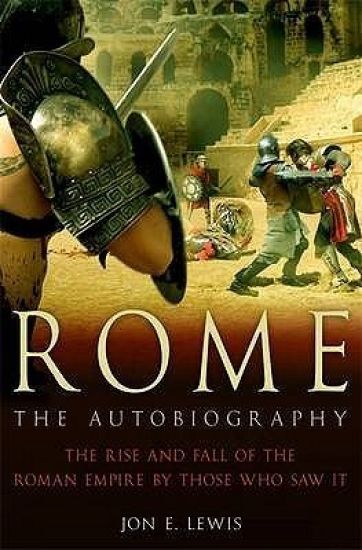
Rome: The Autobiography

Rome: The Autobiography

Jon E. Lewis

Robinson
2010
nidottu
The history of Ancient Rome has been passed down to us through official accounts, personal letters, annotated words of great orators and the considered histories of powerful men. It is found on inscriptions, in private memoirs and official reports from every corner of the Empire. Over 150 pieces are collected in this autobiography of Ancient Rome, from the written accounts of Caesars and slaves, generals and poets on major battles, conspiracy and politics to the minutiae of everyday life and includes amongst them:How to keep a slave, by Cato the Elder; The Life of a Roman Gentleman by Pliny the Younger; Gang Warfare in Rome, by Cicero; a Chariot Fight, by Julius Caesar; Female Athletes and Gladiators, by Juvenal; the Eruption of Vesuivius, by Pliny the Younger; Nero Murders Britannicus, by Tacitus; On Going to bed with Cleopatra, by Mark Antony; Homosexuals in Rome, Juvenal; Alaric the Visogoth Sacks Rome,by Jordanes; The Great Fire of Rome, by Tacitus; Gladitorial Shows, by Seneca; Two Days in the Life of an Emperor's Son, Marcus Aurelius.