Kirjojen hintavertailu. Mukana 12 083 983 kirjaa ja 12 kauppaa.

Kirjahaku

Etsi kirjoja tekijän nimen, kirjan nimen tai ISBN:n perusteella.

12 kirjaa tekijältä Jon Mee

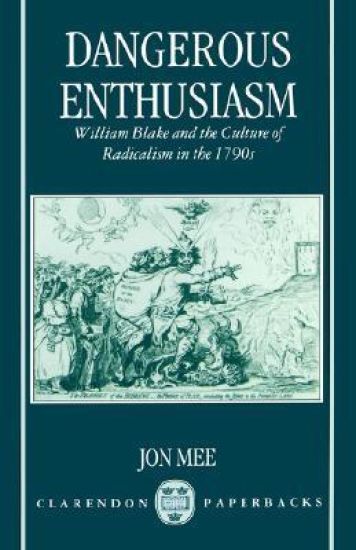
Dangerous Enthusiasm

Dangerous Enthusiasm

Jon Mee

Clarendon Press
1992
sidottu
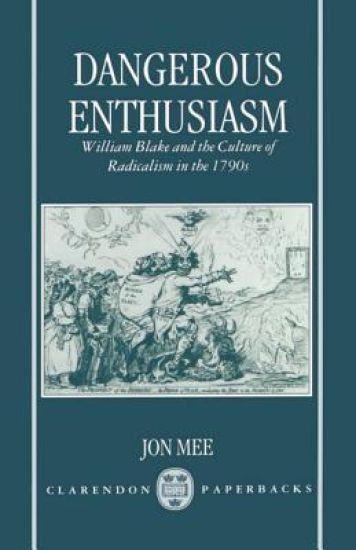
William Blake's work presents a stern challenge to historical criticism. Jon Mee's new study meets that challenge by investigating contexts outside the domains of standard literary histories. He traces the distinctive rhetoric of the illuminated books to the French Revolution controversy of the 1790s and Blake's fusion of the diverse currents of radicalism abroad in that decade. Dangerous Enthusiasm presents a more comprehensively politicized picture of Blake than any previous study. It is supported by a wealth of original research which will be of interest to historians and literary critics alike. Blake emerges from these pages as a `bricoleur' who fused the language of London's popular dissenting culture with the more sceptical radicalism of the Enlightenment. His prophetic books are shown to be less the expressions of isolated genius than the products of a complex response to the cultural politics of his contemporaries.
Dangerous Enthusiasm

Dangerous Enthusiasm

Jon Mee

Clarendon Press
1994
pokkari
Dangerous Enthusiasm considers Blake's prophetic books written during the 1790s in the light of the French Revolution controversy raging at the time. His works are shown to be less the expressions of isolated genius than the products of a complex response to the cultural politics of his contemporaries. William Blake's work presents a stern challenge to historical criticism. Jon Mee's well-received study meets the challenge by investigating contexts outside the domains of standard literary histories. He traces the distinctive rhetoric of the illuminated books to the French Revolution controversy of the 1790s and Blake's fusion of the diverse currents of radicalism abroad in that decade. The study is supported by a wealth of original research which will be of interest to historians and literary critics alike. Blake emerges from these pages as a 'bricoleur' who fused the language of London's popular dissenting culture with the more sceptical radicalism of the Enlightenment. Dangerous Enthusiasm presents a more comprehensively politicized picture of Blake than any previous study. "Mee...places Blake well and correctly...Dangerous Enthusiasm will do much to take Blake out of the somewhat attenuated discourse of analytic academicism and to put his back in a credible place.' 'a general, incontestable conclusion that, whatever their personal relations, Blake's political opinions, expressed in both his writings and his engravings, were much more Paineite than has ever been previously appreciated. Here in these pages Paine grows in stature, with the eager Blake at his side,,, [a] splendid volume...'
Romanticism, Enthusiasm, and Regulation

Romanticism, Enthusiasm, and Regulation

Jon Mee

Oxford University Press
2003
sidottu
What is enthusiasm? Enthusiasm for most of the eighteenth century was identified with excess of religious feeling, although it came increasingly to be used to describe the unregulated and infectious urgings of the crowd more generally. Yet there was a developing alternative understanding of the term which identified it with a therapeutic influx of feeling in an increasingly formalistic and commodified world. This understanding came to be particularly identified with poetry. Enthusiasm was deemed a necessary condition of poetry by the end of the century, but not a sufficient one. For without proper regulation, poetic enthusiasm might become nothing more than the formless emotionalism of the crowd that the literary elite perceived all around them. Although enthusiasm might be thought of as a distinctly Romantic term, this study looks at the way the inherited discourse of enthusiasm structured most writing of the Romantic period. Many of those new to writing as a career in the period took enthusiasm to license their feelings as a legitimate basis for turning to print. Others took this as an alarming version of the old virus. A few elite writers, Coleridge and Wordsworth included, did not take pains to show they were on the right side of the fence that separated the noble enthusiasm of the poet from either the fanaticism of the crowd or the undisciplined pretensions of hacks and scribblers. Understanding the influence of these processes of regulation and the difficulty faced by writers in clearly articulating the difference they were meant to enshrine is at the centre of Romanticism, Enthusiasm, and Regulation.
Romanticism, Enthusiasm, and Regulation

Romanticism, Enthusiasm, and Regulation

Jon Mee

Oxford University Press
2005
nidottu
What is enthusiasm? Enthusiasm for most of the eighteenth century was identified with excess of religious feeling, although it came increasingly to be used to describe the unregulated and infectious urgings of the crowd more generally. Yet there was a developing alternative understanding of the term which identified it with a therapeutic influx of feeling in an increasingly formalistic and commodified world. This understanding came to be particularly identified with poetry. Enthusiasm was deemed a necessary condition of poetry by the end of the century, but not a sufficient one. For without proper regulation, poetic enthusiasm might become nothing more than the formless emotionalism of the crowd that the literary elite perceived all around them. Although enthusiasm might be thought of as a distinctly Romantic term, this study looks at the way the inherited discourse of enthusiasm structured most writing of the Romantic period. Many of those new to writing as a career in the period took enthusiasm to licence their feelings as a legitimate basis for turning to print. Others took this as an alarming version of the old virus. Few elite writers, Coleridge and Wordsworth included, did not take pains to show they were on the right side of the fence that separate the noble enthusiasm of the poet from either the fanaticism of the crowd or the undisciplined pretensions of hacks and scribblers. Understanding the influence of these processes of regulation and the difficulty faced by writers in clearly articulating the difference they were meant to enshrine is at the centre of Romanticism, Enthusiasm, and Regulation.
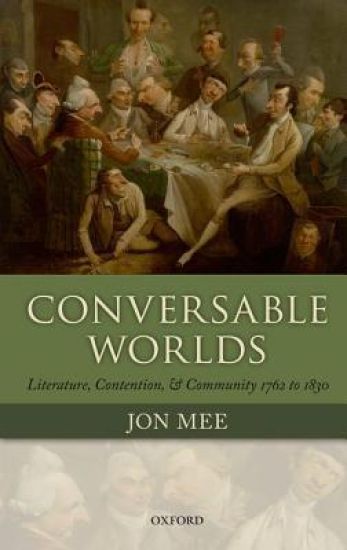
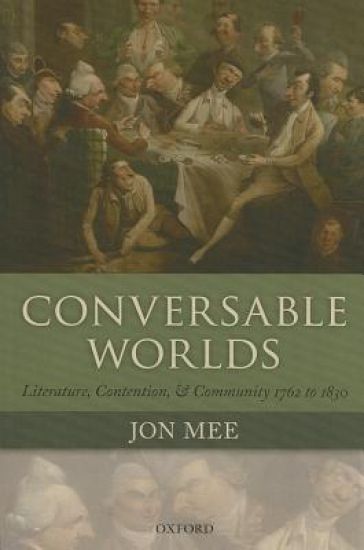
Conversable Worlds

Conversable Worlds

Jon Mee

Oxford University Press
2011
sidottu
Conversable Worlds addresses the emergence of the idea of 'the conversation of culture'. Around 1700 a new commercial society was emerging that thought of its values as the product of exchanges between citizens. Conversation became increasingly important as a model and as a practice for how community could be created. A welter of publications, in periodical essays, in novels, and in poetry, enjoined the virtues of conversation. These publications were enthusiastically read and discussed in book clubs and literary societies that created their own conversable worlds. From some perspectives, the freedom of a distinctively English conversation allowed for the 'collision' of ideas and sentiments. For others, like Joseph Addison and David Hume, ease of 'flow' was the key issue, and politeness the means of establishing a via media. For Addison and Hume, the feminization of culture promised to make women the sovereigns of what Hume called 'the conversable world'. As the culture seemed to open up to a multitude of voices, anxieties appeared as to how far things should be allowed to go. The unruliness of the crowd threatened to disrupt the channels of communication. There was a parallel fear that mere feminized chatter might replace learning. This book examines the influence of these developments on the idea of literature from 1762 through to 1830. Part I examines the conversational paradigm established by figures like Addison and Hume, and the proliferation of conversable worlds into gatherings like Johnson's Club and Montagu's Bluestocking assemblies. Part II looks at the transition from the eighteenth century to 'Romantic' ideas of literary culture, the question of the withdrawal from mixed social space, the drive to sublimate verbal exchange into forms that retained dialogue without contention in places like Coleridge's 'conversation poems,' and the continuing tensions between ideas of the republic of letters as a space of vigorous exchange as opposed to the organic unfolding of consciousness.
Conversable Worlds

Conversable Worlds

Jon Mee

Oxford University Press
2013
nidottu
Conversable Worlds addresses the emergence of the idea of 'the conversation of culture'. Around 1700 a new commercial society was emerging that thought of its values as the product of exchanges between citizens. Conversation became increasingly important as a model and as a practice for how community could be created. A welter of publications, in periodical essays, in novels, and in poetry, enjoined the virtues of conversation. These publications were enthusiastically read and discussed in book clubs and literary societies that created their own conversable worlds. From some perspectives, the freedom of a distinctively English conversation allowed for the 'collision' of ideas and sentiments. For others, like Joseph Addison and David Hume, ease of 'flow' was the key issue, and politeness the means of establishing a via media. For Addison and Hume, the feminization of culture promised to make women the sovereigns of what Hume called 'the conversable world'. As the culture seemed to open up to a multitude of voices, anxieties appeared as to how far things should be allowed to go. The unruliness of the crowd threatened to disrupt the channels of communication. There was a parallel fear that mere feminized chatter might replace learning. This book examines the influence of these developments on the idea of literature from 1762 through to 1830. Part I examines the conversational paradigm established by figures like Addison and Hume, and the proliferation of conversable worlds into gatherings like Johnson's Club and Montagu's Bluestocking assemblies. Part II looks at the transition from the eighteenth century to 'Romantic' ideas of literary culture, the question of the withdrawal from mixed social space, the drive to sublimate verbal exchange into forms that retained dialogue without contention in places like Coleridge's 'conversation poems,' and the continuing tensions between ideas of the republic of letters as a space of vigorous exchange as opposed to the organic unfolding of consciousness.
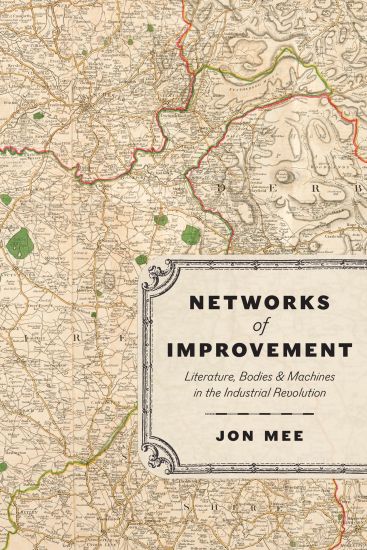
Networks of Improvement

Networks of Improvement

Jon Mee

THE UNIVERSITY OF CHICAGO PRESS
2023
sidottu
A new literary-cultural history of the Industrial Revolution in Britain from the late eighteenth to the mid-nineteenth centuries. Working against the stubbornly persistent image of “dark satanic mills,” in many ways so characteristic of literary Romanticism, Jon Mee provides a fresh, revisionary account of the Industrial Revolution as a story of unintended consequences. In Networks of Improvement, Mee reads a wide range of texts—economic, medical, and more conventionally “literary”—with a focus on their circulation through networks and institutions. Mee shows how a project of enlightened liberal reform articulated in Britain’s emerging manufacturing towns led to unexpectedly coercive forms of machine productivity, a pattern that might be seen repeating in the digital technologies of our own time. Instead of treating the Industrial Revolution as Romanticism’s “other,” Mee shows how writing, practices, and institutions emanating from these industrial towns developed a new kind of knowledge economy, one where local literary and philosophical societies served as important transmission hubs for the circulation of knowledge.
Networks of Improvement

Networks of Improvement

Jon Mee

THE UNIVERSITY OF CHICAGO PRESS
2023
nidottu
A new literary-cultural history of the Industrial Revolution in Britain from the late eighteenth to the mid-nineteenth centuries. Working against the stubbornly persistent image of “dark satanic mills,” in many ways so characteristic of literary Romanticism, Jon Mee provides a fresh, revisionary account of the Industrial Revolution as a story of unintended consequences. In Networks of Improvement, Mee reads a wide range of texts—economic, medical, and more conventionally “literary”—with a focus on their circulation through networks and institutions. Mee shows how a project of enlightened liberal reform articulated in Britain’s emerging manufacturing towns led to unexpectedly coercive forms of machine productivity, a pattern that might be seen repeating in the digital technologies of our own time. Instead of treating the Industrial Revolution as Romanticism’s “other,” Mee shows how writing, practices, and institutions emanating from these industrial towns developed a new kind of knowledge economy, one where local literary and philosophical societies served as important transmission hubs for the circulation of knowledge.
The Cambridge Introduction to Charles Dickens

The Cambridge Introduction to Charles Dickens

Jon Mee

Cambridge University Press
2010
pokkari
Charles Dickens became immensely popular early on in his career as a novelist, and his appeal continues to grow with new editions prompted by recent television and film adaptations, as well as large numbers of students studying the Victorian novel. This lively and accessible introduction to Dickens focuses on the extraordinary diversity of his writing. Jon Mee discusses Dickens's novels, journalism and public performances, the historical contexts and his influence on other writers. In the process, five major themes emerge: Dickens the entertainer; Dickens and language; Dickens and London; Dickens, gender, and domesticity; and the question of adaptation, including Dickens's adaptations of his own work. These interrelated concerns allow readers to start making their own new connections between his famous and less widely read works and to appreciate fully the sheer imaginative richness of his writing, which particularly evokes the dizzying expansion of nineteenth-century London.
The Cambridge Introduction to Charles Dickens

The Cambridge Introduction to Charles Dickens

Jon Mee

Cambridge University Press
2010
sidottu
Charles Dickens became immensely popular early on in his career as a novelist, and his appeal continues to grow with new editions prompted by recent television and film adaptations, as well as large numbers of students studying the Victorian novel. This lively and accessible introduction to Dickens focuses on the extraordinary diversity of his writing. Jon Mee discusses Dickens's novels, journalism and public performances, the historical contexts and his influence on other writers. In the process, five major themes emerge: Dickens the entertainer; Dickens and language; Dickens and London; Dickens, gender, and domesticity; and the question of adaptation, including Dickens's adaptations of his own work. These interrelated concerns allow readers to start making their own new connections between his famous and less widely read works and to appreciate fully the sheer imaginative richness of his writing, which particularly evokes the dizzying expansion of nineteenth-century London.
Print, Publicity, and Popular Radicalism in the 1790s
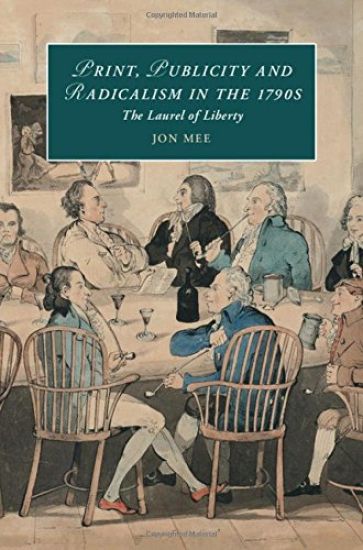
Jon Mee explores the popular democratic movement that emerged in the London of the 1790s in response to the French Revolution. Central to the movement's achievement was the creation of an idea of 'the people' brought into being through print and publicity. Radical clubs rose and fell in the face of the hostile attentions of government. They were sustained by a faith in the press as a form of 'print magic', but confidence in the liberating potential of the printing press was interwoven with hard-headed deliberations over how best to animate and represent the people. Ideas of disinterested rational debate were thrown into the mix with coruscating satire, rousing songs, and republican toasts. Print personality became a vital interface between readers and print exploited by the cast of radicals returned to history in vivid detail by Print, Publicity, and Popular Radicalism in the 1790s. This title is also available as Open Access.
Print, Publicity, and Popular Radicalism in the 1790s
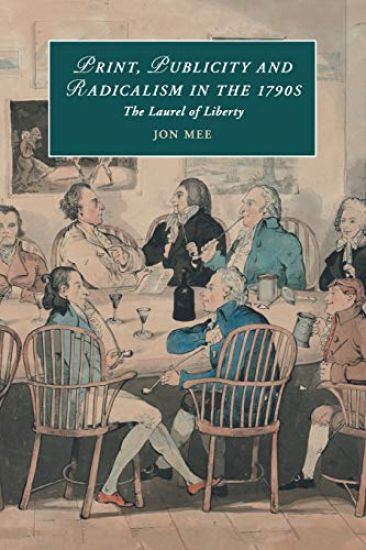
Jon Mee explores the popular democratic movement that emerged in the London of the 1790s in response to the French Revolution. Central to the movement's achievement was the creation of an idea of 'the people' brought into being through print and publicity. Radical clubs rose and fell in the face of the hostile attentions of government. They were sustained by a faith in the press as a form of 'print magic', but confidence in the liberating potential of the printing press was interwoven with hard-headed deliberations over how best to animate and represent the people. Ideas of disinterested rational debate were thrown into the mix with coruscating satire, rousing songs, and republican toasts. Print personality became a vital interface between readers and print exploited by the cast of radicals returned to history in vivid detail by Print, Publicity, and Popular Radicalism in the 1790s. This title is also available as Open Access.