Kirjojen hintavertailu. Mukana 12 421 288 kirjaa ja 12 kauppaa.

Kirjahaku

Etsi kirjoja tekijän nimen, kirjan nimen tai ISBN:n perusteella.

6 kirjaa tekijältä Jon Shelton

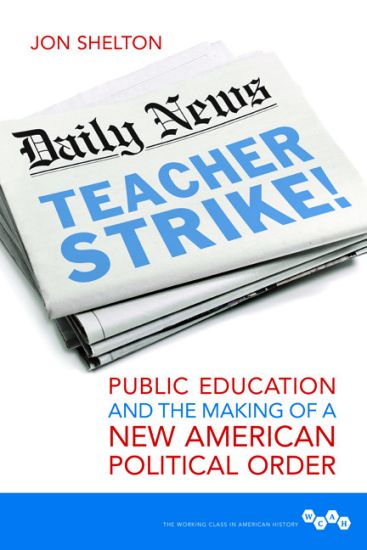
Teacher Strike!

Teacher Strike!

Jon Shelton

University of Illinois Press
2017
sidottu
A wave of teacher strikes in the 1960s and 1970s roiled urban communities. Jon Shelton illuminates how this tumultuous era helped shatter the liberal-labor coalition and opened the door to the neoliberal challenge at the heart of urban education today. As Shelton shows, many working- and middle-class whites sided with corporate interests in seeing themselves as society's only legitimate, productive members. This alliance increasingly argued that public employees and the urban poor took but did not give. Drawing on a wealth of research ranging from school board meetings to TV news reports, Shelton puts readers in the middle of fraught, intense strikes in Newark, St. Louis, and three other cities where these debates and shifting attitudes played out. He also demonstrates how the labor actions contributed to the growing public perception of unions as irrelevant or even detrimental to American prosperity. Foes of the labor movement, meanwhile, tapped into cultural and economic fears to undermine not just teacher unionism but the whole of liberalism.
Teacher Strike!

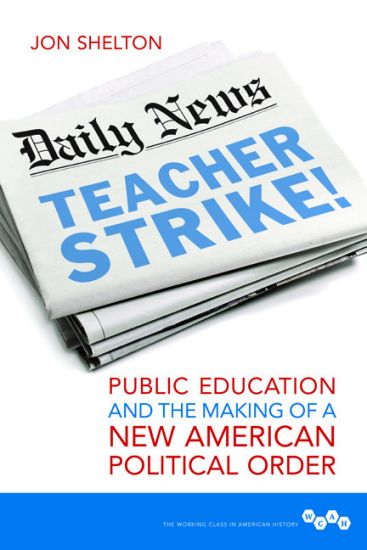
Teacher Strike!

Jon Shelton

University of Illinois Press
2017
nidottu
A wave of teacher strikes in the 1960s and 1970s roiled urban communities. Jon Shelton illuminates how this tumultuous era helped shatter the liberal-labor coalition and opened the door to the neoliberal challenge at the heart of urban education today. As Shelton shows, many working- and middle-class whites sided with corporate interests in seeing themselves as society's only legitimate, productive members. This alliance increasingly argued that public employees and the urban poor took but did not give. Drawing on a wealth of research ranging from school board meetings to TV news reports, Shelton puts readers in the middle of fraught, intense strikes in Newark, St. Louis, and three other cities where these debates and shifting attitudes played out. He also demonstrates how the labor actions contributed to the growing public perception of unions as irrelevant or even detrimental to American prosperity. Foes of the labor movement, meanwhile, tapped into cultural and economic fears to undermine not just teacher unionism but the whole of liberalism.
The Education Myth

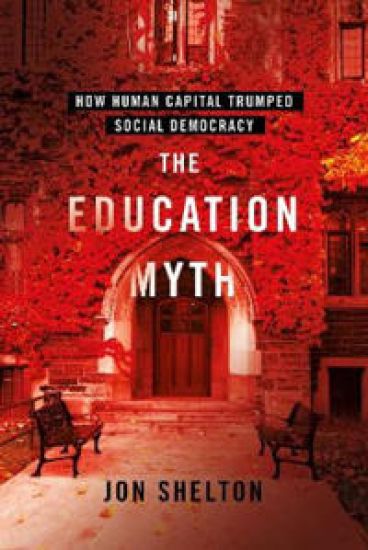
The Education Myth

Jon Shelton

CORNELL UNIVERSITY PRESS
2023
sidottu
The Education Myth questions the idea that education represents the best, if not the only, way for Americans to access economic opportunity. As Jon Shelton shows, linking education to economic well-being was not politically inevitable. In the eighteenth and nineteenth centuries, for instance, public education was championed as a way to help citizens learn how to participate in a democracy. By the 1930s, public education, along with union rights and social security, formed an important component of a broad-based fight for social democracy. Shelton demonstrates that beginning in the 1960s, the political power of the education myth choked off powerful social democratic alternatives like A. Philip Randolph and Bayard Rustin's Freedom Budget. The nation's political center was bereft of any realistic ideas to guarantee economic security and social dignity for the majority of Americans, particularly those without college degrees. Embraced first by Democrats like Lyndon Johnson, Jimmy Carter, and Bill Clinton, Republicans like George W. Bush also pushed the education myth. The result, over the past four decades, has been the emergence of a deeply inequitable economy and a drastically divided political system.