
Kirjahaku
Etsi kirjoja tekijän nimen, kirjan nimen tai ISBN:n perusteella.
11 kirjaa tekijältä Jon Stallworthy
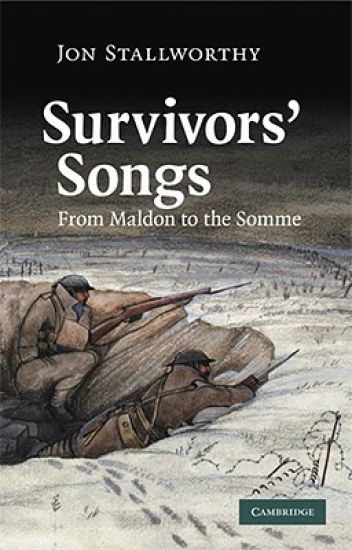
From Homer to Heaney, the voices of men and women have seldom been more piercing, more poignant, than in time of conflict. For fifty years, Jon Stallworthy has been attuned to such voices. In Survivors' Songs he explores a series of poetic encounters with war, with essays on Rupert Brooke, Siegfried Sassoon, Wilfred Owen, and others. Beautifully written, this moving book sets the poetry and prose of the First World War and its aftermath in the wider context of writing about warfare from prehistoric Troy to Anglo-Saxon England; from Agincourt to Flanders; from El Alamein to Vietnam; from the wars of yesterday to the wars of tomorrow.

From Homer to Heaney, the voices of men and women have seldom been more piercing, more poignant, than in time of conflict. For fifty years, Jon Stallworthy has been attuned to such voices. In Survivors' Songs he explores a series of poetic encounters with war, with essays on Rupert Brooke, Siegfried Sassoon, Wilfred Owen, and others. Beautifully written, this moving book sets the poetry and prose of the First World War and its aftermath in the wider context of writing about warfare from prehistoric Troy to Anglo-Saxon England; from Agincourt to Flanders; from El Alamein to Vietnam; from the wars of yesterday to the wars of tomorrow.
T S Eliot called Louis MacNeice 'a poet of genius', a poet's poet, one 'whose virtuosity can be fully appreciated only by other poets'. As his publisher, however, Eliot knew that MacNeice's work could speak to a much larger public. His Autumn Journal, published in May 1939, went through five printings during the war years, and it was to become one of the definitive poems of the 1930s.'I would have a poet,' wrote MacNeice, 'able-bodied, fond of talking, a reader of the newspapers, capable of pity and laughter, informed in economics, appreciative of women, involved in personal relationships, actively interested in politics, susceptible to physical impressions.' Knowing himself to be all of those things, modesty and a desire to demystify his calling led him to make no mention of the one all-important characteristic that distinguishes a poet: a mastery of the music and magic of language.MacNeice's mother died when he was seven, and Jon Stallworthy shows how his imagination transmuted her ghostly presence, and the powerful presence of his father, into an elemental opposition structuring most of what he would write - from anguished indictments of his native Ireland to poignant love poems. Drawing on the testimony of MacNeice's family, friends and lovers, and his extensive correspondence, Stallworthy has produced a remarkable portrait of a poet of rare energy and integrity who was also a brilliant scholar, critic, autobiographer, playwright and translator.'Jon Stallworthy's Louis MacNeice is the indispensable guide to the poetry and is written with great verve, generosity and brilliance. A moving and eloquent account of the life of the poet, as well as a superb analysis of the relationship between the life and the work, this is surely one of the great literary biographies of our time.'Jonathan Allison, editor of The Selected Letters of Louis MacNeice
This work has been selected by scholars as being culturally important and is part of the knowledge base of civilization as we know it.This work is in the public domain in the United States of America, and possibly other nations. Within the United States, you may freely copy and distribute this work, as no entity (individual or corporate) has a copyright on the body of the work.Scholars believe, and we concur, that this work is important enough to be preserved, reproduced, and made generally available to the public. To ensure a quality reading experience, this work has been proofread and republished using a format that seamlessly blends the original graphical elements with text in an easy-to-read typeface.We appreciate your support of the preservation process, and thank you for being an important part of keeping this knowledge alive and relevant.

This work has been selected by scholars as being culturally important and is part of the knowledge base of civilization as we know it.This work is in the public domain in the United States of America, and possibly other nations. Within the United States, you may freely copy and distribute this work, as no entity (individual or corporate) has a copyright on the body of the work.Scholars believe, and we concur, that this work is important enough to be preserved, reproduced, and made generally available to the public. To ensure a quality reading experience, this work has been proofread and republished using a format that seamlessly blends the original graphical elements with text in an easy-to-read typeface.We appreciate your support of the preservation process, and thank you for being an important part of keeping this knowledge alive and relevant.
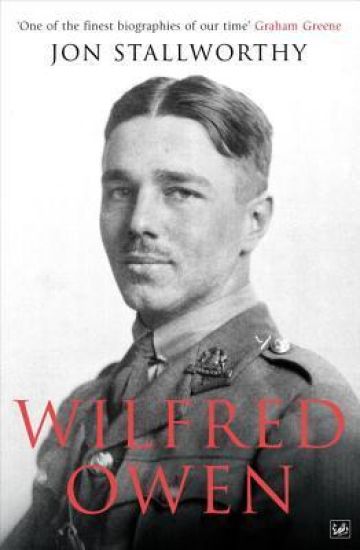
Of all the poets of the First World War, Wilfred Owen most fires the imagination today - this is the comprehensive literary biography of the greatest WW1 poetWilfred Owen tragically died in battle just a few days before the Armistice.

Body language and the body of language - from the first words in the first garden to the last words of last night's lovers - are the entwined themes of Jon Stallworthy's new collection of poems, his first since The Guest from the Future (1995), described by Poetry Review as 'snatches of radio traffic from this century's storms, true stories ...and some of the storytelling inspired'. The centrepiece of the book is 'Skyhorse', an ambitious poem that finds the White Horse on the Berkshire Downs an enduring presence through three millennia of English history.