Kirjojen hintavertailu. Mukana 11 699 587 kirjaa ja 12 kauppaa.

Kirjahaku

Etsi kirjoja tekijän nimen, kirjan nimen tai ISBN:n perusteella.

8 kirjaa tekijältä Jonah Raskin

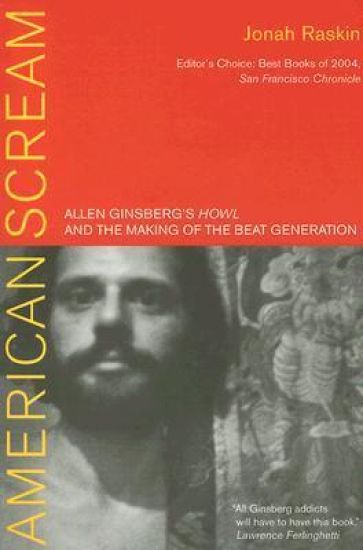
American Scream

American Scream

Jonah Raskin

University of California Press
2006
pokkari
Written as a cultural weapon and a call to arms, Howl touched a raw nerve in Cold War America and has been controversial from the day it was first read aloud nearly fifty years ago. This first full critical and historical study of Howl brilliantly elucidates the nexus of politics and literature in which it was written and gives striking new portraits of Allen Ginsberg, Jack Kerouac, and William Burroughs. Drawing from newly released psychiatric reports on Ginsberg, from interviews with his psychiatrist, Dr. Philip Hicks, and from the poet's journals, "American Scream" shows how Howl brought Ginsberg and the world out of the closet of a repressive society. It also gives the first full accounting of the literary figures - Eliot, Rimbaud, and Whitman - who influenced Howl, definitively placing it in the tradition of twentieth-century American poetry for the first time. As he follows the genesis and the evolution of Howl, Jonah Raskin constructs a vivid picture of a poet and an era. He illuminates the development of Beat poetry in New York and San Francisco in the 1950s - focusing on historic occasions such as the first reading of Howl at Six Gallery in San Francisco in 1955 and the obscenity trial over the poem's publication. He looks closely at Ginsberg's life, including his relationships with his parents, friends, and mentors, while he was writing the poem and uses this material to illuminate the themes of madness, nakedness, and secrecy that pervade Howl. A captivating look at the cultural climate of the Cold War and at a great American poet, "American Scream" finally tells the full story of Howl--a rousing manifesto for a generation and a classic of twentieth-century literature.

Field Days

Field Days

Jonah Raskin

University of California Press
2010
pokkari
'Sooner or later, nearly everyone who cares about wine and food comes to Sonoma' - so begins this lively excursion to a spectacular region that has become known internationally as a Locavore's paradise. Part memoir, part vivid reportage, "Field Days" chronicles the renaissance in farming organically and eating locally that is unfolding in Northern California. Jonah Raskin tells of the year he spent on Oak Hill Farm - working the fields, selling produce at farmers' markets, and following it to restaurants. He also goes behind the scenes at Whole Foods. In this luminous account of his experiences, Raskin introduces a dynamic cast of characters - farmers, chefs, winemakers, farm workers, and environmentalists. They include such luminaries as: Warren Weber at Star Route Farm, the oldest certified organic farm in Marin County; Bob Cannard, who has supplied Chez Panisse with vegetables for decades; Sharon Grossi, the owner of the largest organic farm in Sonoma; and, Craig Stoll, the founder and executive chef at Delfina in San Francisco. Raskin also offers portraits of renowned historical figures, including Luther Burbank, Jack London, and M.F.K. Fisher. "Field Days" is a heartfelt celebration of the farm-to-table movement and its cultural reverberations.
The Mythology of Imperialism

The Mythology of Imperialism

Jonah Raskin

Monthly Review Press,U.S.
2009
nidottu
"We, the readers and students of literature, have been hijacked. The literary critics, our teachers, those assassins of culture, have put us up against the wall and held us captive." So begins Jonah Raskin's The Mythology of Imperialism. When first published in 1971, this book was nothing short of a call to arms, an open revolt against the literary establishment. In his critique of five well-known British writers--Joseph Conrad, Rudyard Kipling, D. H. Lawrence, E. M. Forster, and Joyce Cary--Raskin not only developed the model for a revolutionary anti-imperialist criticism, but, through this book's influence on Edward Said, helped usher in the field of postcolonial studies.Nearly four decades later, The Mythology of Imperialism is all the more relevant. Its readings of British literature still offer bold and original insight into the relationship between text, artist, and historical context. But, perhaps more crucially, this book sends a revolutionary message to all readers and students of literature. Against much of today's postcolonialism--diluted by postmodern obfuscation and largely detached from its historical roots--Raskin locates the center of his anti-imperialist criticism in the anti-imperialist struggle itself and takes his cues not from "the assassins of culture" in the academy but from the national liberation movements of his time.Written with absorbing passion and machete-sharp analysis, this new edition of The Mythology of Imperialism includes the original text, a new introduction and afterword by the author, and a preface by Bruce Robbins.
The Mythology of Imperialism

The Mythology of Imperialism

Jonah Raskin

Monthly Review Press,U.S.
2009
sidottu
"We, the readers and students of literature, have been hijacked. The literary critics, our teachers, those assassins of culture, have put us up against the wall and held us captive." So begins Jonah Raskin's The Mythology of Imperialism. When first published in 1971, this book was nothing short of a call to arms, an open revolt against the literary establishment. In his critique of five well-known British writers--Joseph Conrad, Rudyard Kipling, D. H. Lawrence, E. M. Forster, and Joyce Cary--Raskin not only developed the model for a revolutionary anti-imperialist criticism, but, through this book's influence on Edward Said, helped usher in the field of postcolonial studies.Nearly four decades later, The Mythology of Imperialism is all the more relevant. Its readings of British literature still offer bold and original insight into the relationship between text, artist, and historical context. But, perhaps more crucially, this book sends a revolutionary message to all readers and students of literature. Against much of today's postcolonialism--diluted by postmodern obfuscation and largely detached from its historical roots--Raskin locates the center of his anti-imperialist criticism in the anti-imperialist struggle itself and takes his cues not from "the assassins of culture" in the academy but from the national liberation movements of his time.Written with absorbing passion and machete-sharp analysis, this new edition of The Mythology of Imperialism includes the original text, a new introduction and afterword by the author, and a preface by Bruce Robbins.
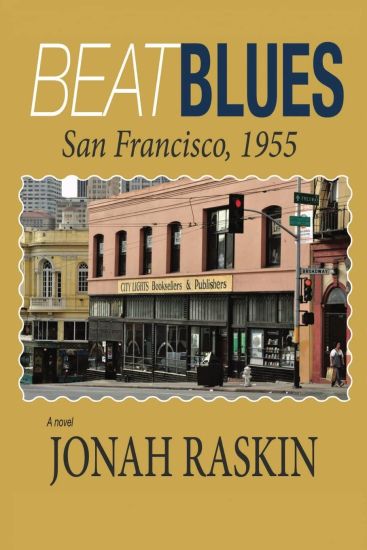
Beat Blues

Beat Blues

Jonah Raskin

Cool Grove Press
2021
pokkari
Part road novel and part reality-inspired fiction, BEAT BLUES: San Francisco, 1955 explores a time and a place when the American counterculture was born, southern racism was exposed, and the Cold War began to thaw with the publication of Ginsberg's Howl, Kerouac's On the Road, Ferlinghetti's A Coney Island of the Mind, Bob Kaufman's Abomunist Manifesto and the magazine "Beatitude." BEAT BLUES takes readers behind the scenes at Lawrence Ferlinghetti's City Lights Bookstore and into the enclaves of San Francisco where bohemians, artists and hipsters dig jazz greats and rub shoulders with Gregory Corso, Nelson Algren and Simone de Beauvoir. "A well-woven spy novel set in the seething, influential Beat Generation milieu of San Francisco, 1955. Raskinhas done his research. When he has Jack Kerouac, Allen Ginsberg, Bob Kaufman, Lawrence Ferlinghetti, Shig Murao and Gregory Corso speak, the results are in the ballpark of reality. He's good at depicting the moilinglives of Beat era figures, such as the tragic Natalie Jackson, featured in Kerouac's The Dharma Bums. The novel skillfully blends activities of the burgeoning Civil Rights movement into the liberation-loving Beat era." -Ed SandersRendezvous with Allen Ginsberg, Jack Kerouac, Bob Kaufman, Neal Cassady and their near constant companion, Natalie Jackson, all of them on the border that divides anonymity from notoriety and madness from sanity. Beat Blues observes the Beat phenomena through the eyes of Norman de Haan, an ex-New Yorker and a veteran of World War II, who moves back and forth from North Beach to the Black neighborhood in the Fillmore District, where the Civil Rights movement reverberates and the characters mourn the murder of Emmett Till.