Kirjojen hintavertailu. Mukana 11 244 527 kirjaa ja 12 kauppaa.

Kirjahaku

Etsi kirjoja tekijän nimen, kirjan nimen tai ISBN:n perusteella.

24 kirjaa tekijältä Jonathan Bate

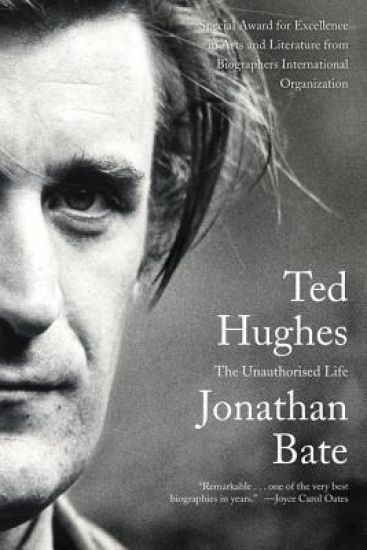
Ted Hughes

Ted Hughes

Jonathan Bate

Harpercollins Publishers
2016
pokkari
SHORTLISTED FOR THE 2015 SAMUEL JOHNSON PRIZE â??Gripping and at times ineffably sad, this book would be poetic even without the poetry. It will be the standard biography of Ted Hughes for a long time to comeâ?? Sunday Times â??Seldom has the life of a writer rattled along with such furious activity â?¦ A moving, fascinating biographyâ?? The Times
Radical Wordsworth

Radical Wordsworth

Jonathan Bate

William Collins
2021
nidottu
A Times and Sunday Times Best Book of 2020 ‘Radical Wordsworth deserves to take its place as the finest modern introduction to his work, life and impact’ Financial Times ‘Richly repays reading … It is hard to think of another poet who has changed our world so much’ Sunday Times A dazzling new biography of Wordsworth’s radical life as a thinker and poetical innovator, published to mark the 250th anniversary of his birth. William Wordsworth wrote the first great poetic autobiography. We owe to him the idea that places of outstanding natural beauty should become what he called ‘a sort of national property’. He changed forever the way we think about childhood, about the sense of the self, about our connection to the natural environment, and about the purpose of poetry. He was born among the mountains of the English Lake District. He walked into the French Revolution, had a love affair and an illegitimate child, before witnessing horrific violence in Paris. His friendship with Samuel Taylor Coleridge was at the core of the Romantic movement. As he retreated from radical politics and into an imaginative world within, his influence would endure as he shaped the ideas of thinkers, writers and activists throughout the nineteenth century in both Britain and the United States. This wonderful book opens what Wordsworth called ‘the hiding places of my power’. W. H. Auden once wrote that ‘Poetry makes nothing happen’. He was wrong. Wordsworth’s poetry changed the world. Award-winning biographer and critic Jonathan Bate tells the story of how it happened.
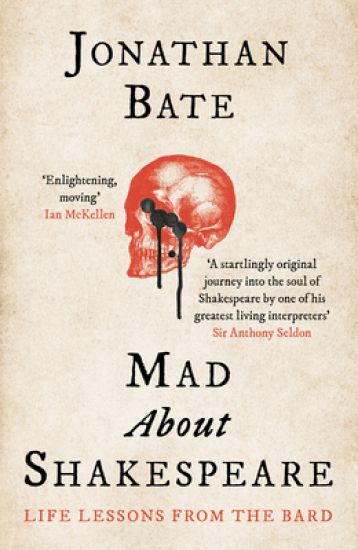
Mad about Shakespeare

Mad about Shakespeare

Jonathan Bate

HARPERCOLLINS PUBLISHERS
2023
nidottu
‘Enlightening, moving’ SIR IAN MCKELLEN From the acclaimed and bestselling biographer Jonathan Bate, a luminous new exploration of Shakespeare and how his themes can untangle comedy and tragedy, learning and loving in our modern lives. ‘The web of our life is of a mingled yarn, good and ill together.’ How does one survive the death of a loved one, the mess of war, the experience of being schooled, of falling in love, of growing old, of losing your mind? Shakespeare’s world is never too far different from our own ‘permeated with the same tragedies, the same existential questions and domestic worries. In this extraordinary book, Jonathan Bate brings then and now together. He investigates moments of his own life – losses and challenges – and asks whether, if you persevere with Shakespeare, he can offer a word of wisdom or a human insight for any time or any crisis. Along the way we meet actors such as Judi Dench and Simon Callow, and writers such as Dr Johnson, John Keats, Virginia Woolf and Sylvia Plath, who turned to Shakespeare in their own dark times. This is a personal story about loss, the black dog of depression, unexpected journeys and the very human things that echo through time, resonating with us all at one point or another.
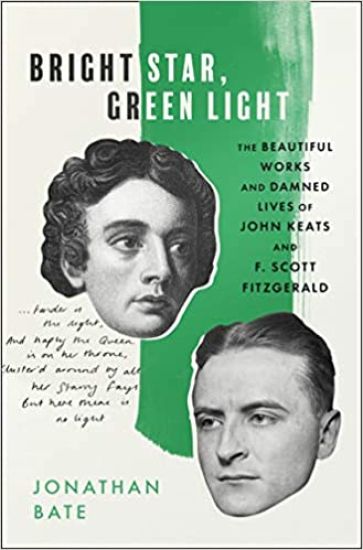
Bright Star, Green Light

Bright Star, Green Light

Jonathan Bate

William Collins
2021
sidottu
A dazzling biography of two interwoven, tragic lives: John Keats and F. Scott Fitzgerald. ‘Highly engaging … Go now, read this book’ THE TIMES ‘For awhile after you quit Keats,’ Fitzgerald once wrote, ‘All other poetry seems to be only whistling or humming.’ John Keats died two hundred years ago, in February 1821. F. Scott Fitzgerald defined a decade that began one hundred years ago, the Jazz Age. In this biography, prizewinning author Jonathan Bate recreates these two shining, tragic lives in parallel. Not only was Fitzgerald profoundly influenced by Keats, titling Tender is the Night and other works from the poet’s lines, but the two lived with echoing fates: both died young, loved to drink, were plagued by tuberculosis, were haunted by their first love, and wrote into a new decade of release, experimentation and decadence. Luminous and vital, this biography goes through the looking glass to meet afresh two of the greatest and best-known Romantic writers in their twinned centuries.
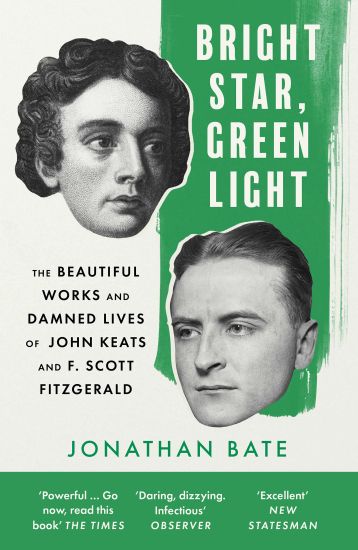
Bright Star, Green Light

Bright Star, Green Light

Jonathan Bate

William Collins
2022
nidottu
A dazzling biography of two interwoven, tragic lives: John Keats and F. Scott Fitzgerald. ‘Highly engaging … Go now, read this book’ THE TIMES ‘For awhile after you quit Keats,’ Fitzgerald once wrote, ‘All other poetry seems to be only whistling or humming.’ John Keats died two hundred years ago, in February 1821. F. Scott Fitzgerald defined a decade that began one hundred years ago, the Jazz Age. In this biography, prizewinning author Jonathan Bate recreates these two shining, tragic lives in parallel. Not only was Fitzgerald profoundly influenced by Keats, titling Tender is the Night and other works from the poet’s lines, but the two lived with echoing fates: both died young, loved to drink, were plagued by tuberculosis, were haunted by their first love, and wrote into a new decade of release, experimentation and decadence. Luminous and vital, this biography goes through the looking glass to meet afresh two of the greatest and best-known Romantic writers in their twinned centuries.
Ted Hughes: The Unauthorised Life
Ted Hughes, Poet Laureate, was one of the greatest writers of the twentieth century. He was one of Britain's most important poets, his work infused with myth; a love of nature, conservation, and ecology; of fishing and beasts in brooding landscapes.With an equal gift for poetry and prose, and with a soul as capacious as any poet in history, he was also a prolific children's writer and has been hailed as the greatest English letter-writer since John Keats. His magnetic personality and insatiable appetite for friendship, love, and life also attracted more scandal than any poet since Lord Byron. His lifelong quest to come to terms with the suicide of his first wife, Sylvia Plath, is the saddest and most infamous moment in the public history of modern poetry.Hughes left behind a more complete archive of notes and journals than any other major poet, including thousands of pages of drafts, unpublished poems, and memorandum books that make up an almost complete record of Hughes's inner life, which he preserved for posterity. Renowned scholar Jonathan Bate has spent five years in the Hughes archives, unearthing a wealth of new material. His book offers, for the first time, the full story of Hughes's life as it was lived, remembered, and reshaped in his art. It is a book that honors, though not uncritically, Hughes's poetry and the art of life-writing, approached by his biographer with an honesty answerable to Hughes's own.
Ted Hughes: The Unauthorised Life

Ted Hughes: The Unauthorised Life

Jonathan Bate

HARPER PERENNIAL
2016
nidottu
Ted Hughes, Poet Laureate, was one of the greatest writers of the twentieth century. He was one of Britain's most important poets.With an equal gift for poetry and prose, he was also a prolific children's writer and has been hailed as the greatest English letterwriter since John Keats. His magnetic personality and insatiable appetite for friendship, love, and life also attracted more scandal than any poet since Lord Byron. His lifelong quest to come to terms with the suicide of his first wife, Sylvia Plath, is the saddest and most infamous moment in the public history of modern poetry.Hughes left behind a more complete archive of notes and journals than any other major poet, including thousands of pages of drafts, unpublished poems, and memorandum books that make up an almost complete record of Hughes's inner life, which he preserved for posterity. Renowned scholar Jonathan Bate has spent five years in the Hughes archives, unearthing a wealth of new material. His book offers, for the first time, the full story of Hughes's life as it was lived, remembered, and reshaped in his art.
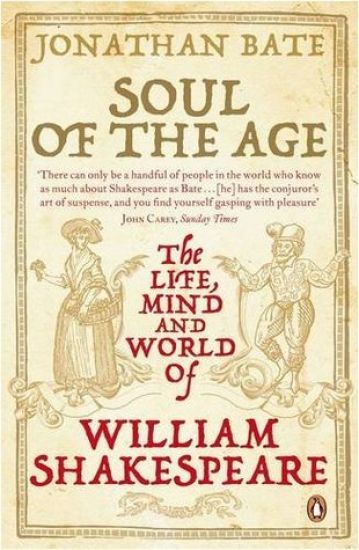
Soul of the Age

Soul of the Age

Jonathan Bate

Penguin Books Ltd
2009
pokkari
Jonathan Bate's Soul of the Age brings us closer than ever to understanding what being Shakespeare was actually like.How did plague turn Shakespeare from a jobbing hack into a courtly poet? How did Bottom's dream rewrite the Bible? How did Shakespeare's plays lead to the deaths of an earl and a king? And why was he the one dramatist of his generation never to be imprisoned?Weaving a dazzling tapestry of Elizabethan beliefs and obsessions, private passions and political intrigues, Soul of the Age leads us on an exhilarating tour of the extraordinary, colourful and often violent world that shaped and informed Shakespeare's thinking. Written by one of the world's leading experts, it combines almost everything there is to know about the man and his work in one sensational narrative.'Bate probably knows as much as any single person can know about Shakespeare ... Surprising, fresh, exhilarating, brilliant', Guardian'Intensely enjoyable ... you find yourself gasping with pleasure' John Carey, Sunday TimesJonathan Bate is Professor of Shakespeare and Renaissance Literature at the University of Warwick, chief editor of The RSC Shakespeare: Complete Works and the author of many books, including most recently John Clare: A Biography, which won the Hawthornden Prize for Literature and the James Tait Black Prize for Biography. A Fellow of the British Academy, he was awarded a CBE in 2006.
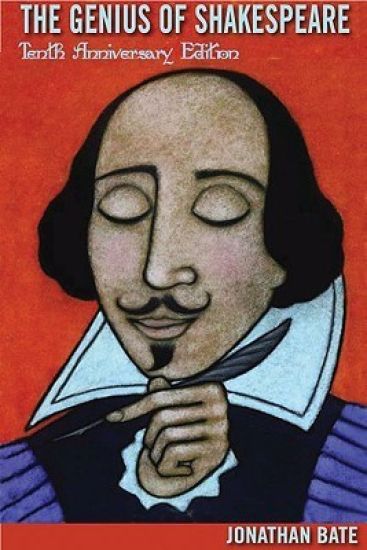
Genius of Shakespeare

Genius of Shakespeare

Jonathan Bate

Oxford University Press Inc
2008
nidottu
This fascinating book by one of Britain's most acclaimed Shakespeare scholars explores the extraordinary staying-power of the world's most famous dramatist. Bate opens by taking up questions of authorship and then goes on to trace Shakespeare's canonization and near-deification, examining not only the uniqueness of his status among English-speaking readers but also his effect on literary cultures across the globe. Ambitious, wide-ranging, and historically rich, this book shapes a provocative inquiry into the nature of genius as it ponders the legacy of a talent unequalled in English letters. A bold and meticulous work of scholarship, The Genius of Shakespeare is also lively and accessibly written and will appeal to any reader who has marveled at the Bard and the enduring power of his work. This tenth anniversary edition has a new twenty-page afterword that addresses the renewed interest in Shakespeare and recent film adaptations of his most celebrated works.
Shakespeare and the English Romantic Imagination
Although is is well known that the Romantics were obsessed with Shakespeare, extraordinarily little attention has been paid to how this affected their creative practice and their theories of the imagination. Yet Shakespeare's effect on both was crucial, as Jonathan Bate shows in this detailed study, which includes the first full critical discussions of Shakespeare and Wordsworth, and of the influence of the plays on the poetry of Blake and Coleridge. The book also offers a fresh account of Shakespeare's powerful presence in the letters and poems of Keats and Byron, and in the Romantic drama, especially in Shelley's The Cenci
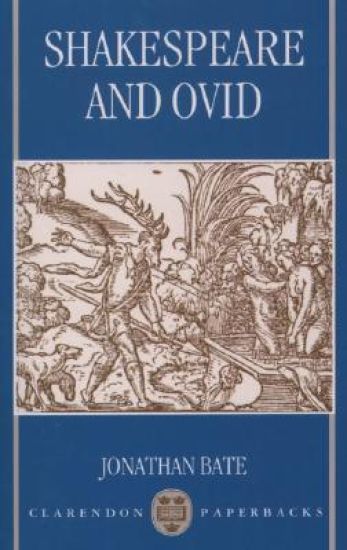
Shakespeare and Ovid

Shakespeare and Ovid

Jonathan Bate

Clarendon Press
1994
nidottu
A comprehensive account of the relationship between Shakespeare and his favourite poet, Ovid. Examining the full range of Shakespeare's works, Jonathan Bate shows how deeply creative the influence of Ovid was.
English Literature

English Literature

Jonathan Bate

Oxford University Press
2010
nidottu
Sweeping across two millennia and every literary genre, acclaimed scholar and biographer Jonathan Bate provides a dazzling introduction to English Literature. The focus is wide, shifting from the birth of the novel and the brilliance of English comedy to the deep Englishness of landscape poetry and the ethnic diversity of Britain's Nobel literature laureates. It goes on to provide a more in-depth analysis, with close readings from an extraordinary scene in King Lear to a war poem by Carol Ann Duffy, and a series of striking examples of how literary texts change as they are transmitted from writer to reader. The narrative embraces not only the major literary movements such as Romanticism and Modernism, together with the most influential authors including Chaucer, Donne, Johnson, Wordsworth, Austen, Dickens and Woolf, but also little-known stories such as the identity of the first English woman poet to be honoured with a collected edition of her works. Written with the flair and passion for which Jonathan Bate has become renowned, this book is the perfect Very Short Introduction for all readers and students of the incomparable literary heritage of these islands. ABOUT THE SERIES: The Very Short Introductions series from Oxford University Press contains hundreds of titles in almost every subject area. These pocket-sized books are the perfect way to get ahead in a new subject quickly. Our expert authors combine facts, analysis, perspective, new ideas, and enthusiasm to make interesting and challenging topics highly readable.
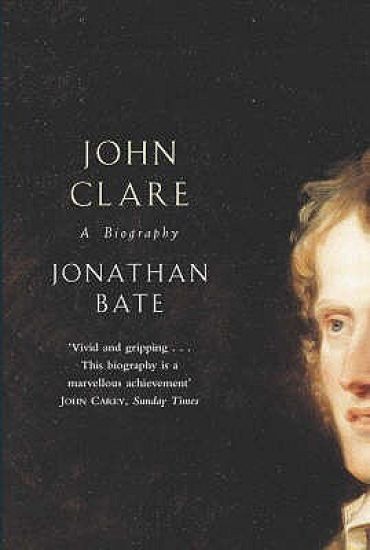
John Clare

John Clare

Jonathan Bate

Picador
2004
pokkari
‘What distinguished Clare is an unspectacular joy and a love for the inexorable one-thing-after-anotherness of the world’ Seamus Heaney John Clare (1793-1864) was a great Romantic poet, with a name to rival that of Blake, Byron, Wordsworth or Shelley – and a life to match. The ‘poet’s poet’, he has a place in the national pantheon and, more tangibly, a plaque in Westminster Abbey’s Poets’ Corner, unveiled in 1989. Here at last is Clare’s full story, from his birth in poverty and employment as an agricultural labourer, via his burgeoning promise as a writer – cultivated under the gaze of rival patrons – and moment of fame, in the company of John Keats, as the toast of literary London, to his final decline into mental illness and the last years of his life, confined in asylums. Clare’s ringing voice – quick-witted, passionate, vulnerable, courageous – emerges through extracts from his letters, journals, autobiographical writings and poems, as Jonathan Bate brings this complex man, his revered work and his ribald world, vividly to life.
Song of the Earth

Song of the Earth

Jonathan Bate

Picador
2001
pokkari
The most important critical work for decades' Bryan Appleyard, Sunday Times In the brilliantly engaging style that characterised The Genius of Shakespeare, Jonathan Bate has written a series of compelling pieces on the link between literature and the environment and why poetry matters in the new millennium. In fascinating detail, Bate explains how words like 'culture' and 'environment' have evolved since the writing of Jane Austen, Thomas Hardy and the Romantics to the present day. 'Bate presents his case with an emotional conviction which is almost impossible to resist' The Times 'Anyone familiar with Bate's The Genius of Shakespeare will know how winningly he marries erudition to liveliness' John Coldstream, Daily Telegraph 'I came away from the book deeply grateful for its impassioned song' Adam Thorpe, Sunday Telegraph
Romantic Ecology (Routledge Revivals)
First published in 1991, Romantic Ecology reassesses the poetry of William Wordsworth in the context of the abiding pastoral tradition in English Literature. Jonathan Bate explores the politics of poetry and argues that contrary to critics who suggest that the Wordsworth was a reactionary who failed to represent the harsh economic reality of his native Lake District, the poet’s politics were fundamentally ‘green’. As our first truly ecological poet, Wordsworth articulated a powerful and enduring vision of human integration with nature which exercised a formative influence on later conservation movements and is of immediate relevance to great environmental issues today. Challenging the orthodoxies of new historicist criticism, Jonathan Bate sets a new agenda for the study of Romanticism in the 1990s.
Romantic Ecology (Routledge Revivals)
First published in 1991, Romantic Ecology reassesses the poetry of William Wordsworth in the context of the abiding pastoral tradition in English Literature. Jonathan Bate explores the politics of poetry and argues that contrary to critics who suggest that the Wordsworth was a reactionary who failed to represent the harsh economic reality of his native Lake District, the poet’s politics were fundamentally ‘green’. As our first truly ecological poet, Wordsworth articulated a powerful and enduring vision of human integration with nature which exercised a formative influence on later conservation movements and is of immediate relevance to great environmental issues today. Challenging the orthodoxies of new historicist criticism, Jonathan Bate sets a new agenda for the study of Romanticism in the 1990s.
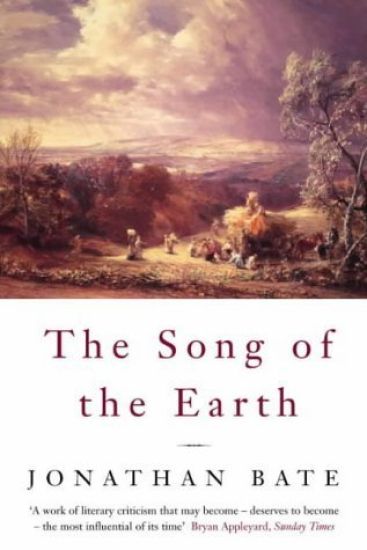
The Song of the Earth

The Song of the Earth

Jonathan Bate

HARVARD UNIVERSITY PRESS
2002
nidottu
As we enter a new millennium ruled by technology, will poetry still matter? The Song of the Earth answers eloquently in the affirmative. A book about our growing alienation from nature, it is also a brilliant meditation on the capacity of the writer to bring us back to earth, our home. In the first ecological reading of English literature, Jonathan Bate traces the distinctions among "nature," "culture," and "environment" and shows how their meanings have changed since their appearance in the literature of the eighteenth century. An intricate interweaving of climatic, topographical, and political elements poetically deployed, his book ranges from greenhouses in Jane Austen's novels to fruit bats in the poetry of Les Murray, by way of Thomas Hardy's woodlands, Dr. Frankenstein's Creature, John Clare's birds' nests, Wordsworth's rivers, Byron's bear, and an early nineteenth-century novel about an orangutan who stands for Parliament. Though grounded in the English Romantic tradition, the book also explores American, Central European, and Caribbean poets and engages theoretically with Rousseau, Adorno, Bachelard, and especially Heidegger. The model for an innovative and sophisticated new "ecopoetics," The Song of the Earth is at once an essential history of environmental consciousness and an impassioned argument for the necessity of literature in a time of ecological crisis.
How the Classics Made Shakespeare

How the Classics Made Shakespeare

Jonathan Bate

PRINCETON UNIVERSITY PRESS
2019
sidottu
From one of our most eminent and accessible literary critics, a groundbreaking account of how the Greek and Roman classics forged Shakespeare’s imaginationBen Jonson famously accused Shakespeare of having “small Latin and less Greek.” But he was exaggerating. Shakespeare was steeped in the classics. Shaped by his grammar school education in Roman literature, history, and rhetoric, he moved to London, a city that modeled itself on ancient Rome. He worked in a theatrical profession that had inherited the conventions and forms of classical drama, and he read deeply in Ovid, Virgil, and Seneca. In a book of extraordinary range, acclaimed literary critic and biographer Jonathan Bate, one of the world’s leading authorities on Shakespeare, offers groundbreaking insights into how, perhaps more than any other influence, the classics made Shakespeare the writer he became.Revealing in new depth the influence of Cicero and Horace on Shakespeare and finding new links between him and classical traditions, ranging from myths and magic to monuments and politics, Bate offers striking new readings of a wide array of the plays and poems. At the heart of the book is an argument that Shakespeare’s supreme valuation of the force of imagination was honed by the classical tradition and designed as a defense of poetry and theater in a hostile world of emergent Puritanism.Rounded off with a fascinating account of how Shakespeare became our modern classic and has ended up playing much the same role for us as the Greek and Roman classics did for him, How the Classics Made Shakespeare combines stylistic brilliance, accessibility, and scholarship, demonstrating why Jonathan Bate is one of our most eminent and readable literary critics.