Kirjojen hintavertailu. Mukana 12 154 642 kirjaa ja 12 kauppaa.

Kirjahaku

Etsi kirjoja tekijän nimen, kirjan nimen tai ISBN:n perusteella.

23 kirjaa tekijältä Jonathan Culler

Barthes

Barthes

Jonathan Culler

Oxford University Press
2002
nidottu
This acclaimed short study, originally published in 1983, and now thoroughly updated, elucidates the varied theoretical contributions of Roland Barthes (1915-80), the 'incomparable enlivener of the literary mind' whose lifelong fascination was with the way people make their world intelligible. He has a multi-faceted claim to fame: to some he is the structuralist who outlined a 'science of literature', and the most prominent promoter of semiology; to others he stands not for science but pleasure, espousing a theory of literature which gives the reader a creative role. This book describes the many projects, which Barthes explored and which helped to change the way we think about a range of cultural phenomena - from literature, fashion, wrestling, and advertising to notions of the self, of history, and of nature. ABOUT THE SERIES: The Very Short Introductions series from Oxford University Press contains hundreds of titles in almost every subject area. These pocket-sized books are the perfect way to get ahead in a new subject quickly. Our expert authors combine facts, analysis, perspective, new ideas, and enthusiasm to make interesting and challenging topics highly readable.
Literary Theory

Literary Theory

Jonathan Culler

Oxford University Press
2011
nidottu
What is literary theory? Is there a relationship between literature and culture? In fact, what is literature, and does it matter? These are some of questions addressed by Jonathan Culler in this Very Short Introduction to literary theory. Often a controversial subject, said to have transformed the study of culture and society in the past two decades, literary theory is accused of undermining respect for tradition and truth and encouraging suspicion about the political and psychological implications of cultural projects rather than admiration for great literature. Here, Jonathan Culler explains 'theory', not by describing warring 'schools' but by sketching key 'moves' theory has encouraged, and speaking directly about the implications of theory for thinking about literature, human identity, and the power of language. In this new edition Culler takes a look at new material, including the 'death of theory', the links between the theory of narrative and cognitive science, trauma theory, ecocriticism, and includes a new chapter on 'Ethics and aesthetics'. This lucid introduction is useful for anyone who has wondered what all the fuss is about or who wants to think about literature today. ABOUT THE SERIES: The Very Short Introductions series from Oxford University Press contains hundreds of titles in almost every subject area. These pocket-sized books are the perfect way to get ahead in a new subject quickly. Our expert authors combine facts, analysis, perspective, new ideas, and enthusiasm to make interesting and challenging topics highly readable.
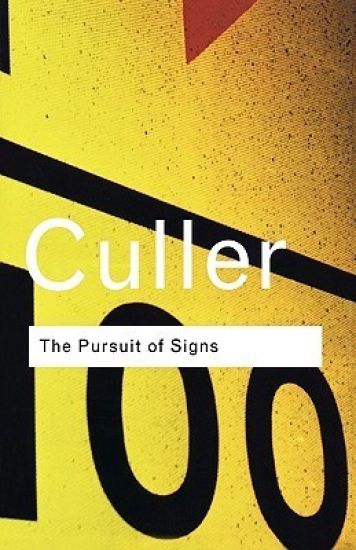
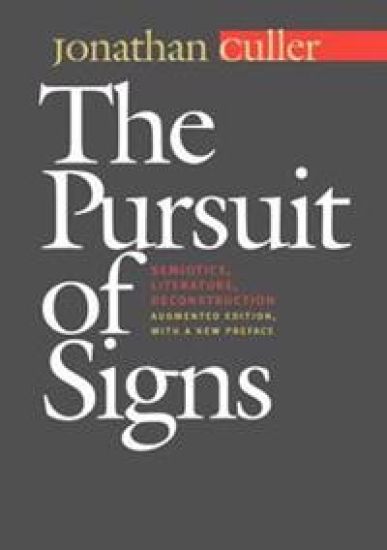
The Pursuit of Signs

The Pursuit of Signs

Jonathan Culler

Routledge
2001
nidottu
To gain a deeper understanding of the literary movement that has dominated recent Anglo-American literary criticism, The Pursuit of Signs is a must. In a world increasingly mediated, it offers insights into our ways of consuming texts that are both brilliant and bold. Dancing through semiotics, reader-response criticism, the value of the apostrophe and much more, Jonathan Culler opens up for every reader the closed world of literary criticism. Its impact on first publication, in 1981, was immense; now, as Mieke Bal notes, 'the book has the same urgency and acuity that it had then', though today it has even wider implications: 'with the interdisciplinary turn taking hold, literary theory itself, through this book, becomes a much more widespread tool for cultural analysis'.
The Pursuit of Signs

The Pursuit of Signs

Jonathan Culler

Routledge
2001
sidottu
To gain a deeper understanding of the literary movement that has dominated recent Anglo-American literary criticism, The Pursuit of Signs is a must. In a world increasingly mediated, it offers insights into our ways of consuming texts that are both brilliant and bold. Dancing through semiotics, reader-response criticism, the value of the apostrophe and much more, Jonathan Culler opens up for every reader the closed world of literary criticism. Its impact on first publication, in 1981, was immense; now, as Mieke Bal notes, 'the book has the same urgency and acuity that it had then', though today it has even wider implications: 'with the interdisciplinary turn taking hold, literary theory itself, through this book, becomes a much more widespread tool for cultural analysis'.
Structuralist Poetics

Structuralist Poetics

Jonathan Culler

Routledge
2002
sidottu
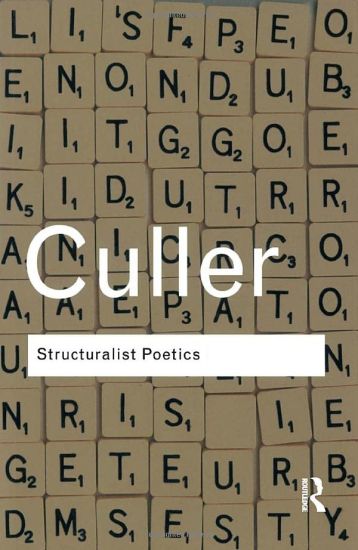
A work of technical skill as well as outstanding literary merit, Structuralist Poetics was awarded the 1975 James Russell Lowell Prize of the Modern Language Association. It was during the writing of this book that Culler developed his now famous and remarkably complex theory of poetics and narrative, and while never a populariser he nonetheless makes it crystal clear within these pages.
Structuralist Poetics

Structuralist Poetics

Jonathan Culler

Routledge
2002
nidottu
A work of technical skill as well as outstanding literary merit, Structuralist Poetics was awarded the 1975 James Russell Lowell Prize of the Modern Language Association. It was during the writing of this book that Culler developed his now famous and remarkably complex theory of poetics and narrative, and while never a populariser he nonetheless makes it crystal clear within these pages.
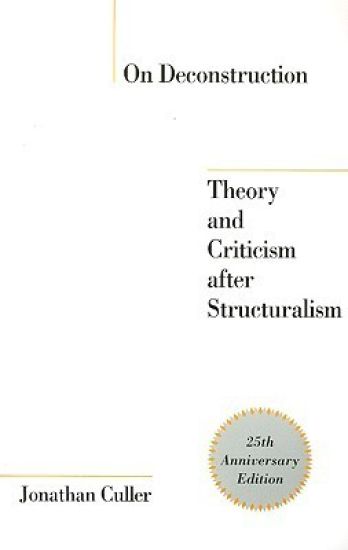
On Deconstruction

On Deconstruction

Jonathan Culler

Routledge
2008
nidottu
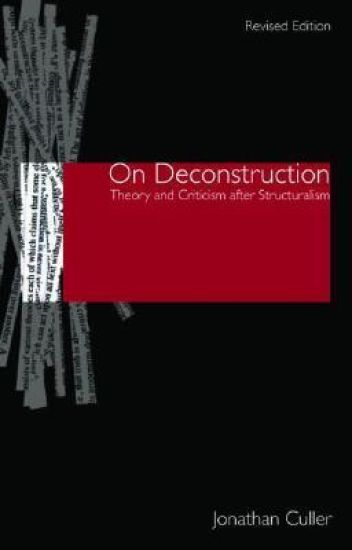
With an emphasis on readers and reading, Jonathan Culler considers deconstruction in terms of the questions raised by psychoanalytic, feminist, and reader-response criticism. On Deconstruction is both an authoritative synthesis of Derrida's thought and an analysis of the often-problematic relationship between his philosophical writings and the work of literary critics. Culler's book is an indispensable guide for anyone interested in understanding modern critical thought. This edition marks the twenty-fifth anniversary of the first publication of this landmark work and includes a new preface by the author that surveys deconstruction's history since the 1980s and assesses its place within cultural theory today.
Theory of the Lyric

Theory of the Lyric

Jonathan Culler

Harvard University Press
2017
nidottu
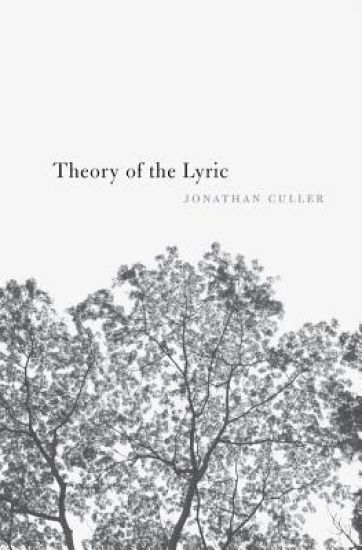
What sort of thing is a lyric poem? An intense expression of subjective experience? The fictive speech of a specifiable persona? Theory of the Lyric reveals the limitations of these two conceptions of the lyric—the older Romantic model and the modern conception that has come to dominate the study of poetry—both of which neglect what is most striking and compelling in the lyric and falsify the long and rich tradition of the lyric in the West. Jonathan Culler explores alternative conceptions offered by this tradition, such as public discourse made authoritative by its rhythmical structures, and he constructs a more capacious model of the lyric that will help readers appreciate its range of possibilities.“Theory of the Lyric brings Culler’s own earlier, more scattered interventions together with an eclectic selection from others’ work in service to what he identifies as a dominant need of the critical and pedagogical present: turning readers’ attention to lyric poems as verbal events, not fictions of impersonated speech. His fine, nuanced readings of particular poems and kinds of poems are crucial to his arguments. His observations on the workings of aspects of lyric across multiple different structures are the real strength of the book. It is a work of practical criticism that opens speculative vistas for poetics but always returns to poems.”—Elizabeth Helsinger, Critical Theory
On Deconstruction

On Deconstruction

Jonathan Culler

Cornell University Press
2008
pokkari
With an emphasis on readers and reading, Jonathan Culler considered deconstruction in terms of the questions raised by psychoanalytic, feminist, and reader-response criticism. On Deconstruction is both an authoritative synthesis of Derrida's thought and an analysis of the often-problematic relation between his philosophical writings and the work of literary critics. Culler's book is an indispensable guide for anyone interested in understanding modern critical thought. This edition marks the twenty-fifth anniversary of the first publication of this landmark work and includes a new preface by the author that surveys deconstruction's history since the 1980s and assesses its place within cultural theory today.
The Pursuit of Signs

The Pursuit of Signs

Jonathan Culler

Cornell University Press
2002
pokkari
The primary task of literary theory, Jonathan Culler asserts in the new edition of his classic in this field, is not to illuminate individual literary works but to explain the system of literary signification—the rules and conventions that determine a reader's understanding of a text and that make literary communication possible. In this wide-ranging book, he investigates the possibilities of a semiotics of literature. A new preface places The Pursuit of Signs in the context of major developments in the study of literature since publication of the original Cornell edition in 1981.
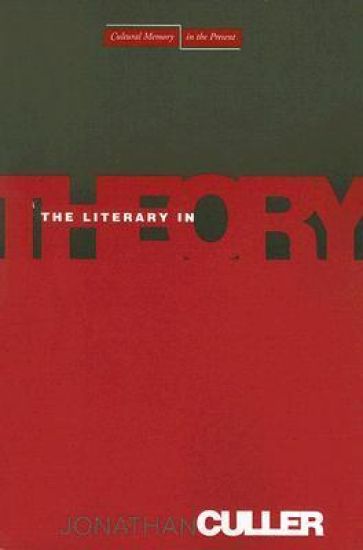
The Literary in Theory

The Literary in Theory

Jonathan Culler

Stanford University Press
2006
sidottu
Has theory neglected literature? Often literary and cultural theory, which goes by the nickname "Theory," has seemed to be the theory of everything except literature: theory of language, of sexuality, of history, of the body, of the psyche, of meaning (or meaninglessness), of politics, but not theory of literature. In this timely and wide-ranging book, Jonathan Culler, whose lucid analyses of structuralism, semiotics, and deconstruction have been prized by generations of readers, explores the place of the literary in theory. If theory has sometimes neglected literature, the literary has, Culler argues, retained a crucial if misunderstood role. Culler's account of the fortunes of the literary in theory, of the resistance to theory, and of key theoretical concepts—text, sign, interpretation, performative, and omniscience—provides valuable insight into today's theoretical debates; and his analysis of various disciplinary practices explores the possibilities of theory for the present and the future.
The Literary in Theory

The Literary in Theory

Jonathan Culler

Stanford University Press
2006
pokkari
Has theory neglected literature? Often literary and cultural theory, which goes by the nickname "Theory," has seemed to be the theory of everything except literature: theory of language, of sexuality, of history, of the body, of the psyche, of meaning (or meaninglessness), of politics, but not theory of literature. In this timely and wide-ranging book, Jonathan Culler, whose lucid analyses of structuralism, semiotics, and deconstruction have been prized by generations of readers, explores the place of the literary in theory. If theory has sometimes neglected literature, the literary has, Culler argues, retained a crucial if misunderstood role. Culler's account of the fortunes of the literary in theory, of the resistance to theory, and of key theoretical concepts—text, sign, interpretation, performative, and omniscience—provides valuable insight into today's theoretical debates; and his analysis of various disciplinary practices explores the possibilities of theory for the present and the future.
On Deconstruction

On Deconstruction

Jonathan Culler

Routledge
2015
sidottu
With an emphasis on readers and reading, Jonathan Culler considers deconstruction in terms of the questions raised by psychoanalytic, feminist, and reader-response criticism. On Deconstruction is both an authoritative synthesis of Derrida's thought and an analysis of the often-problematic relationship between his philosophical writings and the work of literary critics. Culler's book is an indispensable guide for anyone interested in understanding modern critical thought. This edition marks the twenty-fifth anniversary of the first publication of this landmark work and includes a new preface by the author that surveys deconstruction's history since the 1980s and assesses its place within cultural theory today.
On Deconstruction

On Deconstruction

Jonathan Culler

Cornell University Press
2008
sidottu
With an emphasis on readers and reading, Jonathan Culler considered deconstruction in terms of the questions raised by psychoanalytic, feminist, and reader-response criticism. On Deconstruction is both an authoritative synthesis of Derrida's thought and an analysis of the often-problematic relation between his philosophical writings and the work of literary critics. Culler's book is an indispensable guide for anyone interested in understanding modern critical thought. This edition marks the twenty-fifth anniversary of the first publication of this landmark work and includes a new preface by the author that surveys deconstruction's history since the 1980s and assesses its place within cultural theory today.
Just Being Difficult?

Just Being Difficult?

Jonathan Culler; Kevin Lamb

Stanford University Press
2003
sidottu
Is academic writing, particularly in the disciplines of literary theory and cultural studies, needlessly obscure? The claim has been widely circulated in the media and subject to passionate debate, but it has not been the subject of serious discussion. Just Being Difficult? provides learned and thoughtful analyses of the claim, of those it targets, and of the entire question of how critical writing relates to its intended publics and to audiences beyond them. In this book, a range of distinguished scholars, including some who have been charged with willful obscurity, argue for the interest and importance of some of the procedures that critics have preferred to charge with obscurity rather than confront in another way. The debate on difficult writing hovers on the edges of all academic writing that seeks to play a role in the public arena. This collection is a much-needed contribution to the discussion.
Just Being Difficult?

Just Being Difficult?

Jonathan Culler; Kevin Lamb

Stanford University Press
2003
pokkari
Is academic writing, particularly in the disciplines of literary theory and cultural studies, needlessly obscure? The claim has been widely circulated in the media and subject to passionate debate, but it has not been the subject of serious discussion. Just Being Difficult? provides learned and thoughtful analyses of the claim, of those it targets, and of the entire question of how critical writing relates to its intended publics and to audiences beyond them. In this book, a range of distinguished scholars, including some who have been charged with willful obscurity, argue for the interest and importance of some of the procedures that critics have preferred to charge with obscurity rather than confront in another way. The debate on difficult writing hovers on the edges of all academic writing that seeks to play a role in the public arena. This collection is a much-needed contribution to the discussion.
Grounds of Comparison

Grounds of Comparison

Pheng Cheah; Jonathan Culler

Routledge
2003
sidottu
Benedict Anderson, professor at Cornell and specialist in Southeast Asian studies, is best known for his book Imagined Communities: Reflections on the Origin and Spread of Nationalism (1991). It is no understatement to say that this is one of the most influential books of the last twenty years. Widely read both by social scientists and humanists, it has become an unavoidable document. For people in the humanities, Anderson is particularly interesting because he explores the rise of nationalism in connection with the rise of the novel.
Grounds of Comparison

Grounds of Comparison

Pheng Cheah; Jonathan Culler

Routledge
2003
nidottu
Benedict Anderson, professor at Cornell and specialist in Southeast Asian studies, is best known for his book Imagined Communities: Reflections on the Origin and Spread of Nationalism (1991). It is no understatement to say that this is one of the most influential books of the last twenty years. Widely read both by social scientists and humanists, it has become an unavoidable document. For people in the humanities, Anderson is particularly interesting because he explores the rise of nationalism in connection with the rise of the novel.