Kirjojen hintavertailu. Mukana 12 083 983 kirjaa ja 12 kauppaa.

Kirjahaku

Etsi kirjoja tekijän nimen, kirjan nimen tai ISBN:n perusteella.

4 kirjaa tekijältä Jonathan D. Oates

The Battle of Killiecrankie

The Battle of Killiecrankie

Jonathan D. Oates

Helion Company
2018
nidottu
There has not been an account of the first attempt made in Scotland to restore the exiled Stuarts at the end of the seventeenth century for three decades; most accounts stop with the death of the movement’s first leader, ‘Bonnie Dundee’. This book is the first full length account of the military struggle between forces loyal to the newly established Scottish government and the Jacobite cause. It does this by first considering the political and religious situation in Scotland, and to a lesser extent its southern neighbour, from the Restoration of the monarchy in 1660 to the revolution of 1688-1689, which was far more radical in Scotland than it was in England, and which produced a constituency with a grievance which a new restoration might solve. The book then turns to the initial campaigning by both armies, led by Dundee and for the government, General Hugh Mackay, a fellow Scot. With marches and counter marches being inconclusive, the possession of Blair Castle focussed attentions and led to confrontation. But before examining the ensuing battle, the book turns to the officers and men of each army, exploring who they were, their tactics, arms, equipment and organisation. The most substantial chapter is a blow by blow account of the battle of Killiecrankie, beginning with the march to conflict on the day itself, discussions over whether to fight, deployment and initial exchanges of fire. Then the crux of the battle is described, the rush of the Highlanders, the musketry of their opponents, melee and the flight and pursuit. Some of Mackay’s army stood and repelled their enemy, but by the day’s end were obliged to retreat. There is an examination of the numbers of men who fought and the casualties and other losses taken by both sides; including that of the Jacobite commander. A discussion of the battle’s aftermath and its importance then occurs. The conflict was far from over, for the Jacobite army reached its numerical high point after Dundee’s death. There was another battle to be fought that season, at Dunkeld, which was unusual for it was fought in a town. As with the previous battle, this chapter looks at the combatants involved as well as the fighting and its aftermath. The chapter also reviews the campaigning before and after the battle to take the reader until the end of the year. The penultimate chapter covers the final major military engagement of the conflict, at Cromdale, as well as numerous other lesser encounters, skirmishes and sieges, and other developments in the government’s strategy to bring peace to the Highlands. Finally, there is a chapter covering the campaign’s end; which ended with a peace treaty and then the tragedy of Glencoe, and a commentary about the ending of hostilities and the careers of a number of prominent men who fought in the campaign. The book is largely based on primary sources, both published and manuscript from record offices and libraries in London and Edinburgh. These include letters, memoirs, poems, army listings and contemporary newspapers. Recourse has also been made to studies of the battlefield archaeology and the author having walked the battlefields, one with a local expert. There is also a brief description of the battlefields as they are today.
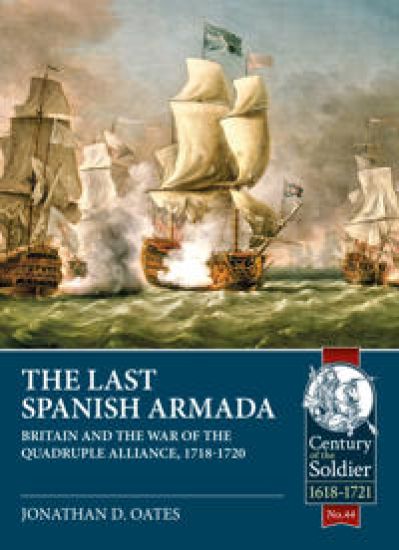
The Last Spanish Armada

The Last Spanish Armada

Jonathan D. Oates

Helion Company
2019
nidottu
Overshadowed by the better known Spanish Armada of 1588, three centuries ago, the final Spanish Armada set sail against England and Scotland. This little known invasion is often treated as part of the little known Jacobite campaign of 1719. However, this invasion and the subsequent campaign in Scotland were part of the virtually unknown War of the Quadruple Alliance. This conflict has never been hitherto covered in a book in the English language. This book is a study of war and diplomacy involving several of the European powers, with fighting on the high seas, in Scotland, Spain, Sardinia, and Sicily. It is a tale of a once great power taking advantage of apparently favourable international circumstances to regain parts of its lost empire. Success seemed possible, but the fortunes of war are fluctuating and luck only goes so far. Eventually the realities of military power reasserted themselves with bloody results. This book presents an account of this little known war. The emphasis is on Britain’s naval, diplomatic and military efforts, whilst not neglecting those of its allies and enemies, both abroad and at home. It draws on a variety of little or unused primary sources held at the National Archives and elsewhere and boasts a cast of interesting and unusual characters.
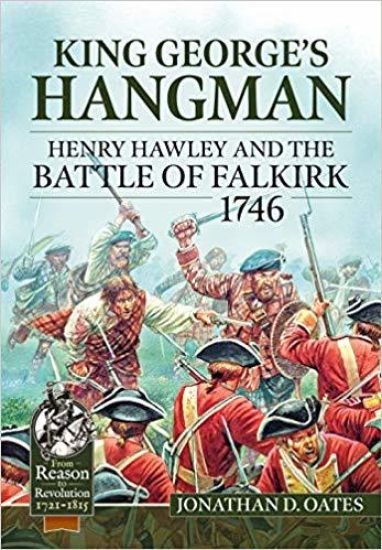
King George’s Hangman

King George’s Hangman

Jonathan D. Oates

Helion Company
2019
sidottu
‘Hangman Hawley’ is one of the villains of the ‘45 and holds a prominent place in Jacobite demonology but was also held in contempt by those who hated the Jacobite cause. He is reputed to have been a man who enjoyed hanging his own soldiers, looting from his enemies, and harrying defeated foes, yet he was defeated in the only battle that he ever held command. No one has come forward to defend his reputation. However, the Duke of Cumberland, commander in chief of the British army in the 1740s and 1750s declared him to be a highly capable cavalry officer. He certainly had the experience; being given his first command when less than ten years old and who fought in Spain, Flanders, Scotland and Germany, rising from ensign to lieutenant general, being wounded in the process. This book covers both Hawley’s professional and personal life. In both he was a figure of controversy. Many hated him – especially Jacobites and civilians – but among soldiers his reputation was more mixed. Drawing on numerous sources this is the first attempt to provide a full length study on an important and controversial figure in eighteenth century British history.
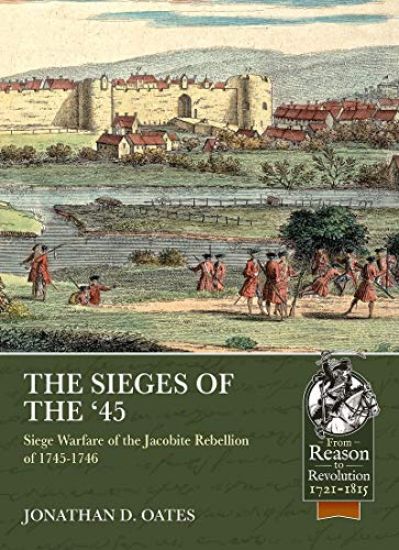
The Sieges of the '45

The Sieges of the '45

Jonathan D. Oates

Helion Company
2021
nidottu
There were more sieges than there were battles during the Jacobite campaign in Scotland and England in 1745-1746, yet no one work has concentrated on these episodes. Siege warfare was more common than set piece battles in Europe at this time and the ‘45 was no exception. There were two sieges of both Ruthven Barracks and of Carlisle, whilst the castles at Edinburgh, Blair Atholl, and Stirling were also besieged, as were the more recently-built Forts Augustus, George, and William. The government, noting the threat passed by some of the Highland clans and their allies, built a number of new forts in the Highlands from 1690 and especially after 1716 in order to contain this danger. In theory the Jacobites, with their lack of heavy artillery (save at Stirling) should have been unable to take any of these old or new garrisoned fortresses. Yet in several cases they were able to do so and the results of these sieges was never guaranteed. Conversely the British Army was forced to undertake its last siege against a fortress on British soil. This book examines the eight places which were under siege in 1745-1746, examining the history and strength of the fortress or walled town, its garrison and the strength of the attackers, along with the artillery employed by both sides. It narrates each siege, using manuscript and published contemporary sources in order to do so.