Kirjojen hintavertailu. Mukana 11 627 670 kirjaa ja 12 kauppaa.

Kirjahaku

Etsi kirjoja tekijän nimen, kirjan nimen tai ISBN:n perusteella.

14 kirjaa tekijältä Jonathan Haslam

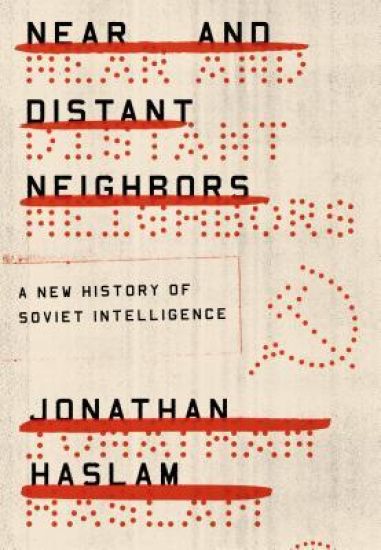
Near and Distant Neighbours

Near and Distant Neighbours

Jonathan Haslam

Oxford University Press
2015
sidottu
Near and Distant Neighbours is the first ever substantiated and complete history of Soviet intelligence. Based on a mass of newly declassified Russian secret intelligence documentation, it reveals the true story of Soviet intelligence from its very beginnings in 1917 right through to the end of the Cold War. Covering both main branches of Soviet espionage - civilian and military - Jonathan Haslam charts the full range of the Soviet intelligence effort and the story of its development: in cryptography, disinformation, special forces, and counter-intelligence. In a tragic irony, an organization that so casually disposed of others critically depended upon the human factor. Due to their lack of expertise and technological know-how, from early on the Soviets were forced to rely heavily on secret agents instead of the more sophisticated code-breaking techniques of other intelligence agencies. But in this they were highly successful, recruiting spy rings such as the infamous 'Cambridge Five' in the 1930s. Had it not been for Soviet espionage against Britain's code-breaking effort during the Second World War, Stalin might never have won the victory that later enabled him to dominate half of Europe. Similarly, espionage directed at his allies enabled the Soviets to build an atomic bomb earlier than expected and to take calculated risks in post-war diplomacy, such as his audacious blockade of Berlin which led to the Berlin Airlift. Khrushchev's denunciation of Stalin in 1956 alienated many of the foreign 'friends' so valued by the Soviet intelligence services. It also made new recruitment of foreign agents much more difficult, as the USSR rapidly lost its glamour and ideological appeal to potential supporters in the West during the 1950s. However, the gap was finally bridged through exploiting greedy and disloyal Western intelligence officers, using blackmail and bribery - and with great success. In fact, it was the ultimate irony that the KGB and GRU had never been more effective than when the Soviet Union began to collapse from within.
Russia's Cold War

Russia's Cold War

Jonathan Haslam

Yale University Press
2012
pokkari
The first history of the Cold War focusing on the Soviet dimension, based on previously inaccessible archives The phrase “Cold War” was coined by George Orwell in 1945 to describe the impact of the atomic bomb on world politics: “We may be heading not for a general breakdown but for an epoch as horribly stable as the slave empires of antiquity.” The Soviet Union, he wrote, was “at once unconquerable and in a permanent state of ‘cold war’ with its neighbors.” But as a leading historian of Soviet foreign policy, Jonathan Haslam, makes clear in this groundbreaking book, the epoch was anything but stable, with constant wars, near-wars, and political upheavals on both sides.Whereas the Western perspective on the Cold War has been well documented by journalists and historians, the Soviet side has remained for the most part shrouded in secrecy—until now. Drawing on a vast range of recently released archives in the United States, the United Kingdom, France, Germany, Russia, and Eastern Europe, Russia’s Cold War offers a thorough and fascinating analysis of East-West relations from 1917 to 1989.Far more than merely a straightforward history of the Cold War, this book presents the first account of politics and decision making at the highest levels of Soviet power: how Soviet leaders saw political and military events, what they were trying to accomplish, their miscalculations, and the ways they took advantage of Western ignorance. Russia’s Cold War fills a significant gap in our understanding of the most important geopolitical rivalry of the twentieth century.
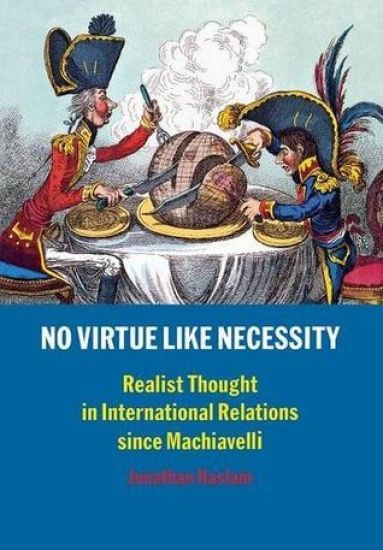
No Virtue Like Necessity

No Virtue Like Necessity

Jonathan Haslam

Yale University Press
2013
pokkari
This wide-ranging book is the first comprehensive history of the development of realist ideas in international relations throughout the last five hundred years. Jonathan Haslam focuses on the emergence and relevance of realist (or statist) thought, showing how it has shaped political thinking and international events since Machiavelli’s time. Haslam draws on an array of original texts in various European languages to illustrate the views of rulers and thinkers, to reveal how wars and other crises affected the thinking of those who experienced them, and to locate realist thinking squarely within the history of political and economic thought.The author explores four themes relating to modern era international relations: reasons of state, the balance of power, the balance of trade, and geopolitics. He contrasts realist ideas with universalist alternatives, both religious and secular, which were based on a more optimistic view of the nature of man or the nature of society. Realist thought never attained consistent predominance, Haslam demonstrates, and the struggle with universalist thought has remained an unresolved tension that can be traced throughout the evolution of international relations theory in the twentieth century.
The Soviet Union and the Threat from the East, 1933-41
This is the third in a series of volumes detailing the history of Soviet foreign policy from the Great Depression to the Great Patriotic War. It covers Soviet policy in the Far East from the Japanese rejection of a non-aggression pact in January 1933 to the conclusion of a neutrality pact in April 1941. During the course of that period the Soviet Union moved from being the vulnerable and isolated suitor to a position of negotiation from strength.
Near and Distant Neighbors: A New History of Soviet Intelligence
A uniquely comprehensive and rich account of the Soviet intelligence services, Jonathan Haslam's Near and Distant Neighbors charts the labyrinthine story of Soviet intelligence from the October Revolution to the end of the Cold War. Previous histories have focused on the KGB, leaving military intelligence and the special service--which specialized in codes and ciphers--lurking in the shadows. Drawing on previously neglected Russian sources, Haslam reveals how both were in fact crucial to the survival of the Soviet state. This was especially true after Stalin's death in 1953, as the Cold War heated up and dedicated Communist agents the regime had relied upon--Klaus Fuchs, the Rosenbergs, Donald Maclean--were betrayed. In the wake of these failures, Khrushchev and his successors discarded ideological recruitment in favor of blackmail and bribery. The tactical turn was so successful that we can draw only one conclusion: the West ultimately triumphed despite, not because of, the espionage war. In bringing to light the obscure inhabitants of an undercover intelligence world, Haslam offers a surprising and unprecedented portrayal of Soviet success that is not only fascinating but also essential to understanding Vladimir Putin's power today.
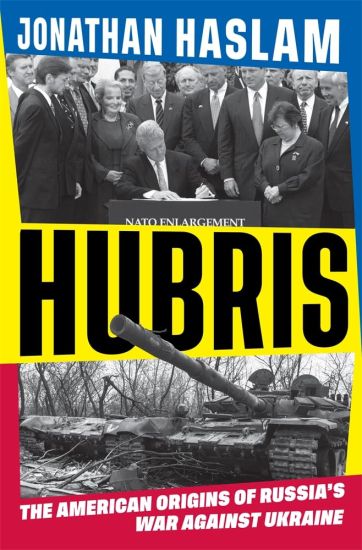
Hubris: The American Origins of Russia's War Against Ukraine
A leading expert on US-Russian relations reveals how the United States and its European allies set the course for the war in Ukraine--and offers a sobering indictment of American foreign policy since the fall of the Soviet Union. Russia's full-scale invasion of Ukraine in February 2022 should not have taken the world by surprise. The attack escalated a war that began in 2014 with the Russian annexation of Crimea, but its origins are visible as far back as the aftermath of the Cold War, when newly independent Ukraine moved to the center of tense negotiations between Russia and the West. The United States was a leading player in this drama. In fact, Jonathan Haslam argues, it was decades of US foreign policy missteps and miscalculations, unchecked and often reinforced by European allies, that laid the groundwork for the current war. Isolated, impoverished, and relegated to a second-order power on the world stage, Russia grew increasingly resentful of Western triumphalism in the wake of the Cold War. The United States further provoked Russian ire with a campaign to expand NATO into Eastern Europe--especially Ukraine, the most geopolitically important of the former Soviet republics. Determined to extend its global dominance, the United States repeatedly ignored signs that antagonizing Russia would bring consequences. Meanwhile, convinced that Ukraine was passing into the Western sphere of influence, Putin prepared to shift the European balance of power in Russia's favor. Timely and incisive, Hubris reveals the assumptions, equivocations, and grievances that have defined the West's relations with Russia since the twilight of the Soviet Union--and ensured that collision was only a matter of time.
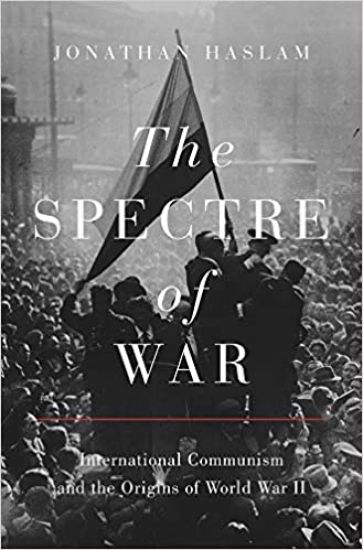
The Spectre of War

The Spectre of War

Jonathan Haslam

PRINCETON UNIVERSITY PRESS
2021
sidottu
A bold new history showing that the fear of Communism was a major factor in the outbreak of World War IIThe Spectre of War looks at a subject we thought we knew—the roots of the Second World War—and upends our assumptions with a masterful new interpretation. Looking beyond traditional explanations based on diplomatic failures or military might, Jonathan Haslam explores the neglected thread connecting them all: the fear of Communism prevalent across continents during the interwar period. Marshalling an array of archival sources, including records from the Communist International, Haslam transforms our understanding of the deep-seated origins of World War II, its conflicts, and its legacy.Haslam offers a panoramic view of Europe and northeast Asia during the 1920s and 1930s, connecting fascism’s emergence with the impact of the 1917 Bolshevik Revolution. World War I had economically destabilized many nations, and the threat of Communist revolt loomed large in the ensuing social unrest. As Moscow supported Communist efforts in France, Spain, China, and beyond, opponents such as the British feared for the stability of their global empire, and viewed fascism as the only force standing between them and the Communist overthrow of the existing order. The appeasement and political misreading of Nazi Germany and fascist Italy that followed held back the spectre of rebellion—only to usher in the later advent of war.Illuminating ideological differences in the decades before World War II, and the continuous role of pre- and postwar Communism, The Spectre of War provides unprecedented context for one of the most momentous calamities of the twentieth century.
The Spectre of War

The Spectre of War

Jonathan Haslam

PRINCETON UNIVERSITY PRESS
2022
pokkari
A bold new history showing that the fear of Communism was a major factor in the outbreak of World War IIThe Spectre of War looks at a subject we thought we knew—the roots of the Second World War—and upends our assumptions with a masterful new interpretation. Looking beyond traditional explanations based on diplomatic failures or military might, Jonathan Haslam explores the neglected thread connecting them all: the fear of Communism prevalent across continents during the interwar period. Marshalling an array of archival sources, including records from the Communist International, Haslam transforms our understanding of the deep-seated origins of World War II, its conflicts, and its legacy.Haslam offers a panoramic view of Europe and northeast Asia during the 1920s and 1930s, connecting fascism’s emergence with the impact of the 1917 Bolshevik Revolution. World War I had economically destabilized many nations, and the threat of Communist revolt loomed large in the ensuing social unrest. As Moscow supported Communist efforts in France, Spain, China, and beyond, opponents such as the British feared for the stability of their global empire, and viewed fascism as the only force standing between them and the Communist overthrow of the existing order. The appeasement and political misreading of Nazi Germany and fascist Italy that followed held back the spectre of rebellion—only to usher in the later advent of war.Illuminating ideological differences in the decades before World War II, and the continuous role of pre- and postwar Communism, The Spectre of War provides unprecedented context for one of the most momentous calamities of the twentieth century.
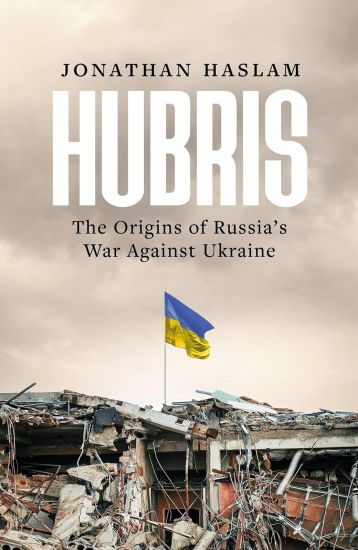
Hubris

Hubris

Jonathan Haslam

BLOOMSBURY PUBLISHING PLC
2024
sidottu
On 24 February 2022, Russia launched a full-scale invasion of Ukraine in an escalation of the Russo-Ukraine conflict that began eight years earlier. But the roots of the conflict began long before that historic date.The origins of the Russo-Ukrainian War can be traced back through a sequence of events to the early 1990s that lead us not to Russia or Ukraine, but to the other side of the Atlantic. In 1994, the White House, under President Clinton, embarked upon the expansion of NATO, urged on by the new governments of Poland, the Czech Republic and Hungary, who sought the security NATO could offer against Russia. Even at this early stage, the United States was secretly considering Ukraine for membership. When the likelihood of this emerged, President Putin of Russia made absolutely clear that this was a red line not to be crossed. But few expected the war that eventually came.In Hubris, Jonathan Haslam, one of the world’s greatest experts on Russian foreign policy and espionage, examines one of the most intractable issues of our time.
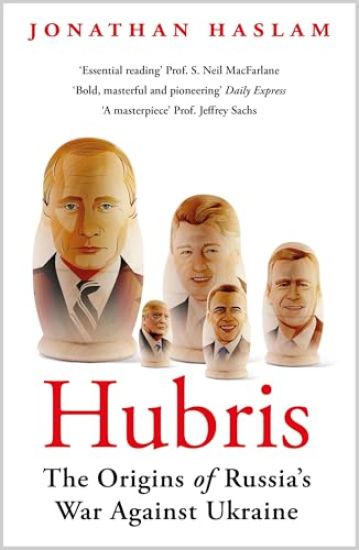
Hubris

Hubris

Jonathan Haslam

Bloomsbury Publishing (UK)
2025
nidottu
A timely and controversial examination of thirty years of diplomatic misunderstandings, roads not taken and mutual suspicion that resulted in the terrible tragedy of Russia's brutal war on Ukraine.
The Nixon Administration and the Death of Allende's Chile
In this revealing history of Allende's Chile, Jonathan Haslam uncovers the actual involvement of Cuba, the Soviet Union, and the CIA in that country's struggle for political and economic stability. The story begins by tracing the trajectory of the communist and socialist parties from the pre-war period through to the dramatic election of Salvador Allende as president of Chile in 1970, in a country long accustomed to political democracy but divided by great inequality of income. It weaves in an account of a new force linked to Castro's Cuba, and elucidates the longstanding politicization of the Chilean armed forces through mere talk of action in the early 1960s to the attempted coup d'etat of 1969 and the coup of 1973. It highlights the personal profile of Allende and his close ties to Cuba, and shows Soviet indifference to the fate of the regime during a period of emerging detente with the United States, which meant enduring isolation for this precarious socialist experiment.In this tragic tale of assisted suicide, The Nixon Administration and the Death of Allende's Chile underlines the chronic mismanagement of the economy in the drive to socialism on the back of a minority franchise. It deepens our understanding of close US involvement in attempts to block the formation of the Unidad Popular government, and how it then attempted to bring down the regime by massive subsidies to nationwide strikes, engineering a coup led by the navy behind the back even of CIA stations in Santiago.
The Vices of Integrity

The Vices of Integrity

Jonathan Haslam

Verso Books
2000
nidottu
In Edward Hallet Carr's definitive biography Jonathan Haslam paints a compelling portrait of a man torn between a vicarious identification with the romance of revolution and the ruthless realism of his own intellectual formation.