Kirjojen hintavertailu. Mukana 12 016 292 kirjaa ja 12 kauppaa.

Kirjahaku

Etsi kirjoja tekijän nimen, kirjan nimen tai ISBN:n perusteella.

6 kirjaa tekijältä Jonathan Hope

The Authorship of Shakespeare's Plays

The Authorship of Shakespeare's Plays

Jonathan Hope

Cambridge University Press
2007
pokkari
This book introduces a method for determining the authorship of Renaissance plays. Based on the rapid rate of change in English grammar in the late sixteenth- and early-seventeenth centuries, socio-historical linguistic evidence allows us to distinguish the hands of Renaissance playwrights within play texts. The present study focuses on Shakespeare: his collaborations with Fletcher and Middleton; and the apocryphal plays. Among the plays examined are Henry VIII, The Two Noble Kinsmen, Macbeth, Pericles and Sir Thomas More. The findings of the book allow us to be more confident about the divisions of the collaborative plays, and confirm the status of Edward III as a strong candidate for inclusion in the canon. Using graphs to present statistical data in a readily comprehensible form, the book also contains a wealth of information about the history of the English language during a period of rapid and far-reaching change.
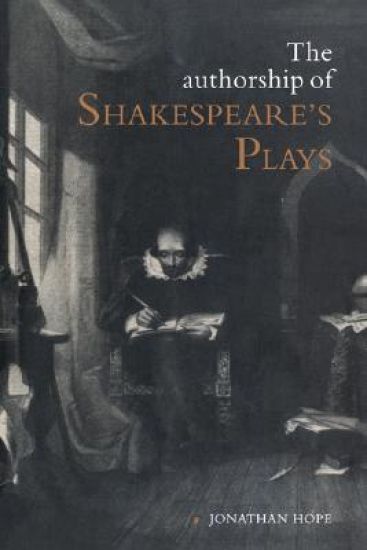
The Authorship of Shakespeare's Plays

The Authorship of Shakespeare's Plays

Jonathan Hope

Cambridge University Press
1994
sidottu
This book introduces a method for determining the authorship of Renaissance plays. Based on the rapid rate of change in English grammar in the late sixteenth- and early-seventeenth centuries, socio-historical linguistic evidence allows us to distinguish the hands of Renaissance playwrights within play texts. The present study focuses on Shakespeare: his collaborations with Fletcher and Middleton; and the apocryphal plays. Among the plays examined are Henry VIII, The Two Noble Kinsmen, Macbeth, Pericles and Sir Thomas More. The findings of the book allow us to be more confident about the divisions of the collaborative plays, and confirm the status of Edward III as a strong candidate for inclusion in the canon. Using graphs to present statistical data in a readily comprehensible form, the book also contains a wealth of information about the history of the English language during a period of rapid and far-reaching change.
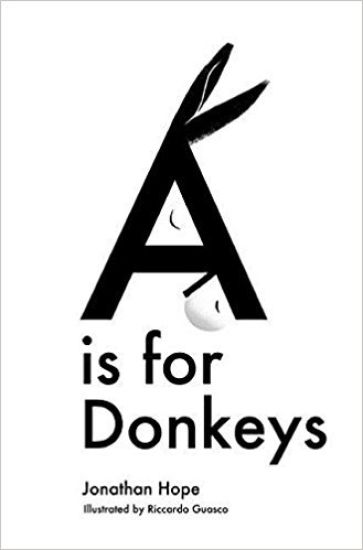
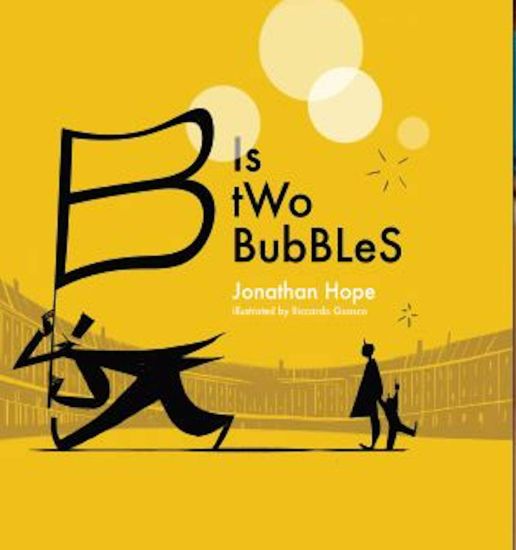
B is Two Bubbles

B is Two Bubbles

Jonathan Hope

Brown Dog Books
2020
sidottu
A is a mountain with snow on the top B is two bubbles – how soon will they pop? An alphabet book with a whimsical twist, B is Two Bubbles treats the written forms of the letters A-Z as the mischievous starting point for a colourful, daydreamy excursion. Jonathan Hope’s deft couplets are stylishly illustrated by Riccardo Guasco, with imaginative visual allusions to iconic locations in the author’s home city of Bath, England. It’s as if Winnie the Pooh were explaining how to write the letters of the alphabet. An inventive, subtly inspiring read for English language learners, linguistically-curious children and adults.
Shakespeare's Grammar

Shakespeare's Grammar

Jonathan Hope

The Arden Shakespeare
2003
sidottu
A comparative reference guide to Shakespeare's grammar, based on a complete revision of an extremely elderly but still much-cited volume, Abbott's Shakespearean Grammar, first published in 1869 and still regarded by default as an essential component of Shakespeare research. This volume meets the identified need for an authoritative and systematic grammar of Shakespeare which takes account both of current linguistic developments and of the current state of knowledge about Early Modern English and enable editors and readers both to understand and to contextualise Shakespeare's use and manipulation of language, i.e. to locate it in the context of other writings in Early Modern English.'Should be an essential reference tool not only for Shakespeare editors but for university and school teachers' ' Professor Ernst Honigmann, editor of Arden 3 Othello'...should become part of every reader's, and certainly every teacher's, arsenal of central reference books' - Ruth Morse, Shakespeare Survey
Shakespeare and Language: Reason, Eloquence and Artifice in the Renaissance
'Much drink may be said to be an equivocator with lechery: it makes him, and it mars him; it sets him on, and it takes him off; it persuades him, and disheartens him; makes him stand to, and not stand to: in conclusion, equivocates him in a sleep, and, giving him the lie, leaves him.' Porter, Macbeth, II i. Why would Elizabethan audiences find Shakespeare's Porter in Macbeth so funny? And what exactly is meant by the name the 'Weird' Sisters? Jonathan Hope, in a comprehensive and fascinating study, looks at how the concept of words meant something entirely different to Elizabethan audiences than they do to us today. In Shakespeare and Language: Reason, Eloquence and Artifice in the Renaissance, he traces the ideas about language that separate us from Shakespeare. Our understanding of 'words', and how they get their meanings, based on a stable spelling system and dictionary definitions, simply does not hold. Language in the Renaissance was speech rather than writing - for most writers at the time, a 'word' was by definition a collection of sounds, not letters - and the consequences of this run deep. They explain our culture's inability to appreciate Shakespeare's wordplay, and suggest that a rift opened up in the seventeenth century as language came to be regarded as essentially 'written'. The book also considers the visual iconography of language in the Renaissance, the influence of the rhetorical tradition, the extent to which Shakespeare's late style is driven by a desire to increase the subjective content of the text, and new ways of studying Shakespeare's language using computers. As such it will be of great interest to all serious students and teachers of Shakespeare. Despite the complexity of its subject matter, the book is accessibly written with an undergraduate readership in mind.