Kirjojen hintavertailu. Mukana 11 244 527 kirjaa ja 12 kauppaa.

Kirjahaku

Etsi kirjoja tekijän nimen, kirjan nimen tai ISBN:n perusteella.

15 kirjaa tekijältä Jonathan L. Kvanvig

Faith and Humility

Faith and Humility

Jonathan L. Kvanvig

Oxford University Press
2020
nidottu
Faith and Humility is devoted to articulating the connections between the nature and value of faith and humility. The goal is to understand faith and humility in a way that does not discriminate between religious and mundane contexts, between sacred and secular. It arises from a conviction that these two character traits are important to a flourishing life, and intimately related to each other in such a way that the presence of one demands the presence of the other. In particular, the book defends the claim that each of these virtues provides a necessary, compensating balance to the potential downside of the other virtue. The result of such an inquiry, if that inquiry is successful, will require a re-orienting of discussions surrounding faith, including debates about the relationship between faith and reason.
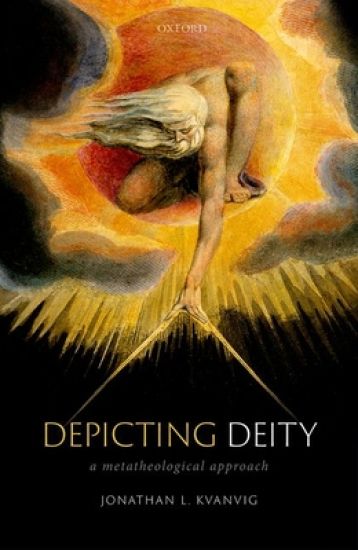
Depicting Deity

Depicting Deity

Jonathan L. Kvanvig

Oxford University Press
2021
sidottu
A theology aims to explicate the nature of God. A metatheology investigates more fundamental issues concerning how to structure such an intellectual endeavour, and where it should begin. Approaches that ignore this more fundamental investigation risk presupposing stances that do not withstand scrutiny, and perhaps would never have been endorsed if considered directly. Approaches that ignore the issue of fundamentality can also switch from one set of assumptions to another without noticing the change in perspective that results, giving rise to a chance of incoherence and an approach that is theoretically disorderly. This book begins with the more basic question of where to begin thinking about God and where it is best to start the project of theology. It does so in a way that offers some hope of a defensible metatheory from which a complete theology, displaying the kind of theoretical elegance and structure we find in our best scientific and philosophical theories, can be developed.
The Problem of Hell

The Problem of Hell

Jonathan L. Kvanvig

Oxford University Press Inc
1994
nidottu
The doctrine of hell presents the most intractable version of the problem of evil, for though it might be argued that ordinary pain and evil can somehow be compensated for by the course of future experience, the pain and suffering of hell leads nowhere. This work develops an understanding of hell that is common to a broad variety of religious perspectives, and argues that the usual understandings of hell are incapable of solving the problem of hell. Kvanvig first argues that the traditional understanding of hell found in Christianity suffers from moral and epistemological inadequacies. Historically, these shortcomings lead to alternatives to the traditional doctrine of hell, such as universalism, annihilationism, or the second chance doctrine. Kvanvig shows, however, that the typical alternatives to the traditional understanding are inadequate as well. He argues that both the traditional understanding and the typical alternatives fail to solve the problem of hell because they share the common flaw of being constructed on a retributive model of hell. Kvanvig then develops a philosophical account of hell which does not depend on a retributive model and argues that it is adequate on both philosophical and theological grounds.
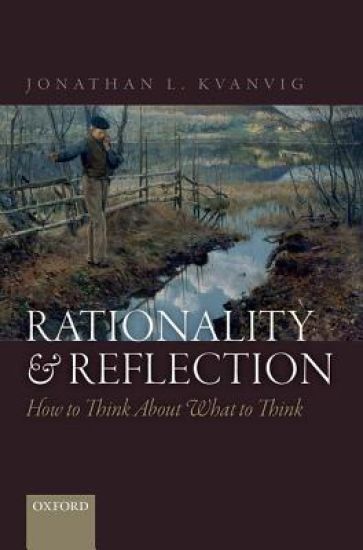
Rationality and Reflection

Rationality and Reflection

Jonathan L. Kvanvig

Oxford University Press
2014
sidottu
Jonathan L. Kvanvig presents a conception of rationality which answers to the need arising out of the egocentric predicament concerning what to do and what to believe. He does so in a way that avoids, on the one hand, reducing rationality to the level of beasts, and on the other hand, elevating it so that only the most reflective among us are capable of rational beliefs. Rationality and Reflection sets out a theory of rationality--a theory about how to determine what to think--which defends a significant degree of optionality in the story of what is reasonable for people to think, and thereby provides a framework for explaining what kinds of rational disagreement are possible. The theory is labelled Perspectivalism and it offers a unique account of rationality, one that cuts across the usual distinctions between Foundationalism and Coherentism and between Internalism and Externalism. It also differs significantly from Evidentialism, maintaining that, to the extent that rationality is connected to the notion of evidence, it is a function both of the evidence one has and what one makes of it.
Rationality and Reflection

Rationality and Reflection

Jonathan L. Kvanvig

Oxford University Press
2017
nidottu
Jonathan L. Kvanvig presents a conception of rationality which answers to the need arising out of the egocentric predicament concerning what to do and what to believe. He does so in a way that avoids, on the one hand, reducing rationality to the level of beasts, and on the other hand, elevating it so that only the most reflective among us are capable of rational beliefs. Rationality and Reflection sets out a theory of rationality--a theory about how to determine what to think--which defends a significant degree of optionality in the story of what is reasonable for people to think, and thereby provides a framework for explaining what kinds of rational disagreement are possible. The theory is labelled Perspectivalism and it offers a unique account of rationality, one that cuts across the usual distinctions between Foundationalism and Coherentism and between Internalism and Externalism. It also differs significantly from Evidentialism, maintaining that, to the extent that rationality is connected to the notion of evidence, it is a function both of the evidence one has and what one makes of it.
Faith and Humility

Faith and Humility

Jonathan L. Kvanvig

Oxford University Press
2018
sidottu
This book is devoted to articulating the connections between the nature and value of faith and humility. The goal is to understand faith and humility in a way that does not discriminate between religious and mundane contexts, between sacred and secular. It arises from a conviction that these two character traits are important to a flourishing life, and intimately related to each other in such a way that the presence of one demands the presence of the other. In particular, the book defends the claim that each of these virtues provides a necessary, compensating balance to the potential downside of the other virtue. The result of such an inquiry, if that inquiry is successful, will require a re-orienting of discussions surrounding faith, including debates about the relationship between faith and reason.
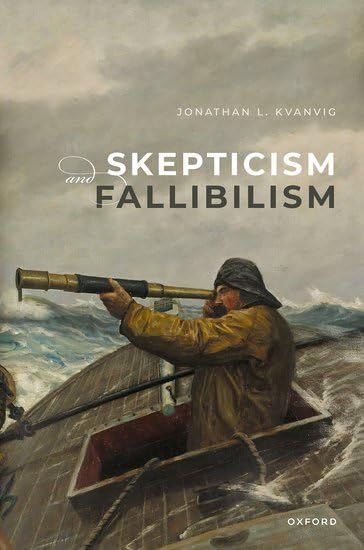
Skepticism and Fallibilism

Skepticism and Fallibilism

Jonathan L. Kvanvig

Oxford University Press
2024
sidottu
There are two common responses to skepticism, the epistemological claim that knowledge is at least non-existent and perhaps also unachievable, and both are to be avoided. So Jonathan Kvanvig argues here. The first response is to succumb to it, trying then to find some adequate basis for life that foregoes presumptions of knowledge. The second response is dismissive, viewing it as an overwrought, hyperbolic response to human limitations, so wrongheaded that nothing beyond a laconic response is needed before returning to important philosophical tasks. Avoiding these responses requires theory development on the part of skepticism and a way of characterizing sensitive fallibilism in contrast to complacent versions of it. These two tasks take up the majority of the chapters, several of which show how theory development on behalf of the skeptic needs to proceed. The hardest part of this project is to characterize the skeptical ideal for matters that we investigate through the use of defeasible reasoning, where the idea of finding an infallibilist standard looks impossible. In spite of this appearance, it is possible to characterize this ideal in terms of reasoning that puts one in full control over the possibility of error. The other task involves characterizing fallibilism in terms of this notion of full control over the possibilities of error, and then developing a version of this view that doesn't require such full control while at the same time acknowledging, predicting, and explaining how and why such full control appears whenever the language of knowledge is used. The result is an approximationist version of fallibilism that acknowledges that our knowledge is never ideal but is nonetheless close enough to the ideal to be present.
The Knowability Paradox

The Knowability Paradox

Jonathan L. Kvanvig

Clarendon Press
2006
sidottu
The paradox of knowability, derived from a proof by Frederic Fitch in 1963, is one of the deepest paradoxes concerning the nature of truth. Jonathan Kvanvig argues that the depth of the paradox has not been adequately appreciated. It has long been known that the paradox threatens antirealist conceptions of truth according to which truth is epistemic. If truth is epistemic, what better way to express that idea than to maintain that all truths are knowable? In the face of the paradox, however, such a characterization threatens to undermine antirealism. If Fitch's proof is valid, then one can be an antirealist of this sort only by endorsing the conclusion of the proof that all truths are known. Realists about truth have tended to stand on the sidelines and cheer the difficulties faced by their opponents from Fitch's proof. Kvanvig argues that this perspective is wholly unwarranted. He argues that there are two problems raised by the paradox, one that threatens antirealism about truth and the other that threatens everybody's view about truth, realist or antirealist. The problem facing antirealism has had a number of proposed solutions over the past 40 years, and the results have not been especially promising with regard to the first problem. The second problem has not even been acknowledged, however, and the proposals regarding the first problem are irrelevant to the second problem. This book thus provides a thorough investigation of the literature on the paradox, and also proposes a solution to the deeper of the two problems raised by Fitch's proof. It provides a complete picture of the paradoxicality that results from Fitch's proof, and presents a solution to the paradox that claims to address both problems raised by the original proof.
The Knowability Paradox

The Knowability Paradox

Jonathan L. Kvanvig

Oxford University Press
2008
nidottu
The paradox of knowability, derived from a proof by Frederic Fitch in 1963, is one of the deepest paradoxes concerning the nature of truth. Jonathan Kvanvig argues that the depth of the paradox has not been adequately appreciated. It has long been known that the paradox threatens antirealist conceptions of truth according to which truth is epistemic. If truth is epistemic, what better way to express that idea than to maintain that all truths are knowable? In the face of the paradox, however, such a characterization threatens to undermine antirealism. If Fitch's proof is valid, then one can be an antirealist of this sort only by endorsing the conclusion of the proof that all truths are known. Realists about truth have tended to stand on the sidelines and cheer the difficulties faced by their opponents from Fitch's proof. Kvanvig argues that this perspective is wholly unwarranted. He argues that there are two problems raised by the paradox, one that threatens antirealism about truth and the other that threatens everybody's view about truth, realist or antirealist. The problem facing antirealism has had a number of proposed solutions over the past 40 years, and the results have not been especially promising with regard to the first problem. The second problem has not even been acknowledged, however, and the proposals regarding the first problem are irrelevant to the second problem. This book thus provides a thorough investigation of the literature on the paradox, and also proposes a solution to the deeper of the two problems raised by Fitch's proof. It provides a complete picture of the paradoxicality that results from Fitch's proof, and presents a solution to the paradox that claims to address both problems raised by the original proof.

Destiny and Deliberation

Destiny and Deliberation

Jonathan L. Kvanvig

Oxford University Press
2013
nidottu
Jonathan Kvanvig presents a compelling new work in philosophical theology on the universe, creation, and the afterlife. Organised thematically by the endpoints of time, the volume begins by addressing eschatological matters--the doctrines of heaven and hell--and ends with an account of divine deliberation and creation. Kvanvig develops a coherent theistic outlook which reconciles a traditional, high conception of deity, with full providential control over all aspects of creation, with full providential control over all aspects of creation, with a conception of human beings as free and morally responsible. The resulting position and defense is labeled "Philosophical Arminianism," and deserves attention in a broad range of religious traditions.
Destiny and Deliberation

Destiny and Deliberation

Jonathan L. Kvanvig

Oxford University Press
2011
sidottu
Jonathan Kvanvig presents a compelling new work in philosophical theology on the universe, creation, and the afterlife. Organised thematically by the endpoints of time, the volume begins by addressing eschatological matters--the doctrines of heaven and hell--and ends with an account of divine deliberation and creation. Kvanvig develops a coherent theistic outlook which reconciles a traditional, high conception of deity, with full providential control over all aspects of creation, with a conception of human beings as free and morally responsible. The resulting position and defense is labeled "Philosophical Arminianism," and deserves attention in a broad range of religious traditions.
The Value of Knowledge and the Pursuit of Understanding

The Value of Knowledge and the Pursuit of Understanding

Jonathan L. Kvanvig

Cambridge University Press
2007
pokkari
Epistemology has for a long time focused on the concept of knowledge and tried to answer questions such as whether knowledge is possible and how much of it there is. Often missing from this inquiry, however, is a discussion on the value of knowledge. In The Value of Knowledge and the Pursuit of Understanding Jonathan Kvanvig argues that epistemology properly conceived cannot ignore the question of the value of knowledge. He also questions one of the most fundamental assumptions in epistemology, namely that knowledge is always more valuable than the value of its subparts. Taking Platos' Meno as a starting point of his discussion, Kvanvig tackles the different arguments about the value of knowledge and comes to the conclusion that knowledge is less valuable than generally assumed. Clearly written and well argued, this 2003 book will appeal to students and professionals in epistemology.
The Value of Knowledge and the Pursuit of Understanding

The Value of Knowledge and the Pursuit of Understanding

Jonathan L. Kvanvig

Cambridge University Press
2003
sidottu
Epistemology has for a long time focused on the concept of knowledge and tried to answer questions such as whether knowledge is possible and how much of it there is. Often missing from this inquiry, however, is a discussion on the value of knowledge. In The Value of Knowledge and the Pursuit of Understanding Jonathan Kvanvig argues that epistemology properly conceived cannot ignore the question of the value of knowledge. He also questions one of the most fundamental assumptions in epistemology, namely that knowledge is always more valuable than the value of its subparts. Taking Platos' Meno as a starting point of his discussion, Kvanvig tackles the different arguments about the value of knowledge and comes to the conclusion that knowledge is less valuable than generally assumed. Clearly written and well argued, this 2003 book will appeal to students and professionals in epistemology.
Warrant in Contemporary Epistemology

Warrant in Contemporary Epistemology

Jonathan L. Kvanvig

Rowman Littlefield
1996
sidottu
In his widely influential two-volume work, Warrant: The Current Debate and Warrant and Proper Function, Alvin Plantinga argued that warrant is that which explains the difference between knowledge and true belief. Plantinga not only developed his own account of warrant but also mapped the terrain of epistemology. Motivated by Plantinga's work, fourteen prominent philosophers have written new essays investigating Plantingian warrant and its contribution to contemporary epistemology. The resulting collection, representing a broad array of views, not only gives readers a critical perspective on Plantinga's landmark work, but also provides in one volume a clear statement of the variety of approaches to the nature of warrant within contemporary epistemology, and to the connections between epistemology and metaphysics. Positions covered include internalism and externalism, reliabilism, coherentism and foundationalism, virtue theories, and defensibility theories. Alvin Plantinga responds to the essays in his own contribution.
Warrant in Contemporary Epistemology

Warrant in Contemporary Epistemology

Jonathan L. Kvanvig

Rowman Littlefield
1996
nidottu
In his widely influential two-volume work, Warrant: The Current Debate and Warrant and Proper Function, Alvin Plantinga argued that warrant is that which explains the difference between knowledge and true belief. Plantinga not only developed his own account of warrant but also mapped the terrain of epistemology. Motivated by Plantinga's work, fourteen prominent philosophers have written new essays investigating Plantingian warrant and its contribution to contemporary epistemology. The resulting collection, representing a broad array of views, not only gives readers a critical perspective on Plantinga's landmark work, but also provides in one volume a clear statement of the variety of approaches to the nature of warrant within contemporary epistemology, and to the connections between epistemology and metaphysics. Positions covered include internalism and externalism, reliabilism, coherentism and foundationalism, virtue theories, and defensibility theories. Alvin Plantinga responds to the essays in his own contribution.