Kirjojen hintavertailu. Mukana 12 016 292 kirjaa ja 12 kauppaa.

Kirjahaku

Etsi kirjoja tekijän nimen, kirjan nimen tai ISBN:n perusteella.

11 kirjaa tekijältä Jonathan Meades

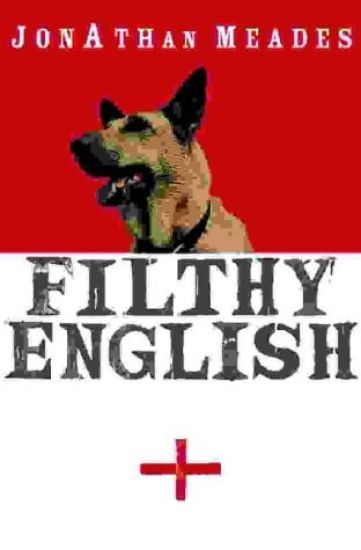
Filthy English

Filthy English

Jonathan Meades

HARPERCOLLINS PUBLISHERS
2003
pokkari
In the title story of this darkly humourous collection, a lexicographer discovers why his surname is a slang word for "foot" and a nightmarish revelation follows. In another, a dog who stars in bestial pornographic movies describes the slippery slope towards aniseed addiction.
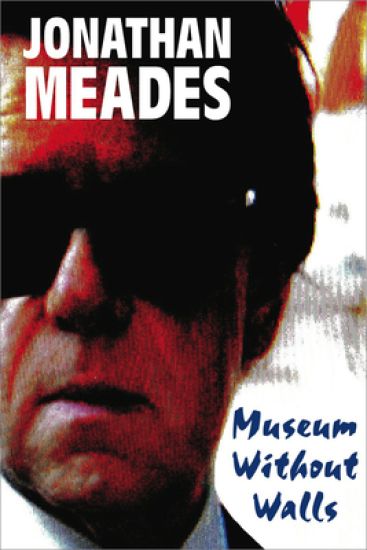
Museum Without Walls

Museum Without Walls

Jonathan Meades

Unbound
2013
pokkari
Jonathan Meades has an obsessive preoccupation with places. He has spent thirty years constructing sixty films, two novels and hundreds of pieces of journalism that explore an extraordinary range of them, from natural landscapes to man-made buildings and 'the gaps between them', drawing attention to what he calls 'the rich oddness of what we take for granted'. This book collects fifty-four pieces and six film scripts that dissolve the barriers between high and low culture, good and bad taste, deep seriousness and black comedy. Meades delivers what he calls 'heavy entertainment' – strong opinions backed up by an astonishing depth of knowledge. To read Meades on places, buildings, politics or cultural history is an exhilarating workout for the mind. He leaves you better informed, more alert, less gullible.
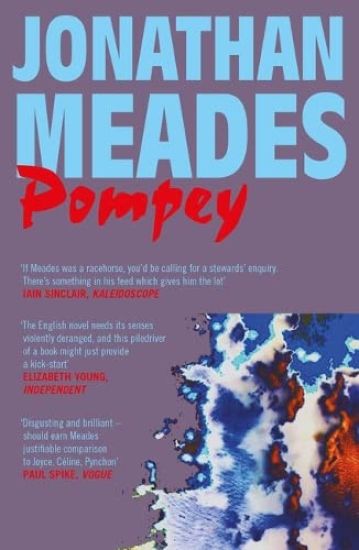
Pompey

Pompey

Jonathan Meades

Unbound
2013
pokkari
At first glance, Jonathan Meades's 1993 masterpiece Pompey is a post-war family saga set in and around the city of Portsmouth. This doesn't come close to communicating the scabrous magnificence of Meades's vision. He writes like Martin Amis on acid, creating an obscene, suppurating vision of an England in terminal decline. The story begins with Guy Vallender, a fireworks manufacturer from Portsmouth (Pompey), who has four children by different four different women. There's Poor Eddie, a feeble geek with a gift for healing; 'Mad Bantu', the son of a black prostitute, who was hopelessly damaged in the womb by an attempted abortion; Bonnie, who is born beautiful but becomes a junkie and a porn star; and finally Jean-Marie, a leather-wearing gay gerontophiliac conceived on a one-night stand in Belgium. The narrator is 'Jonathan Meades', cousin to Poor Eddie and Bonnie, who tells the story of how their strange and poisonous destinies intersect. And although there is no richer stew of perversity, voyeurism, corruption, religious extremism and curdled celebrity in all of English literature, there is also an underlying compassion and a jet-black humour which makes Pompey an important and strangely satisfying work of art. Prepare to enter the English novel's darkest ride….
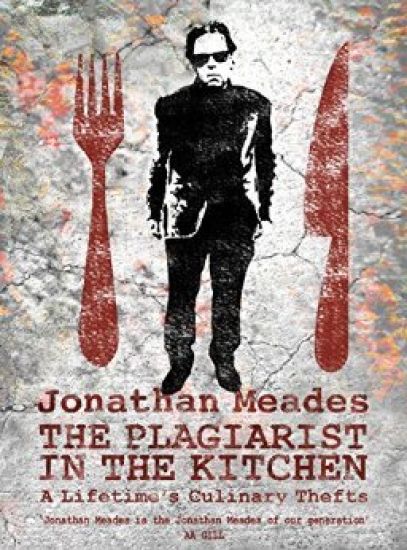
The Plagiarist in the Kitchen

The Plagiarist in the Kitchen

Jonathan Meades

Unbound
2017
sidottu
`I adore Meades's book . . . I want more of his rule-breaking irreverence in my kitchen.' New York Times`The Plagiarist in the Kitchen is hilariously grumpy, muttering at us "Don't you bastards know anything?" You can read it purely for literary pleasure, but Jonathan Meades makes everything sound so delicious that the non-cook will be moved to cook and the bad cook will cook better.' David Hare, GuardianThe Plagiarist in the Kitchen is an anti-cookbook. Best known as a provocative novelist, journalist and film-maker, Jonathan Meades has also been called `the best amateur chef in the world' by Marco Pierre White. His contention here is that anyone who claims to have invented a dish is delusional, dishonestly contributing to the myth of culinary originality.Meades delivers a polemical but highly usable collection of 125 of his favourite recipes, each one an example of the fine art of culinary plagiarism. These are dishes and methods he has hijacked, adapted, improved upon and made his own. Without assuming any special knowledge or skill, the book is full of excellent advice. He tells us why the British never got the hang of garlic. That a purist would never dream of putting cheese in a Gratin Dauphinois. That cooking brains in brown butter cannot be improved upon. And why - despite the advice of Martin Scorsese's mother - he insists on frying his meatballs.Adorned with his own abstract monochrome images (none of which `illustrate' the stolen recipes they accompany), The Plagiarist in the Kitchen is a stylish object, both useful and instructive. In a world dominated by health fads, food vloggers and over-priced kitchen gadgets, it is timely reminder that, when it comes to food, it's almost always better to borrow than to invent.
Museum Without Walls

Museum Without Walls

Jonathan Meades

Unbound
2021
pokkari
Jonathan Meades has an obsessive preoccupation with places. He has spent thirty years constructing sixty films, two novels and hundreds of pieces of journalism that explore an extraordinary range of them, from natural landscapes to man-made buildings and 'the gaps between them', drawing attention to what he calls 'the rich oddness of what we take for granted'. This book collects fifty-four pieces and six film scripts that dissolve the barriers between high and low culture, good and bad taste, deep seriousness and black comedy. Meades delivers what he calls 'heavy entertainment' – strong opinions backed up by an astonishing depth of knowledge. To read Meades on places, buildings, politics or cultural history is an exhilarating workout for the mind. He leaves you better informed, more alert, less gullible.
Pompey

Pompey

Jonathan Meades

Unbound
2021
pokkari
At first glance, Jonathan Meades's 1993 masterpiece is a post-war family saga set in and around the city of Portsmouth. This doesn't come close to communicating the scabrous magnificence of Meades's creation.Pompey is an obscene, suppurating vision of an England in terminal decline. The story begins with Guy Vallender, a fireworks manufacturer from Portsmouth, who has four children by different four different women. There's Poor Eddie, a feeble geek with a gift for healing; 'Mad Bantu', the son of a black prostitute, who was hopelessly damaged in the womb by an attempted abortion; Bonnie, who is born beautiful but becomes a junkie and a porn star; and finally Jean-Marie, a leather-wearing gay gerontophiliac conceived on a one-night stand in Belgium. The narrator is 'Jonathan Meades', cousin to Poor Eddie and Bonnie, who tells the story of how their strange and poisonous destinies intersect. And although there is no richer stew of perversity, voyeurism, corruption, religious extremism and curdled celebrity in all of English literature, there is also an underlying compassion and a jet-black humour which makes Pompey an important and strangely satisfying work of art. Prepare to enter the English novel's darkest ride…
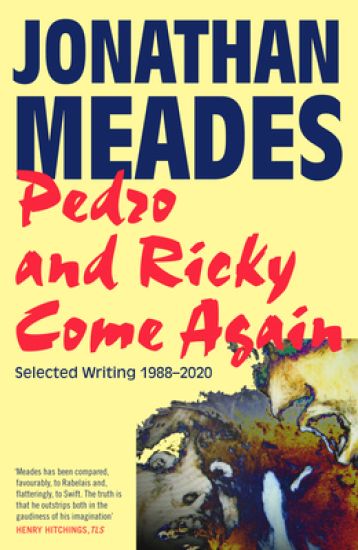
Pedro and Ricky Come Again

Pedro and Ricky Come Again

Jonathan Meades

Unbound
2021
sidottu
'Ought to become a classic. It is an enshrinement of [Meades's] intense baroque and catholic cleverness' Roger Lewis, The Times'One of the foremost prose stylists of his age in any register . . . Probably we don’t deserve Meades, a man who apparently has never composed a dull paragraph' Steven Poole, Guardian'There are more gems in this wonderful book than I could cram into a dozen of these columns' Simon Heffer, Daily Telegraph'Such a useful and important critic . . . He is very much on the reader’s side, bringing his full wit to bear on every single thing he writes' Nicholas Lezard, SpectatorThis landmark publication collects three decades of writing from one of the most original, provocative and consistently entertaining voices of our time. Anyone who cares about language and culture should have this book in their life.Thirty years ago, Jonathan Meades published a volume of reportorial journalism, essays, criticism, squibs and fictions called Peter Knows What Dick Likes. The critic James Wood was moved to write: ‘When journalism is like this, journalism and literature become one.’Pedro and Ricky Come Again is every bit as rich and catholic as its predecessor. It is bigger, darker, funnier and just as impervious to taste and manners. It bristles with wit and pin-sharp eloquence, whether Meades is contemplating northernness in a German forest or hymning the virtues of slang.From the indefensibility of nationalism and the ubiquitous abuse of the word ‘iconic’, to John Lennon’s shopping lists and the wine they call Black Tower, the work assembled here demonstrates Meades's unparalleled range and erudition, with pieces on cities, artists, sex, England, France, concrete, faith, politics, food, history and much, much more.
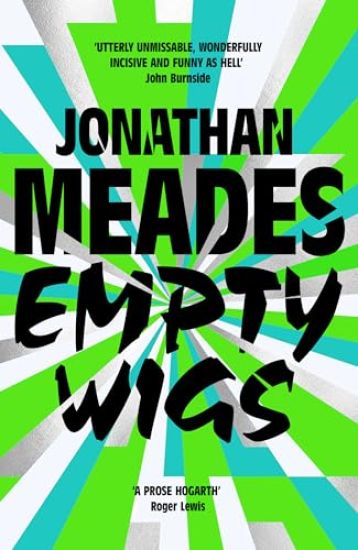
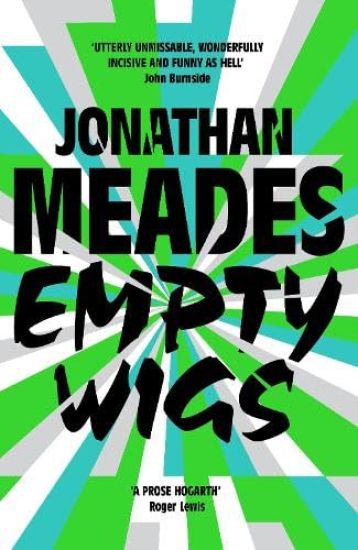
Empty Wigs

Empty Wigs

Jonathan Meades

Boundless Publishing Group Ltd
2025
sidottu
‘Go to Empty Wigs for prose that never ceases to dazzle, for an extended holiday from contemporary pieties and to disgrace yourself with laughter’ Paul Genders, Literary ReviewEmpty Wigs is a hallucinatory ride through the twentieth century that will cement Jonathan Meades as one of the great imaginative writers of our age.It moves from bloody Algiers in 1962 to the Welsh Marches in the late nineteenth century, from Lüneburg Heath to suburban southern England. Its characters are damned and doomed. They exert free will so make terrible choices. Their appetites are base. Their lives are without end. They lurch to extremes. From euthanasia to terrorism and political assassination, with secrets and betrayals, great gothic houses and pseudo-scientific experiments, Empty Wigs is a vast compendium of tales from the jungle of existence which show humankind at its most abject.Many of its stories are bleak, perverse, harrowing. Many are tragically farcical. But the writing is neon-rich, gorgeous and baroque, funny and joyfully offensive. Told through frames within frames, mazes within mazes, colliding narratives and quick changing moods, Empty Wigs is a late modern masterpiece and a return to the novel’s origins.'Loudly immoral, deafeningly well written and indiscriminately offensive, Meades’s novel is a breath of filthy air in a puritanical age' Cosmo Adair, The Times'Meades finds the mot juste, the striking reference, to complete every brilliant line. Is it all a bit too much? Reader, it is' Stephen Smith, Observer'A head-spinning turn that can quicken from high farce into deep seriousness, vaulting across time and space' Chris Harvey, Daily Telegraph
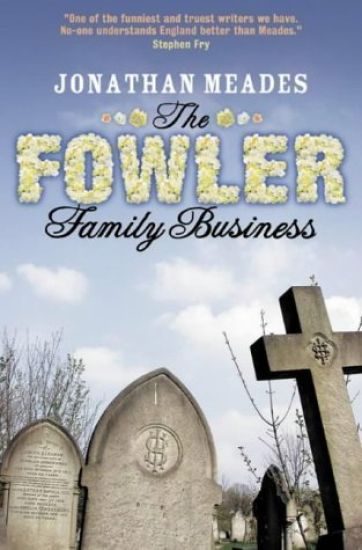
Fowler Family Business

Fowler Family Business

Jonathan Meades

HARPERCOLLINS PUBLISHERS
2003
pokkari
'One of the funniest and truest writers we have. No one understands England better than Meades.' Stephen Fry An inventively nasty, gruesomely comic paean to the sylvan heights of Forest Hill and Upper Norwood, a warped map of the death trade's quotidian strangeness.
Empty Wigs

Empty Wigs

Jonathan Meades

Wilton Square Books
2026
pokkari
‘Go to Empty Wigs for prose that never ceases to dazzle, for an extended holiday from contemporary pieties and to disgrace yourself with laughter’ Paul Genders, Literary Review Empty Wigs is a hallucinatory ride through the twentieth century that will cement Jonathan Meades as one of the great imaginative writers of our age. It moves from bloody Algiers in 1962 to the Welsh Marches in the late nineteenth century, from Lüneburg Heath to suburban southern England. Its characters are damned and doomed. They exert free will so make terrible choices. Their appetites are base. Their lives are without end. They lurch to extremes. From euthanasia to terrorism and political assassination, with secrets and betrayals, great gothic houses and pseudo-scientific experiments, Empty Wigs is a vast compendium of tales from the jungle of existence which show humankind at its most abject. Many of its stories are bleak, perverse, harrowing. Many are tragically farcical. But the writing is neon-rich, gorgeous and baroque, funny and joyfully offensive. Told through frames within frames, mazes within mazes, colliding narratives and quick changing moods, Empty Wigs is a late modern masterpiece and a return to the novel’s origins. ‘Loudly immoral, deafeningly well written and indiscriminately offensive, Meades’s novel is a breath of filthy air in a puritanical age’ Cosmo Adair, The Times ‘Meades finds the mot juste, the striking reference, to complete every brilliant line. Is it all a bit too much? Reader, it is’ Stephen Smith, The Observer ‘A head-spinning turn that can quicken from high farce into deep seriousness, vaulting across time and space’ Chris Harvey, Daily Telegraph