Kirjojen hintavertailu. Mukana 11 342 296 kirjaa ja 12 kauppaa.

Kirjahaku

Etsi kirjoja tekijän nimen, kirjan nimen tai ISBN:n perusteella.

7 kirjaa tekijältä Jonathan Porter

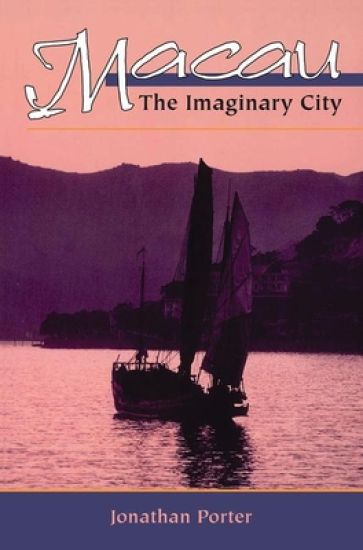
Macau

Macau

Jonathan Porter

Routledge
2019
sidottu
In this evocative essay on the cultural and social history of a unique and fragile city, Jonathan Porter examines Macau as an enduring but ever-changing threshold between two worlds, the West and China. Founded by the Portuguese in 1557, Macau emerged as a vibrant commercial and cultural hub in the early seventeenth century. The city then gradually
Macau

Macau

Jonathan Porter

Westview Press Inc
1999
nidottu
"For many people who have encountered it, Macau makes a deep impression on the imagination, as if the city were not entirely real or, rather, not of the real world. Macau often seems dreamlike, as though it were sustained by the effort of some powerful imagination." In this evocative essay on the cultural and social history of a unique and fragile city, Jonathan Porter examines Macau as an enduring but ever-changing threshold between East and West. Founded by the Portuguese in 1557, Macau emerged as a vibrant commercial and cultural hub in the early seventeenth century. The city then gradually evolved, flourishing first as a Eurasian community in the eighteenth century and then as an increasingly Chinese city in the nineteenth century. Macau became a modern manufacturing center in the late twentieth century and is now destined for reversion to the People’s Republic of China in 1999. The city was the meeting ground for many cultures, but central to this fascinating story is the encounter between an expansive, seaborne Portuguese empire and the introspective, closed world of imperial China. Unlike the other great colonial port cities of Asia, Macau did not provide natural access to the hinterland, and this geographical and historical isolation has fostered a unique balance of cultural influences that survives to this day. Poised on the periphery of two worlds, an isolated but global crossroads, Macau is a unique cultural and social melange that illuminates crucial issues of cross-cultural exchange in world history. Establishing Portugal and China as distinct cultural archetypes, Porter then examines the subsequent encounters of East and West in Macau from the sixteenth to the twentieth century. Avoiding the traditional linear chronological approach, Porter instead looks at a series of images from the city’s history and culture, including its place in the geographical context of the South China coast; the architecture of Macau, which reflects the memories of its historical passages; the variety of people who crossed the threshold of Macau; the material culture of everyday life; and the spiritual topography resulting from the encounters of popular religious movements in Macau. Jonathan Porter concludes his literary journey by reflecting on the character and meaning of the many cultural and social influences that have met and mingled in Macau. His words and photographs eloquently capture the essence of a place that seems too ephemeral to be real, too captivating to be anything but an imaginary city.
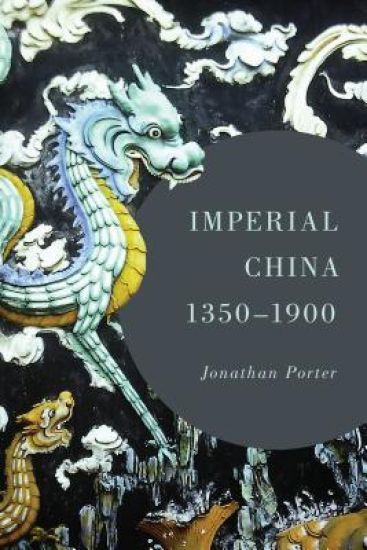
Imperial China, 1350–1900

Imperial China, 1350–1900

Jonathan Porter

Rowman Littlefield
2016
sidottu
This clear and engaging book provides a concise overview of the Ming-Qing epoch (1368–1912), China’s last imperial age. Beginning with the end of the Mongol domination of China in 1368, this five-century period was remarkable for its continuity and stability until its downfall in the Revolution of 1911. Viewing the Ming and Qing dynasties as a coherent era characterized by the fruition of diverse developments from earliest times, Jonathan Porter traces the growth of imperial autocracy, the role of the educated Confucian elite as custodians of cultural authority, the significance of ritual as the grounding of political and social order, the tension between monarchy and bureaucracy in political discourse, the evolution of Chinese cultural identity, and the perception of the “barbarian” and other views of the world beyond China. As the climax of traditional Chinese history and the harbinger of modern China in the twentieth century, Porter argues that imperial China must be explored for its own sake as well as for the essential foundation it provides in understanding contemporary China, and indeed world history writ large.
Imperial China, 1350–1900

Imperial China, 1350–1900

Jonathan Porter

Rowman Littlefield
2016
nidottu
This clear and engaging book provides a concise overview of the Ming-Qing epoch (1368–1912), China’s last imperial age. Beginning with the end of the Mongol domination of China in 1368, this five-century period was remarkable for its continuity and stability until its downfall in the Revolution of 1911. Viewing the Ming and Qing dynasties as a coherent era characterized by the fruition of diverse developments from earliest times, Jonathan Porter traces the growth of imperial autocracy, the role of the educated Confucian elite as custodians of cultural authority, the significance of ritual as the grounding of political and social order, the tension between monarchy and bureaucracy in political discourse, the evolution of Chinese cultural identity, and the perception of the “barbarian” and other views of the world beyond China. As the climax of traditional Chinese history and the harbinger of modern China in the twentieth century, Porter argues that imperial China must be explored for its own sake as well as for the essential foundation it provides in understanding contemporary China, and indeed world history writ large.
Willy Want More

Willy Want More

Jonathan Porter

Xlibris Us
2019
pokkari
Jonathan Porter has always been artistically inclined wanting to find some positive medium in which to use his God given talent to help others, hoping to make writing for children his calling and to give inspiration towards wanting more