Kirjojen hintavertailu. Mukana 11 342 296 kirjaa ja 12 kauppaa.

Kirjahaku

Etsi kirjoja tekijän nimen, kirjan nimen tai ISBN:n perusteella.

9 kirjaa tekijältä Jonathan Rauch

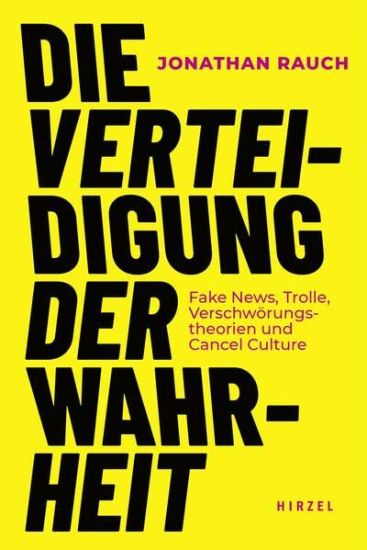
Die Verteidigung Der Wahrheit: Fake News, Trolle, Verschworungstheorien Und Cancel Culture / Jonathan Rauch Erklart Das Gesetz, Mit Dem Wir Wissen Erz
Fakten oder Fake-News, Wahrheit oder Luge: Woher wissen wir, was wir wissen? Die Antworten darauf sind enorm wichtig fur eine funktionierende Gesellschaft, eine lebendige Demokratie. Auf der "rechten" Seite verbreiten Trolle reaktionare Propaganda im Netz. Und "links" sorgt die Cancel-Culture dafur, dass an Universitaten der offene Diskurs uber sensible Themen wie "Gender" oder "Race" verstummt. Fur Propagandaexperten ist klar, dass beide als Techniken eines Informationskrieges bezeichnet werden konnen. Sie manipulieren das gesellschaftliche und mediale Umfeld, um politischen Nutzen daraus zu ziehen. Jonathan Rauch erklart und verteidigt die Verfassung der Erkenntnis Regeln, die die liberale Wissenschaft definieren und die realitatsbasierte Gemeinschaft organisieren. Sie stehen unter dem Dauerbeschuss von Widersachern, die nicht mude werden, immer wieder neue Angriffsstrategien auszuprobieren. Ein Buch, das erlautert, was zu tun ist, um die Wahrheit zu verteidigen - ganz besonders in Zeiten wie diesen.
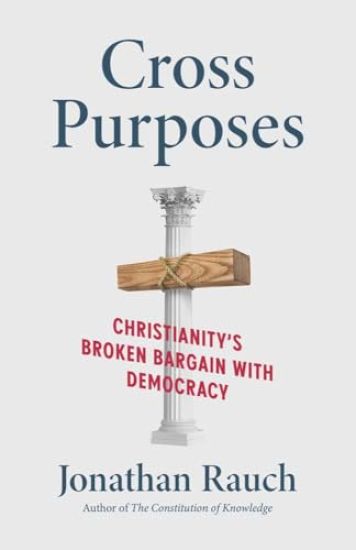
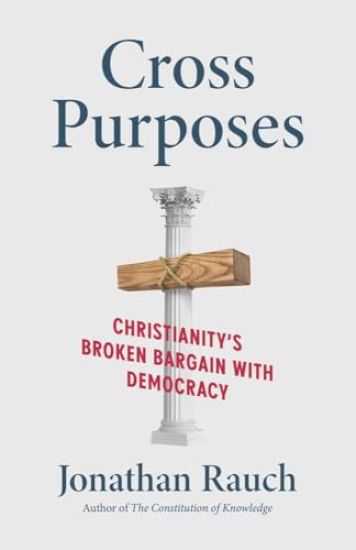
Cross Purposes

Cross Purposes

Jonathan Rauch

YALE UNIVERSITY PRESS
2025
sidottu
Why the crisis of Christianity has become a crisis for democracy “Concise and elegant. . . . Rauch applies careful research and incisive prose to examine, diagnose, and prescribe a cure for the maladies afflicting contemporary religious-political dynamics.”—Michael M. Rosen, Commentary What happens to American democracy if Christianity is no longer able, or no longer willing, to perform the functions on which our constitutional order depends? In this provocative book, the award-winning journalist Jonathan Rauch—a lifelong atheist—reckons candidly with both the shortcomings of secularism and the corrosion of Christianity. Thin Christianity, as Rauch calls the mainline church, has been unable to inspire and retain believers. Worse, a Church of Fear has distorted white evangelicalism in ways that violate the tenets of both Jesus and James Madison. What to do? For answers, Rauch looks to a new generation of religious thinkers, as well as to the Church of Jesus Christ of Latter-day Saints, which has placed the Constitution at the heart of its spiritual teachings. In this timely critique Rauch addresses secular Americans who think Christianity can be abandoned, and Christian Americans who blame secular culture for their grievances. The two must work together, he argues, to confront our present crisis. He calls on Christians to recommit to the teachings of their faith that align with Madison, not MAGA, and to understand that liberal democracy, far from being oppressive, is uniquely protective of religious freedom. At the same time, he calls on secular liberals to understand that healthy religious institutions are crucial to the survival of the liberal state.
Gay Marriage

Gay Marriage

Jonathan Rauch

Henry Holt Company Inc
2005
nidottu
"Thoughtful and convincingly argued . . . Rauch's impressive book is as enthusiastic an encomium to marriage as anyone, gay or straight, could write." —David J. Garrow, The Washington Post Book World In May 2004, gay marriage became legal in Massachusetts, but it remains a divisive and contentious issue across America. As liberals and conservatives mobilize around this issue, no one has come forward with a more compelling, comprehensive, and readable case for gay marriage than Jonathan Rauch. In this book, he puts forward a clear and honest manifesto explaining why gay marriage is important—even crucial—to the health of marriage in America today, grounding his argument in commonsense, mainstream values and confronting social conservatives on their own turf. Marriage, he observes, is more than a bond between individuals; it also links them to the community at large. Excluding some people from the prospect of marriage not only is harmful to them but also is corrosive of the institution itself.Gay marriage, he shows, is a "win-win-win" for strengthening the bonds that tie us together and for remaining true to our national heritage of fairness and humaneness toward all.
The Constitution of Knowledge

The Constitution of Knowledge

Jonathan Rauch

Brookings Institution
2021
sidottu
Arming Americans to defend the truth from today's war on facts.Disinformation. Trolling. Conspiracies. Social media pile-ons. Campus intolerance. On the surface, these recent additions to our daily vocabulary appear to have little in common. But together, they are driving an epistemic crisis: a multi-front challenge to America's ability to distinguish fact from fiction and elevate truth above falsehood.In 2016 Russian trolls and bots nearly drowned the truth in a flood of fake news and conspiracy theories, and Donald Trump and his troll armies continued to do the same. Social media companies struggled to keep up with a flood of falsehoods, and too often didn't even seem to try. Experts and some public officials began wondering if society was losing its grip on truth itself. Meanwhile, another new phenomenon appeared: ?cancel culture.? At the push of a button, those armed with a cellphone could gang up by the thousands on anyone who ran afoul of their sanctimony.In this pathbreaking book, Jonathan Rauch reaches back to the parallel eighteenth-century developments of liberal democracy and science to explain what he calls the ?Constitution of Knowledge??our social system for turning disagreement into truth.By explicating the Constitution of Knowledge and probing the war on reality, Rauch arms defenders of truth with a clearer understanding of what they must protect, why they must do so?and how they can do it. His book is a sweeping and readable description of how every American can help defend objective truth and free inquiry from threats as far away as Russia and as close as the cellphone.
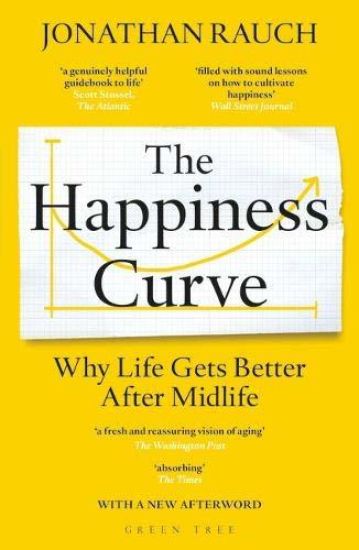
The Happiness Curve: Why Life Gets Better After 50
In this warm, wise, and witty overview, Jonathan Rauch combines evidence and experience to show his fellow adults that the best is yet to come." --Steven Pinker, bestselling author of Enlightenment Now This book will change your life by showing you how life changes. Why does happiness get harder in your 40s? Why do you feel in a slump when you're successful? Where does this malaise come from? And, most importantly, will it ever end? Drawing on cutting-edge research, award-winning journalist Jonathan Rauch answers all these questions. He shows that from our 20s into our 40s, happiness follows a U-shaped trajectory, a "happiness curve," declining from the optimism of youth into what's often a long, low slump in middle age, before starting to rise again in our 50s. This isn't a midlife crisis, though. Rauch reveals that this slump is instead a natural stage of life--and an essential one. By shifting priorities away from competition and toward compassion, it equips you with new tools for wisdom and gratitude to win the third period of life. And Rauch can testify to this personally because it was his own slump, despite acclaim as a journalist and commentator that compelled him to investigate the happiness curve. His own story and the stories of many others from all walks of life--from a steelworker and a limo driver to a telecoms executive and a philanthropist--show how the ordeal of midlife malaise reboots our values and even our brains for a rebirth of gratitude. Full of insights and data and featuring many ways to endure the slump and avoid its perils and traps, The Happiness Curve doesn't just show you the dark forest of midlife, it helps you find a path through the trees. It also demonstrates how we can--and why we must--do more to help each other through the woods. Midlife is a journey we mustn't walk alone.
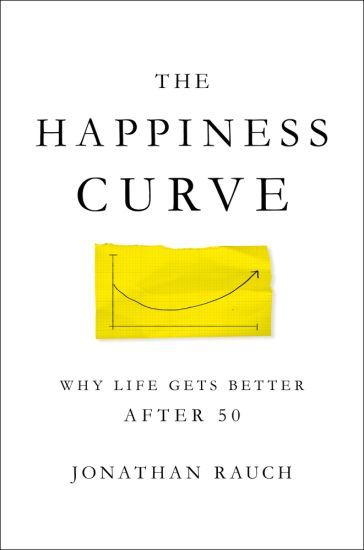
The Happiness Curve

The Happiness Curve

Jonathan Rauch

Green Tree
2019
nidottu
Why does happiness get harder in your 40s? Why do you feel in a slump even when you're successful? Where does this malaise come from? And, most importantly, will it ever end?Drawing on cutting-edge research, award-winning journalist Jonathan Rauch answers all these questions. He shows that from our 20s into our 40s, happiness follows a well-documented U-shaped trajectory, a "happiness curve", declining from the optimism of youth into what's often a long, low trough in middle age, before starting to rise again in our 50s.This isn't a midlife crisis, though. Rauch reveals that this downturn is instead a natural stage of life – and an essential one. By shifting priorities away from competition and toward compassion, you can equip yourself with new tools of wisdom and gratitude to head positively into your later years.And Rauch can testify to this personally – it was his own slump, despite acclaim as a journalist and commentator that compelled him to investigate the happiness curve. His own story and the stories of many others from all walks of life – from a steelworker and a limo driver to a telecoms executive and a philanthropist – show how the ordeal of midlife malaise can reboot our values and even our brains for a rebirth of gratitude.Full of insights and eye-opening data, and featuring practical ways to endure the dip and avoid its perils and traps, The Happiness Curve doesn't just show you the dark forest of midlife, it helps you find a path through the trees.
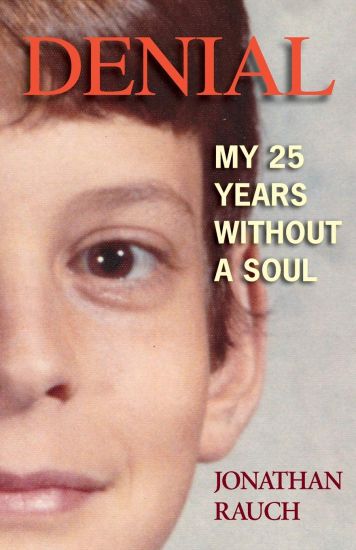
Denial

Denial

Jonathan Rauch

Acorn Abbey Books
2019
pokkari
A young boy sitting on a piano bench realizes one day that he will never marry. At the time this seems merely a simple, if odd, fact, but as his attraction to boys grows stronger, he is pulled into a vortex of denial. Not just for one year or even ten, but for 25 years, he lives in an inverted world, a place like a photographic negative, where love is hate, attraction is envy, and childhood never ends. He comes to think of himself as a kind of monster--until one day, seemingly miraculously, the world turns itself upright and the possibility of love floods in. Equal parts Oliver Sacks and George Orwell, with a dash of Woody Allen, Jonathan Rauch's memoir is by turns harrowing and funny, a grippingly intimate journey through a bizarre maze of self-torment that ends with an unexpected discovery. Many people, gay and straight, have lived through their own versions of this story, seeking to twist their personality in directions it just wouldn't go. Not all have been lucky enough to escape. First published in 2013, Denial has been revised for this new edition, which includes a new afterword by the author.
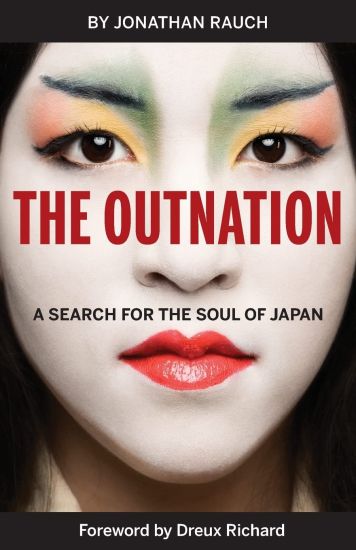
The Outnation

The Outnation

Jonathan Rauch

Acorn Abbey Books
2021
pokkari
In Japanese, the word for "foreign country" means "outnation." But to many Americans and Japanese, it is Japan itself, despite its increasing influence in world affairs, that is the outsider-the outnation: a country, as some have said, in the world but not of it.How different is this industrial superpower? Why did its fast climb to the pinnacle of the global economy also contain the causes of its subsequent fall? And what can we all-Americans and Japanese alike-learn from the Japanese model?In this rigorous, searching, deeply personal journey through Japan's islands and institutions, Jonathan Rauch reveals how different the country really is-and how hauntingly, sometimes eerily, familiar. In 200 numbered, lyrical paragraphs, The Outnation takes readers through Tokyo's nighttime crowds and into quiet country hamlets, to the office of a high-tech industrialist and to a farmer's dinner table. He distills conversations with dozens of Japanese, statesmen and professors as well as sushi chefs and innkeepers. He probes the public values of the Japanese and details the inner workings of their political, economic, and intellectual systems.Now an acknowledged classic, republished with a new foreword by Dreux Richard, The Outnation is a perceptive and honest exploration of Japan and its people-and a sometimes disconcerting mirror that reflects America in a fresh light.