
Kirjahaku
Etsi kirjoja tekijän nimen, kirjan nimen tai ISBN:n perusteella.
68 kirjaa tekijältä Jonathan Sacks

The Koren Sacks Siddur is the first new Orthodox Hebrew/English siddur in a generation. The siddur exemplifies Koren's traditions of textual accuracy and intuitive graphic design, and offers an illuminating translation, introduction and commentary by one of the world's leading Jewish thinkers, Rabbi Jonathan Sacks. It is the only Orthodox siddur that includes: prayers for the state of Israel, its soldiers and national holidays, and a halakhic guide for visitors; prayers following childbirth and upon the birth of a daughter; a modern translation and transliteration, and citations of modern authorities. Published in cooperation with the Orthodox Union. Festive cover by renowned Jerusalem artist Yair Emanuel.

Fans of the Koren Sacks Siddur: meet the Koren Sacks Rosh HaShana Mahzor. Like the Siddur, this new Mahzor weds the elegance of Koren with the wisdom of Rabbi Jonathan Sacks. Koren's sophisticated graphic layout, and Rabbi Sacks' remarkable translation, introduction and commentary jointly offer a meaningful start to the new year.

The Koren Sacks Yom Kippur Mahzor, is a new Hebrew/English prayer book with translation and commentary by Chief Rabbi Lord Jonathan Sacks. It is a companion to the Koren Sacks Rosh Hashana Mahzor, and one volume among a growing body of work produced by the celebrated Koren Publishers-Chief Rabbi Sacks partnership. The Koren Sacks Yom Kippur Mahzor marries the sophisticated graphic approach for which Koren Publishers Jerusalem is renowned with the insight and eloquence of Chief Rabbi Sacks. The Koren Sacks Yom Kippur Mahzor brings out the inner meaning of the Yom Kippur prayers by aligning the Hebrew and English texts, highlighting key words, distinguishing poetry from prose, and using beautiful fonts designed by master typographer Eliyahu Koren. Chief Rabbi Sacks' translation brings readers closer to the authentic meaning of the Hebrew text, while his introduction and commentary provide new ways of understanding and experiencing the Yom Kippur service.

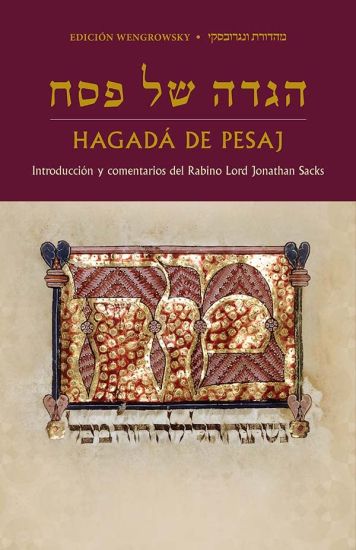
Rabbi Jonathan Sacks, Chief Rabbi of the United Hebrew Congregations of the Commonwealth in the United Kingdom offers a refreshing and insightful commentary to the Koren Haggada, together with illuminating essays on the themes and motifs of the Festival of Freedom. Sensitively translated, the traditional texts are carefully balanced alongside the Chief Rabbi's contemporary ideas, in a modern and user-friendly design. With new interpretations and in-depth analyses of the Passover liturgy and ritual, Rabbi Sacks' style is engaging, intelligent at times daring in its innovation and always inspiring. With essay titles as diverse as Pesah, Freud and Jewish Identity and Pesah and the Rebirth of Israel, as well as explorations of the role of women in the exodus, and the philosophy of leadership and nation-building, the Chief Rabbi's Haggada is a thought-provoking and essential companion at the Seder table.

Celebrate the Festival of Freedom with the new Koren Pesah Mahzor. Rabbi Sacks, renowned translation and commentary clarify the prayers and explore the themes of the festival, from slavery to nationhood, and from exile to freedom.

The Koren Sacks Rosh HaShana Mahzor is an inspiring high holiday prayer book. An invaluable introduction by Rabbi Jonathan Sacks guides you through the themes of the day. A brilliant commentary blends insights from Tanakh and classical sources with Rabbi Sacks' keen observations. An eloquent, contemporary translation makes the prayers accessible and meaningful. A sophisticated design brings out the power and poetry of the text. The Koren Sacks Rosh HaShana Mahzor enables you to enter the true spirit of Rosh HaShana and emerge into the new year renewed.

The Koren Sacks Yom Kippur Mahzor is a companion to the Koren Sacks Rosh Hashana Mahzor, and one volume among a growing body of work produced by the celebrated Koren-Sacks partnership. The Koren Sacks Yom Kippur Mahzor marries the sophisticated graphic approach for which Koren Publishers Jerusalem is renowned with the insight and eloquence of Rabbi Sacks, one of today's leading Jewish thinkers. The Koren Sacks Yom Kippur Mahzor brings out the inner meaning of the Yom Kippur prayers by aligning the Hebrew and English texts, highlighting key words, distinguishing poetry from prose, and using beautiful fonts designed by master typographer Eliyahu Koren. Rabbi Sacks translation brings readers closer than ever before to the authentic meaning of the Hebrew text, while his introduction and commentary provide new ways of understanding and experiencing the Yom Kippur service. Includes additional Piyutim and Selihot as well as the full text of the Mishna Yoma with commentary.
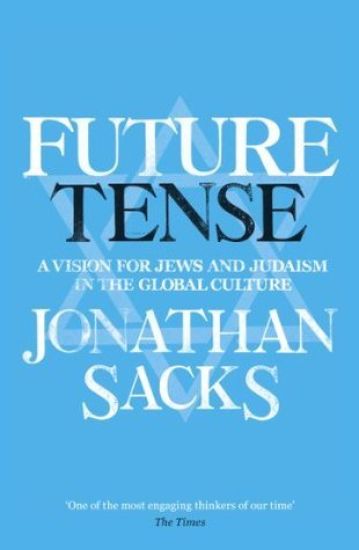
Chief Rabbi Sir Jonathan Sacks takes a timely look at the ambiguous position of Judaism in the world today.

Writing with his usual grace and fluency, Jonathan Sacks moves beyond the tired arguments of militant atheists such as Dawkins' The God Delusion and Hitchens' God is Not Great, to explore how religion has always played a valuable part in human culture and far from being dismissed as redundant, must be allowed to temper and develop scientific understanding in order for us to be fully human.Ranging around the world to draw comparisons from different cultures, and delving deep into the history of language and of western civilisation, Jonathan Sacks shows how the predominance of science-oriented thinking is embedded deeply even in our religious understanding, and calls on us to recognise the centrality of relationship to true religion, and thus to see how this core value of relationship is essential if we are to avoid the natural tendency for science to rule our lives rather than fulfilling its promise to set us free.

To Heal a Fractured World: The Ethics of Responsibility
Jonathan Sacks
SCHOCKEN BOOKS INC
2007
nidottu
One of the most respected religious thinkers of our time makes an impassioned plea for the return of religion to its true purpose--as a partnership with God in the work of ethical and moral living. What are our duties to others, to society, and to humanity? How do we live a meaningful life in an age of global uncertainty and instability? In To Heal a Fractured World, Rabbi Jonathan Sacks offers answers to these questions by looking at the ethics of responsibility. In his signature plainspoken, accessible style, Rabbi Sacks shares with us traditional interpretations of the Bible, Jewish law, and theology, as well as the works of philosophers and ethicists from other cultures, to examine what constitutes morality and moral behavior. "We are here to make a difference," he writes, "a day at a time, an act at a time, for as long as it takes to make the world a place of justice and compassion." He argues that in today's religious and political climate, it is more important than ever to return to the essential understanding that "it is by our deeds that we express our faith and make it real in the lives of others and the world." To Heal a Fractured World--inspirational and instructive, timely and timeless--will resonate with people of all faiths.

Future Tense: Future Tense: Jews, Judaism, and Israel in the Twenty-first Century
Jonathan Sacks
SCHOCKEN BOOKS INC
2012
nidottu
We are in danger, says Rabbi Sacks, of forgetting what Judaism's place is within the global project of humankind. The Jewish people exist for a reason, and it is not for themselves alone. They must recommit themselves to their foundational purpose: to the task of creating a just world in which the divine presence can dwell among us all. Without compromising one iota of Jewish faith, Rabbi Sacks declares, Jews must stand alongside their friends--Christian, Muslim, Hindu, Sikh, Buddhist, and secular humanist--in defense of freedom against those who desecrate life. And they should do this not to win friends or the admiration of others but because it is what a people of God is supposed to do. Rabbi Sacks's powerful message of tikkum olam--using Judaism as a blueprint for repairing an imperfect world--will resonate with people of all faiths.
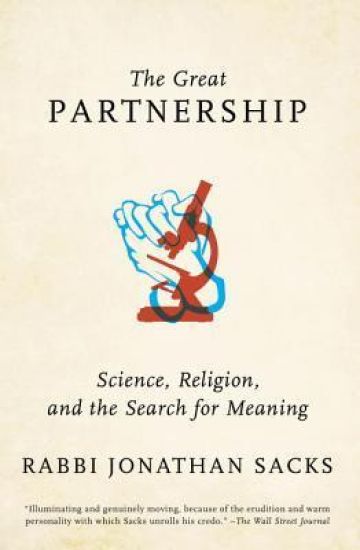
The Great Partnership: Science, Religion, and the Search for Meaning
Jonathan Sacks
SCHOCKEN BOOKS INC
2014
nidottu
Impassioned, erudite, thoroughly researched, and beautifully reasoned, The Great Partnership argues not only that science and religion are compatible, but that they complement each other--and that the world needs both. "Atheism deserves better than the new atheists," states Rabbi Jonathan Sacks, "whose methodology consists of criticizing religion without understanding it, quoting texts without contexts, taking exceptions as the rule, confusing folk belief with reflective theology, abusing, ridiculing, and demonizing religious faith and holding it responsible for the great crimes against humanity. Religion has done harm; I acknowledge that. But the cure for bad religion is good religion, not no religion, just as the cure for bad science is good science, not the abandonment of science." Rabbi Sacks's counterargument is that religion and science are the two essential perspectives that allow us to see the universe in its three-dimensional depth. Science teaches us where we come from. Religion explains to us why we are here. Science is the search for explanation. Religion is the search for meaning. There have been times when religion tried to dominate science. And there have been times, including our own, when it is believed that we can learn all we need to know about meaning and relationships through biochemistry, neuroscience, and evolutionary psychology. In this fascinating look at the interdependence of religion and science, Rabbi Sacks explains why both views are tragically wrong. ***National Jewish Book Awards 2012, Finalist***Dorot Foundation Award for Modern Jewish Thought and Experience
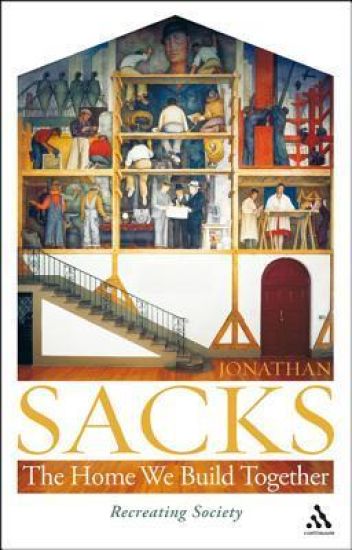
The Home We Build Together
Jonathan Sacks
Continuum International Publishing Group Ltd.
2009
nidottu
'Multiculturalism has run its course, and it is time to move on.' So begins Jonathan Sacks' new book on the future of British society and the dangers facing liberal democracy.Arguing that global communications have fragmented national cultures and that multiculturalism, intended to reduce social frictions, is today reinforcing them, Sacks argues for a new approach to national identity. We cannot stay with current policies that are producing a society of conflicting ghettoes and non-intersecting lives, turning religious bodies into pressure groups rather than society-building forces.Britain, he argues, will have to construct a national narrative as a basis for identity, reinvigorate the concept of the common good, and identify shared interests among currently conflicting groups. It must restore a culture of civility, protect "neutral spaces" from politicization, and find ways of moving beyond an adversarial culture in which the loudest voice wins. He argues for a responsibility- rather than rights-based model of citizenship that connects the ideas of giving and belonging.Offering a new paradigm to replace previous models of assimilation on the one hand, multiculturalism on the other, he argues that we should see society as "the home we build together", bringing the distinctive gifts of different groups to the common good. Sacks warns of the hazards free and open societies face in the twenty-first century, and offers an unusual religious defence of liberal democracy and the nation state.
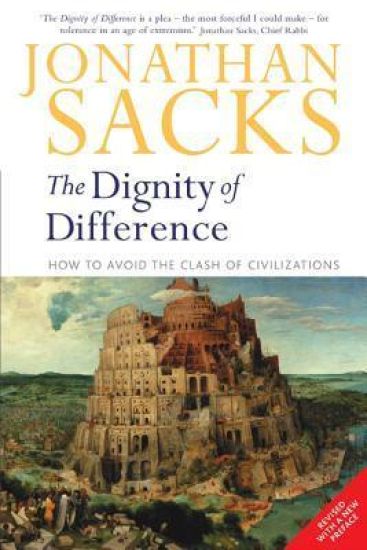
The Dignity of Difference is Rabbi Jonathan Sacks's radical proposal for reconciling hatreds.The year 2001 began as the United Nations Year of Dialogue between Civilizations. By its end, the phrase that came most readily to mind was 'the clash of civilizations.' The tragedy of September 11 intensified the danger caused by religious differences around the world. As the politics of identity begin to replace the politics of ideology, can religion become a force for peace?The first major statement by a Jewish leader on the ethics of globalization, it also marks a paradigm shift in the approach to religious coexistence. Sacks argues that we must do more than search for values common to all faiths; we must also reframe the way we see our differences.
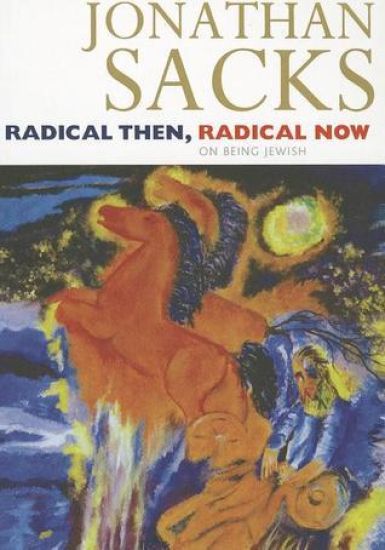
The Jewish People in its very being constitutes a living protest against a world of hatred, violence and war.Radical Then, Radical Now is a powerful testimony to the amazing resilience of the Jewish people who have, through their endurance of four thousand years of persecution and exile, earned a unique place in history. Without land or power, they created an identity for themselves through their shared dreams of freedom, justice, dignity and human rights.Yet far more than Jewish history is contained within the pages of this book. Jonathan Sacks reminds us all of the legacy of those dreams and of our responsibility to our fellow man. He challenges us to build a better world.
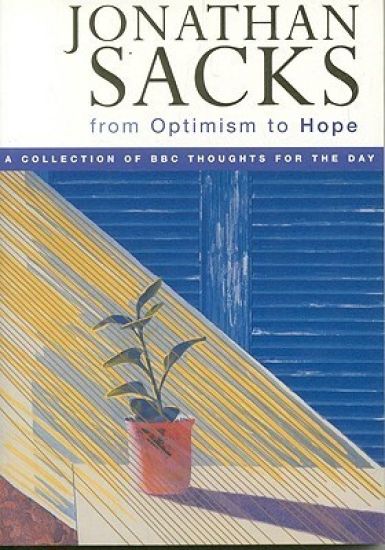
Here, the Chief Rabbi has selected his favorite "Thoughts for the Day" for publication.Rabbi Sacks' well-deserved reputation as a writer and broadcaster in the UK has followed him to North America with the success of The Dignity of Difference. His clear, calm voice brings hope and encouragement to all of us struggling to come to terms with modern, turbulent times. In the UK, that calm voice is frequently heard on the country's most popular morning BBC radio news show. He regular presents a "Thought for the Day" in which he addresses a current issue with characteristic brevity and clarity.The result is a book that will appeal to a very wide audience — people with religious belief and those with little or none.
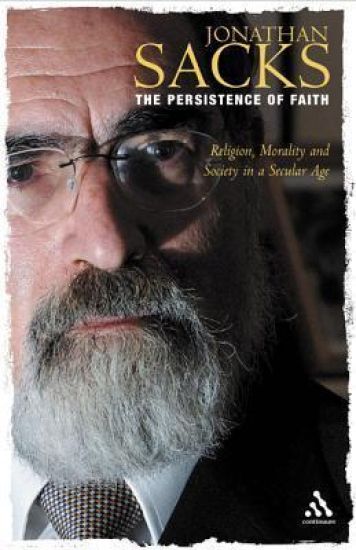
Rabbi Sacks passionately argues for the importance of faith and religious values in today's consumerist society with crystalline intelligence and deep compassion. What is the role of religion in a secular society? This is the question that Rabbi Sacks answered in his seminal 1990 Reith Lectures. Now reissued thirty years on, his prescient and moving argument for the renewal of religious values is powerfully relevant to our present moment. In a series of acclaimed essays, Rabbi Sacks addresses the fact that religion often appears on the world stage as a destabilising threat to liberal democracies – from the influence of the moral majority in the USA to the Islamic Revolution in Iran and the renewed vigour of Catholicism in Europe and Africa, there are many who fear the resurgence of faith. However, Sacks’ solution is not to drive religion further into retreat and promote secularisation. Instead, he argues tolerance must lie at the heart of this renewal of traditional values. Faiths of many different kinds can together provide a cohesive morality to unite us all despite our differences and provide meaning and dignity in an otherwise consumerist society. It is essential that religions, as Sacks eloquently argues, respect the unconditional rights of their fellow humans regardless of their faiths, or lack of faith, while working together towards this common good.
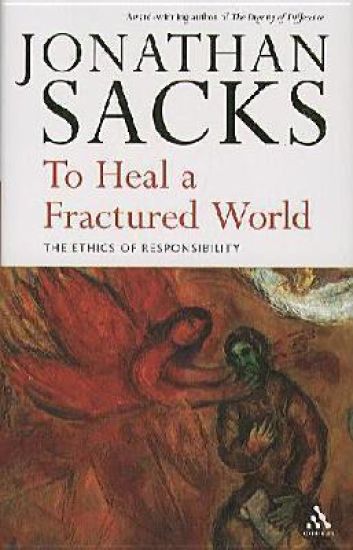
‘The only force equal to a fundamentalism of hate is a counter-fundamentalism of love.’Jonathan Sacks is an outstanding moral authority of our time and best-selling author of The Dignity of Difference. One of Judaism’s most distinctive and challenging ideas is its ethics of responsibility. We have been given the gift of freedom and we in turn have to honour and enhance the freedom of others. More than in any previous generation, we have been tempted to imagine that it is the individual’s needs which are the sole source of meaning.In To Heal A Fractured World, Rabbi Sacks argues that such preoccupation with oneself is a mistake. Ethics are concerned with the life we live together, and the goods we share only exist by virtue of being shared. Rabbi Sacks argues his case in a way which shows a profound engagement with the human condition today, and reflects how widely he has read. He talks with as much authority about Sigmund Freud or Karl Marx as he does about the Hebrew Bible.This is a clarion call to the outside world to come to its senses.
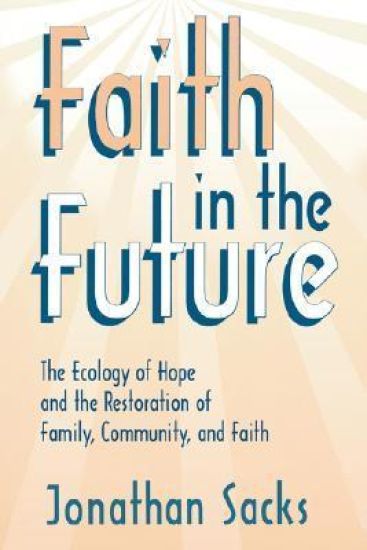
Faith in the Future addresses some of the major themes of our time: the fragmentation of our common culture, the breakdown of family and community life, the lack of moral direction, and the waning of religious belief. How, Sacks asks, can we construct a humane social order that honors human dignity and difference, one in which we can be both true to ourselves and a blessing to others? In the confusing state of postindustrial societies in the post-Cold War situation, can we give those who come after us a coherent map of hope? In treating such questions, Faith in the Future is structured in four parts. In the first, "The Moral Covenant, " Sacks touches on the broadest of issues: morality, the family, and the importance of communities in the life of society. In the second, "Living Together, " he asks how we can co-exist while remaining faithful to our distinctive identities and traditions. In the third, "Jewish Ethics and Spirituality, " he sketches some of Judaism's leading themes. "There is such a thing, " says, as an ecology of hope, and it lies in restoring to our culture a sense of family, community, and religious faith.