Kirjojen hintavertailu. Mukana 11 717 486 kirjaa ja 12 kauppaa.

Kirjahaku

Etsi kirjoja tekijän nimen, kirjan nimen tai ISBN:n perusteella.

3 kirjaa tekijältä Jonathan Teubner

Charity after Augustine

Charity after Augustine

Jonathan Teubner

Oxford University Press
2025
sidottu
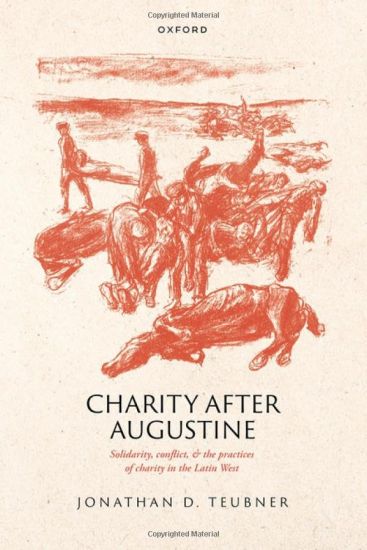
Charity after Augustine explores why the Augustinian tradition's attempts to build solidarity in the societies of the Latin West have ended in disaster just as often as they have brought about justice. Focusing on the concrete practices of love and charity — almsgiving, works of mercy, good works — Teubner demonstrates how religious leaders attempted simultaneously to bind and hold communities together while also, in fits and starts, to expand and include others in their communities. The first part probes how Augustine's thought is put into practice, informing a tradition of political action inspired by concepts of love and enacted through practices of charity. In a second, more expansive part, Charity after Augustine turns to the ways in which the Benedictine tradition, as recieved by Gregory the Great and Bernard of Clairvaux, transforms this vision and puts it into practice in contexts radically different from those of Augustine's age. At the heart of this book is an attempt to find a non-idealized vision of love that can inform thick relations within a community that are not diluted but are rather strengthened by the incorporation of outsiders.
An Analysis of St. Augustine's Confessions

An Analysis of St. Augustine's Confessions

Jonathan Teubner

Macat International Limited
2017
nidottu
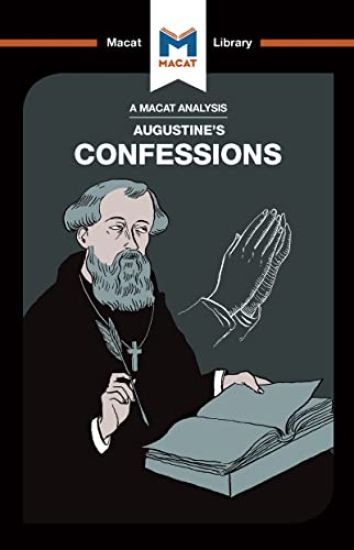
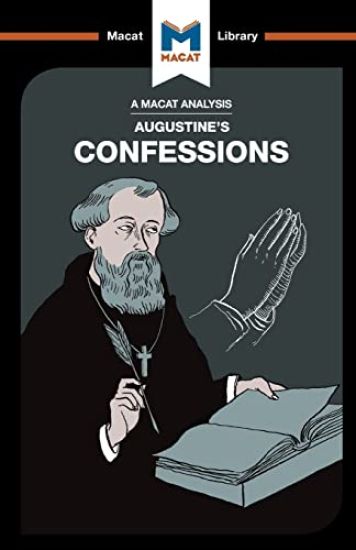
St. Augustine’s Confessions is one of the most important works in the history of literature and Christian thought. Written around 397, when Augustine was the Christian bishop of Hippo (in modern-day Algeria), the Confessions were designed both to spiritually educate those who already shared Augustine’s faith, and to convert those who did not. Augustine did this through the original maneuver of writing what is now recognized as being the first Western autobiography – letting readers share in his own experiences of youth, sin, and eventual conversion. The Confessions are a perfect example of using reasoning to subtly bring readers around to a particular point of view – with Augustine inviting them to accompany him on his own spiritual journey towards God so they could make their own conversion. Carefully structured, the Confessions run from describing the first 43 years of Augustine’s life in North Africa and Italy, to discussing the nature of memory, before moving on to analyzing the Bible itself. In order, the sections form a carefully structured argument, moving from the personal to the philosophical to the contemplative. In the hundreds of years since they were first published, they have persuaded hundreds of thousands of readers to recognize towards the same God that Augustine himself worshipped.
Confessions

Confessions

Jonathan Teubner

Macat International Limited
2017
sidottu
St. Augustine’s Confessions is one of the most important works in the history of literature and Christian thought. Written around 397, when Augustine was the Christian bishop of Hippo (in modern-day Algeria), the Confessions were designed both to spiritually educate those who already shared Augustine’s faith, and to convert those who did not. Augustine did this through the original maneuver of writing what is now recognized as being the first Western autobiography – letting readers share in his own experiences of youth, sin, and eventual conversion. The Confessions are a perfect example of using reasoning to subtly bring readers around to a particular point of view – with Augustine inviting them to accompany him on his own spiritual journey towards God so they could make their own conversion. Carefully structured, the Confessions run from describing the first 43 years of Augustine’s life in North Africa and Italy, to discussing the nature of memory, before moving on to analyzing the Bible itself. In order, the sections form a carefully structured argument, moving from the personal to the philosophical to the contemplative. In the hundreds of years since they were first published, they have persuaded hundreds of thousands of readers to recognize towards the same God that Augustine himself worshipped.