Kirjojen hintavertailu. Mukana 11 244 527 kirjaa ja 12 kauppaa.

Kirjahaku

Etsi kirjoja tekijän nimen, kirjan nimen tai ISBN:n perusteella.

24 kirjaa tekijältä Jonathan Trigg

Death on the Don

Death on the Don

Jonathan Trigg

The History Press Ltd
2017
nidottu
Nazi Germany’s assault on the Soviet Union in the summer of 1941, Operation Barbarossa, was the largest invasion in history. Almost 3.5 million men smashed into Stalin’s Red Army, reaching the gates of Leningrad, Moscow and Sevastopol. But not all of this vast army was German; indeed, by the summer of 1942, over 500,000 were Romanians, Italians, Hungarians, Slovaks and Croatians – Hitler’s Axis allies. As part of the German offensive that year, more than four allied armies advanced to the Don only to be utterly annihilated in the Red Army’s Saturn and Uranus winter offensives. Hundreds of thousands were killed, wounded or captured, and the German Sixth Army was left surrounded and dying in the rubble of Stalingrad. Poorly equipped, often badly led and totally unprepared for the war, they were asked to fight. Drawing on first-hand accounts from veterans and civilians, as well as previously unpublished source material, Death on the Don tells the story of one of the greatest military disasters of the Second World War.
Hitler's Gauls

Hitler's Gauls

Jonathan Trigg

The History Press Ltd
2009
nidottu
The divisions of the Waffen-SS were among the elite of Hitler’s armies in the Second World War. But alongside the Germans in the Waffen-SS fought an astonishingly high number of volunteers from other countries. By the end of the Second World War these foreign volunteers comprised half of all Hitler’s Waffen-SS, and filled the ranks of over twenty-four of the nominal thirty-eight Waffen-SS divisions. So during the most brutal war that mankind has ever known, hundreds of thousands of men flocked to fight for a country that was not theirs, and for a cause that was one of the most monstrous and barbaric in history. Who were these men, and why did they fight? Hitler’s Gauls is an in-depth examination of one of these legions of foreign volunteers, the Charlemagne division, who were recruited entirely from conquered France. The men in Charlemagne, often motivated by an extreme anti-communist zeal, fought hard on the Eastern Front including battles of near annihilation in the snows of Pomerania and the final stand in the ruins of Berlin. This definitive history, illustrated with rare photographs, explores the background, training, key figures and full combat record of one of Hitler’s lesser known foreign units of the Second World War.
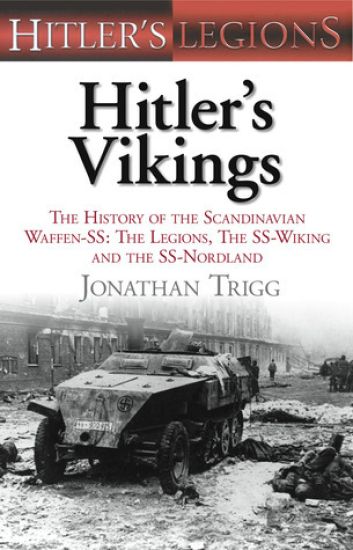
Hitler's Vikings

Hitler's Vikings

Jonathan Trigg

The History Press Ltd
2010
sidottu
The Nazis’ dream of a world dominated by legions of Aryan ‘supermen’, forged in battle and absolutely loyal to Hitler, was epitomised by the Waffen-SS. Created as a supreme military élite, it grew to become Nazi Germany’s ‘second army’, an immense force totalling almost one million men by the end of the War. An astonishing fact about the SS is that thousands of its members were not German. Men stepped forward from almost every nation in Europe — for many, sometimes complex reasons — that included hatred of Bolshevism and nationalist sentiment or even straightforward anti-Semitism. Foremost amongst them were Scandinavians from Denmark, Norway, Sweden and Finland. Thousands were recruited from 1940 onwards and fought with distinction on the Russian Front.They served at first in national legions but were then brought together in the Wiking Panzer Division and the Nordland Panzer-grenadier Division. In Hitler’s Vikings, Jonathan Trigg details the battles these men fought and what inspired them to join the Waffen-SS, based wherever possible on interviews with surviving veterans. Many of the photographs reproduced here have never before been published. Hitler’s ‘Vikings’ were amongst the last men still fighting in the ruins of Berlin in 1945 — their story is truly remarkable. Jonathan Trigg served in the 1st Battalion The Royal Anglian Regiment, reaching the rank of Captain and completing tours in Northern Ireland, Bosnia and the Middle East. He is an established writer on military history, with a particular interest in foreign volunteer formations in the Second World War. Hitler’s Vikings is his fourth volume in Spellmount’s Hitler’s Legions series.
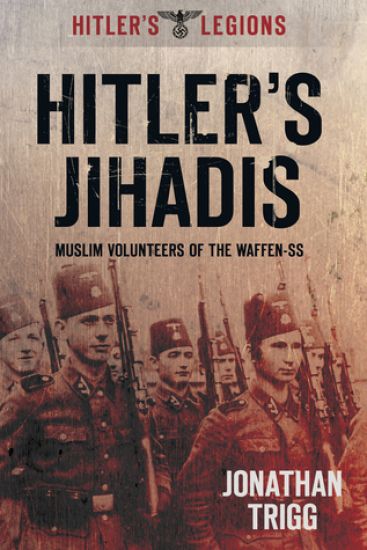
Hitler's Jihadis

Hitler's Jihadis

Jonathan Trigg

The History Press Ltd
2012
nidottu
As the West finds itself embroiled in conflict with radical Islam at home and abroad it is fascinating to hear the echoes of militant Islam from the Second World War, and the Nazis attempt to preach 'Jihad' against the British Empire and Stalin. Hitler's Jihadis tells the story of the tens of thousands of Muslims, from as far away as India who volunteered to wear the SS double lightning flashes and serve alongside their erstwhile conquerors. Jonathan Trigg gives insight into the pre-war politics that inspired these Islamic volunteers, who for the most part did not survive. Those who did survive the war and the bloody retribution that followed saw the reputation of the units in which they served in berated as militarily inept and castigated for atrocities against unarmed civilians. Using first hand accounts and official records Hitler's Jihadis peels away the propaganda to reveal the complexity that lies at the heart of the story of Hitler's most unlikely 'Aryans'.
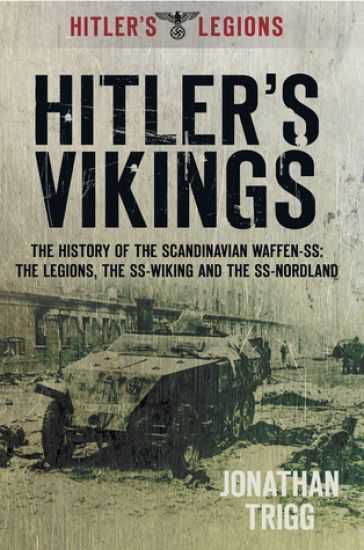
Hitler's Vikings

Hitler's Vikings

Jonathan Trigg

The History Press Ltd
2012
nidottu
The Nazis’ dream of a world dominated by legions of Aryan ‘supermen’, forged in battle and absolutely loyal to Hitler, was epitomised by the Waffen-SS. Created as a supreme military élite, it grew to become Nazi Germany’s ‘second army’, an immense force totalling almost one million men by the end of the War. An astonishing fact about the SS is that thousands of its members were not German. Men stepped forward from almost every nation in Europe — for many, sometimes complex reasons — that included hatred of Bolshevism and nationalist sentiment or even straightforward anti-Semitism. Foremost amongst them were Scandinavians from Denmark, Norway, Sweden and Finland. Thousands were recruited from 1940 onwards and fought with distinction on the Russian Front.They served at first in national legions but were then brought together in the Wiking Panzer Division and the Nordland Panzer-grenadier Division. In Hitler’s Vikings, Jonathan Trigg details the battles these men fought and what inspired them to join the Waffen-SS, based wherever possible on interviews with surviving veterans. Many of the photographs reproduced here have never before been published. Hitler’s ‘Vikings’ were amongst the last men still fighting in the ruins of Berlin in 1945 — their story is truly remarkable.
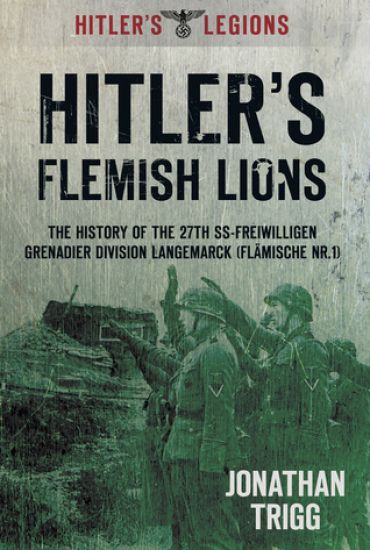
Hitler's Flemish Lions

Hitler's Flemish Lions

Jonathan Trigg

The History Press Ltd
2012
nidottu
Motivated by anti-communist zeal and a burning desire for Flemish self-rule, the men of the SS Langemarck answered Himmler's call to arms and earned a reputation for steadfastness in battle from friend and foe alike, right through to their eventual destruction by the Soviets in 1945. The exploits of key figures such as the famous Flemish Knight's Cross winner Remy Schrijnen are covered in detail. Written by a former captain in the British Army, this is the second in Spellmount's new series on Hitler's foreign Legions, following the best-selling Hitler's Gauls.
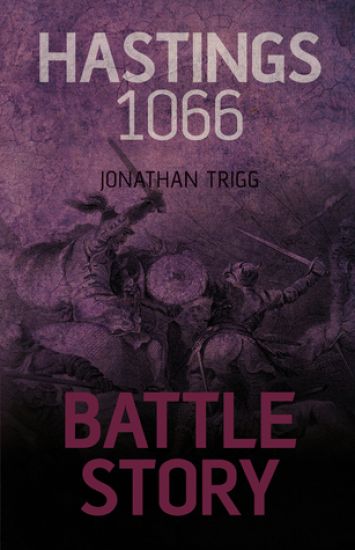
Battle Story: Hastings 1066

Battle Story: Hastings 1066

Jonathan Trigg

The History Press Ltd
2012
nidottu
In 1066 the most significant battle on English soil – and arguably the most important in British history – took place some six miles northwest of Hastings. A king would die on the battlefield and a new dynasty would be established. The fighting exemplified the superiority of an all-arms combined attack employing foot soldiers, cavalry and archers against massed infantry. To understand what happened and why – read Battle Story. Photographs of the battlefield today, artist’s interpretations and of course reproductions from the Bayeux tapestry place you in the centre of the action. Easy-to-read maps plot each development in the struggle. Descriptions of the weaponry, armour and tactics of the combatants help explain why the famous housecarls of England were obliterated for all time. Packed with fact boxes, this short introduction is the perfect way to explore a turning point in British and European history.
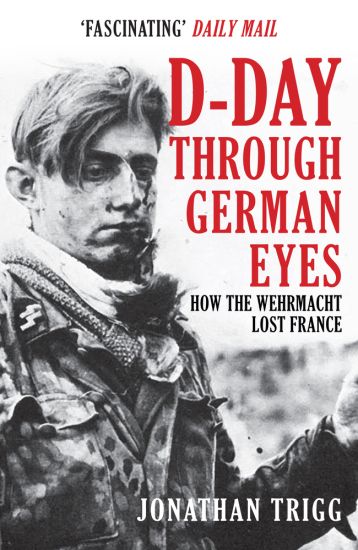
D-Day Through German Eyes

D-Day Through German Eyes

Jonathan Trigg

Amberley Publishing
2020
pokkari
Everyone is familiar with the story of D-Day and the triumphal liberation of France by the Allies: a barbaric enemy was defeated by Allied ingenuity, courage and overwhelming military force, helped by dreadful German command errors and the terrible state of Wehrmacht forces in the West – but is this all true? The Wehrmacht was hugely experienced, equipped with some of the best weaponry of the war and was holding its own in Italy and Russia at the time. Berlin knew the invasion was coming and had had years to prepare for it. So how did the Germans view the impending invasion and campaign, did they feel ready, what forces did they have and could they have done better? Previous histories have focused on the ‘clash of the generals’; the battle between von Runstedt and Eisenhower, Montgomery and Rommel, but on the German side in particular this was a battle that would be fought by divisional and regimental commanders; the ‘German D-Day colonels’ upon whom the real business of trying to defeat the invasion fell – it was they and their men, outnumbered and outgunned, who somehow held Normandy for ten whole weeks against the greatest seaborne invasion force ever assembled, and occasionally even came close to defeating it. In the end they lost, and the majority of these unsung leaders ended up killed, wounded or captured in the fighting. As for their men, they ranged from élite Waffen-SS stormtroopers through to bewildered teenagers, old men, ‘recycled’ invalids and even anti-communist Eastern legions. Written from the ‘other side’ and told through the words of the veterans, this book is a revelation.
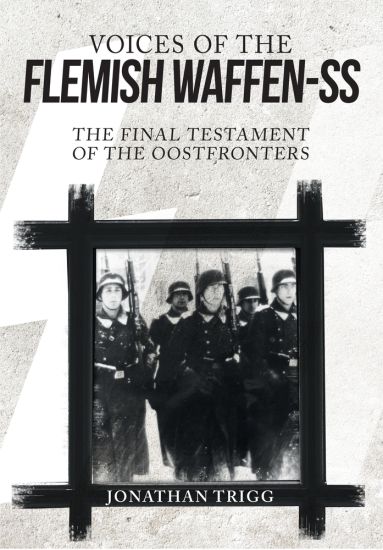
Voices of the Flemish Waffen-SS

Voices of the Flemish Waffen-SS

Jonathan Trigg

Amberley Publishing
2021
pokkari
At the very beginning of the Second World War Germany invaded and occupied Belgium. Yet less than a year later some of Belgium’s citizens volunteered to join the Waffen-SS and go and fight on the newly formed Eastern Front against Stalin’s Soviet Union. By the end of the war thousands had volunteered. Casualties were high, but there were survivors and they returned home, often to face condemnation and retribution. This book is about the war they fought in their own words, the very few who remain, the last testament before they are all gone. The motivations of these men were complex: the Flemings have their own culture and identity and some longed for a state independent of French-speaking Belgium. Some volunteered through a deep hatred of communism, often fuelled by their Catholic faith. Some, of course, were simply persuaded by Hitler’s vision of a new world order. The Flemish Waffen-SS, in various configurations, saw action on the Eastern Front from 1941 onwards - at the siege of Leningrad, in the Ukraine, then retreating into Germany itself with the remnants surrendering to the Allies as the Reich lay in ruins. This was hard fighting: and for those men who had chosen this path, the war was not over. Some stayed in Germany, some returned home, perhaps to trial as war criminals. The interviews and images gathered by Jonathan Trigg are vital historical documents.
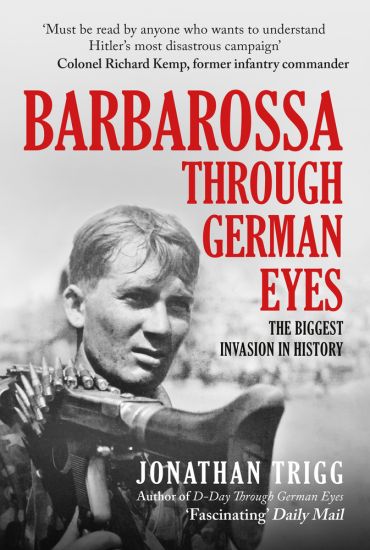
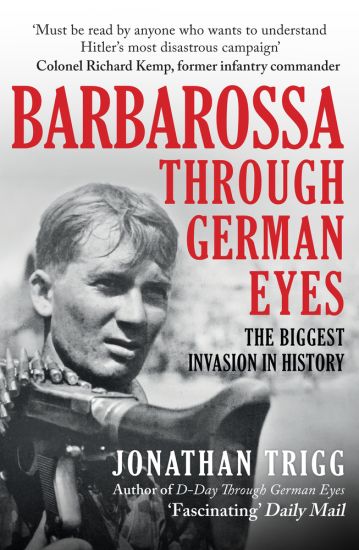
Barbarossa Through German Eyes

Barbarossa Through German Eyes

Jonathan Trigg

Amberley Publishing
2021
sidottu
Spring 1941 – the Third Reich triumphant! Having taken over Germany in 1933, Hitler launched a series of lightning campaigns across Europe that crushed Poland, Denmark, Norway, France, the Low Countries and then the Balkans. Only Great Britain had withstood the Nazis, but even it was battered and bruised and close to defeat. Then, on 22 June 1941 – in the most momentous decision of the war – the Nazi dictator turned East and flung his victorious armies into the vastness of the Soviet Union. Having signed a Non-Aggression Pact with Hitler back in 1939, Stalin was taken completely by surprise by the German attack. Hitler’s Wehrmacht – buoyed by years of untrammelled success and led by some of the greatest commanders Nazi Germany had to offer – crashed across the border and sent the Red Army reeling. The German plan was simple and its scale staggering; over three million men, armed with over three thousand panzers, the same number of aircraft, more than seven thousand guns and carried by over six hundred thousand vehicles and even more horses, would be joined by over half a million soldiers from allied countries, and together they would destroy the largest army in the world while advancing a thousand miles to the very borders of Asiatic Russia. There they would halt and what remained of the Soviet Union and the communist faith that spawned it would wither and die. In the newly conquered lebensraum, Hitler and the Nazis would then commence the biggest mass human extermination programme in history. Barbarossa was huge, but it was fought by men; and on the German side in particular, it would be fought by junior officers and simple soldiers as the Wehrmacht tried to win the war once and for all.
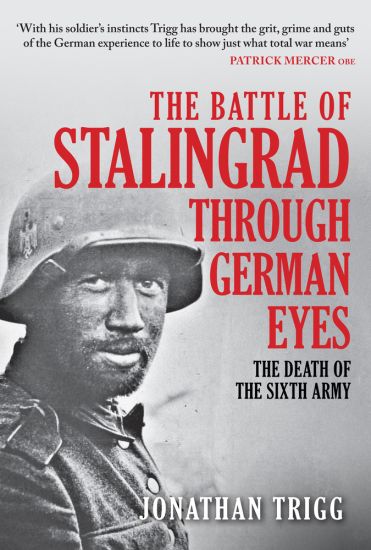
The Battle of Stalingrad Through German Eyes

The Battle of Stalingrad Through German Eyes

Jonathan Trigg

AMBERLEY PUBLISHING
2022
sidottu
Five months, one week and three days of hell. The German offensive to capture Stalingrad began in August 1942, using Friedrich Paulus’s 6th Army and elements of the 4th Panzer Army. The attack was supported by intense bombing that reduced much of the city to rubble. The battle degenerated into house-to-house fighting, as both sides fought for the city on the Volga. By mid-November, the Germans were on the brink of victory as the Soviet defenders clung on to a final few slivers of land along the west bank of the river. Then, on 19 November, the Red Army launched Operation Uranus, targeting the weaker Romanian armies protecting the 6th Army’s flanks. The ill-equipped Romanians were overrun and the 6th Army was cut off and surrounded. Hitler was determined to hold the city – the symbolic namesake of the Soviet leader – and forbade the 6th Army from attempting a breakout, insisting they be supplied by air instead; in February 1943, without food or ammunition, some 91,000 starving, lice-ridden Germans surrendered. The losses on both sides were eye-watering – the Soviets alone suffered something approaching half a million dead and more than 650,000 sick or wounded – and in his unique style author Jonathan Trigg reveals the human agony behind such statistics through the words of the Germans who were there. Was it all over after the surrender? Of course not. Death marches did for many: Landser Josef Farber remembered: ‘We set out with 1,200 men … about 120 were alive when we reached the camp.’ This was war at its rawest – this was Stalingrad.
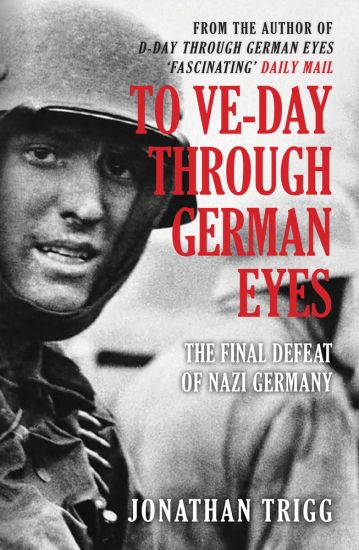
To VE-Day Through German Eyes

To VE-Day Through German Eyes

Jonathan Trigg

AMBERLEY PUBLISHING
2022
pokkari
‘If Germany stays united and marches to the rhythm of its revolutionary socialist outlook, it will be unbeatable. Our indestructible will to life, and the driving force of the Führer’s personality guarantee this.’ (Joseph Goebbels, 4 June 1943.) It wasn’t and it didn’t. After the collapse of the German Army in the West in August 1944, the western Allies raced towards the borders of the Reich itself, and in the East the victorious Red Army was doing the same – everyone believed the war would be over by Christmas. But it wasn’t. Somehow, Nazi Germany managed to stave off final defeat until May the following year. In the end the agony was brought to a close with the hammer and sickle flying over the ruins of Berlin. The much-vaunted ‘Thousand Year Reich’ had lasted just a dozen years, but in that time it had wrought havoc across the globe. With defeat came the wholesale surrender of the once-proud Wehrmacht; hosts of men suddenly found themselves miles from home in territories ravaged by war. Amongst their ranks were thousands of non-Germans from all over Europe, men – mostly ex-Waffen-SS – who had thrown in their lot with the Germans; they were now ‘collaborators’ and ‘traitors’ and would return home to face the justice of the victors. Most histories focus on the fate of Adolf Hitler and German High Command on the road to the bunker beneath the rubble of Berlin, but on the German side in particular, as defeat loomed this was a battle that would be fought by junior officers and other ranks as the Wehrmacht fell apart. Following on from his successful D-Day Through German Eyes: How the Wehrmacht Lost France, Jonathan Trigg seeks with this second volume to tell the story of Nazi Germany’s final defeat through the voices of the men – and women – who witnessed it first-hand. This narrative is written from the ‘other side’ and told as much as possible through the words of the combatants and civilian witnesses.
Barbarossa Through German Eyes

Barbarossa Through German Eyes

Jonathan Trigg

AMBERLEY PUBLISHING
2023
pokkari
Spring 1941 – the Third Reich triumphant! Having taken over Germany in 1933, Hitler launched a series of lightning campaigns across Europe that crushed Poland, Denmark, Norway, France, the Low Countries and then the Balkans. Only Great Britain had withstood the Nazis, but even it was battered and bruised and close to defeat. Then, on 22 June 1941 – in the most momentous decision of the war – the Nazi dictator turned East and flung his victorious armies into the vastness of the Soviet Union. Having signed a Non-Aggression Pact with Hitler back in 1939, Stalin was taken completely by surprise by the German attack. Hitler’s Wehrmacht – buoyed by years of untrammelled success and led by some of the greatest commanders Nazi Germany had to offer – crashed across the border and sent the Red Army reeling. The German plan was simple and its scale staggering; over three million men, armed with over three thousand panzers, the same number of aircraft, more than seven thousand guns and carried by over six hundred thousand vehicles and even more horses, would be joined by over half a million soldiers from allied countries, and together they would destroy the largest army in the world while advancing a thousand miles to the very borders of Asiatic Russia. There they would halt and what remained of the Soviet Union and the communist faith that spawned it would wither and die. In the newly conquered lebensraum, Hitler and the Nazis would then commence the biggest mass human extermination programme in history. Barbarossa was huge, but it was fought by men; and on the German side in particular, it would be fought by junior officers and simple soldiers as the Wehrmacht tried to win the war once and for all.
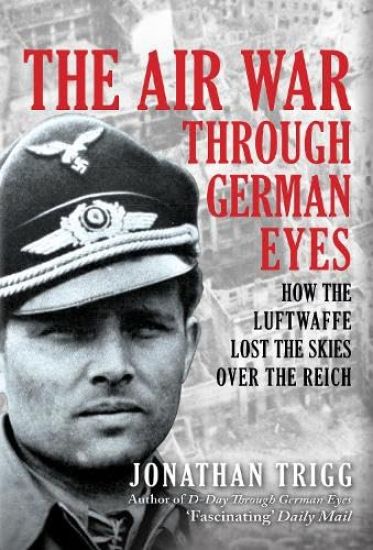
The Air War Through German Eyes

The Air War Through German Eyes

Jonathan Trigg

AMBERLEY PUBLISHING
2024
sidottu
Starting with leaflet drops in 1940, the aerial offensive against the Nazis’ homeland grew into a huge armada that pulverised much of Germany, seriously damaging her ability to make war and killing hundreds of thousands. By day, the Flying Fortresses of the Mighty Eighth US Airforce confronted the day fighters of Luftflotte Reich, and then it was the turn of Bomber Command’s Lancasters to fight off the deadly predators of the Nachtjagd (night hunters). The tactics and technology of Allied escort fighters evolved quickly though the war years, as they did for the defending German fighters. For the Allied airmen who fought this war the price was frighteningly high, for those who opposed them – in the air and on the ground – it was even higher. As the bombing increased, Nazi high command was forced to devote more and more resources to try and defeat the Allied campaign, just when those same resources were desperately needed elsewhere, both on the Russian Front and, after D-Day on 6 June 1944, on the new Western Front. Written from the ‘other side’ and told as much as possible through the words of the veterans, this is an important book on one of the most controversial campaigns of the Second World War.
The Battle of Stalingrad Through German Eyes

The Battle of Stalingrad Through German Eyes

Jonathan Trigg

AMBERLEY PUBLISHING
2024
pokkari
Five months, one week and three days of hell. The German offensive to capture Stalingrad began in August 1942, using Friedrich Paulus’s 6th Army and elements of the 4th Panzer Army. The attack was supported by intense bombing that reduced much of the city to rubble. The battle degenerated into house-to-house fighting, as both sides fought for the city on the Volga. By mid-November, the Germans were on the brink of victory as the Soviet defenders clung on to a final few slivers of land along the west bank of the river. Then, on 19 November, the Red Army launched Operation Uranus, targeting the weaker Romanian armies protecting the 6th Army’s flanks. The ill-equipped Romanians were overrun and the 6th Army was cut off and surrounded. Hitler was determined to hold the city – the symbolic namesake of the Soviet leader – and forbade the 6th Army from attempting a breakout, insisting they be supplied by air instead; in February 1943, without food or ammunition, some 91,000 starving, lice-ridden Germans surrendered. The losses on both sides were eye-watering – the Soviets alone suffered something approaching half a million dead and more than 650,000 sick or wounded – and in his unique style author Jonathan Trigg reveals the human agony behind such statistics through the words of the Germans who were there. Was it all over after the surrender? Of course not. Death marches did for many: Landser Josef Farber remembered: ‘We set out with 1,200 men … about 120 were alive when we reached the camp.’ This was war at its rawest – this was Stalingrad.
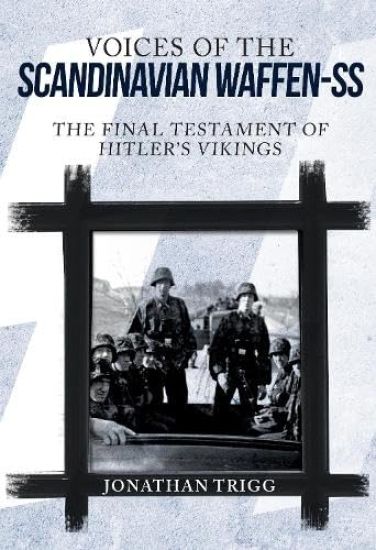
Voices of the Scandinavian Waffen-SS

Voices of the Scandinavian Waffen-SS

Jonathan Trigg

AMBERLEY PUBLISHING
2024
pokkari
At the beginning of the Second World War Nazi Germany invaded and occupied Denmark and Norway, but left neutral Sweden alone. Less than a year later citizens from all three of those Scandinavian nations volunteered to join the Nazi Waffen-SS and go and fight on the newly formed Eastern Front against Stalin’s Soviet Union. By the end of the war in 1945 the number of Scandinavians who had fought in the Waffen-SS had reached the thousands. Casualties were high, but there were survivors and they returned home, often to face retribution and condemnation. As time marches on the veterans are passing away. This book is about the war they fought in their own words – their last testament before they are all gone. The motivation of these men was complex: many volunteered through a deep hatred of communism, particularly in light of Moscow’s invasion of Finland in the Winter War. Some simply believed in Hitler’s vision of a new world order, while others were just young men with a craving for adventure. The Scandinavian Waffen-SS, in various configurations, saw action on the Eastern Front from 1941 onwards – at the siege of Leningrad, in the cauldron of the Demyansk Pocket, in the Caucasus, and famously at Narva in Estonia and back into Germany itself with the remnants fighting to virtual extinction in the ruins of Berlin as the war came to a bloody close. For these men who had chosen the ‘wrong’ side, the war was certainly not over. Some fled to Germany, some returned home to recrimination and prison. Jonathan Trigg has interviewed some of the last survivors, who tell their story with absolute truthfulness: after so many years, they have nothing to lose. The interviews and images gathered within are vital historical documents.
The Defeat of the Luftwaffe

The Defeat of the Luftwaffe

Jonathan Trigg

Amberley Publishing
2018
pokkari
In 1939 and 1940 the Nazi blitzkrieg crushed Poland and the Low Countries and France. This was a new type of warfare with air and ground forces working hand-in-glove and sweeping away all resistance. On the ground the new panzer divisions symbolised this combat revolution, and in the air its symbol was the all-conquering Luftwaffe with its fleets of Stuka dive bombers. When Hitler looked further east in 1941, the Luftwaffe turned with him, spearheading the largest invasion in world history as the Wehrmacht launched Operation Barbarossa to annihilate Stalin’s Soviet Union. Within weeks they had destroyed thousands of Red Air Force planes and ruled the skies. Yet less than four years later that same Red Air Force was flying unopposed over Hitler’s burning Reich Chancellery in Berlin and his much-vaunted Luftwaffe lay in utter ruins. How did this happen? Using original research and exceptional illustrations, including photos of planes from both sides, this book explains how the Nazi Luftwaffe’s certain victory in the east was transformed into ashes through incompetence, misjudgement and hubris.
To VE-Day Through German Eyes

To VE-Day Through German Eyes

Jonathan Trigg

Amberley Publishing
2020
sidottu
‘If Germany stays united and marches to the rhythm of its revolutionary socialist outlook, it will be unbeatable. Our indestructible will to life, and the driving force of the Führer’s personality guarantee this.’ (Joseph Goebbels, 4 June 1943.) It wasn’t and it didn’t. After the collapse of the German Army in the West in August 1944, the western Allies raced towards the borders of the Reich itself, and in the East the victorious Red Army was doing the same – everyone believed the war would be over by Christmas. But it wasn’t. Somehow, Nazi Germany managed to stave off final defeat until May the following year. In the end the agony was brought to a close with the hammer and sickle flying over the ruins of Berlin. The much-vaunted ‘Thousand Year Reich’ had lasted just a dozen years, but in that time it had wrought havoc across the globe. With defeat came the wholesale surrender of the once-proud Wehrmacht; hosts of men suddenly found themselves miles from home in territories ravaged by war. Amongst their ranks were thousands of non-Germans from all over Europe, men – mostly ex-Waffen-SS – who had thrown in their lot with the Germans; they were now ‘collaborators’ and ‘traitors’ and would return home to face the justice of the victors. Most histories focus on the fate of Adolf Hitler and German High Command on the road to the bunker beneath the rubble of Berlin, but on the German side in particular, as defeat loomed this was a battle that would be fought by junior officers and other ranks as the Wehrmacht fell apart. Following on from his successful D-Day Through German Eyes: How the Wehrmacht Lost France, Jonathan Trigg seeks with this second volume to tell the story of Nazi Germany’s final defeat through the voices of the men – and women – who witnessed it first-hand. This narrative is written from the ‘other side’ and told as much as possible through the words of the combatants and civilian witnesses.
Hastings 1066

Hastings 1066

Jonathan Trigg

Dundurn Press
2016
nidottu
The battle in which the destruction of the shield wall changed Western Europe forever. In 1066, a foreign invader won the throne of England in a single battle and changed not only the history of the British Isles but of Christendom forever. Harold Godwinson's army, exhausted from their victory against an invading Norwegian Viking army at the Battle of Stamford Bridge in the north, and his navy, scattered by storms, could not hold back William of Normandy. But would the invasion have succeeded if the two armies had met on equal terms? Author and ex-Captain in the Royal Anglian Regiment Jonathan Trigg brings a soldier's eye to the story to explain the precise circumstances of the conflict and the reasons for the outcome. The Battle of Hastings is in fact a tactical lesson in the use of all arms: Harold's forces consisted entirely of infantry. William had the best cavalry in Europe, perhaps the world, heavily armoured and armed with lance and shield. He also had crossbowmen, never before seen in England. This book gives a clear, concise account of the Battle of Hastings and the events that influenced it, supported by a timeline of events and orders of battle. Over fifty images illustrate the events during this momentous campaign.