Kirjojen hintavertailu. Mukana 11 717 486 kirjaa ja 12 kauppaa.

Kirjahaku

Etsi kirjoja tekijän nimen, kirjan nimen tai ISBN:n perusteella.

16 kirjaa tekijältä Jonathon Green

Vulgar Tongue: Green's History of Slang

Vulgar Tongue: Green's History of Slang

Jonathon Green

Oxford University Press
2014
sidottu
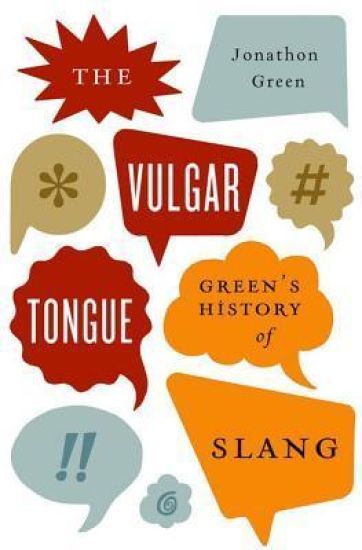
Once the language of thieves and beggars, slang is an ever present part of today's culture for people across the strata. It allows us to connect to others, to express otherwise guarded thoughts, and to convey humor in the everyday. But how did slang escape its stigma as the language of the streets and integrate itself so seamlessly with "standard English?" The Vulgar Tongue tells the full story of English language slang, from its origins in early British beggar books to its spread in American and Australian culture in the eighteenth century. The aim is not to record the history of the over 125,000 English words that make up the lexis. Rather, the author focuses on the common, often profane themes that run through the word-list--crime, sex, bodily parts and functions, insults, and drink and drugs--and their scope and function throughout the various cultures and overlapping subcultures of English language history, from the sporting world to the university campus to ethnic communities. In tracing its development and trajectory throughout the English-speaking world, Jonathon Green offers an impassioned defence for its vitality, showing how slang has grown into a modern, versatile vocabulary that has nevertheless established its own role in contemporary English. Drawing on thirty years' worth of research, The Vulgar Tongue is a celebration of the words and phrases of an overlooked aspect of human language and interaction.
Crooked Talk

Crooked Talk

Jonathon Green

Cornerstone
2016
pokkari
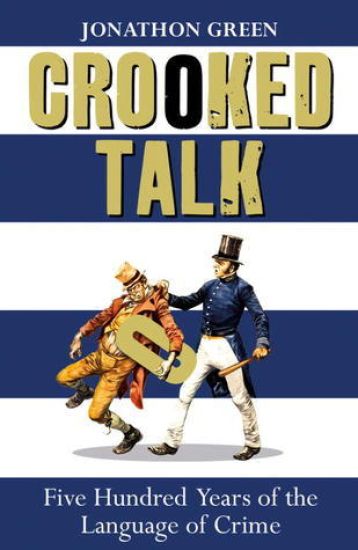
The language of crime has a long and venerable history - in fact, the first collection of words specifically used by criminals, Hye-Way to the Spittel House, dates from as early as 1531.
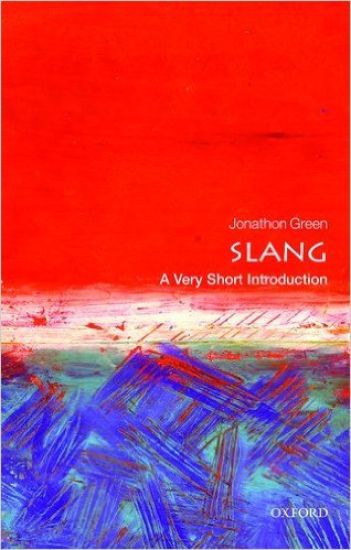
Slang

Slang

Jonathon Green

Oxford University Press
2016
nidottu
Slang, however one judges it, shows us at our most human. It is used widely and often, typically associated with the writers of noir fiction, teenagers, and rappers, but also found in the works of Shakespeare and Dickens. It has been recorded since at least 1500 AD, and today's vocabulary, taken from every major English-speaking country, runs to over 125,000 slang words and phrases. This Very Short Introduction takes readers on a wide-ranging tour of this fascinating sub-set of the English language. It considers the meaning and origins of the word 'slang' itself, the ideas that a make a word 'slang', the long-running themes that run through slang, and the history of slang's many dictionaries. ABOUT THE SERIES: The Very Short Introductions series from Oxford University Press contains hundreds of titles in almost every subject area. These pocket-sized books are the perfect way to get ahead in a new subject quickly. Our expert authors combine facts, analysis, perspective, new ideas, and enthusiasm to make interesting and challenging topics highly readable.
The A - Z of Nuclear Jargon (Routledge Revivals)
First published in 1986, the purpose of this dictionary is to clarify the technology behind nuclear jargon. The entries deal with all areas of nuclear warfare: its strategies and tactics, personnel and weapons systems, arms control and disarmament talks. The terminology of the nuclear age expands and changes as fast as the weapons and strategies it describes; the dictionary therefore covers a span ranging from the first tentative post-Hiroshima ideas and systems through to the near-fictions of the ‘Star Wars’ initiative. This fascinating reissue will be of particular value to those in need of a comprehensive guide to the vocabulary of nuclear warfare, as well as students of linguistics with a particular interest in slang and jargon.
The A - Z of Nuclear Jargon (Routledge Revivals)
First published in 1986, the purpose of this dictionary is to clarify the technology behind nuclear jargon. The entries deal with all areas of nuclear warfare: its strategies and tactics, personnel and weapons systems, arms control and disarmament talks. The terminology of the nuclear age expands and changes as fast as the weapon and strategies it describes; the dictionary therefore covers a span ranging from the first tentative post-Hiroshima ideas and systems through to the near-fictions of the ‘Star Wars’ initiative.
Newspeak (Routledge Revivals)

Newspeak (Routledge Revivals)

Jonathon Green

Routledge
2013
sidottu
George Orwell coined the term ‘Newspeak’ for his novel 1984, the purpose of which was designed to shrink vocabularies and eliminate subtlety and nuance. For this dictionary, first published to herald the year 1984, Jonathon Green compiled nearly 8, 000 entries – selected from the slangs and specific vocabularies of trades, professions and interests – covering such areas as the world of entertainment, the media, the military economics, and finance. This dictionary provides an accurate and useful linguistic guide for students of lexicography and an interesting compendium for the general inquisitive reader.
Newspeak (Routledge Revivals)

Newspeak (Routledge Revivals)

Jonathon Green

Routledge
2015
nidottu
George Orwell coined the term ‘Newspeak’ for his novel 1984, the purpose of which was designed to shrink vocabularies and eliminate subtlety and nuance. For this dictionary, first published to herald the year 1984, Jonathon Green compiled nearly 8, 000 entries – selected from the slangs and specific vocabularies of trades, professions and interests – covering such areas as the world of entertainment, the media, the military economics, and finance. This dictionary provides an accurate and useful linguistic guide for students of lexicography and an interesting compendium for the general inquisitive reader.
Dictionary of Jargon (Routledge Revivals)
First published in 1987, the Dictionary of Jargon expands on its predecessor Newspeak (Routledge Revivals, 2014) as an authoritative reference guide to specialist occupational slang, or jargon. Containing around 21, 000 entries, the dictionary encompasses a truly eclectic range of fields and includes extensive coverage of both British and U.S. jargon. Areas dealt with range from marketing to medicine, from advertising to artificial intelligence and from skiing to sociology. This is a fascinating resource for students of lexicography and professional lexicographers, as well as the general inquisitive reader.
Dictionary of Jargon (Routledge Revivals)
First published in 1987, the Dictionary of Jargon expands on its predecessor Newspeak (Routledge Revivals, 2014) as an authoritative reference guide to specialist occupational slang, or jargon. Containing around 21, 000 entries, the dictionary encompasses a truly eclectic range of fields and includes extensive coverage of both British and U.S. jargon. Areas dealt with range from marketing to medicine, from advertising to artificial intelligence and from skiing to sociology. This is a fascinating resource for students of lexicography and professional lexicographers, as well as the general inquisitive reader.
Days In The Life

Days In The Life

Jonathon Green

VINTAGE
1998
pokkari
Jonothan Green offers a time trip from lat-fifties CND, beatniks and bop to the threshold of our own decade's designer revolutionaries and style warriors. . . . . Green has collected 101 quintessential sixties groovers and lovingly teased out their memories, all of them refreshingly self-critical and remarkably sharpened by hindsight. . .
The Stories of Slang

The Stories of Slang

Jonathon Green

Robinson
2017
pokkari
'If you're up for an adventure through the back alleys of English, The Stories of Slang will not disappoint.' Kory Stamper, Times Literary Supplement'Few lexicographers are lucky enough to have both endlessly pleasurable work and the talent to write amusingly about [slang]. Jonathon Green is one . . . Lovers of language should be grateful to those who create slang, and to those few like Mr Green who make it their work to open this window into the psyche for the benefit of all.' - The Economist'By turns bawdy, sweary and irreverent, this book . . . is a fascinating look at how centuries of slang came to inform all aspects of social life, how it was used, and how much of it still lingers.' History RevealedLike the flesh-and-blood humans whose uncensored emotions it represents, slang's obsessions are sex, the body and its functions, and intoxication: drink and drugs. Slang does not do kind. It's about hatreds - both intimate and and national - about the insults that follow on, the sneers and the put-downs. Caring, sharing and compassion? Not at this address. There are over 10,000 terms focusing on sex, but love? Not one.Jonathon Green, aka 'Mr Slang', has drawn on the 600,000-plus citations that make up his magisterial Green's Dictionary of Slang (published 2010, now online at www.greensdictofslang.com) to tell some of slang's most entertaining stories. Categories range from The Body to Pulp Diction, via multi-cultural London English and pun-tastic gems.Mostly gazing up from the gutter, slang, perhaps surprisingly, also embraces the stars. These stories may look at drunken sailors, dubious doctors, and a shelf of dangerously potent cocktails, but slang does class acts as well. None more so than Shakespeare. Devotee of the double entendre, master of the pun, first to put nearly 300 slang terms in print. 'Shakespeare, uses, at my count, just over five hundred "slang" terms, of which 277 are currently the first recorded use of a given term. Among these are the beast with two backs, every mother's son, fat-headed, heifer (for woman), pickers and stealers (hands), small beer (insignificant matters), what the dickens, and many more.'http://jonathongreen.co.uk
Sounds & Furies

Sounds & Furies

Jonathon Green

Robinson
2019
pokkari
'In terms of a non-fiction account of how historical and contemporary language has been shaped by women, I really recommend lexicographer Jonathon Green's Sounds and Furies'ELEY WILIAMS, author of The Liar's Dictionary'When it comes to distaff dirtiness, mainstream males such as Dickens and Dekker make easy pickings, but Green finds the greatest treasures when he mudlarks on the margins. In Sounds & Furies, he has dredged up some gems.'EMMA BYRNE, Spectator'From fishwives to flappers and from music hall performers to Mumsnetters, women have indeed made contributions to the slang vocabulary of English; by bringing together so much fascinating material about their words and their worlds, this book makes its own contribution to the history of both women and language.'PROFESSOR DEBORAH CAMERON, Professor of Language and Communication, Worcester College, University of Oxford'Green comprehensively disproves that slang is inherently masculine. Mumsnetters and bulldaggers, flappers and slappers, shicksters and hash-slingers all put in their claims as slang-users in their own right in this entertaining and thought-provoking book. Any writer venturing into the contentious area of women as users, creators or objects of slang from now on will look to Green for guidance or for arguments.'JULIE COLEMAN, author of The Life of SlangSlang. The ultimate in man-made languages. The male gaze made verbal. A world where words for intercourse mean 'man hits woman', the penis is a gun, a knife or club and the vagina a terrifying tunnel. Possibly with teeth. Two thousand words for woman and every one a put-down. Even 'mother' is simply short for the grossest of obscenities. Thus the story, now and for several hundred years. But stories are just that and perhaps there's an alternative. In this book Jonathon Green, the leading collector of English-language slang and drawing on forty years of research in the field, asks whether women have another role to play. As slang's active, positive, rebellious subject, rather than its endlessly derided, submissive object. Sounds & Furies represents a quest to overturn a long-established, but far from invulnerable belief system. To show that throughout a recorded history that starts with Chaucer's bawdy, mouthy and magnificently self-willed Wife of Bath and carries on through a cast of working girls and villainesses, playwrights and bestselling authors, shop-girls and fish-wives and through to the modern, on-line worlds of Mumsnet and Tinder, women have always made slang their own. If slang has always been the language of the margins, then women, for all their numbers, have also been consigned to t
Odd Job Man

Odd Job Man

Jonathon Green

Jonathan Cape Ltd
2017
pokkari
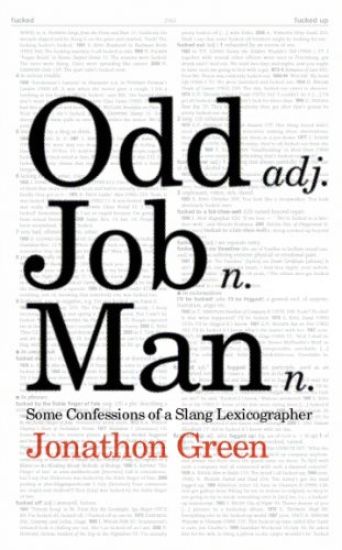
For thirty years Jonathon Green has been collecting slang – the indefinable language of the gutter, the brothel, the jail, the barroom – producing a succession of dictionaries, most recently the three-volume Green's Dictionary of Slang, that have been recognised as the most comprehensive and authoritative ever compiled. In this fascinating memoir Green reveals that he first began collecting slang in the 1970s, noticing that the contemporary authorities (notably Eric Partridge) preferred the past to the present, unaware of the huge array of new slang being coined by the counter-culture. He ponders why he still does this strange, lonely job, exploring the satisfaction that can be gained by tracking down the first use of a term just encountered in one of the cheap dime novels he devours for research. The lexis leans towards pimping and prostitution, crime and imprisonment, violence and cruelty, drunken and drugged debauches: what does this say about the man who spends every day truffling for it?A fascinating look at how one man has built a lexis of 125,000 words that includes 1,740 words for sexual intercourse, 1,351 for the penis, 540 for defecation/urination, 247 for fat, 219 for vomiting and 180 for anal sex, Odd Job Man will delight all those who love the words that the conventional dictionaries leave out.
Language!

Language!

Jonathon Green

Atlantic Books
2014
sidottu
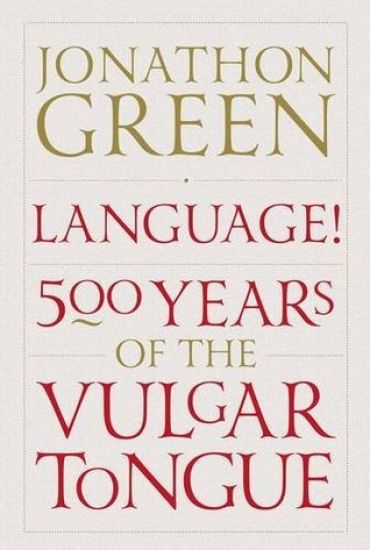
In this richly entertaining book, Jonathon Green traces the development of slang and its trajectory through society, and offers an impassioned argument for its defence. Beginning, at least in recorded terms, in the gutter and the thieves' tavern, and displayed only in a few criminological pamphlets, slang has made its way up and out: across social classes and into every medium.There is no doubt that slang deals with those areas of life that standard English often chooses to sidestep. Certainly, slang has many more synonyms for topics such as crime, drunkenness and recreational drug-taking, sexual intercourse and the parts of the body with which we conduct it (and a variety of other functions), for madness, stupidity, unattractiveness, violence, racism and nationalism. That, for the author, is its role and its charm. Often dismissed as 'bad' language or 'swear-words', slang, he argues, is a 'counter-language', the language that says no. Born in the street it resists the niceties of the respectable. It is language's film noir, its banana skin, its pin that pops pretention. It is neither respectable nor respectful. It can be cruel, it can also be inventive, creative and very often funny. It represents us at our most human. Language! is an exuberant and rewarding work that uncovers an oral history of marginality and rebellion, of dispossession and frustration, and it shows how slang gives a vocabulary and a voice to our most guarded thoughts.
Language!

Language!

Jonathon Green

Atlantic Books
2015
nidottu
In this richly entertaining book, Jonathon Green traces the development of slang and its trajectory through society, and offers an impassioned argument for its defence. Beginning, at least in recorded terms, in the gutter and the thieves' tavern, and displayed only in a few criminological pamphlets, slang has made its way up and out: across social classes and into every medium. There is no doubt that slang deals with those areas of life that standard English often chooses to sidestep. Certainly, slang has many more synonyms for topics such as crime, drunkenness and recreational drug-taking, sexual intercourse and the parts of the body with which we conduct it (and a variety of other functions), for madness, stupidity, unattractiveness, violence, racism and nationalism. That, for the author, is its role and its charm. Often dismissed as 'bad' language or 'swear-words', slang, he argues, is a 'counter-language', the language that says no. Born in the street it resists the niceties of the respectable. It is language's film noir, its banana skin, its pin that pops pretention. It is neither respectable nor respectful. It can be cruel, it can also be inventive, creative and very often funny. It represents us at our most human. Language! is an exuberant and rewarding work that uncovers an oral history of marginality and rebellion, of dispossession and frustration, and it shows how slang gives a vocabulary and a voice to our most guarded thoughts.