Kirjojen hintavertailu. Mukana 12 016 292 kirjaa ja 12 kauppaa.

Kirjahaku

Etsi kirjoja tekijän nimen, kirjan nimen tai ISBN:n perusteella.

5 kirjaa tekijältä Jonathon W. Moses

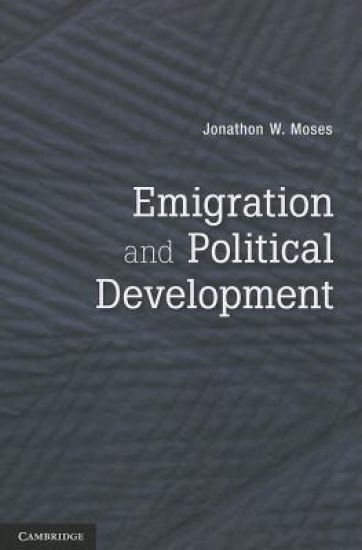
Emigration and Political Development

Emigration and Political Development

Jonathon W. Moses

Cambridge University Press
2011
pokkari
While policy makers, international organizations and academics are increasingly aware of the economic effects of emigration, the potential political effects remain understudied. This book maps the nature of the relationship that links emigration and political development. Jonathon W. Moses explores the nature of political development, arguing that emigration influences political development. In particular, he introduces a new cross-national database of annual emigration rates and analyzes specific cases of international emigration (and out-migration within countries) under varying political and economic contexts.

Norwegian Catch-Up

Norwegian Catch-Up

Jonathon W. Moses

Routledge
2017
sidottu
'Norwegian Catch-Up' looks at the early Norwegian economic trajectory in the light of its external commitments and opportunities. Detailing Norway's economic performance relative to other countries at a time characterized by globalization, it has a particular focus on the role of international trade, investment and migration. The book examines how a small open state adapted successfully to the demands of (and opportunities provided by) a global market place. Not only did Norway manage an impressive economic record, but it developed concomitantly a strong and articulate labor movement and resilient democratic institutions. In short, the Norwegian example provides hope for development in a context of globalization. This text provides the student with a pioneering new vantage point for understanding the nature and scope of today's globalization and its effect on economic (and political) development. It also provides a historical reflection on the liberal antecedent of modern social democracy.
Norwegian Catch-Up

Norwegian Catch-Up

Jonathon W. Moses

Routledge
2017
nidottu
Norwegian Catch-Up looks at the early Norwegian economic trajectory in light of its external commitments and opportunities. Detailing Norway's economic performance relative to other countries at a time characterized by globalization, it has particular focus on the role of international trade, investment and migration.The book examines how a small open state adapted successfully to the demands of (and opportunities provided by) a global market place. Not only did Norway manage an impressive economic record but it developed concomitantly. In short the Norwegian example provides hope for development in a context of globalization.This text provides the student with a pioneering new vantage point for understanding the nature and scope of today's globalization and its effect on economic (and political) development. It also provides a historical reflection on the liberal antecedent of modern social democracy.
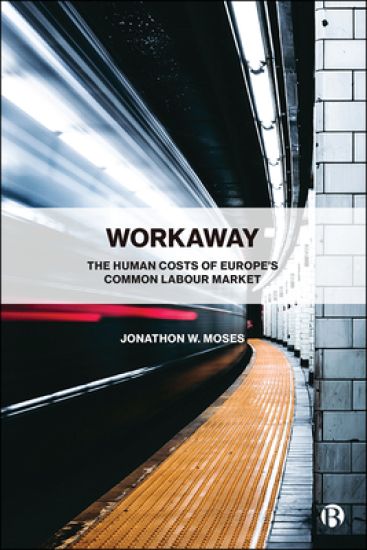
Workaway

Workaway

Jonathon W. Moses

Bristol University Press
2021
sidottu
This agenda-setting book shows how freedom of movement has made the integration of Europe’s labour markets a contentious issue, for example in the aftermath of the eurocrisis, where workers had to make great sacrifices to enable the currency area to function. It argues that the process of market integration in Europe has undermined the power and influence of European workers and generated significant human costs. In starting from the position of labour, this book offers an alternative approach which balances the needs of justice and efficiency. With appeal across a wide range of readers interested in economic integration, it provides lessons for policymakers in how to integrate Europe’s member states to better protect workers and citizens.
Workaway

Workaway

Jonathon W. Moses

Bristol University Press
2023
nidottu
This agenda-setting book shows how freedom of movement has made the integration of Europe’s labour markets a contentious issue, for example in the aftermath of the eurocrisis, where workers had to make great sacrifices to enable the currency area to function. It argues that the process of market integration in Europe has undermined the power and influence of European workers and generated significant human costs. In starting from the position of labour, this book offers an alternative approach which balances the needs of justice and efficiency. With appeal across a wide range of readers interested in economic integration, it provides lessons for policymakers in how to integrate Europe’s member states to better protect workers and citizens.