Kirjojen hintavertailu. Mukana 11 717 486 kirjaa ja 12 kauppaa.

Kirjahaku

Etsi kirjoja tekijän nimen, kirjan nimen tai ISBN:n perusteella.

4 kirjaa tekijältä Jordan D. Finkin

A Rhetorical Conversation

A Rhetorical Conversation

Jordan D. Finkin

Pennsylvania State University Press
2015
pokkari
This book is about Jewish language. The fact that Jews speak and write in distinctive ways is well known. (The journalist Mike Royko called it “Hebonics.”) These forms of expression actually draw from many sources and have been employed in popular culture from Henry Roth’s Call It Sleep to the novels of Saul Bellow to contemporary television. What has received less attention is what allowed these modern forms to flow from a rich body of Yiddish literature. This book fills that gap by exploring the language of modern Yiddish literature, addressing emblematically why Jews answer a question with a question. Through a series of case studies, A Rhetorical Conversation explores various distinctive aspects of Yiddish literature to explain the nature and importance of Jewish discourse: the way of speaking, writing, arguing, and thinking developed by Yiddish culture based on prolonged and intimate contact with traditional texts.
A Rhetorical Conversation

A Rhetorical Conversation

Jordan D. Finkin

Pennsylvania State University Press
2010
sidottu
This book is about Jewish language. The fact that Jews speak and write in distinctive ways is well known. (The journalist Mike Royko called it “Hebonics.”) These forms of expression actually draw from many sources and have been employed in popular culture from Henry Roth’s Call It Sleep to the novels of Saul Bellow to contemporary television. What has received less attention is what allowed these modern forms to flow from a rich body of Yiddish literature. This book fills that gap by exploring the language of modern Yiddish literature, addressing emblematically why Jews answer a question with a question. Through a series of case studies, A Rhetorical Conversation explores various distinctive aspects of Yiddish literature to explain the nature and importance of Jewish discourse: the way of speaking, writing, arguing, and thinking developed by Yiddish culture based on prolonged and intimate contact with traditional texts.
An Inch or Two of Time

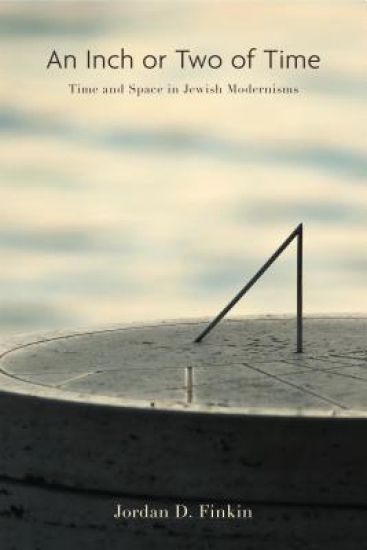
An Inch or Two of Time

Jordan D. Finkin

Pennsylvania State University Press
2015
sidottu
In literary modernism, time and space are sometimes transformed from organizational categories into aesthetic objects, a transformation that can open dramatic metaphorical and creative possibilities. In An Inch or Two of Time, Jordan Finkin shows how Jewish modernists of the early twentieth century had a distinct perspective on this innovative metaphorical vocabulary. As members of a national-ethnic-religious community long denied the rights and privileges of self-determination, with a dramatically internalized sense of exile and landlessness, the Jewish writers at the core of this investigation reimagined their spatial and temporal orientation and embeddedness. They set as the fulcrum of their imagery the metaphorical power of time and space. Where non-Jewish writers might tend to view space as a given—an element of their own sense of belonging to a nation at home in a given territory—the Jewish writers discussed here spatialized time: they created an as-if space out of time, out of history. They understood their writing to function as a kind of organ of perception on its own. Jewish literature thus presents a particularly dynamic system for working out the implications of that understanding, and as such, this book argues, it is an indispensable part of the modern library.
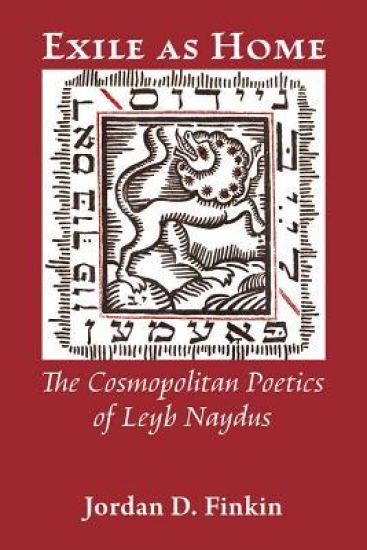
Exile as Home

Exile as Home

Jordan D. Finkin

Hebrew Union College Press,U.S.
2017
sidottu
Leyb Naydus (1890-1918) expanded the possibilities of Yiddish poetry via his rich cosmopolitan works, introducing a wealth of themes and forms seldom seen in that language, including some of its first sonnets of literary merit. A devotee of European Symbolism, Nayduss poems shimmer with his love of nature, especially that of his native Lithuania. His ground-breaking poetry explores classicism, exoticism, eroticism, Orientalism, and Judaism with equal verve. Nayduss work adds to our understanding of the creation of a major literature in a minor language. Indeed, this book shows how the poetics of minor-language literatures innovate simultaneously from within and without, and how those interactions can offer even greater creative possibilities than the major-language literatures with which they were in conversation. Nayduss unique body of work not only expanded the repertoire of Yiddish poetry, but also cemented Yiddishs place on the world literary stage, convincing young Yiddish writers that this was a language that could fulfill their artistic aspirations. Literary critic Naftoli Vaynigs lengthy essay on Naydus, written in 1943 in the Vilne Ghetto, makes a remarkable case for why the poems of this cosmopolitan aesthete, who died so tragically young, should serve as a fitting emblem for a culture threatened with extinction. Finkins Exile as Home, published here with a translation of Vaynigs essay, Naydus Studies, extends that argument.