Kirjojen hintavertailu. Mukana 11 244 527 kirjaa ja 12 kauppaa.

Kirjahaku

Etsi kirjoja tekijän nimen, kirjan nimen tai ISBN:n perusteella.

6 kirjaa tekijältä Josef Chytry

The Aesthetic State

The Aesthetic State

Josef Chytry

University of California Press
2018
pokkari
Shortly after the middle of the eighteenth century a number of thinkers from the German-speaking lands began to create a paradigm drawn from their impressions of a distant historical reality, ancient Athens; added to it a new mode of thought, modern dialectics; and at times even paid homage to the ancient Greek deity Dionysos, to materialize their longing for an ideal. The influence of these forces came to permeate modern German consciousness, deifying the concept and activity of art, reviving the Platonic (and Sanskrit) vision of the cosmos as play and aesthetic creation, and projecting a way of life and labor that would honor not the commodity but the aesthetic product. With rigorous commitment to primary sources and an unflagging critical engagement with the ideas and concrete situations they raise, Josef Chytry provides a comprehensive and extensive study of this central motif in German thought from Winckelmann to Marcuse. Chytry takes "aesthetic state" to signify the concentrated modern intellectual movement to revitalize the radical Hellenic tradition of the polis as the site of a beautiful or good life. The movement begins with the classicism of Winckelmann, Wiemar aesthetic humanism (Wieland, Herder, Goethe), and Schiller's formal theory of the aesthetic state and continues through the idealism of the Swabian dialecticians Holderlin, Hegel, and Schelling and the realism of Marx, Wagner, and Nietzsche. It culminates in the postrealism of Heiddegger, Marcuse, and the aesthetic modernist artist Walter Spies, who initiated a dialogue with the non-Western "theatre state" of the isle of Bali. Josef Chytry concludes that the future speculation on the ideal of an aesthetic state must come to terms with the postrealist themes of ontological anarchy, aesthetic ethos, and theatre state. In a bold effort to stimulate such speculation, Chytry indicates how proponents of the aesthetic state might join forces with Rawlsian political theory to promote further the organon of persuasion that, in his view, serves as the common fount for the ancient, dialectical, and contractarian quests for the polis. This title is part of UC Press's Voices Revived program, which commemorates University of California Press’s mission to seek out and cultivate the brightest minds and give them voice, reach, and impact. Drawing on a backlist dating to 1893, Voices Revived makes high-quality, peer-reviewed scholarship accessible once again using print-on-demand technology. This title was originally published in 1989.
The Aesthetic State

The Aesthetic State

Josef Chytry

University of California Press
2024
sidottu
Shortly after the middle of the eighteenth century a number of thinkers from the German-speaking lands began to create a paradigm drawn from their impressions of a distant historical reality, ancient Athens; added to it a new mode of thought, modern dialectics; and at times even paid homage to the ancient Greek deity Dionysos, to materialize their longing for an ideal. The influence of these forces came to permeate modern German consciousness, deifying the concept and activity of art, reviving the Platonic (and Sanskrit) vision of the cosmos as play and aesthetic creation, and projecting a way of life and labor that would honor not the commodity but the aesthetic product. With rigorous commitment to primary sources and an unflagging critical engagement with the ideas and concrete situations they raise, Josef Chytry provides a comprehensive and extensive study of this central motif in German thought from Winckelmann to Marcuse. Chytry takes "aesthetic state" to signify the concentrated modern intellectual movement to revitalize the radical Hellenic tradition of the polis as the site of a beautiful or good life. The movement begins with the classicism of Winckelmann, Wiemar aesthetic humanism (Wieland, Herder, Goethe), and Schiller's formal theory of the aesthetic state and continues through the idealism of the Swabian dialecticians Holderlin, Hegel, and Schelling and the realism of Marx, Wagner, and Nietzsche. It culminates in the postrealism of Heiddegger, Marcuse, and the aesthetic modernist artist Walter Spies, who initiated a dialogue with the non-Western "theatre state" of the isle of Bali. Josef Chytry concludes that the future speculation on the ideal of an aesthetic state must come to terms with the postrealist themes of ontological anarchy, aesthetic ethos, and theatre state. In a bold effort to stimulate such speculation, Chytry indicates how proponents of the aesthetic state might join forces with Rawlsian political theory to promote further the organon of persuasion that, in his view, serves as the common fount for the ancient, dialectical, and contractarian quests for the polis. This title is part of UC Press's Voices Revived program, which commemorates University of California Press’s mission to seek out and cultivate the brightest minds and give them voice, reach, and impact. Drawing on a backlist dating to 1893, Voices Revived makes high-quality, peer-reviewed scholarship accessible once again using print-on-demand technology. This title was originally published in 1989.
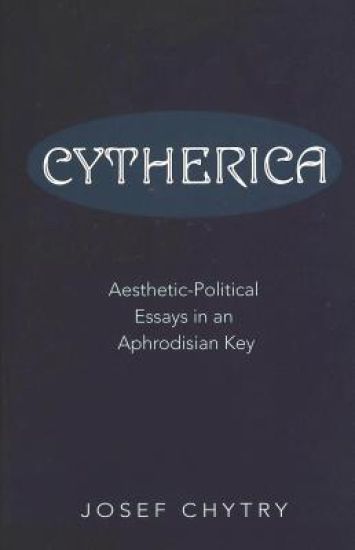
Cytherica

Cytherica

Josef Chytry

Peter Lang Publishing Inc
2005
sidottu
"Cytherica" boldly introduces a new faculty of thought called cytherics to contemporary academic discursivities. It defines cytherics as the sighting and siting of an aesthetic-erotic, or -aphrodisian-, environment. Building on the furthest extensions of aesthetics since the eighteenth century, cytherics develops both the aesthetic-political and aesthetic-erotic dimensions of the aesthetic tradition to formulate exciting new responses to the pressing issues of contemporary societies. While drawing richly on the background of German and European Hellenism, this book provides valuable new insights for those working in the areas of the aesthetic-political, critical theory, postmodernist discursivities, and dialectical speculation."
Mountain of Paradise

Mountain of Paradise

Josef Chytry

Peter Lang Publishing Inc
2013
sidottu
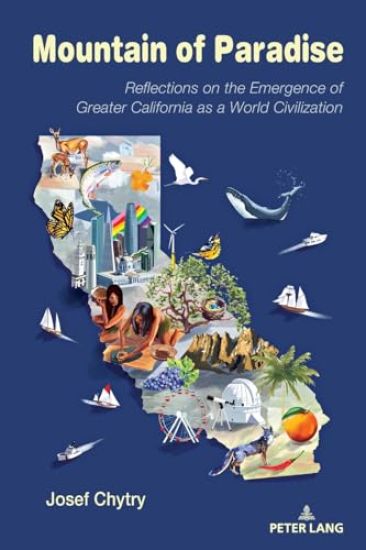
Mountain of Paradise challenges conventional taxonomies of world civilizations by introducing a new and formidable candidate: the civilization of Greater California presently incubating as the evolution of California into a veritable «nation-state» or «world commonwealth» according to contemporary commentators and scholars. Through a series of reflective essays it clarifies the momentous implications of this claim by a thorough account of the genealogical origins of «California», permutation into its speculative moment of self-identity thanks to prolonged creative interchange with European thought and philosophy, advancement to status of a socio-economic powerhouse by the 1950s and 1960s, invention of distinctly Californian variants of political economy by the 1970s and 1980s, and present domination over regions formerly classified as «Greater California». In its range and originality Mountain of Paradise constitutes a robust contribution to current political, social, economic and global thematics.
Cosmotheism

Cosmotheism

Josef Chytry

Peter Lang Publishing Inc
2020
sidottu
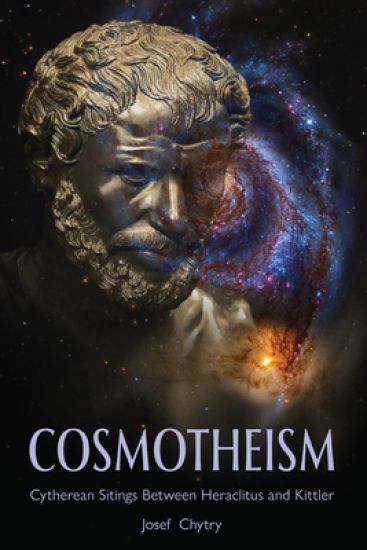
Cosmotheism retrieves the importance of a cosmic approach to reality through its revival of the heliocentric creed championed by Copernicus, Bruno and Kepler, through its critiques of historical patterns of politics and technology, and through its sponsorship of emancipatory thinkers, artists, "psychonauts," and cosmologists.
Mountain of Paradise

Mountain of Paradise

Josef Chytry

Peter Lang AG, Internationaler Verlag der Wissenschaften
2025
nidottu
Mountain of Paradise challenges conventional taxonomies of world civilizations by introducing a new and formidable candidate: the civilization of Greater California presently incubating as the evolution of California into a veritable «nation-state» or «world commonwealth» according to contemporary commentators and scholars. Through a series of reflective essays it clarifies the momentous implications of this claim by a thorough account of the genealogical origins of «California», permutation into its speculative moment of self-identity thanks to prolonged creative interchange with European thought and philosophy, advancement to status of a socio-economic powerhouse by the 1950s and 1960s, invention of distinctly Californian variants of political economy by the 1970s and 1980s, and present domination over regions formerly classified as «Greater California». In its range and originality Mountain of Paradise constitutes a robust contribution to current political, social, economic and global thematics.