Kirjojen hintavertailu. Mukana 11 372 265 kirjaa ja 12 kauppaa.

Kirjahaku

Etsi kirjoja tekijän nimen, kirjan nimen tai ISBN:n perusteella.

6 kirjaa tekijältä Josef Früchtl

Trust in the World

Trust in the World

Josef Früchtl

Routledge
2020
nidottu
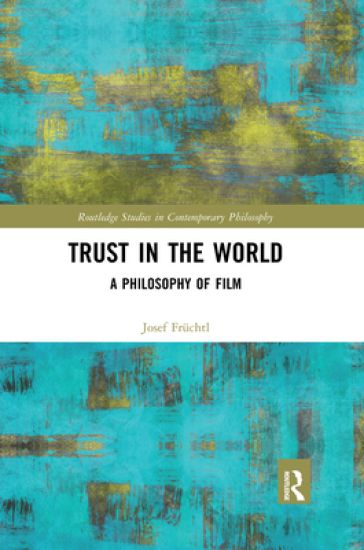
This book examines the theory, originally raised in Gilles Deleuze’s philosophy of film, that cinema has the power to restore our trust in the world. Früchtl demonstrates that cinema does this in three main ways: by restoring our belief in the absurd, in the body and in a sceptical abstention from judging and acting. Cinema shares this ability with other arts, but what sets it apart in particular is that it evokes Modernity and its principle of subjectivity. This book further develops the idea of trust and cinema by synthesizing the philosophies of complementary thinkers such as Kant, Nancy, Agamben, Benjamin and Rancière. It concludes with examination of Cavell’s solution to the problem of scepticism and a synthesis of Kantian aesthetic theory with Cavellian pragmatism. Originally published in German under the title Vertrauen in die Welt, this English-language translation features a new introduction that situates Früchtl’s work within contemporary analytical philosophy of film. It will be of interest to scholars working in Continental aesthetics, philosophy of film, and film theory.
The Impertinent Self

The Impertinent Self

Josef Früchtl

Stanford University Press
2009
sidottu
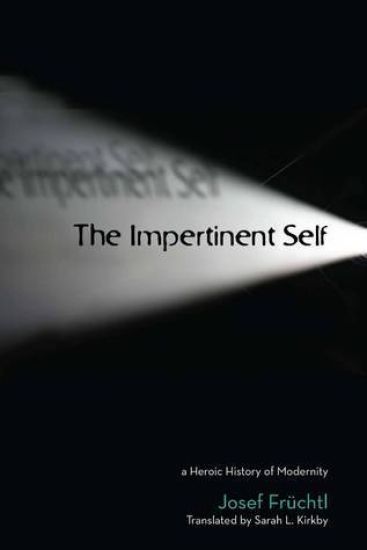
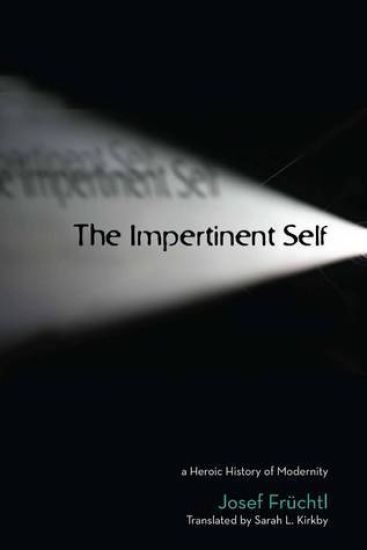
The Impertinent Self provides a philosophical and cultural theory of modernity by constructing a parallel between the philosophical self and the hero figure found in certain cinematic genres. Früchtl argues that modernity is not unified and should be conceived as a phenomenon consisting of three strata: the classical, the agonist, and the hybrid. He demonstrates this by following a dual trajectory: the shift in the concept of the self from German idealism to Romanticism and so-called postmodernism, and the evolution of the hero figure in the Western and in crime and science fiction movies. Früchtl takes a clear position within the ongoing discussion in the humanities and social sciences about modernity, a discussion that, in light of the work of Foucault, Lyotard, and Habermas, has too often neglected the importance of Romanticism. Similarly, he embraces the role of film and popular culture in modern society.
The Impertinent Self

The Impertinent Self

Josef Früchtl

Stanford University Press
2009
pokkari
The Impertinent Self provides a philosophical and cultural theory of modernity by constructing a parallel between the philosophical self and the hero figure found in certain cinematic genres. Früchtl argues that modernity is not unified and should be conceived as a phenomenon consisting of three strata: the classical, the agonist, and the hybrid. He demonstrates this by following a dual trajectory: the shift in the concept of the self from German idealism to Romanticism and so-called postmodernism, and the evolution of the hero figure in the Western and in crime and science fiction movies. Früchtl takes a clear position within the ongoing discussion in the humanities and social sciences about modernity, a discussion that, in light of the work of Foucault, Lyotard, and Habermas, has too often neglected the importance of Romanticism. Similarly, he embraces the role of film and popular culture in modern society.
Trust in the World

Trust in the World

Josef Früchtl

Routledge
2017
sidottu
This book examines the theory, originally raised in Gilles Deleuze’s philosophy of film, that cinema has the power to restore our trust in the world. Früchtl demonstrates that cinema does this in three main ways: by restoring our belief in the absurd, in the body and in a sceptical abstention from judging and acting. Cinema shares this ability with other arts, but what sets it apart in particular is that it evokes Modernity and its principle of subjectivity. This book further develops the idea of trust and cinema by synthesizing the philosophies of complementary thinkers such as Kant, Nancy, Agamben, Benjamin and Rancière. It concludes with examination of Cavell’s solution to the problem of scepticism and a synthesis of Kantian aesthetic theory with Cavellian pragmatism. Originally published in German under the title Vertrauen in die Welt, this English-language translation features a new introduction that situates Früchtl’s work within contemporary analytical philosophy of film. It will be of interest to scholars working in Continental aesthetics, philosophy of film, and film theory.