Kirjojen hintavertailu. Mukana 11 706 272 kirjaa ja 12 kauppaa.

Kirjahaku

Etsi kirjoja tekijän nimen, kirjan nimen tai ISBN:n perusteella.

5 kirjaa tekijältä Josef Lössl

Interpreting the Bible and Aristotle in Late Antiquity
This book brings together sixteen studies by internationally renowned scholars on the origins and early development of the Latin and Syriac biblical and philosophical commentary traditions. It casts light on the work of the founder of philosophical biblical commentary, Origen of Alexandria, and traces the developments of fourth- and fifth-century Latin commentary techniques in writers such as Marius Victorinus, Jerome and Boethius. The focus then moves east, to the beginnings of Syriac philosophical commentary and its relationship to theology in the works of Sergius of Reshaina, Probus and Paul the Persian, and the influence of this continuing tradition in the East up to the Arabic writings of al-Farabi. There are also chapters on the practice of teaching Aristotelian and Platonic philosophy in fifth-century Alexandria, on contemporaneous developments among Byzantine thinkers, and on the connections in Latin and Syriac traditions between translation (from Greek) and commentary. With its enormous breadth and the groundbreaking originality of its contributions, this volume is an indispensable resource not only for specialists, but also for all students and scholars interested in late-antique intellectual history, especially the practice of teaching and studying philosophy, the philosophical exegesis of the Bible, and the role of commentary in the post-Hellenistic world as far as the classical renaissance in Islam.
The Early Church

The Early Church

Josef Lössl

T. T.Clark Ltd
2009
nidottu
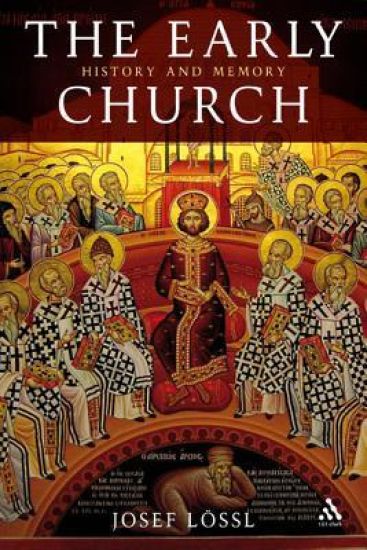
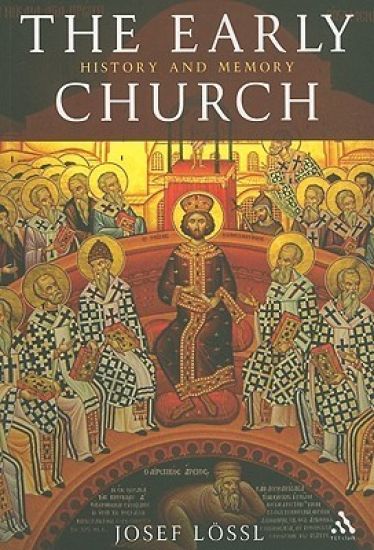
This introductory study is written from a new religious and theological studies perspective. Building on latest research in history and archaeology it also deals with reception studies, including popular literature, fiction, film, art and new religions. The book illustrates how perceptions of the early church still dominate the wider cultural discourse and how much that discourse is in need of a historically informed notion of 'the early church'. The book falls into seven chapters. Chapter I discusses concepts like 'early church' and 'early Christianity' and wider aspects of reception. Chapter II deals with concepts of history, memory and cultural origins in early Christian thought and its study. Chapter III outlines varieties of religious traditions in the context of the early church, especially Hellenistic Judaism. Chapter IV discusses Jewish and Gentile identities in the early church. Chapter V deals with the emergence of an early Christian literature. Chapter VI outlines the development of early Christian religious practices, and Chapter VII looks at leadership and political structures in and around the early church and their implications.
The Early Church

The Early Church

Josef Lössl

T. T.Clark Ltd
2009
sidottu
This introductory study is written from a new religious and theological studies perspective. Building on latest research in history and archaeology it also deals with reception studies, including popular literature, fiction, film, art and new religions. The book illustrates how perceptions of the early church still dominate the wider cultural discourse and how much that discourse is in need of a historically informed notion of 'the early church'. The book falls into seven chapters. Chapter I discusses concepts like 'early church' and 'early Christianity' and wider aspects of reception. Chapter II deals with concepts of history, memory and cultural origins in early Christian thought and its study. Chapter III outlines varieties of religious traditions in the context of the early church, especially Hellenistic Judaism. Chapter IV discusses Jewish and Gentile identities in the early church. Chapter V deals with the emergence of an early Christian literature. Chapter VI outlines the development of early Christian religious practices, and Chapter VII looks at leadership and political structures in and around the early church and their implications.
Jerome of Stridon

Jerome of Stridon

Josef Lössl

Ashgate Publishing Limited
2009
sidottu
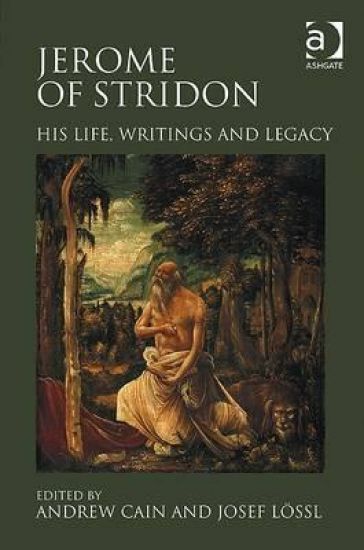
This book assembles eighteen studies by internationally renowned scholars that epitomize the latest and best advances in research on the greatest polymath in Latin Christian antiquity, Jerome of Stridon (c.346-420) traditionally known as "Saint Jerome." It is divided into three sections which explore topics such as the underlying motivations behind Jerome's work as a hagiographer, letter-writer, theological controversialist, translator and exegete of the Bible, his linguistic competence in Greek, Hebrew, and Syriac, his relations to contemporary Jews and Judaism as well as to the Greek and Latin patristic traditions, and his reception in both the East and West in late antiquity down through the Protestant Reformation. Familiar debates are re-opened, hitherto uncharted terrain is explored, and problems old and new are posed and solved with the use of innovative methodologies. This monumental volume is an indispensable resource not only for specialists on Jerome but also for students and scholars who cultivate interests broadly in the history, religion, society, and literature of the late antique Christian world.
Interpreting the Bible and Aristotle in Late Antiquity

Interpreting the Bible and Aristotle in Late Antiquity

Josef Lössl

Ashgate Publishing Limited
2011
sidottu
This book brings together sixteen studies by internationally renowned scholars on the origins and early development of the Latin and Syriac biblical and philosophical commentary traditions. It casts light on the work of the founder of philosophical biblical commentary, Origen of Alexandria, and traces the developments of fourth- and fifth-century Latin commentary techniques in writers such as Marius Victorinus, Jerome and Boethius. The focus then moves east, to the beginnings of Syriac philosophical commentary and its relationship to theology in the works of Sergius of Reshaina, Probus and Paul the Persian, and the influence of this continuing tradition in the East up to the Arabic writings of al-Farabi. There are also chapters on the practice of teaching Aristotelian and Platonic philosophy in fifth-century Alexandria, on contemporaneous developments among Byzantine thinkers, and on the connections in Latin and Syriac traditions between translation (from Greek) and commentary. With its enormous breadth and the groundbreaking originality of its contributions, this volume is an indispensable resource not only for specialists, but also for all students and scholars interested in late-antique intellectual history, especially the practice of teaching and studying philosophy, the philosophical exegesis of the Bible, and the role of commentary in the post-Hellenistic world as far as the classical renaissance in Islam.