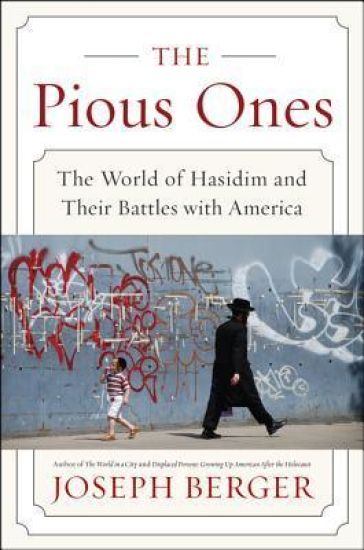
As the population of ultra-Orthodox Jews in the United States increases to astonishing proportions, veteran New York Times journalist Joseph Berger takes us inside the notoriously insular world of the Hasidim to explore their origins, beliefs, and struggles--and the social and political implications of their expanding presence in America.Though the Hasidic way of life was nearly extinguished in the Holocaust, today the Hasidim--"the pious ones"--have become one of the most prominent religious subcultures in America. In The Pious Ones, New York Times journalist Joseph Berger traces their origins in eighteenth-century Eastern Europe, illuminating their dynamics and core beliefs that remain so enigmatic to outsiders. He analyzes the Hasidim's codified lifestyle by telling the story of some of its followers, revealing the religion's fascinating secrets, complexities, and paradoxes. Berger provides a nuanced and insightful portrayal of how their all-encompassing faith dictates nearly every aspect of life--including work, education, food, sex, clothing, and social relations--sustaining a sense of connection and purpose in a changing world.From the intense sectarian politics to the conflicts that arise over housing, transportation, schooling, and gender roles, The Pious Ones also chronicles the ways in which the fabric of Hasidic daily life is threatened by exposure to the wider world and also by internal fissures within its growing population.
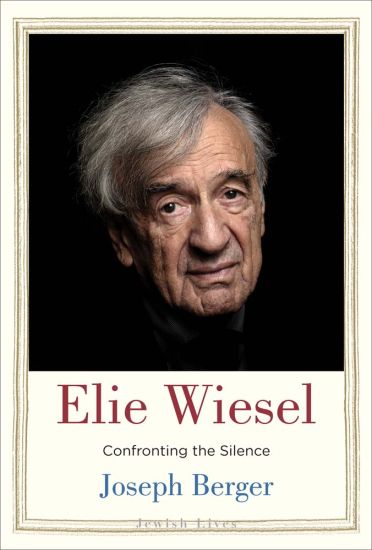
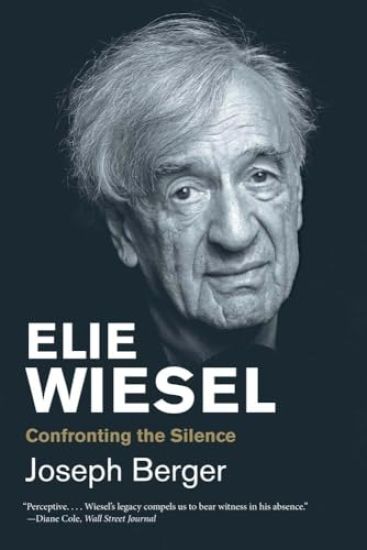
An intimate look at Elie Wiesel, author of the seminal Holocaust memoir Night and recipient of the Nobel Peace Prize Finalist for the National Jewish Book Award, Biography category “An indispensable touchstone.”—Julia M. Klein, Forward As an orphaned survivor and witness to the horrors of Auschwitz, Elie Wiesel (1928–2016) compelled the world to confront the Holocaust with his searing memoir Night. How did this soft-spoken man from a small Carpathian town become such an influential figure on the world stage? Drawing on Wiesel’s prodigious literary output and interviews with his family, friends, scholars, and critics, Joseph Berger seeks to answer this question. Berger explores Wiesel’s Hasidic childhood in Sighet, his postwar years spent rebuilding his life from the ashes in France, his transformation into a Parisian intellectual, his failed attempts at romance, his years scraping together a living in America as a journalist, his decision to marry and have a child, his emergence as a spokesperson for Holocaust survivors and persecuted peoples throughout the world, his lifelong devotion to the state of Israel, and his difficult final years. Through this penetrating portrait we come to know intimately the man the Norwegian Nobel Committee called “a messenger to mankind.”
An intimate look at Elie Wiesel, author of the seminal Holocaust memoir Night and recipient of the Nobel Peace Prize Finalist for the National Jewish Book Award, Biography category “An indispensable touchstone.”—Julia M. Klein, Forward As an orphaned survivor and witness to the horrors of Auschwitz, Elie Wiesel (1928–2016) compelled the world to confront the Holocaust with his searing memoir Night. How did this soft-spoken man from a small Carpathian town become such an influential figure on the world stage? Drawing on Wiesel’s prodigious literary output and interviews with his family, friends, scholars, and critics, Joseph Berger seeks to answer this question. Berger explores Wiesel’s Hasidic childhood in Sighet, his postwar years spent rebuilding his life from the ashes in France, his transformation into a Parisian intellectual, his failed attempts at romance, his years scraping together a living in America as a journalist, his decision to marry and have a child, his emergence as a spokesperson for Holocaust survivors and persecuted peoples throughout the world, his lifelong devotion to the state of Israel, and his difficult final years. Through this penetrating portrait we come to know intimately the man the Norwegian Nobel Committee called “a messenger to mankind.”
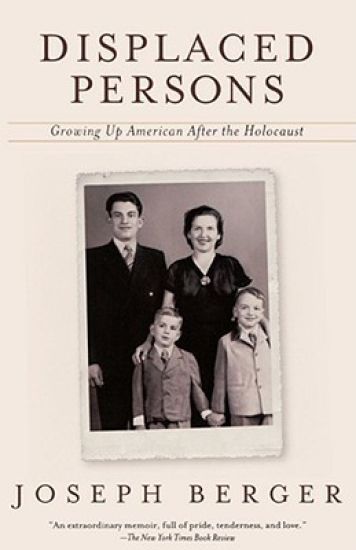
In this touching account, veteran New York Times reporter Joseph Berger describes how his own family of Polish Jews -- with one son born at the close of World War II and the other in a "displaced persons" camp outside Berlin -- managed against all odds to make a life for themselves in the utterly foreign landscape of post-World War II America. Paying eloquent homage to his parents' extraordinary courage, luck, and hard work while illuminating as never before the experience of 140,000 refugees who came to the United States between 1947 and 1953, Joseph Berger has captured a defining moment in history in a riveting and deeply personal chronicle.
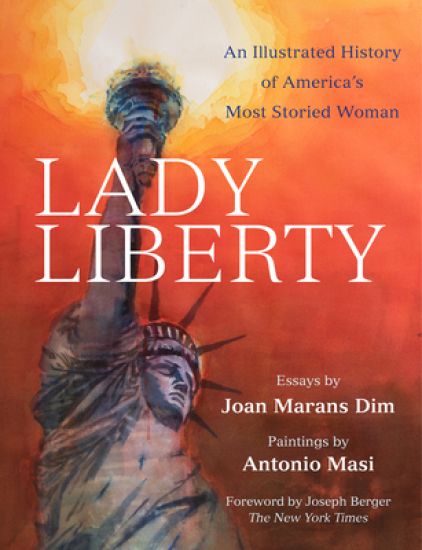
Magnificent art complements an unvarnished history of the Statue of Liberty and its relationship to immigration policy in the United States throughout the years. What began in 1865 in Glatigny, France, at a dinner party hosted by esteemed university professor Édouard René de Laboulaye and attended by, among others, a promising young sculptor, Frédéric Auguste Bartholdi, was the extravagant notion of creating and giving a monumental statue to America that celebrated the young nation's ideals. Bartholdi, and later civil engineer Alexandre-Gustave Eiffel, caught the spirit of the project and thus began the epic struggle to create, build, transport, and pay for the monument. Although The Statue of Liberty was to be a gift from France, the cost of its creation was meant to be shared with America. To the Lady's creators and supporters, America offered liberty and the right to live one's life unencumbered—that is, without fear and with a rule of law and a government that derived its power from the consent of the people it governed. Yet, in America, fundraising for the Lady dragged. Had it not been for publisher Joseph Pulitzer's flashy fundraising campaign in his newspaper the World, the entire project likely would have collapsed. The tale, abundant with lively and interesting stories about the Statue of Liberty's creators, is also told in the context of America's immigration policies—past and present. Explored, too, is the American immigrant experience and how it viscerally connects to the Lady. Also integral to the tale is poetry—a sonnet—written by a then–largely unknown Jewish poet, Emma Lazarus, who moved a nation and gave a deeply rich and fresh meaning and purpose to the statue. In addition to the prose, Lady Liberty includes thirty-three elegant, full-page stirring paintings by celebrated artist Antonio Masi. Lady Liberty, a smart, timely, entertaining, and nonpartisan jewel of a book, is written for every American—young and old. Lady Liberty also speaks to the millions who dream of one day becoming Americans. Dim and Masi offer this book now because the Statue of Liberty, as a symbol of American beneficence, has never been more relevant . . . or more in jeopardy.
As the years go by Life brings challenges for all of us. This book brings to you the reader, some of the insights and understandings that I have learned from my patients over many years of practice. The people that I have worked with have almost all been well-functioning men and women, professionals, people in business, academics, politicians, working people, wives and husbands, parents of children, and children of elderly aging parents. I am doubly Board Certified as a Specialist Psychiatrist in both the United States and Canada, and since my training days my clinical work has almost entirely been in Psychodynamic Psychotherapy and Independent Assessment. That means that I have been listening to people and trying to understand together with them the various challenges in their lives that they have been undergoing that led them to come to see me. It has been a great privilege to have had so many wonderful people share some of the most personal intimate aspects of their lives with me in their search to understand themselves and live their lives more peacefully and happily. What I believe is special about this book, is that it contains many vignettes, aspects of their stories, that illustrate the various difficulties throughout our lives that all of us go through, and how we can understand them better. My hope is that in passing on to you dear reader some of the lessons of life that I have learned from my patients over the years, that you too will have a broader understanding of your own lives and relationships. A book like this that is the accumulation of more than forty five years of seeing thousands of patients can only be written with the ongoing support of a number of important people in my life, to whom I am profoundly grateful. My dear wife Judy has been there with me all the way, supporting me, caring for me and often offering her own valuable insights about life, as have our wonderful daughters Hadassah, Elisheva, Shoshana, and Zehava. Most of their children, our grandchildren, are now young adults or teenagers and they too have offered the very useful perspectives of younger generations on some of life's problems. The Rabbi of the synagogue I attend most often, Rabbi Uri Kaufman, has often provided provocative stimulation from his wealth of Jewish knowledge, and my therapist, Dr Michael O'Mahony, has listened patiently to me for a number of years. But ultimately, this book contains my own thoughts and insights. Over the years in my academic presentations and writings and in my political work I have encountered many people disagreeing with me. Indeed, I have said frequently to my patients and others that if you become involved in any sort of community or political work you can guarantee that whatever viewpoint you express there will always be at least one person - if not more - who opposes you. But I believe that most of my insights are valuable, and will stand the test of time. And I offer them to you with full confidence that you will find here much that will greatly benefit you.