

Kirjahaku
Etsi kirjoja tekijän nimen, kirjan nimen tai ISBN:n perusteella.
7 kirjaa tekijältä Joseph Dyer
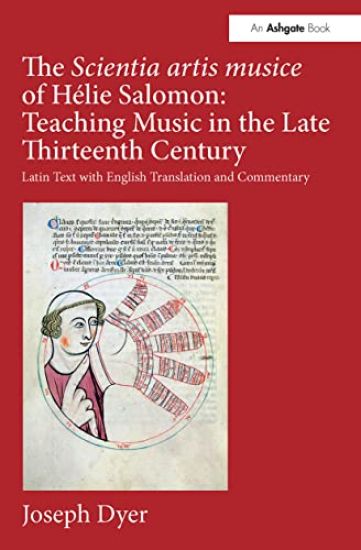
The Scientia artis musice of Hélie Salomon: Teaching Music in the Late Thirteenth Century
Joseph Dyer
TAYLOR FRANCIS LTD
2021
nidottu
Hélie Salomon’s Scientia artis musice (1274), is a practical manual devoted to basic concepts, psalmody, vocal pedagogy, the musical hand in singing, clefs as indicators of the tone (mode) to which a piece belongs, and practical instruction in the singing of four-voice parallel organum. Joseph Dyer presents the first, much-needed, modern edition of Salomon’s treatise, accompanied by a full English translation, comprehensive introduction and commentary. This edition corrects errors in the 1784 edition of Martin Gerbert, includes the music of chants omitted by Gerbert from the tonary, and makes available reproductions in colour of the eight illustrations in the treatise.
The Scientia artis musice of Hélie Salomon: Teaching Music in the Late Thirteenth Century
Joseph Dyer
Routledge
2018
sidottu
Hélie Salomon’s Scientia artis musice (1274), is a practical manual devoted to basic concepts, psalmody, vocal pedagogy, the musical hand in singing, clefs as indicators of the tone (mode) to which a piece belongs, and practical instruction in the singing of four-voice parallel organum. Joseph Dyer presents the first, much-needed, modern edition of Salomon’s treatise, accompanied by a full English translation, comprehensive introduction and commentary. This edition corrects errors in the 1784 edition of Martin Gerbert, includes the music of chants omitted by Gerbert from the tonary, and makes available reproductions in colour of the eight illustrations in the treatise.



Stories from the Ivy: A collection of strange tales
Joseph Dyer
Createspace Independent Publishing Platform
2013
nidottu
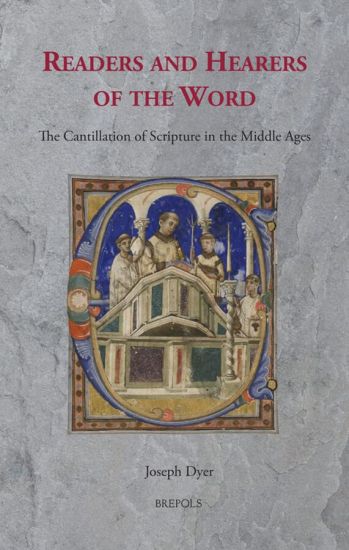
Readers and Hearers is a broad, multi-disciplinary treatment of the chanting of the Scriptures (epistle and gospel) at Mass in the Middle Ages. This form of chanting followed a procedure that continued to be used in the western Latin liturgy until the mid-twentieth century and in the traditional Latin Mass today. The readings were not simply spoken, but chanted to formulae that stood halfway between heightened speech and song (cantillation). Specific clerics (lectors, subdeacons, deacons), distinctively vested, were commissioned to chant the Scriptures, employing a ritual that came to be surrounded by an elaborate ceremonial. For the gospel this involved acolytes, processional movement, and the employment of ecclesiastical 'furniture' (pulpit, ambo, and choir screen). While the laity attending Mass could generally see all of the ritual actions, what did they understand of the Latin text they were hearing? In areas where Latin was spoken in Antiquity the ability to comprehend Latin passively as it morphed into the Romance vernaculars survived longer than generally assumed. Naturally, in Germanic lands, christianized in the early Middle Ages, that capability never existed. Several manuals were created to guide layfolk to engage in devotions suitable to the various parts of the Mass. How all of these elements - ceremony and devotional aids - united 'readers' with 'hearers' at Mass is the theme of the present volume, which also covers Martin Luther's guidelines for the chanting of the Scriptures in German.