Kirjojen hintavertailu. Mukana 11 342 296 kirjaa ja 12 kauppaa.

Kirjahaku

Etsi kirjoja tekijän nimen, kirjan nimen tai ISBN:n perusteella.

25 kirjaa tekijältä Joseph Epstein

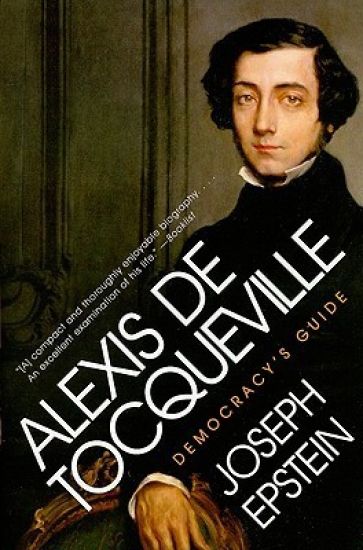
Alexis de Tocqueville

Alexis de Tocqueville

Joseph Epstein

HARPERCOLLINS PUBLISHERS INC
2009
nidottu
Part of the acclaimed Eminent Lives series, Alexis de Tocqueville dissects the legacy of the celebrated cultural observer. Joseph Epstein, distinguished literary historian and author of the bestselling Snobbery: The American Version, provides a fresh account of the celebrated writer's classic travels in America, and compares what de Tocqueville witnessed to the current state of our nation.
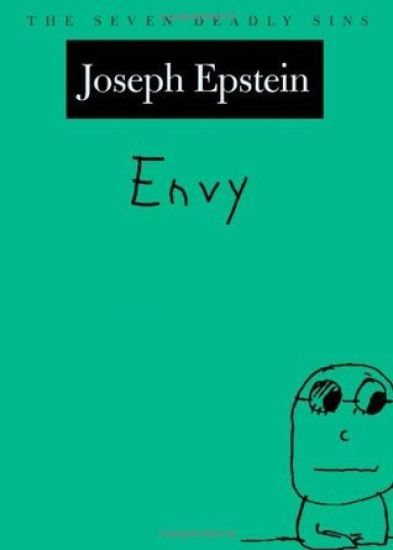
Envy

Envy

Joseph Epstein

Oxford University Press
2003
sidottu
Part of a series of highly entertaining books on the history of sinning. While each of the other six deadly sins area a guilty pleasure, 'the green-eyed monster', as it is often called, is no fun. Jacob Epstein considers what the experts have written about envy, schadenfreude, and resentment, and how it operates under different political systems. Why is it so powerful that it can so easily overpower sense and caution? Could it ever be wiped from the map of humankind's nastier emotions? The author bravely offers his own experiences of envy, and his prescription for removing it from one's psychic economy. This is a refreshingly honest and very entertaining account of a very old sin.
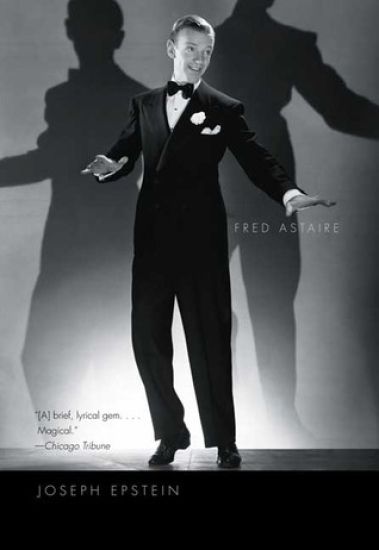
Fred Astaire

Fred Astaire

Joseph Epstein

Yale University Press
2009
pokkari
A portrait of America’s most graceful and elegant male dancer and how he came to represent the essence of style, suavity, and charm Joseph Epstein’s Fred Astaire investigates the great dancer’s magical talent, taking up the story of his life, his personality, his work habits, his modest pretensions, and above all his accomplishments. Written with the wit and grace the subject deserves, Fred Astaire provides a remarkable portrait of this extraordinary artist and how he came to embody for Americans a fantasy of easy elegance and, paradoxically, of democratic aristocracy.Tracing Astaire’s life from his birth in Omaha to his death in his late eighties in Hollywood, the book discusses his early days with his talented and outspoken sister Adele, his gifts as a singer (Irving Berlin, George Gershwin, and Jerome Kern all delighted in composing for Astaire), and his many movie dance partners, among them Cyd Charisse, Rita Hayworth, Eleanor Powell, and Betty Hutton. A key chapter of the book is devoted to Astaire’s somewhat unwilling partnership with Ginger Rogers, the woman with whom he danced most dazzlingly. What emerges from these pages is a fascinating view of an American era, seen through the accomplishments of Fred Astaire, an unassuming but uncompromising performer who transformed entertainment into art and gave America a new yet enduring standard for style.
Partial Payments

Partial Payments

Joseph Epstein

WW Norton Co
1991
nidottu
Epstein writes about authors to whom he feels indebted, those he has revered and learned from. His range extends from Matthew Arnold to Tom Wolfe, from George Santayana to S.J. Perelman.
A Line Out for a Walk

A Line Out for a Walk

Joseph Epstein

WW NORTON CO
1992
nidottu
Paul Klee's words on his art, "I take a line out for a walk," describe precisely what the author of these essays does—he takes out such "lines" as gossip, gambling, height (or the lack of it), hats, smoking, fame or compulsive reading and "walks them" in his own discursive style.
Life Sentences

Life Sentences

Joseph Epstein

WW Norton Co
2008
nidottu
Reading an essay by Joseph Epstein is much like watching Joe DiMaggio hit a pitched ball: the pleasure is in watching a difficult art performed with matchless grace and ease. In Life Sentences, his fourth collection of literary essays, Epstein considers the lives and works of nineteen writers of note, appreciating many of them, roughing up some others, and overall weighing them in the very finely calibrated balance of his well-stocked mind. His subjects include Michel de Montaigne, F. Scott Fitzgerald, Joseph Conrad, Mary McCarthy, Alexander Solzhenitsyn, Robert Lowell, John Dos Passos, Edmund Wilson, Elizabeth Bishop, Ambrose Bierce, and Philip Larkin. No overarching theory or grinding ideological ax mars these finely nuanced readings of writers who matter; as Epstein writes, "What unites this collection of literary essays is the interest of the man who wrote them." And what interests him is excellence in literature. Few pleasures in life are as dependable as reading a Joseph Epstein essay. In that sense Life Sentences is another blue-chip public offering.
In a Cardboard Belt!: Essays Personal, Literary, and Savage
Taking his title from the wounded cry of the once great Max Bialystock in The Producers -- "Look at me now Look at me now I'm wearing a cardboard belt " -- the charming essayist Joseph Epstein gives us his largest and most adventurous collection to date. With his signature gifts of sparkling humor and penetrating intelligence, he issues forth as a memoirist, polemicist, literary critic, and amused observer of contemporary culture. In deeply considered examinations of writers from Paul Val ry to Truman Capote, in incisive take-downs of such cultural pooh-bahs as Harold Bloom and George Steiner, and in personally revealing essays about his father and about his years as a teacher, this remarkable collection from one of America's best essayists is a book to be savored.
Love Song of A. Jerome Minkoff: And Other Stories
In his first collection of stories since Fabulous Small Jews, Joseph Epstein delivers all the pleasures his readers have come to expect: stories of ordinary men confronting the moments that define a life, told with the bittersweet humor and loving irony encompassed in the title of the book. These fourteen tales map a very particular world--Jews whose lives are anchored in Chicago--in rich, revealing detail even as they brim with universal longings: complex love affairs and unspoken rivalries, family triumphs and private disappointments. Epstein, who "happens to possess a standup comic's gift for punch lines" (New York Times Book Review), brings his emphatically grown-up characters to witty, rueful, and charming life. The Love Song of A. Jerome Minkoff is a marvelous collection from a master of the short form and one of the most distinctive writers working in America today.
Gossip: The Untrivial Pursuit

Gossip: The Untrivial Pursuit

Joseph Epstein

HARPER PERENNIAL
2012
nidottu
Gossip is no trivial matter; despite its reputation, Epstein argues, it is an eternal and necessary human enterprise. Proving that he himself is a master of the art, Epstein serves up delightful mini-biographies of the Great Gossips of the Western World, along with many choice bits from his own experience. He also makes a powerful case that gossip has morphed from its old-fashioned best--clever, mocking, a great private pleasure--to a corrosive new-school version, thanks to the reach of the mass media and the Internet. Written in his trademark erudite and witty style, Gossip captures the complexity of this immensely entertaining subject.
Snobbery: The American Version

Snobbery: The American Version

Joseph Epstein

HARPER PERENNIAL
2003
nidottu
A national bestseller, Snobbery examines the discriminating qualities in all of us. With dishy detail, Joseph Epstein skewers all manner of elitism in contemporary America. He offers his arch observations of the new footholds of snobbery: food, fashion, high-achieving children, schools, politics, being with-it, name-dropping, and much more. Clever, incisive, and immensely entertaining, Snobberyexplores the shallows and depths of status and taste -- with enviable results.
Narcissus Leaves the Pool

Narcissus Leaves the Pool

Joseph Epstein

HARPER PERENNIAL
2007
nidottu
Joseph Epstein demonstrates time and again his talent for taking nearly any subject and polishing it into a gem of sparkling wit and fascination. In Narcissus Leaves the Pool, he displays his signature verve and charm in sixteen agile, entertaining pieces. Among his targets in this collection are name-dropping, talent versus genius, the cult of youthfulness, and the information revolution.
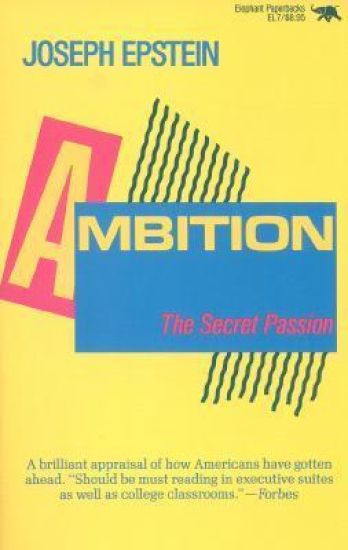
Ambition

Ambition

Joseph Epstein

Ivan R Dee, Inc
1989
pokkari
"Ambition is not what it used to be," writes Joseph Epstein. The desire to get ahead no longer evokes the same admiration it once did—indeed, modern novelists seem hardly able to deal with ambition without a sneer. But is ambition necessarily synonymous with ruthless, narrow self-interest? Or, as Mr. Epstein suggests, is it "the fuel of achievement"—an honorable way to influence and advance civilization? Mr. Epstein’s sketches of eminent Americans—from Benjamin Franklin (that premier go-getter) to Henry Ford, Edith Wharton, F. Scott Fitzgerald, Adlai Stevenson, and the Rockefeller, Guggenheim, and Kennedy dynasties—and his pointed reconsideration of the ingredients of the American Dream (success, money, and power) form a fascinating social history, one that may change many readers’ attitudes toward their “secret passion.” "Should be must reading in executive suites as well as college classrooms."—Forbes. "Handled with a good amount of wit and with the clear, straightforward analysis of a man with a point of view. Like Samuel Johnson, [Epstein] reminds more often than he instructs."—Jack Richardson, New York Times. "To have so rich an intellectual fare so pleasurably served is rare. Read Ambition and feast."—Saturday Review.
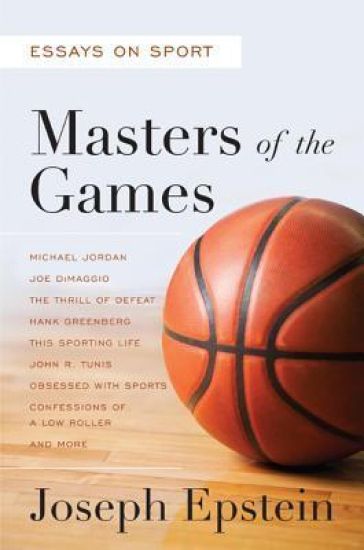
Masters of the Games

Masters of the Games

Joseph Epstein

Rowman Littlefield
2015
sidottu
In this collection, his twenty-fifth book, Joseph Epstein departs from writing about literature and culture to indulge his fondness for the world of sport in all its forms. In these essays and stories on such subjects as saving Joe DiMaggio’s reputation from the clutches of an iconoclastic biographer, marveling at the skills of Michael Jordan, shaking free of an addiction to radio sports talk shows, or contemplating the changing nature of the games he grew up with and played as a boy, Epstein turns writing about sports into an art at once penetrating and highly amusing.
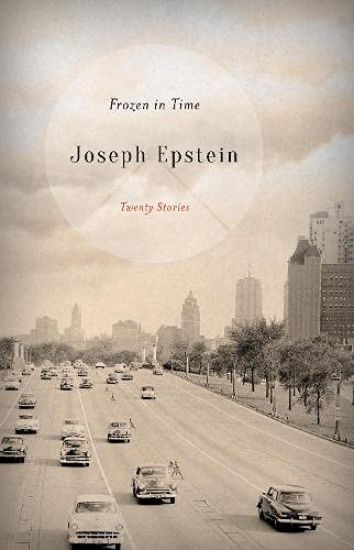
Frozen in Time

Frozen in Time

Joseph Epstein

The Lyons Press
2018
pokkari
The estimable Joseph Epstein—essayist, past editor of The American Scholar, and recipient of the 2003 National Humanities Medal along with Hal Holbrook and John Updike—brings together twenty short stories in his first such collection since 2010. Most, though not all, of the stories are set in Epstein’s hometown of Chicago, but otherwise they have a variety of subjects: among the titles are "Dad's Gay," "The Casanova of LaSalle Street," "JDate," "Adultery," "Widow's Pique," "Race Relations," "The Man on Whom Everything Was Lost," "My Five Husbands," and "Second Family." Most are stories about family and friendships.
Charm

Charm

Joseph Epstein

The Lyons Press
2021
pokkari
Joseph Epstein takes on that most enchanting (and, alas, increasingly rare) of human gifts, charm. “Almost everyone will recognize when he or she is in the presence of charm,” he writes. “Charm is magic of a kind; it casts a spell. In the presence of charm the world seems lighter and lovelier. A charming person can cause you to forget your problems, at least temporarily, to hold the world’s dreariness at bay. Charm is a reminder that the world is filled with jolly prospects and delightful possibilities. Watching Fred Astaire dance, or listening to Blossom Dearie sing, or reading the poems of C.P. Cavafy, or merely looking at Rita Hayworth or Ava Gardner, one recalls that the world can be a pretty damn fine place.”
Wind Sprints

Wind Sprints

Joseph Epstein

Axios Press
2016
sidottu
Who is the greatest living essayist writing in English? Joseph Epstein would surely be at the top of anybody's list. Epstein is penetrating. He is witty. He has a magic touch with words, that hard to define but immediately recognizable quality called style. Above all, he is impossible to put down. Joseph Epstein's Wind Sprints: Shorter Essays is the third volume of essays from Axios Press following the much acclaimed Essays in Biography, 2012 and A Literary Education and Other Essays, 2014. It contains 142 short essays, literary sprints rather than marathons. Subjects range from domestic life to current social trends to an appraisal of "contemporary nuttiness." After reading Epstein, we see life with a fresh eye. We also see ourselves a little more clearly. This is what Plutarch intended: life teaching by example, but with a wry smile and such a sure hand that we hardly notice the instruction. It is just pure pleasure.
The Ideal of Culture

The Ideal of Culture

Joseph Epstein

Axios Press
2018
sidottu
Who is the greatest living essayist writing in English? Joseph Epstein would surely be at the top of anybody's list. Epstein is penetrating. He is witty. He has a magic touch with words, that hard to define but immediately recognizable quality called style. Above all, he is impossible to put down. Joseph Epstein's The Ideal of Culture: Essays is the fourth such volume from Axios Press and contains 63 essays. Subjects range from domestic life to current social trends to an appraisal of "contemporary nuttiness." It follows the much acclaimed Essays in Biography, 2012, A Literary Education and Other Essays, 2014, and Wind Sprints: Shorter Essays, 2016. After reading Epstein, we see life with a fresh eye. We also see ourselves a little more clearly. This is what Plutarch intended: life teaching by example, but with a wry smile and such a sure hand that we hardly notice the instruction. It is just pure pleasure.
Gallimaufry

Gallimaufry

Joseph Epstein

Axios Press
2020
sidottu
Who is the greatest living essayist writing in English? Joseph Epstein would surely be at the top of anybody's list. Epstein is penetrating. He is witty. He has a magic touch with words, that hard to define but immediately recognizable quality called style. Above all, he is impossible to put down. Joseph Epstein's Gallimaufry: A Collection of Essays, Reviews, Bits is the fifth such volume from Axios Press and contains 58 essays. Subjects range from domestic life to current social trends to an appraisal of "contemporary nuttiness." It follows the much-acclaimed Essays in Biography, 2012; A Literary Education and Other Essays, 2014; Wind Sprints: Shorter Essays, 2016; and The Ideal of Culture: Essays, 2018.After reading Epstein, we see life with a fresh eye. We also see ourselves a little more clearly. This is what Plutarch intended: life teaching by example, but with a wry smile and such a sure hand that we hardly notice the instruction. It is just pure pleasure.
The Novel, Who Needs It?

The Novel, Who Needs It?

Joseph Epstein

ENCOUNTER BOOKS,USA
2023
sidottu
In this brief but highly engaging book Joseph Epstein argues for the primacy of fiction, and specifically of the novel, among all intellectual endeavors that seek to describe the behavior of human beings. Reading superior fiction, he holds, arouses the mind in a way that nothing else quite does. He shows how the novel at its best operates above the level of ideas in favor of taking up the truths of the heart. No other form probes so deeply into that eternal mystery of mysteries, human nature, than does the novel. Along the way, Epstein recounts how we read fiction differently than much else we read. He sets out how memory works differently in the reading of fiction than in that of other works. He notes that certain novels are best read at certain ages, and suggests that novels, like movies, might do well to carry ratings, with some novels best read no later than one’s early twenties, others not to be read before the age of forty.The knowledge one acquires from reading novels differs from all other kinds of knowledge, for the subject of all superior fiction is human existence itself, in all its variousness and often humbling confusion. The spirit of the novel entails questioning much that others consider home truths. This is demonstrated by the fact that so many important philosophers, social scientists, jurists, and other intellectuals have been devoted readers of fiction, among them Oliver Wendell Holmes, Jr., Michael Oakeshott, Edward Shils, and Clifford Geertz.The Novel, Who Needs It? takes up those current elements in the culture that militate against the production of first-rate fiction. Prominent among them are the rise of online reading, the expansion of creative writing programs, the artistically discouraging effects of political correctness, and the pervasiveness of therapeutic thinking throughout contemporary culture. As for the title, The Novel, Who Needs It?, Joseph Epstein’s answer is that we all do.