Kirjojen hintavertailu. Mukana 11 342 296 kirjaa ja 12 kauppaa.

Kirjahaku

Etsi kirjoja tekijän nimen, kirjan nimen tai ISBN:n perusteella.

6 kirjaa tekijältä Joseph F. Byrnes

Catholic and French Forever

Catholic and French Forever

Joseph F. Byrnes

Pennsylvania State University Press
2005
sidottu
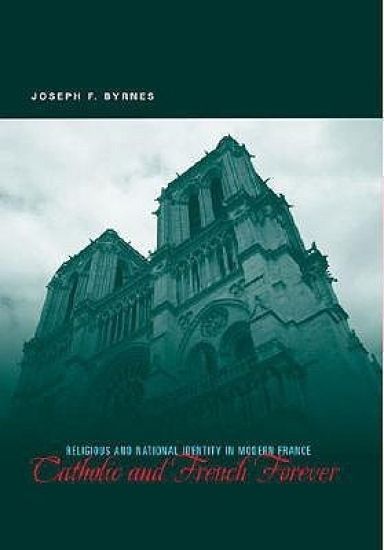
It is often said that there are two Frances—Catholic and secular. This notion dates back to the 1790s, when the revolutionary government sought to divorce Catholic Christianity from national life. While Napoleon formally reconciled his regime to France’s millions of Catholics, church-state relations have remained a source of conflict and debate throughout the nineteenth and twentieth centuries. In Catholic and French Forever Joseph Byrnes recounts the fights and reconciliations between French citizens who found Catholicism integral to their traditional French identity and those who found the continued presence of Catholicism an obstacle to both happiness and progress. He does so through stories of priests, legislators, intellectuals, and pilgrims whose experiences manifest the problem of being both Catholic and French in modern France. Byrnes finds that loyalties to the French nation and Catholicism became so incompatible in the revolutionary era that Catholic believers responded defensively across the nineteenth century, politicizing both religious pilgrimage and the languages of religious instruction. He shows that a détente emerged in the first decades of the twentieth century with the respect given to priests in arms during World War I and to the work of religious art historian Émile Mâle. This détente has lasted, precariously and with interruption, up to the present day.
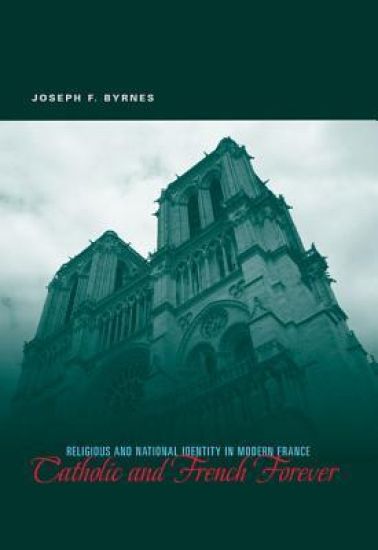
Catholic and French Forever

Catholic and French Forever

Joseph F. Byrnes

Pennsylvania State University Press
2012
pokkari
It is often said that there are two Frances—Catholic and secular. This notion dates back to the 1790s, when the revolutionary government sought to divorce Catholic Christianity from national life. While Napoleon formally reconciled his regime to France’s millions of Catholics, church-state relations have remained a source of conflict and debate throughout the nineteenth and twentieth centuries. In Catholic and French Forever Joseph Byrnes recounts the fights and reconciliations between French citizens who found Catholicism integral to their traditional French identity and those who found the continued presence of Catholicism an obstacle to both happiness and progress. He does so through stories of priests, legislators, intellectuals, and pilgrims whose experiences manifest the problem of being both Catholic and French in modern France. Byrnes finds that loyalties to the French nation and Catholicism became so incompatible in the revolutionary era that Catholic believers responded defensively across the nineteenth century, politicizing both religious pilgrimage and the languages of religious instruction. He shows that a détente emerged in the first decades of the twentieth century with the respect given to priests in arms during World War I and to the work of religious art historian Émile Mâle. This détente has lasted, precariously and with interruption, up to the present day.
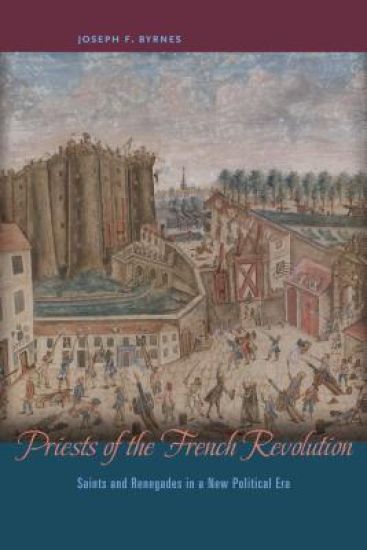
Priests of the French Revolution

Priests of the French Revolution

Joseph F. Byrnes

Pennsylvania State University Press
2014
sidottu
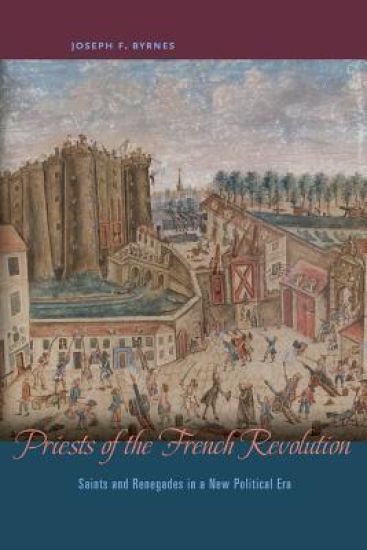
The 115,000 priests on French territory in 1789 belonged to an evolving tradition of priesthood. The challenge of making sense of the Christian tradition can be formidable in any era, but this was especially true for those priests required at the very beginning of 1791 to take an oath of loyalty to the new government—and thereby accept the religious reforms promoted in a new Civil Constitution of the Clergy. More than half did so at the beginning, and those who were subsequently consecrated bishops became the new official hierarchy of France. In Priests of the French Revolution, Joseph Byrnes shows how these priests and bishops who embraced the Revolution creatively followed or destructively rejected traditional versions of priestly ministry. Their writings, public testimony, and recorded private confidences furnish the story of a national Catholic church. This is a history of the religious attitudes and psychological experiences underpinning the behavior of representative bishops and priests. Byrnes plays individual ideologies against group action, and religious teachings against political action, to produce a balanced story of saints and renegades within a Catholic tradition.
Priests of the French Revolution

Priests of the French Revolution

Joseph F. Byrnes

Pennsylvania State University Press
2016
pokkari
The 115,000 priests on French territory in 1789 belonged to an evolving tradition of priesthood. The challenge of making sense of the Christian tradition can be formidable in any era, but this was especially true for those priests required at the very beginning of 1791 to take an oath of loyalty to the new government—and thereby accept the religious reforms promoted in a new Civil Constitution of the Clergy. More than half did so at the beginning, and those who were subsequently consecrated bishops became the new official hierarchy of France. In Priests of the French Revolution, Joseph Byrnes shows how these priests and bishops who embraced the Revolution creatively followed or destructively rejected traditional versions of priestly ministry. Their writings, public testimony, and recorded private confidences furnish the story of a national Catholic church. This is a history of the religious attitudes and psychological experiences underpinning the behavior of representative bishops and priests. Byrnes plays individual ideologies against group action, and religious teachings against political action, to produce a balanced story of saints and renegades within a Catholic tradition.
God on the Western Front

God on the Western Front

Joseph F. Byrnes

Pennsylvania State University Press
2023
sidottu
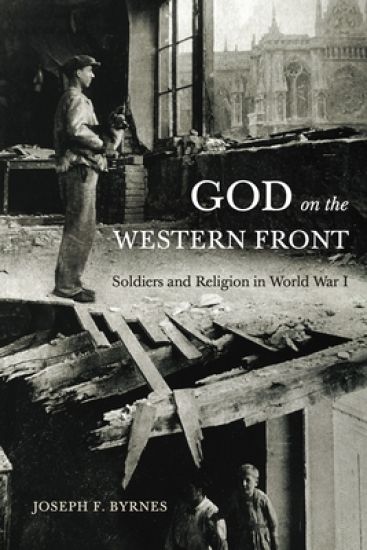
From 1914 to 1918, religious believers and hopeful skeptics tried to find meaning and purpose behind divinely willed destruction. God on the Western Front is a history of lived religion across national boundaries, religious affiliations, and class during World War I, utilizing an expansive record of primary sources.Joseph F. Byrnes takes readers on a tour of the battlefields of France, listening to the words of German, French, and English soldiers; going behind the lines to hear from the men and women who provided pastoral and medical care; and reviewing the religious writings of priests, bishops, ministers, and rabbis as they tried to make sense of it all. The story begins with citizens at home as they responded to the obligation to make war and then focuses on the “God-talk” and “nation-talk” that soldiers used to express their foundational religious experiences. Byrnes’s study attends to the words of average men who struggled to articulate their religious sentiments, alongside the generals Helmuth von Moltke, Ferdinand Foch, and Douglas Haig and the soldier theologians Franz Rosenzweig, Paul Tillich, Pierre Teilhard de Chardin, and Geoffrey Studdert Kennedy. In doing so, he shows how religious and battle experience are intertwined and showcases the wide range of spiritual responses that emerged across boundaries.Going beyond the typical constraints of studies focused either on one nation or one confessional affiliation, Byrnes’s international and interfaith approach breaks new ground. It will appeal to scholars and students of modern European history, religious history, and the history of war.
God on the Western Front

God on the Western Front

Joseph F. Byrnes

Pennsylvania State University Press
2024
pokkari
From 1914 to 1918, religious believers and hopeful skeptics tried to find meaning and purpose behind divinely willed destruction. God on the Western Front is a history of lived religion across national boundaries, religious affiliations, and class during World War I, utilizing an expansive record of primary sources.Joseph F. Byrnes takes readers on a tour of the battlefields of France, listening to the words of German, French, and English soldiers; going behind the lines to hear from the men and women who provided pastoral and medical care; and reviewing the religious writings of priests, bishops, ministers, and rabbis as they tried to make sense of it all. The story begins with citizens at home as they responded to the obligation to make war and then focuses on the “God-talk” and “nation-talk” that soldiers used to express their foundational religious experiences. Byrnes’s study attends to the words of average men who struggled to articulate their religious sentiments, alongside the generals Helmuth von Moltke, Ferdinand Foch, and Douglas Haig and the soldier theologians Franz Rosenzweig, Paul Tillich, Pierre Teilhard de Chardin, and Geoffrey Studdert Kennedy. In doing so, he shows how religious and battle experience are intertwined and showcases the wide range of spiritual responses that emerged across boundaries.Going beyond the typical constraints of studies focused either on one nation or one confessional affiliation, Byrnes’s international and interfaith approach breaks new ground. It will appeal to scholars and students of modern European history, religious history, and the history of war.