This book looks at everything we know from research, theory, and practice and compiles it all into one book that provides principals and other administrators with the tools to improve literacy instruction. The strategies are research-based and tested. Not only does Joseph Murphy do a thorough analysis and study of literacy, he also explores the most effective leadership practices that contribute to successful literacy. This is the first book to show the important connections between literacy and leadership practices. This is a must-have book for any Headteacher intent on being an instructional leader for improved literacy
This book looks at everything we know from research, theory, and practice and compiles it all into one book that provides principals and other administrators with the tools to improve literacy instruction. The strategies are research-based and tested. Not only does Joseph Murphy do a thorough analysis and study of literacy, he also explores the most effective leadership practices that contribute to successful literacy. This is the first book to show the important connections between literacy and leadership practices. This is a must-have book for any Headteacher intent on being an instructional leader for improved literacy
In this book, the author offers a new vision of the purpose of leadership preparation programmes, and a series of principles to guide the development of the knowledge base, instructional strategies and structures in defining future programmes. The design presented is based on: lessons learned from an extensive review of training programmes over the last 100 years; an in-depth investigation into the problems currently plaguing preparation programmes, and an examination of the important changes likely to shape the future of education and educational leadership.
In this book, the author offers a new vision of the purpose of leadership preparation programmes, and a series of principles to guide the development of the knowledge base, instructional strategies and structures in defining future programmes. The design presented is based on: lessons learned from an extensive review of training programmes over the last 100 years; an in-depth investigation into the problems currently plaguing preparation programmes, and an examination of the important changes likely to shape the future of education and educational leadership.
Focusing on an important emerging issue in United States' education - school reform via privatization - this book is designed to meet three major goals: to examine the foundations and the context of the privatization movement; to review the evidence on privatization in areas other than schooling; and to shape decisions about privatization in the school-reform arena.
Focusing on an important emerging issue in United States' education - school reform via privatization - this book is designed to meet three major goals: to examine the foundations and the context of the privatization movement; to review the evidence on privatization in areas other than schooling; and to shape decisions about privatization in the school-reform arena.
Bottling Fog is the culmination of 50 years of work to capture the core ingredients of leadership. Joseph Murphy, a preeminent scholar of leadership, has compiled this book of short and thoughtful lessons designed for today's busy professional. The lessons come from reading, seeing, and hearing about leadership in various sectors of practice. Murphy unpacks the nucleus of leadership and presents it in a way that we rarely find—seeing the fog and shaping it into meaningful forms, not textbooks or lectures, but lessons. Each lesson represents a profound slice of understanding for leaders, crafted so that they will not forget these insights as soon as they walk to their cars at the end of the day. Book Features:Concise and powerful lessons on leadership.Immediately useful to the everyday practice of leaders.Drawn from a professional lifetime of examining the complexities of practice.A user-friendly style with no academic language.
Bottling Fog is the culmination of 50 years of work to capture the core ingredients of leadership. Joseph Murphy, a preeminent scholar of leadership, has compiled this book of short and thoughtful lessons designed for today's busy professional. The lessons come from reading, seeing, and hearing about leadership in various sectors of practice. Murphy unpacks the nucleus of leadership and presents it in a way that we rarely find—seeing the fog and shaping it into meaningful forms, not textbooks or lectures, but lessons. Each lesson represents a profound slice of understanding for leaders, crafted so that they will not forget these insights as soon as they walk to their cars at the end of the day. Book Features:Concise and powerful lessons on leadership.Immediately useful to the everyday practice of leaders.Drawn from a professional lifetime of examining the complexities of practice.A user-friendly style with no academic language.
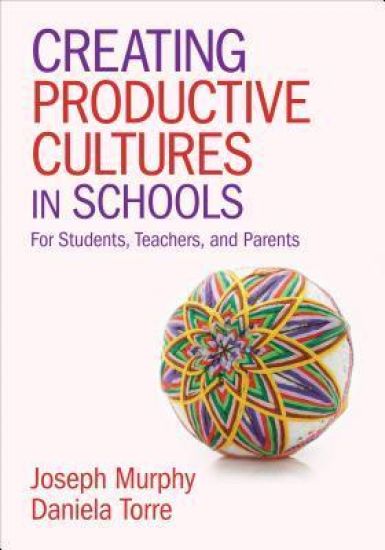
Leading Researcher Joseph Murphy and his colleague Daniela Torre shed light on two critical issues in education today: student underachievement and how to build effective, high-performing schools. Murphy draws from considerable research and scholarship in the area of school reform. This research is based on meaningful links with the worlds of practice and policy, and builds upon our most robust understanding about school improvement. The book examines the historical footings of the American public school to expose the economic, political, social, and cultural currents that have shaped and continue to influence our understanding of public education and underachievement.
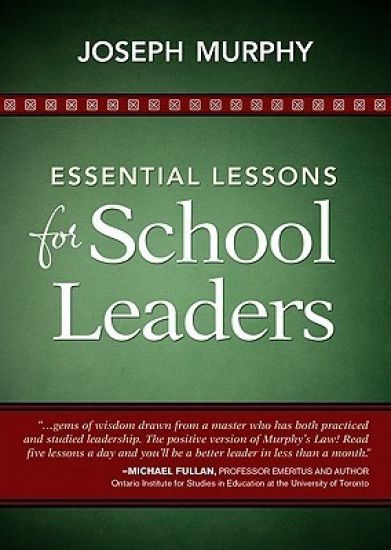
Keep these heartfelt gems top of mind. This gold mine of wisdom from top education researcher and bestselling author of Turning Around Failing Schools and Connecting Teacher Leadership and School Improvement contains key tips and strategies every school leader should know. Award-winning professor and former school administrator Joseph F. Murphy's concise and instructive lessons will help you stay focused on what matters most as you navigate the hectic world of high-stakes testing and accountability: It really is all about the kids: Optimism is essential, Caring counts a lot, Listen and let people finish talking. Don't confuse excuses and explanations. Each lesson is coupled with context in a few sentences taken from Murphy's extensive real-world experiences. This collection is ideal for use in daily reflections, speeches, staff meetings, presentations, or as a gift to anyone who works with children.
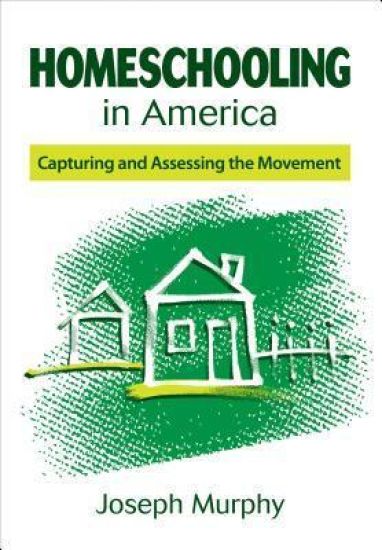
This book is the definitive study on homeschooling in the United States, delving into a movement that impacts more students nationwide than the entire charter school movement. In 2010, more than 2 million students were homeschooled. This book explores:The history of homeschooling in America.áHow this movement has grown in credibility and enrollment exponentiallyThe current state of homeschooling, including questions over who gets homeschooled, why, and what is the successùacademically and in lifeùof students who are homeschooledThe impact of homeschooling on the student and on American societyIn the most extensive survey and analysis of research on homeschooling, spanning the birth of the movement in the 1970s to today, Homeschooling in America shines a light on one of the most important yet least understood social movements of the last forty years and what it means for education today.
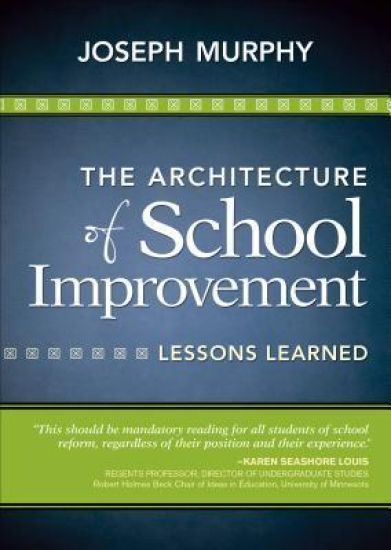
The book will be an analog to the volume Corwin published in 2011, Essential Lessons for School Leaders. Specifically, there will be between 100 and 125 lessons, each of which will be highlighted on a separate page. For example: prevention trumps remediationcontext always matters. School improvement is about layering small gains. Most of these will be framed as laws, as was the case in the Lessons for Leaders volume. One difference is that this book will begin with a 13-page fable, ôThe Mournful Tale of the Death of Mr. School Improvement,' in which many of these laws fail to play out. Murphy may also generate a closing fable where lessons are seen not in breach but in practice.
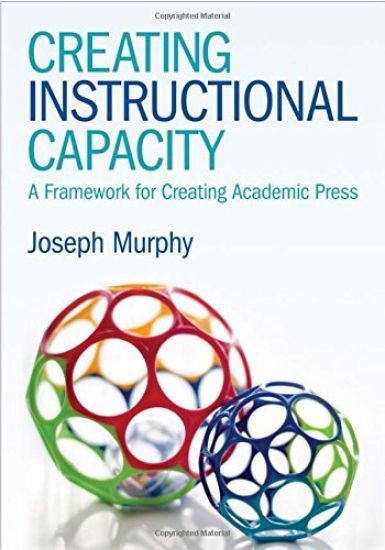
This book covers "academic press", the effective management of the core technology of schooling, the three parts of the instructional program: instruction, curriculum, and assessment. This book is about building instructional capacity in the role of leadership to improve school culture.
This book directs educators on how to experience new levels of engagement and growth by seeing things from a student perspective. It shows readers how to transform the learning environment into a challenging, cohesive, and satisfying model for growth and outcome, and how to build a culture of support, safety, and membership through academic excellence.
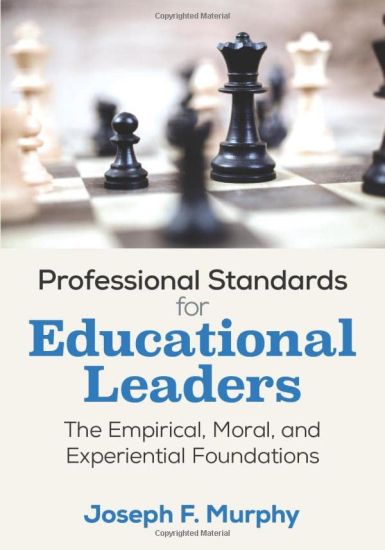
Evidence increasingly points to a direct link between the curriculum leadership provided by educational leaders and the overall effectiveness of schools. Written by the primary architect of PSEL, educational leadership expert Joseph F. Murphy, this authoritative guide to understanding and applying the standards explores the new emphasis on leadership of learning, school culture and diversity, professional norms of educational leadership as well as teacher quality and caring support.Written for higher education faculty, professional development providers, and school and district leaders, this comprehensive manual will power the educational leadership profession through the challenges of the next decade and beyond.
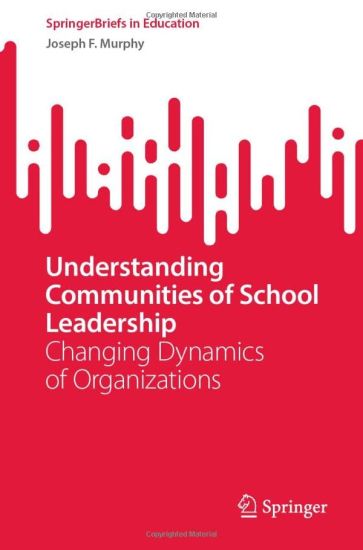
This book examines the evolution of schooling from bureaucracy and hierarchy to post-industrial schools, and places teachers’ leadership on center stage at the same time. That is, it asks teachers to deepen leadership in their classrooms and with other teachers. The book carries education and schooling from formal control to a social influence process and addresses the deeply rooted difficulty of focusing too much energy on content. It reveals the strong power of internal and external context and helps educators implant the idea of the school not as a fixed, immutable home, but as a relatively deep social process. It shows how co-leadership comes alive in schools. Communities of schooling is one of the three most critical developments in education in the last 140 years. When it is linked with the two other fundamental reorientations in schooling - “dispersed ownership” and “constructivist work” - it becomes the most powerful force in education since the 1700s. This book shows how communities of schooling replace the earlier pillars of “learning as telling,” “hierarchy of control,” and “non-democratic influence.” The work also explains the meaning and understanding of school work as a social influence process where all school-based educators exert power, but at different levels. The idea of enhancing individual and collective capacity through interdependency, shared work, and collective responsibility is unpacked.