Kirjojen hintavertailu. Mukana 11 699 587 kirjaa ja 12 kauppaa.

Kirjahaku

Etsi kirjoja tekijän nimen, kirjan nimen tai ISBN:n perusteella.

7 kirjaa tekijältä Joseph F. O'Callaghan

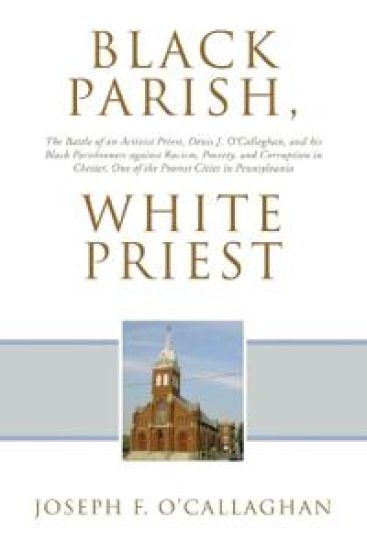
Black Parish, White Priest: The Battle of an Activist Priest, Denis J. O'Callaghan, and his Black Parishioners against Racism, Poverty, and Corruption
"How long are you going to stay?" queried his skeptical Black parishioners. "I hope to die here," responded Denis, their new White pastor. With that commitment, he encouraged their sense of self-worth and urged them to claim their rights in the church and in the broader community. As he gained their trust, they called him, "Father O, not to be familiar, but in love." Working with Black ministers, he endeavored to improve the quality of life for everyone by creating the Chester Community Improvement Project and Better Housing for Chester. As tensions arose between Black parents and White teachers in his parochial school, and as his outspokenness provoked the city's politicians, complaints were made to Cardinal Krol, Archbishop of Philadelphia. Citing anonymous sources, the cardinal fired Denis as pastor. When he moved to another parish in obedience to the cardinal, Denis lamented, "All I want to do is cry, these are my people." Because Cardinal Krol would not identify his anonymous informants, Denis refused to resign as pastor and demanded a hearing in accordance with canon law. The dispute was resolved when the cardinal permitted Denis to accept a position at Saint Mary Seminary in Baltimore. There, before dying of cancer, he devoted himself to teaching young seminarians the nuts and bolts of being a pastor. Admonishing them to be good shepherds, he affirmed, "if you are going to live the gospel. you have to speak out." As he learned, you also have to be prepared to suffer the consequences.
A History of Medieval Spain

A History of Medieval Spain

Joseph F. O'Callaghan

Cornell University Press
1983
pokkari
This book is a comprehensive narrative history based on an impressively wide reading in the sources and secondary literature. It should prove useful to teachers, students, and general readers in European history.... Soundly traditional in its organization, it gives primacy to political events without neglecting institutional, social, and cultural matters.-American Historical Review Illustrations, genealogical charts, maps, and an extensive bibliography round out a book that will be welcomed by scholars and students of Spanish and Portuguese history and literature, as well as by medievalists, as the fullest account to date of Spanish history in the Middle Ages. Medieval Spain is brilliantly recreated, in all its variety and richness, in this comprehensive survey. Likely to become the standard work in English, the book treats the entire Iberian Peninsula and all the people who inhabited it, from the coming of the Visigoths in the fifth century to the reign of Ferdinand and Isabella. Integrating a wealth of information about the diverse peoples, institutions, religions, and customs that flourished in the states that are now Spain and Portugal, Joseph F. O'Callaghan focuses on the continuing attempts to impose political unity on the peninsula. O'Callaghan divides his story into five compact historical periods and discusses political, social, economic, and cultural developments in each period. By treating states together, he is able to put into proper perspective the relationships among them, their similarities and differences, and the continuity of development from one period to the next. He gives proper attention to Spain's contacts with the rest of the medieval world, but his main concern is with the events and institutions on the peninsula itself.
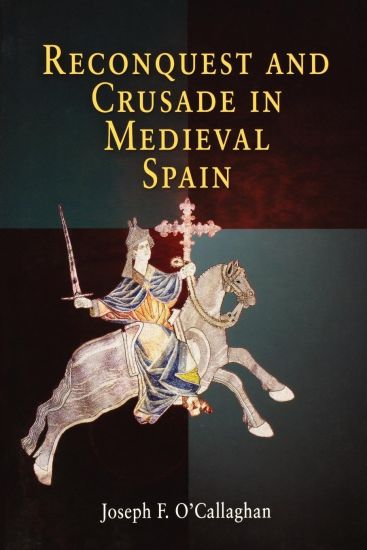
Reconquest and Crusade in Medieval Spain

Reconquest and Crusade in Medieval Spain

Joseph F. O'Callaghan

University of Pennsylvania Press
2004
pokkari
Drawing from both Christian and Islamic sources, Reconquest and Crusade in Medieval Spain demonstrates that the clash of arms between Christians and Muslims in the Iberian peninsula that began in the early eighth century was transformed into a crusade by the papacy during the twelfth and thirteenth centuries. Successive popes accorded to Christian warriors willing to participate in the peninsular wars against Islam the same crusading benefits offered to those going to the Holy Land. Joseph F. O'Callaghan clearly demonstrates that any study of the history of the crusades must take a broader view of the Mediterranean to include medieval Spain. Following a chronological overview of crusading in the Iberian peninsula from the late eleventh to the middle of the thirteenth century, O'Callaghan proceeds to the study of warfare, military finance, and the liturgy of reconquest and crusading. He concludes his book with a consideration of the later stages of reconquest and crusade up to and including the fall of Granada in 1492, while noting that the spiritual benefits of crusading bulls were still offered to the Spanish until the Second Vatican Council of 1963. Although the conflict described in this book occurred more than eight hundred years ago, recent events remind the world that the intensity of belief, rhetoric, and action that gave birth to crusade, holy war, and jihad remains a powerful force in the twenty-first century.
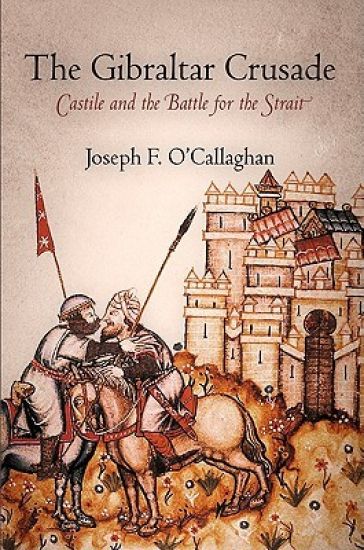
The Gibraltar Crusade

The Gibraltar Crusade

Joseph F. O'Callaghan

University of Pennsylvania Press
2014
pokkari
The epic battle for control of the Strait of Gibraltar waged by Castile, Morocco, and Granada in the late thirteenth and early fourteenth centuries is a major, but often overlooked, chapter in the history of the Christian reconquest of Spain. After the Castilian conquest of Seville in 1248 and the submission of the Muslim kingdom of Granada as a vassal state, the Moors no longer loomed as a threat and the reconquest seemed to be over. Still, in the following century, the Castilian kings, prompted by ideology and strategy, attempted to dominate the Strait. As self-proclaimed heirs of the Visigoths, they aspired not only to reconstitute the Visigothic kingdom by expelling the Muslims from Spain but also to conquer Morocco as part of the Visigothic legacy. As successive bands of Muslims over the centuries had crossed the Strait from Morocco into Spain, the kings of Castile recognized the strategic importance of securing Algeciras, Gibraltar, and Tarifa, the ports long used by the invaders. At a time when European enthusiasm for the crusade to the Holy Land was on the wane, the Christian struggle for the Strait received the character of a crusade as papal bulls conferred the crusading indulgence as well as ancillary benefits. The Gibraltar Crusade had mixed results. Although the Castilians seized Gibraltar in 1309 and Algeciras in 1344, the Moors eventually repossessed them. Only Tarifa, captured in 1292, remained in Castilian hands. Nevertheless, the power of the Marinid dynasty of Morocco was broken at the battle of Salado in 1340, and for the remainder of the Middle Ages Spain was relieved of the threat of Moroccan invasion. While the reconquest remained dormant during the late fourteenth and early fifteenth centuries, Ferdinand and Isabella conquered Granada, the last Muslim outpost in Spain, in 1492. In subsequent years Castile fulfilled its earlier aspirations by establishing a foothold in Morocco.
The Learned King

The Learned King

Joseph F. O'Callaghan

University of Pennsylvania Press
1993
sidottu
This book is a volume in the Penn Press Anniversary Collection. To mark its 125th anniversary in 2015, the University of Pennsylvania Press rereleased more than 1,100 titles from Penn Press's distinguished backlist from 1899-1999 that had fallen out of print. Spanning an entire century, the Anniversary Collection offers peer-reviewed scholarship in a wide range of subject areas.
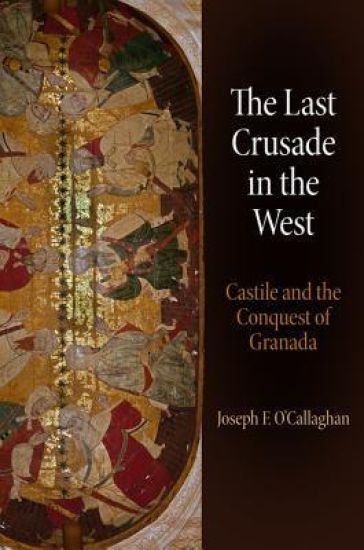
The Last Crusade in the West

The Last Crusade in the West

Joseph F. O'Callaghan

University of Pennsylvania Press
2014
sidottu
By the middle of the fourteenth century, Christian control of the Iberian Peninsula extended to the borders of the emirate of Granada, whose Muslim rulers acknowledged Castilian suzerainty. No longer threatened by Moroccan incursions, the kings of Castile were diverted from completing the Reconquest by civil war and conflicts with neighboring Christian kings. Mindful, however, of their traditional goal of recovering lands formerly ruled by the Visigoths, whose heirs they claimed to be, the Castilian monarchs continued intermittently to assault Granada until the late fifteenth century. Matters changed thereafter, when Fernando and Isabel launched a decade-long effort to subjugate Granada. Utilizing artillery and expending vast sums of money, they methodically conquered each Na?rid stronghold until the capitulation of the city of Granada itself in 1492. Effective military and naval organization and access to a diversity of financial resources, joined with papal crusading benefits, facilitated the final conquest. Throughout, the Na?rids had emphasized the urgency of a jihad waged against the Christian infidels, while the Castilians affirmed that the expulsion of the "enemies of our Catholic faith" was a necessary, just, and holy cause. The fundamentally religious character of this last stage of conflict cannot be doubted, Joseph F. O'Callaghan argues.
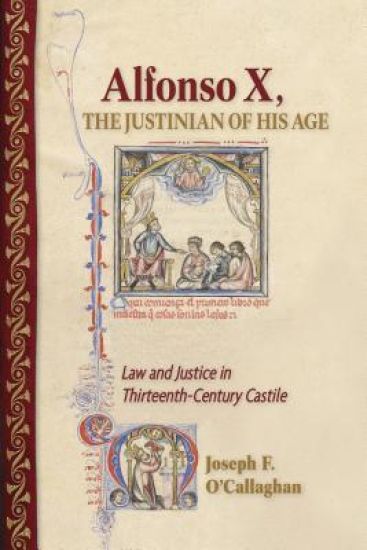
Alfonso X, the Justinian of His Age

Alfonso X, the Justinian of His Age

Joseph F. O'Callaghan

Cornell University Press
2019
sidottu
In this magisterial work, Joseph O'Callaghan offers a detailed account of the establishment of Alfonso X's legal code, the Libro de las leyes or Siete Partidas, and its applications in the daily life of thirteenth-century Iberia, both within and far beyond the royal courts. O'Callaghan argues that Alfonso X, el Sabio (the Wise), was the Justinian of his age, one of the truly great legal minds of human history. Alfonso X, the Justinian of His Age highlights the struggles the king faced in creating a new, coherent, inclusive, and all-embracing body of law during his reign, O'Callaghan also considers Alfonso X's own understanding of his role as king, lawgiver, and defender of the faith in order to evaluate the impact of his achievement on the administration of justice. Indeed, such was the power and authority of the Alfonsine code that it proved the king's downfall when his son invoked it to challenge his rule. Throughout this soaring legal and historical biography, O'Callaghan reminds us of the long-term impacts of Alfonso X's legal works, not just on Castilian (and later, Iberian) life, but on the administration of justice across the world.