
Kirjojen hintavertailu. Mukana 11 600 142 kirjaa ja 12 kauppaa.

Kirjahaku

Etsi kirjoja tekijän nimen, kirjan nimen tai ISBN:n perusteella.

3 kirjaa tekijältä Joseph F. Spillane

Cocaine

Cocaine

Joseph F. Spillane

Johns Hopkins University Press
2000
sidottu
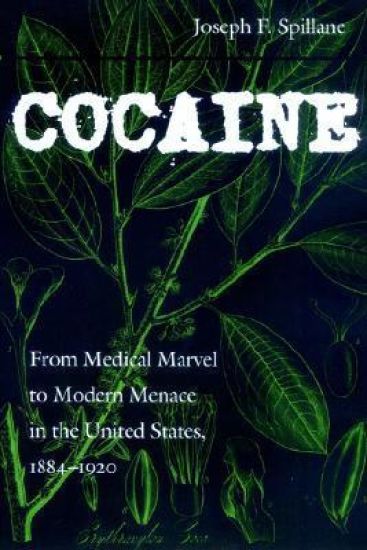
In 1884 American physicians discovered the anesthetic value of cocaine, and over the next three decades this substance derived from the coca plant became so popular that it became, ironically, a public health problem. Demand exceeded supply; abuse proliferated. The black market produced a legendary underground of "cocaine fiends." As attempts at regulation failed, Congress in 1914 banned cocaine outright, and America launched its longstanding war against now-illegal drugs. Challenging "traditional thinking about both the 'rise' and 'fall' of drug problems" (which makes legal prohibition the pivotal point in the story), Spillane examines phenomena that have eluded earlier students of drug history. He explores the role of American business in fostering consumer interest in cocaine during the years when no law proscribed its use, the ways in which authorities and social agents tried nonetheless to establish informal controls on the substance, and the mixed results they achieved. In asking how this pain-allaying drug became recognizably dangerous, how reformers tried to ameliorate its social effects, and how an underground of cocaine abusers developed even before regulation of the drug industry as a whole, Spillane discovers contingency, complication, and mixed motives. Arguing that the underground drug culture had origins other than in federal prohibition can tell us as we face questions about drug policy today.
Cocaine

Cocaine

Joseph F. Spillane

Johns Hopkins University Press
2002
pokkari
In 1884 American physicians discovered the anesthetic value of cocaine, and over the next three decades this substance derived from the coca plant became so popular that it became, ironically, a public health problem. Demand exceeded supply; abuse proliferated. The black market produced a legendary underground of "cocaine fiends." As attempts at regulation failed, Congress in 1914 banned cocaine outright, and America launched its longstanding war against now-illegal drugs. Challenging "traditional thinking about both the 'rise' and 'fall' of drug problems" (which makes legal prohibition the pivotal point in the story), Spillane examines phenomena that have eluded earlier students of drug history. He explores the role of American business in fostering consumer interest in cocaine during the years when no law proscribed its use, the ways in which authorities and social agents tried nonetheless to establish informal controls on the substance, and the mixed results they achieved. In asking how this pain-allaying drug became recognizably dangerous, how reformers tried to ameliorate its social effects, and how an underground of cocaine abusers developed even before regulation of the drug industry as a whole, Spillane discovers contingency, complication, and mixed motives. Arguing that the underground drug culture had origins other than in federal prohibition can tell us as we face questions about drug policy today.
Coxsackie

Coxsackie

Joseph F. Spillane

Johns Hopkins University Press
2014
sidottu
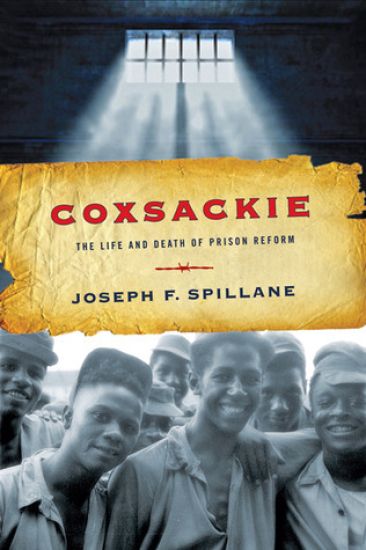
Should prisons attempt reform and uplift inmates or, by means of principled punishment, deter them from further wrongdoing? This debate has raged in Western Europe and in the United States at least since the late eighteenth century. Joseph F. Spillane examines the failure of progressive reform in New York State by focusing on Coxsackie, a New Deal reformatory built for young male offenders. Opened in 1935 to serve "adolescents adrift," Coxsackie instead became an unstable and brutalizing prison. From the start, the liberal impulse underpinning the prison's mission was overwhelmed by challenges it was unequipped or unwilling to face-drugs, gangs, and racial conflict. Spillane draws on detailed prison records to reconstruct a life behind bars in which "ungovernable" young men posed constant challenges to racial and cultural order. The New Deal order of the prison was unstable from the start; the politics of punishment quickly became the politics of race and social exclusion, and efforts to save liberal reform in postwar New York only deepened its failures. In 1977, inmates took hostages to focus attention on their grievances. The result was stricter discipline and an end to any pretense that Coxsackie was a reform institution. Why did the prison fail? For answers, Spillane immerses readers in the changing culture and racial makeup of the U.S. prison system and borrows from studies of colonial prisons, which emblematized efforts by an exploitative regime to impose cultural and racial restraint on others. In today's era of mass incarceration, prisons have become conflict-ridden warehouses and powerful symbols of racism and inequality. This account challenges the conventional wisdom that America's prison crisis is of comparatively recent vintage, showing instead how a racial and punitive system of control emerged from the ashes of a progressive ideal.