Kirjojen hintavertailu. Mukana 11 244 527 kirjaa ja 12 kauppaa.

Kirjahaku

Etsi kirjoja tekijän nimen, kirjan nimen tai ISBN:n perusteella.

14 kirjaa tekijältä Joseph Farrell

Dario Fo & Franca Rame - Theatre, Politics, Life

Dario Fo & Franca Rame - Theatre, Politics, Life

Joseph Farrell

Methuen Publishing Ltd
2019
sidottu
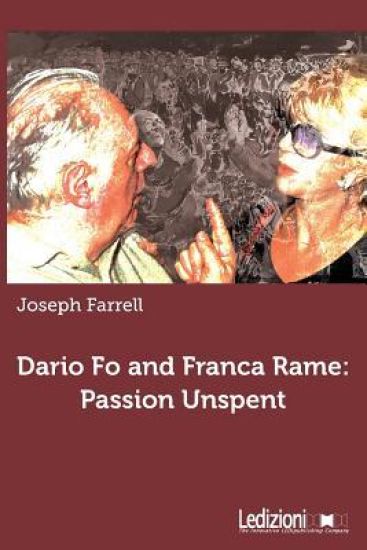
Dario Fo (1926–2016), actor, playwright, theatre director, stage designer, political activist, artist and author who, having attained international fame in theatre, produced the first of his six novels at the age of 88 – was there any limit to his versatile genius? He was awarded the Nobel Prize for Literature in 1997, and works such as Accidental Death of an Anarchist or Can’t Pay? Won’t Pay secured his reputation as the outstanding political playwright of his age. Unlike other writers of a similar mind, Fo’s chosen genre was farce, so his drama is a uniquely engaging mixture of laughter and anger. In 1954 he married Franca Rame (1929–2013), a member of a family-company of touring players. The personal and professional partnership of the two over sixty years was probably unique in theatre history. Her inherited, instinctive knowledge of stagecraft was invaluable to him, but although she was always recognised as an actor of considerable talent, her contribution to the writing of the plays was long undervalued. With the emergence of the feminist movement she increasingly asserted herself, notably with a series of one-woman works she wrote and performed. She became one of Italy’s and Europe’s leading feminist campaigners, and as such a target for right-wing terrorist groups. In 1973, she was kidnapped and raped by neo-Fascist thugs. Although the subjects of their plays, with their fearless attacks on corruption and satire of Popes and politicians, were often taken from the headlines of the day, their theatre was deeply rooted in theatrical tradition. The Nobel Prize citation stated that Fo ‘emulated the jesters of the Middle Ages in scourging authority and upholding the dignity of the downtrodden’, but this political campaigning came at a cost. The couple’s militant reputation meant that they were for many years barred from Italian television and banned from entering the USA, but their plays were staged from London to Tokyo and they themselves were acclaimed wherever they toured. Joseph Farrell translated many of their works and knew Dario and Franca well. His biography is a complete account of the various activities and multifaceted lives of two extraordinary individuals.
Latin Language and Latin Culture

Latin Language and Latin Culture

Joseph Farrell

Cambridge University Press
2001
pokkari
The Latin language is popularly imagined in a number of specific ways: as a masculine language, an imperial language, a classical language, a dead language. This book considers the sources of these metaphors and analyses their effect on how Latin literature is read. It argues that these metaphors have become idées fixes not only in the popular imagination but in the formation of Latin studies as a professional discipline. By reading with and more commonly against these metaphors, the book offers a different view of Latin as a language and as a vehicle for cultural practice. The argument ranges over a variety of texts in Latin and texts about Latin produced by many different sorts of writers from antiquity to the twentieth century.
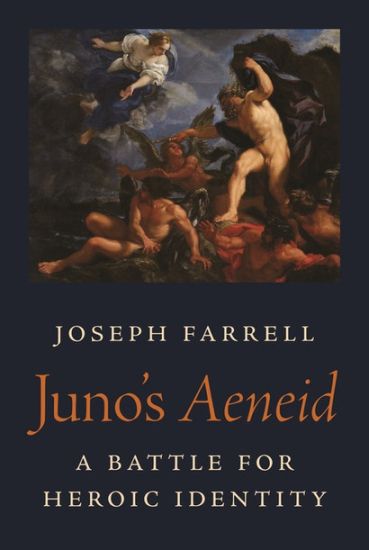
Juno's Aeneid

Juno's Aeneid

Joseph Farrell

PRINCETON UNIVERSITY PRESS
2021
sidottu
A major new interpretation of Vergil's epic poem as a struggle between two incompatible versions of the Homeric heroThis compelling book offers an entirely new way of understanding the Aeneid. Many scholars regard Vergil's poem as an attempt to combine Homer’s Iliad and Odyssey into a single epic. Joseph Farrell challenges this view, revealing how the Aeneid stages an epic contest to determine which kind of story it will tell—and what kind of hero Aeneas will be.Farrell shows how this contest is provoked by the transgressive goddess Juno, who challenges Vergil for the soul of his hero and poem. Her goal is to transform the poem into an Iliad of continuous Trojan persecution instead of an Odyssey of successful homecoming. Farrell discusses how ancient critics considered the flexible Odysseus the model of a good leader but censured the hero of the Iliad, the intransigent Achilles, as a bad one. He describes how the battle over which kind of leader Aeneas will prove to be continues throughout the poem, and explores how this struggle reflects in very different ways on the ethical legitimacy of Rome’s emperor, Caesar Augustus.By reframing the Aeneid in this way, Farrell demonstrates how the purpose of the poem is to confront the reader with an urgent decision between incompatible possibilities and provoke uncertainty about whether the poem is a celebration of Augustus or a melancholy reflection on the discontents of a troubled age.
Juno's Aeneid

Juno's Aeneid

Joseph Farrell

PRINCETON UNIVERSITY PRESS
2023
pokkari
A major new interpretation of Vergil's epic poem as a struggle between two incompatible versions of the Homeric heroThis compelling book offers an entirely new way of understanding the Aeneid. Many scholars regard Vergil's poem as an attempt to combine Homer’s Iliad and Odyssey into a single epic. Joseph Farrell challenges this view, revealing how the Aeneid stages an epic contest to determine which kind of story it will tell—and what kind of hero Aeneas will be.Farrell shows how this contest is provoked by the transgressive goddess Juno, who challenges Vergil for the soul of his hero and poem. Her goal is to transform the poem into an Iliad of continuous Trojan persecution instead of an Odyssey of successful homecoming. Farrell discusses how ancient critics considered the flexible Odysseus the model of a good leader but censured the hero of the Iliad, the intransigent Achilles, as a bad one. He describes how the battle over which kind of leader Aeneas will prove to be continues throughout the poem, and explores how this struggle reflects in very different ways on the ethical legitimacy of Rome’s emperor, Caesar Augustus.By reframing the Aeneid in this way, Farrell demonstrates how the purpose of the poem is to confront the reader with an urgent decision between incompatible possibilities and provoke uncertainty about whether the poem is a celebration of Augustus or a melancholy reflection on the discontents of a troubled age.
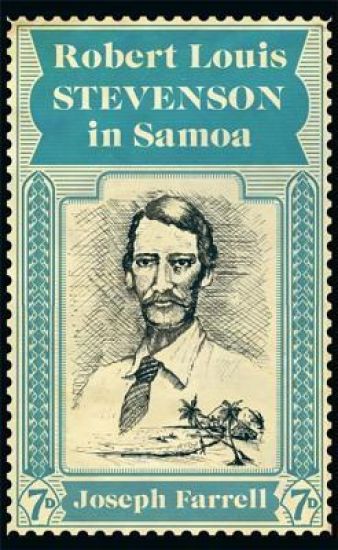
Robert Louis Stevenson in Samoa

Robert Louis Stevenson in Samoa

Joseph Farrell

MacLehose Press
2019
pokkari
Shortlised for the Saltire Society Non Fiction Book of the Year Award Almost every adult and child is familiar with his Treasure Island, but few know that Robert Louis Stevenson lived out his last years on an equally remote island, which was squabbled over by colonial powers much as Captain Flint's treasure was contested by the mongrel crew of the Hispaniola.In 1890 Stevenson settled in Upolu, an island in Samoa, after two years sailing round the South Pacific. He was given a Samoan name and became a fierce critic of the interference of Germany, Britain and the U.S.A. in Samoan affairs - a stance that earned him Oscar Wilde's sneers, and brought him into conflict with the Colonial Office, who regarded him as a menace and even threatened him with expulsion from the island.Joseph Farrell's pioneering study of Stevenson's twilight years stands apart from previous biographies by giving as much weight to the Samoa and the Samoans - their culture, their manners, their history - as to the life and work of the man himself. For it is only by examining the full complexity of Samoa and the political situation it faced as the nineteenth century gave way to the twentieth, that Stevenson's lasting and generous contribution to its cause can be appreciated.
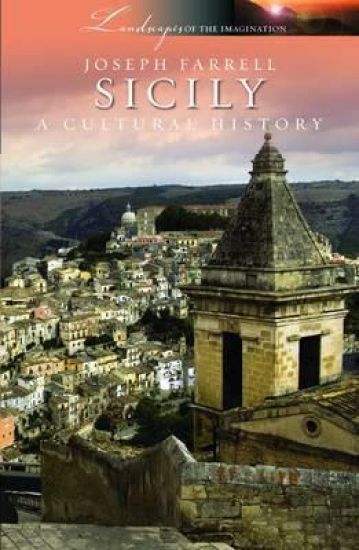
Sicily

Sicily

Joseph Farrell

Signal Books Ltd
2012
nidottu
Long before it became an Italian offshore island, Sicily was the land in the centre of the Mediterranean where the great civilizations of Europe and Northern Africa met. In ancient times it was the scene of conflicts between Carthaginians, Greeks and Romans and there are still more, better preserved Greek temples in Sicily than in the whole of mainland Greece. An Arab invasion in 827 made Sicily home to an Islamic culture, and through Sicily the Arabs introduced to Europe a range of products from sugar to pasta. Other conquering forces included the Catalan-Aragonese, the Spanish, the French, the Austrians and even the British who invented Marsala wine. Sicily today is familiar and unfamiliar, modernized and unchanging. Visitors will find in an out-of-the-way town an Aragonese castle, will stumble across a Norman church by the side of a lesser travelled road, will see red Muslim-styles domes over a Christian shrine, will find a Baroque church of breathtaking beauty in a village, will catch a glimpse from the motorway of a solitary Greek temple on the horizon and will happen on a the celebrations of the patron saint of a run-down district of a city, and will stop and wonder. There is more to Sicily than the Godfather and the mafia. Land of Myth and Religious Feast: the myth of Persephone at the lake of Pergusa: the Holy Week processions in Enna and Erice; the festivities for St. Rosalia in Palermo, St. Agatha in Catania, St. James in Caltagirone. History in Stone: the Valley of the Temples in Agrigento; Norman cathedrals in Palermo, Monreale and Cefalu; Saracen and Aragonese castles; Arab-Norman-Byzantine mosaics in the Palace of the Normans in Palermo, Islands and Cities: the Aeolian Islands with their volcanoes at Stromboli and Vulcano; the hauntingly beautiful cities of Taormina and Cefalu; Mount Etna; the eighteenth-century Baroque towns of Ragusa and Noto.
Honour and the Sword

Honour and the Sword

Joseph Farrell

Signal Books Ltd
2021
sidottu
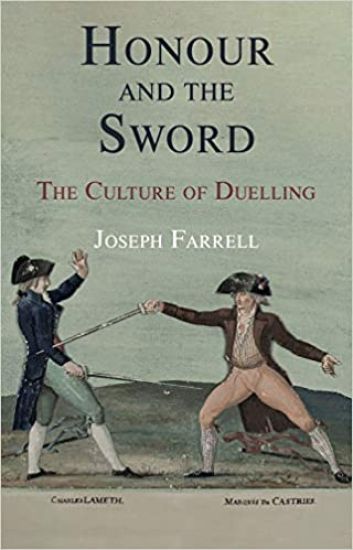
The popularity of the musical, Hamilton, featuring the death of Alexander Hamilton in a duel with Aaron Burr, then Vice President of the United States, has revived interest in duelling, but also aroused incredulity that such events could ever have occurred. Where did the custom originate, and why did it spread so quickly all over Europe and the Americas? Duelling was once commonplace. Prime ministers and poets, artists and journalists, and even some ladies went out to the 'field of honour'. Casanova fought with a Polish nobleman in Warsaw, the Duke of Wellington duelled with an English earl in Hyde Park and the Russian poet Pushkin died in a duel in St Petersburg. There were many enigmas associated with the phenomenon. As well as displaying skills with the sword or the pistol, a duellist had to silence problems of conscience. Could duelling be squared with the commandment against killing one's neighbour? Did the fact that both parties were inspired by a gentlemanly code of Honour make the duel superior to a vulgar brawl? The moral justification of duelling intrigued thinkers and intellectuals. Dr Johnson returned to the issue several times, while Rousseau was baffled by the question. Duels added drama to mediocre novels or plays, but featured in the theatre of Shakespeare and later in the work of such masters as Walter Scott, Conrad, Chekhov and Pirandello. Duelling has been too long regarded as an embarrassing sideline in western culture, but for centuries it was an integral part of history. Joseph Farrell attempts to clarify what the duel actually was and why men ever behaved that way. Exploring the social and cultural forces that encouraged what now seems an extraordinary anachronism, he traces the international evolution of the duel - and its many representations in literature and art - from Renaissance Italy to the whole of Europe, including Britain, and onto the US.
Primo Levi

Primo Levi

Joseph Farrell

Verlag Peter Lang
2004
nidottu
Primo Levi has been identified in the public mind as the supreme witness to the barbarism that was the Nazi Holocaust but he was ambivalent about having that role thrust upon him. He also wished to be judged as a writer who, in addition to the autobiographical works on his experiences in the death camps, wrote poetry, produced volumes of sci-fi stories, authored novels and contributed critical essays to newspapers on a range of topics and writers. No one has the right to ignore or downplay the 'testimony' Primo Levi offered, but it is time to examine the wider vision inherent in his work and to explore the tradition in which he operated. Levi was one of the great wisdom writers of his age, whose ethical authority, somewhat to his own embarrassment, was accepted in many fields. Several contributors to this collection of essays see him as a proponent of Enlightenment values, or as heir to a longer Humanist tradition. Even after enduring Auschwitz, he held fast to a notion of the dignity of the human person, and no man did more to re-establish, however quizzically, the secular basis for such beliefs. His overall standing as writer is the subject of this book.
Men Without a World

Men Without a World

Joseph Farrell

ALPHA EDITION
2023
pokkari
Men Without a World, has been considered important throughout human history. In an effort to ensure that this work is never lost, we have taken steps to secure its preservation by republishing this book in a modern format for both current and future generations. This complete book has been retyped, redesigned, and reformatted. Since these books are not scans of the authors' original publications, the text is readable and clear.
The Headswoman

The Headswoman

Joseph Farrell

Alpha Editions
2023
nidottu
Mind Stealers of Pluto by Joseph Farrell has been regarded as significant work throughout human history, and in order to ensure that this work is never lost, we have taken steps to ensure its preservation by republishing this book in a contemporary format for both current and future generations. This entire book has been retyped, redesigned, and reformatted. Since these books are not made from scanned copies, the text is readable and clear.
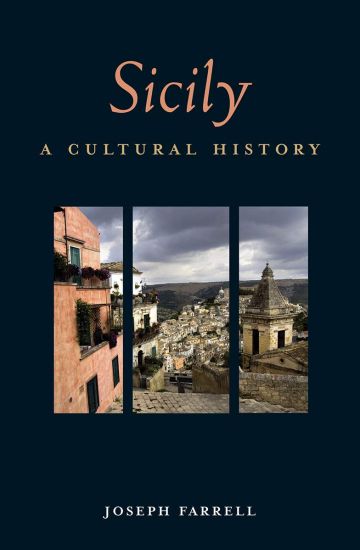
Sicily: A Cultural History

Sicily: A Cultural History

Joseph Farrell

Interlink Books
2014
nidottu
"Reading these guides is the next best thing to actually going there with them in hand." --Foreword Magazine AN ENGAGING INTRODUCTION TO A CULTURAL GIANT Long before it became an Italian offshore island, Sicily was the land in the center of the Mediterranean where the great civilizations of Europe and Northern Africa met. Sicily today is familiar and unfamiliar, modernized and unchanging. Visitors will find in an out-of-the-way town an Aragonese castle, will stumble across a Norman church by the side of a lesser travelled road, will see red Muslim-styles domes over a Christian shrine, will find a Baroque church of breathtaking beauty in a village, will catch a glimpse from the motorway of a solitary Greek temple on the horizon and will happen on a the celebrations of the patron saint of a run-down district of a city, and will stop and wonder. There is more to Sicily than the Godfather and the mafia.