Kirjojen hintavertailu. Mukana 11 635 594 kirjaa ja 12 kauppaa.

Kirjahaku

Etsi kirjoja tekijän nimen, kirjan nimen tai ISBN:n perusteella.

63 kirjaa tekijältä Joseph Harris

Gweithiau Awdurol Y Diweddar Joseph Harris (gomer)
Casgliad o weithiau awdurol y diweddar Joseph Harris (Gomer), ynghyd chofiant o'r awdur a'i deulu, a nodiadau eglurhaol. Mae'r gyfrol yn cynnwys detholiad o'i ysgrifau amrywiol, gan gynnwys erthyglau crefyddol, barddoniaeth, a phamffledi, sy'n rhoi cipolwg ar ei feddwl a'i ddylanwad ar ddiwylliant Cymru yn y bedwaredd ganrif ar bymtheg. Mae'r cofiant yn taflu goleuni ar ei fywyd personol a'i gyfraniad i'r gymdeithas. This work has been selected by scholars as being culturally important, and is part of the knowledge base of civilization as we know it. This work was reproduced from the original artifact, and remains as true to the original work as possible. Therefore, you will see the original copyright references, library stamps (as most of these works have been housed in our most important libraries around the world), and other notations in the work. This work is in the public domain in the United States of America, and possibly other nations. Within the United States, you may freely copy and distribute this work, as no entity (individual or corporate) has a copyright on the body of the work. As a reproduction of a historical artifact, this work may contain missing or blurred pages, poor pictures, errant marks, etc. Scholars believe, and we concur, that this work is important enough to be preserved, reproduced, and made generally available to the public. We appreciate your support of the preservation process, and thank you for being an important part of keeping this knowledge alive and relevant.
The Description and use of the Globes, and the Orrery. To Which is Prefixed, by way of Introduction, a Brief Account of the Solar System. By J. Harris
The 18th century was a wealth of knowledge, exploration and rapidly growing technology and expanding record-keeping made possible by advances in the printing press. In its determination to preserve the century of revolution, Gale initiated a revolution of its own: digitization of epic proportions to preserve these invaluable works in the largest archive of its kind. Now for the first time these high-quality digital copies of original 18th century manuscripts are available in print, making them highly accessible to libraries, undergraduate students, and independent scholars.Medical theory and practice of the 1700s developed rapidly, as is evidenced by the extensive collection, which includes descriptions of diseases, their conditions, and treatments. Books on science and technology, agriculture, military technology, natural philosophy, even cookbooks, are all contained here.++++The below data was compiled from various identification fields in the bibliographic record of this title. This data is provided as an additional tool in helping to insure edition identification: ++++Harvard University Houghton LibraryT113888The ornaments are those used by Henry Woodfall.London: printed for Thomas Wright, mathematical instrument-maker; and Richard Cushee, globe-maker, 1731. viii,190p., plates; 8
Misanthropy in the Age of Reason

Misanthropy in the Age of Reason

Joseph Harris

Oxford University Press
2022
sidottu
Ever since Timon of Athens shunned his fellow-countrymen and went to live out in the wilderness, the misanthrope has proved to be a fascinating but troubling figure for writers and thinkers. This comparative study brings together a range of material from various genres, periods, and countries to explore the developing status of misanthropy in the European literary and intellectual imagination from the late Renaissance to the dawn of Romanticism. During this period, the term 'misanthropy' shifts from being an obscure Greek calque to being almost banal in its ubiquity. In order to trace the contours of the period's evolving attitudes towards misanthropy, this study takes a combined thematic and historical approach. After two chapters offering close readings of the period's key icons of misanthropy--Shakespeare's Timon of Athens and Molière's Alceste--the remaining six chapters each explore different thematic issues of misanthropy as they surface across the period. Drawing on works by Shakespeare, Molière, Hobbes, Pascal, Rochester, Swift, Rousseau, Kotzebue, Schiller, Wollstonecraft, and Leopardi, as well as countless less canonical writers, this study demonstrates that the misanthrope is not a fixed, stable figure in early modern literature. Rather, he--or very occasionally she--emerges in many guises, from philosopher to comic grouch, from tragic hero to moral censor, from cynical villain to disappointed idealist, from quasi-bestial outsider to worldly satirist. As both critic of humanity and object of critical scrutiny, the misanthrope challenges straightforward oppositions between individual and society, virtue and vice, reason and folly, human and animal.
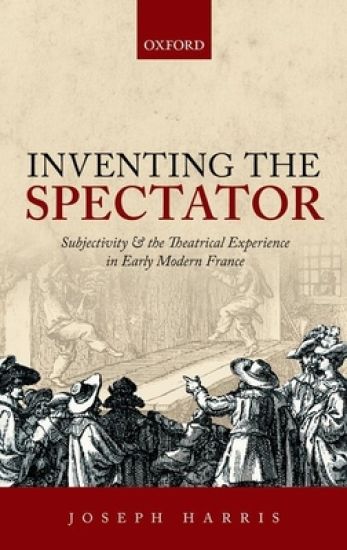
Inventing the Spectator

Inventing the Spectator

Joseph Harris

Oxford University Press
2014
sidottu
During the seventeenth and eighteenth centuries, France became famous -- notorious even -- across Europe for its ambitious attempts to codify and theorise a system of universally valid dramatic 'rules'. So fundamental and formative was this 'classical' conception of drama that it still underpins our modern conception of theatre today. Yet rather than rehearsing familiar arguments about plays, Inventing the Spectator reads early modern France's dramatic theory against the grain, tracing instead the profile and characteristics of the spectator that these arguments imply: the living, breathing individual in whose mind, senses, and experience the theatre comes to life. In so doing, Joseph Harris raises numerous questions -- of imagination and illusion, reason and emotion, vision and aurality, to name but a few -- that strike at the very heart of human psychology, cognition, and experience. Bridging the gap between literary and theatre studies, history of psychology, and intellectual history, Inventing the Spectator thus reconstructs the theatre spectator's experience as it was understood and theorised within French dramatic theory between the Renaissance and the Revolution. It explores early modern spectatorship through three main themes (illusion and the senses; pleasure and narrative; interest and identification) and five key dramatic theoreticians (d'Aubignac, Corneille, Dubos, Rousseau, and Diderot). As it demonstrates, the period's dramatic rules are at heart rules of psychology, cognition, and affect that emerged out of a complex dialogue with human subjectivity in all its richness.
You're in the Wrong Place

You're in the Wrong Place

Joseph Harris

Wayne State University Press
2020
nidottu
In a thrilling interconnected narrative, You're in the Wrong Place presents characters reaching for transcendence from a place they cannot escape. Charles Baxter stated that "Joseph Harris has a particular feeling for the Detroit suburbs and the slightly stunted lives of the young people there....You're in the Wrong Place isn't uniformly downbeat-there are all sorts of rays of hope that gleam toward the end".The book, composed of twelve stories, begins in the fall of 2008 with the shuttering of Dynamic Fabricating-a fictional industrial shop located in the Detroit suburb of Ferndale. Over the next seven years, the shop's former employees - as well as their friends and families-struggle to find money, purpose, and levity in a landscape suddenly devoid of work, faith, and love.In "Would You Rather", a young couple brought together by Dynamic Fabricating shares a blissful weekend in Northern Michigan, unaware of the catastrophe that awaits them upon their return home. In "Acolytes", a devout Catholic clings to her faith as her brothers descend into cultish soccer violence. In "Memorial", an ex-Dynamic worker scrapes money together for a tribute to his best friend, lost to the war in Afghanistan. In "Was It Good for You?" a cam girl deconstructs materialism with her ageng great aunt, a luxury sales associate, and an anxious, faceless client. And in the title story, simmering tensions come to a boil on a hot summer day for a hardscrabble landscaping crew, hired by the local bank to maintain the lawns of foreclosuresIn turns elegiac and harrowing, You're in the Wrong Place blends lyric intensity with philosophical eroticism to create a singular, powerful vision of contemporary American life. Readers of contemporary fiction grounded in place need to take up this collection.
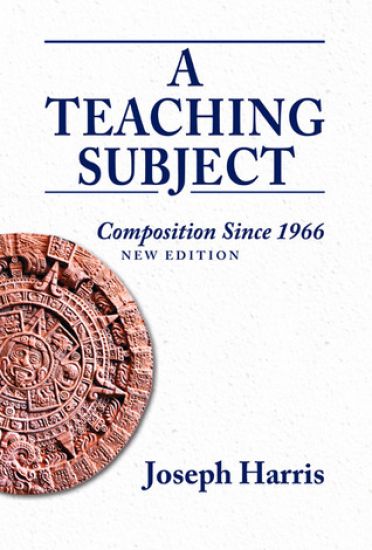
Teaching Subject, A

Teaching Subject, A

Joseph Harris

Utah State University Press
2012
pokkari
In this classic text, Joseph Harris traces the evolution of college writing instruction since the Dartmouth Seminar of 1966. A Teaching Subject offers a brilliant interpretative history of the first decades during which writing studies came to be imagined as a discipline separable from its partners in English studies. Postscripts to each chapter in this new edition bring the history of composition up to the present. Reviewing the development of the field through five key ideas, Harris unfolds a set of issues and tensions that continue to shape the teaching of writing today. Ultimately, he builds a case, now deeply influential in its own right, that composition defines itself through its interest and investment in the literacy work that students and teachers do together. Unique among English studies fields, composition is, Harris contends, a teaching subject.
"Speak Useful Words or Say Nothing"

"Speak Useful Words or Say Nothing"

Joseph Harris

Cornell University Library, Division of Rare Manuscripts Collections
2009
sidottu
This selection by Susan E. Deskis and Thomas D. Hill of twelve of Joseph Harris's most important essays underscores the range of his work from critical readings of canonical texts to philological elucidation of Old Norse and Old English literary works to discussions of larger theoretical issues such as oral theory. One of the central problems of medieval literary scholarship is the aesthetics of traditional and oral literature, and how and whether one can meaningfully discuss the literary history of an oral genre. Harris's studies of such topics as the Old Norse short narrative and of the Masterbuilder tale focus precisely on such problems and offer brilliant readings of specific texts as well as models of literary historical discourse. "Speak Useful Words or Say Nothing" also shows that Harris's work frequently bridges the divide between the Latin and Christian sources and the native vernacular traditions that together found their way into Old Norse and Old English literature.For more about the Islandica series, visit http: //cip.cornell.edu/Islandica
"Speak Useful Words or Say Nothing"

"Speak Useful Words or Say Nothing"

Joseph Harris

Cornell University Library, Division of Rare Manuscripts Collections
2009
pokkari
This selection by Susan E. Deskis and Thomas D. Hill of twelve of Joseph Harris's most important essays underscores the range of his work from critical readings of canonical texts to philological elucidation of Old Norse and Old English literary works to discussions of larger theoretical issues such as oral theory. One of the central problems of medieval literary scholarship is the aesthetics of traditional and oral literature, and how and whether one can meaningfully discuss the literary history of an oral genre. Harris's studies of such topics as the Old Norse short narrative and of the Masterbuilder tale focus precisely on such problems and offer brilliant readings of specific texts as well as models of literary historical discourse. "Speak Useful Words or Say Nothing" also shows that Harris's work frequently bridges the divide between the Latin and Christian sources and the native vernacular traditions that together found their way into Old Norse and Old English literature.For more about the Islandica series, visit http: //cip.cornell.edu/Islandica
An Essay upon Money and Coins

An Essay upon Money and Coins

Joseph Harris

Cambridge University Press
2017
pokkari
Joseph Harris (1704–64) was equally distinguished as an astronomer and as an expert on coinage. From a humble background, he came to the attention of Edmond Halley, the Astronomer Royal. He spent some time making astronomical observations in South America and the West Indies, and familiarised himself with marine navigational practice, proposing improvements to measuring equipment and publishing a very popular instructional work on the uses of globes and orreries. He later observed the 1761 transit of Venus from Wales. Harris entered the Royal Mint in 1736, and became the King's Assay Master in 1749. This influential 1757 work, considered by the Victorian economist J. R. McCulloch as 'one of the best and most valuable treatises on the subject of money that has ever seen the light', argues that it is vital to a country's economy that the value of precious metal in its coinage remains constant.
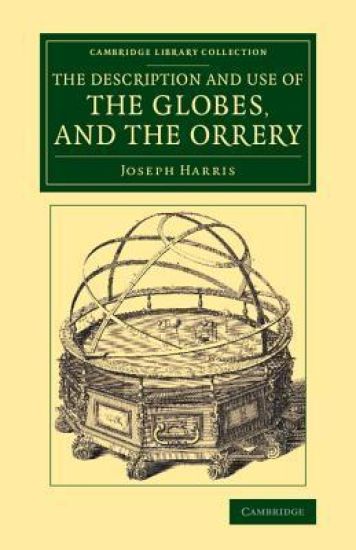
The Description and Use of the Globes, and the Orrery

The Description and Use of the Globes, and the Orrery

Joseph Harris

Cambridge University Press
2014
pokkari
Born in rural Wales, to which he always felt a close connection, Joseph Harris (c.1704–64) moved to London in 1724, presenting the Astronomer Royal, Edmond Halley, with a testimonial of his mathematical ability. Harris then found work as an astronomer and teaching of navigation; his observations of magnetism and solar eclipses taken in Vera Cruz in 1726 and 1727 were relayed to the Royal Society by Halley. Harris' illustrated introduction to the solar system was originally printed for the instrument-maker Thomas Wright and the globe-maker Richard Cushee; it is here reissued in its 1731 first edition. Clearly describing the use of astronomical apparatus such as globes and orreries, it proved very popular, going through fourteen printings by 1793. Harris starts with an overview of the solar system and the fixed stars, and then shows how to solve astronomical problems using globes and orreries.