Kirjojen hintavertailu. Mukana 11 342 296 kirjaa ja 12 kauppaa.

Kirjahaku

Etsi kirjoja tekijän nimen, kirjan nimen tai ISBN:n perusteella.

10 kirjaa tekijältä Joseph Horowitz

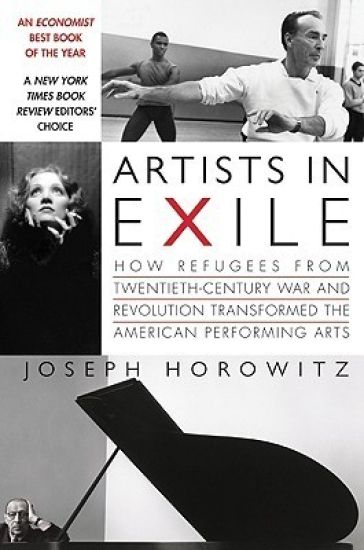
Artists in Exile

Artists in Exile

Joseph Horowitz

HARPERCOLLINS PUBLISHERS INC
2009
nidottu
Decades of war and revolution in Europe forced an "intellectual migration" during the last century, relocating thousands of artists and thinkers to the United States. For many of Europe's premier performing artists, America proved to be a destination both strange and opportune.Featuring the stories of George Balanchine, Kurt Weill, Fritz Lang, Billy Wilder, Greta Garbo, Marlene Dietrich, and many others, Artists in Exile explores the impact that these famous newcomers had on American culture, and that America had on them.
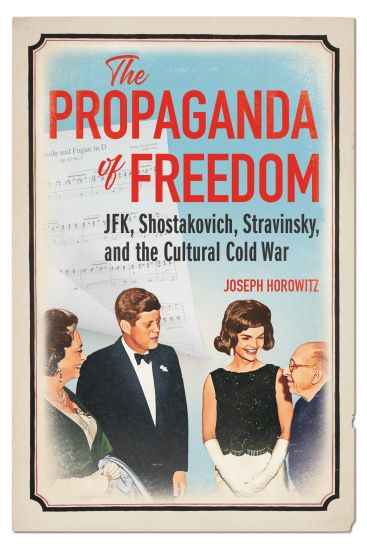
The Propaganda of Freedom

The Propaganda of Freedom

Joseph Horowitz

UNIVERSITY OF ILLINOIS PRESS
2023
sidottu
The perils of equating notions of freedom with artistic vitality Eloquently extolled by President John F. Kennedy, the idea that only artists in free societies can produce great art became a bedrock assumption of the Cold War. That this conviction defied centuries of historical evidence--to say nothing of achievements within the Soviet Union--failed to impact impregnable cultural Cold War doctrine. Joseph Horowitz writes: “That so many fine minds could have cheapened freedom by over-praising it, turning it into a reductionist propaganda mantra, is one measure of the intellectual cost of the Cold War.” He shows how the efforts of the CIA-funded Congress for Cultural Freedom were distorted by an anti-totalitarian “psychology of exile” traceable to its secretary general, the displaced Russian aristocrat/composer Nicolas Nabokov, and to Nabokov’s hero Igor Stravinsky. In counterpoint, Horowitz investigates personal, social, and political factors that actually shape the creative act. He here focuses on Stravinsky, who in Los Angeles experienced a “freedom not to matter,” and Dmitri Shostakovich, who was both victim and beneficiary of Soviet cultural policies. He also takes a fresh look at cultural exchange and explores paradoxical similarities and differences framing the popularization of classical music in the Soviet Union and the United States. In closing, he assesses the Kennedy administration’s arts advocacy initiatives and their pertinence to today’s fraught American national identity. Challenging long-entrenched myths, The Propaganda of Freedom newly explores the tangled relationship between the ideology of freedom and ideals of cultural achievement.
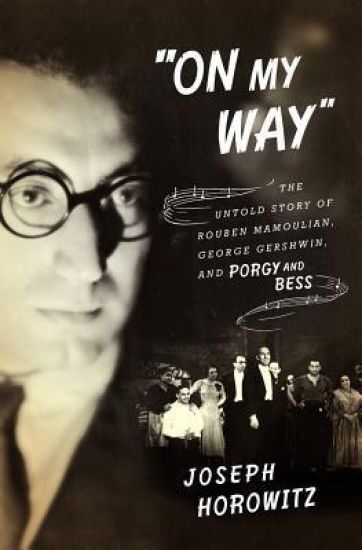
"On My Way"

"On My Way"

Joseph Horowitz

WW Norton Co
2013
sidottu
"Bring my goat!" Porgy exclaims in the final scene of Gershwin’s opera Porgy and Bess. Bess, whom he loves, has left for New York City, and he’s determined to find her. When his request is met with astonishment—New York is a great distance from South Carolina’s Catfish Row—Porgy remains undaunted. He mounts his goat-cart and leads the community in an ecstatic finale, "Oh Lawd, I’m on my way." Stephen Sondheim has called "Bring my goat!" "one of the most moving moments in musical theater history." For years it was assumed that DuBose Heyward—the author of the seminal novella and subsequent play, Porgy, and later the librettist for the opera Porgy and Bess—penned this historic line. In fact, both it and "Oh Lawd, I'm on my way" were added to the play eight years earlier by that production’s unheralded architect: Rouben Mamoulian. Porgy and Bess as we know it would not exist without the contributions of this master director. Culling new information from the recently opened Mamoulian Archives at the Library of Congress, award-winning author Joseph Horowitz shows that, more than anyone else, Mamoulian took Heyward's vignette of a regional African-American subculture and transformed it into an epic theater work, a universal parable of suffering and redemption. Part biography, part revelatory history, "On My Way" re-creates Mamoulian's visionary style on stage and screen, his collaboration with George Gershwin, and the genesis of the opera that changed the face of American musical life.
Classical Music in America

Classical Music in America

Joseph Horowitz

WW Norton Co
2007
nidottu
“An opinionated, stimulating account of how classical music failed to establish fruitful roots in America,” Classical Music in America chronicles “a cultural attitude that has produced many fine artists and striking moments—but no institutional or intellectual support to sustain them” (Kirkus Reviews, starred review). “An admirable, scholarly volume” (Times Literary Supplement), this “formidable book ... shows how American classical music became a ‘performance culture,’ an ersatz-European showplace for celebrity virtuosos, rather than a native-born genre” (The New Yorker). “As a comprehensive, convincing analysis of the contemporary dilemma” of reconciling European heritage with American vision “and a riveting portrait of the century and a half of events and personalities which brought it about, Mr Horowitz’s account would be hard to beat” (The Economist). “Anyone seeking to understand why American classical music has come to so dead an end—and wondering how it might yet escape a final descent into cultural irrelevance—should read Classical Music in America with close attention” (Commentary).
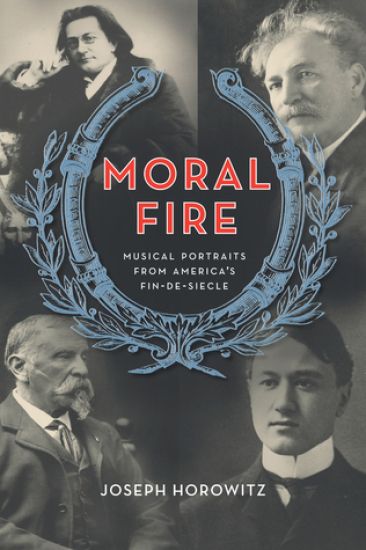
Moral Fire

Moral Fire

Joseph Horowitz

University of California Press
2012
sidottu
Joseph Horowitz writes in "Moral Fire": "If the Met's screaming Wagnerites standing on chairs (in the 1890s) are unthinkable today, it is partly because we mistrust high feeling. Our children avidly specialize in vicarious forms of electronic interpersonal diversion. Our laptops and televisions ensnare us in a surrogate world that shuns all but facile passions; only Jon Stewart and Bill Maher share moments of moral outrage disguised as comedy". Arguing that the past can prove instructive and inspirational, Horowitz revisits four astonishing personalities - Henry Higginson, Laura Langford, Henry Krehbiel and Charles Ives - whose missionary work in the realm of culture signaled a belief in the fundamental decency of civilized human nature, in the universality of moral values, and in progress toward a kingdom of peace and love.
The Disciple: A Wagnerian Tale from the Gilded Age
Wagnerism dominated American cultural and intellectual life of the late nineteenth century. The central apostle was the conductor Anton Seidl, a prot g and surrogate son of the composer. Seidl arrived in the US in 1885. His life's mission became the propagation of Wagner in the US. In this capacity, his influence was immense - greater than Toscanini or Bernstein in decades to come. His early death, in1898, preceded the advent of broadcasts and recordings. In The Disciple, Seidl is remembered as a man beset by hidden sorrow. In a sense, he never recuperated from Wagner's death in 1882 - Seidl was then 32 years old. The impact of the Wagner personality was indelible - and not only on Seidl. The larger picture: the late Gilded Age marked the apex of classical music in the US. Seidl and Antonin Dvorak (also in The Disciple) were the most prominent, most influential personalities. Not much later came Gustav Mahler (1908-1911) - and The Disciple is in fact a prequel to Horowitz's acclaimed The Marriage: The Mahlers in New York. Both books argue that historical fiction can become an indispensable tool for cultural history. The principal secondary character of the novel is Laura Langford, who as founder of the Seidl Society became the most important concert impresario in Brooklyn. The Seidl Society presented Seidl in concert fourteen times a week at Coney Island's Brighton Beach resort. On Wagner Nights, the 3,000-seat music pavilion would fill to capacity. In winter, the Society presented Seidl in concert at the Brooklyn Academy of Music. This story is very little known. In fact, most American Wagnerites were women for whom Wagner afforded a necessary opportunity for emotional release.