Kirjahaku
Etsi kirjoja tekijän nimen, kirjan nimen tai ISBN:n perusteella.
18 kirjaa tekijältä Joseph J. Ellis
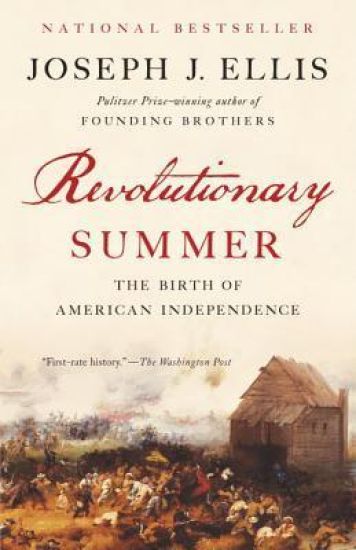
A Washington Post Notable BookA Kirkus Reviews Best Nonfiction Book of the YearThe summer months of 1776 witnessed the most consequential events in the story of our country's founding. While the thirteen colonies came together and agreed to secede from the British Empire, the British were dispatching the largest armada ever to cross the Atlantic to crush the rebellion in the cradle. The Continental Congress and the Continental Army were forced to make decisions on the run, improvising as history congealed around them. In a brilliant and seamless narrative, Ellis meticulously examines the most influential figures in this propitious moment, including George Washington, John Adams, Thomas Jefferson, Benjamin Franklin, and Britain's Admiral Lord Richard and General William Howe. He weaves together the political and military experiences as two sides of a single story, and shows how events on one front influenced outcomes on the other.
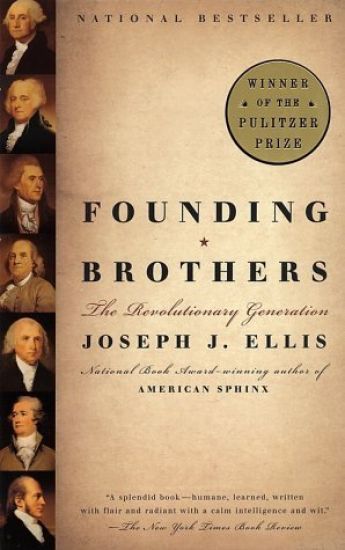
PULITZER PRIZE WINNER - NATIONAL BESTSELLER - A landmark work of history explores how a group of greatly gifted but deeply flawed individuals--Hamilton, Burr, Jefferson, Franklin, Washington, Adams, and Madison--confronted the overwhelming challenges before them to set the course for our nation. "A splendid book--humane, learned, written with flair and radiant with a calm intelligence and wit." --The New York Times Book ReviewThe United States was more a fragile hope than a reality in 1790. During the decade that followed, the Founding Fathers--re-examined here as Founding Brothers--combined the ideals of the Declaration of Independence with the content of the Constitution to create the practical workings of our government. Through an analysis of six fascinating episodes--Hamilton and Burr's deadly duel, Washington's precedent-setting Farewell Address, Adams' administration and political partnership with his wife, the debate about where to place the capital, Franklin's attempt to force Congress to confront the issue of slavery and Madison's attempts to block him, and Jefferson and Adams' famous correspondence--Founding Brothers brings to life the vital issues and personalities from the most important decade in our nation's history.
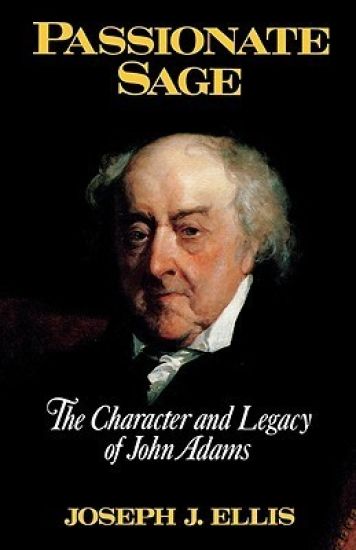
A fresh look at this astute, likably quirky statesman, by the author of the Pulitzer Award-winning Founding Brothers and the National Book Award winning American Sphinx. "The most lovable and most laughable, the warmest and possibly the wisest of the founding fathers, John Adams knew himself as few men do and preserved his knowledge in a voluminous correspondence that still resonates. Ellis has used it with great skill and perception not only to bring us the man, warts and all, but more importantly to reveal his extraordinary insights into the problems confronting the founders that resonate today in the republic they created."—Edmund S. Morgan, Sterling Professor of History Emeritus, Yale University.
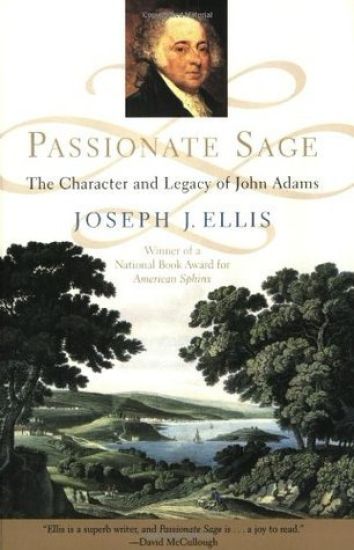
A fresh look at this astute, likably quirky statesman, by the author of the Pulitzer Award-winning Founding Brothers and the National Book Award winning American Sphinx. "The most lovable and most laughable, the warmest and possibly the wisest of the founding fathers, John Adams knew himself as few men do and preserved his knowledge in a voluminous correspondence that still vibrates. Ellis has used it with great skill and perception not only to bring us the man, warts and all, but more importantly to reveal his extraordinary insights into the problems confronting the founders that resonate today in the republic they created." —Edmund S. Morgan, Sterling Professor of History Emeritus, Yale University
An entrepreneur, a writer who wanted to depict an ideal society, a dramatist who tried to reconcile high aesthetic standards and populism, and a Connecticut Yankee who ran into the contradictions of conservatism and liberalism—each of the four men depicted in this book had a vision of what kind of society post-Revolutionary America should be. Through portraits of these bellwether figures, the prize-winning historian Joseph J. Ellis examines the currents that were shaping the new country.
Through portraits of four figures—Charles Willson Peale, Hugh Henry Brackenridge, William Dunlap, and Noah Webster—Joseph Ellis provides a unique perspective on the role of culture in post-Revolutionary America, both its high expectations and its frustrations.
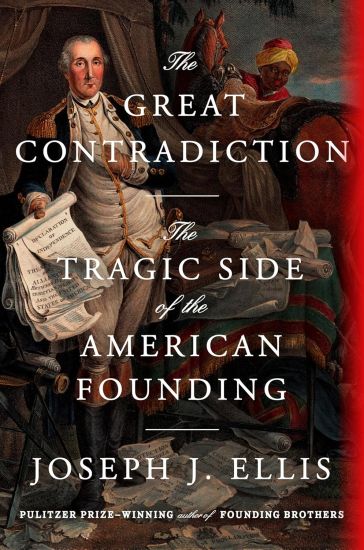
A major new history from our most trusted voice on the Revolutionary era, the author of the Pulitzer Prize-winning Founding Brothers and the National Book Award winner American Sphinx an astounding look at how America's founders--Washington, Jefferson, Franklin, Madison, Adams--regarded the issue of slavery as they drafted the Declaration of Independence and the Constitution. A daring and important work that ultimately reckons with the two great failures of America's founding: the failure to end slavery and the failure to avoid Indian removal. "How does it appear in the sight-of-heaven," wrote Samuel Hopkins of Newport, "that these States, who have been fighting for liberty, cannot agree in any political constitution unless it indulge and authorize them to enslave their fellow men." On the eve of the American Revolution, half a million enslaved African Americans were embedded in the North American population. The slave trade was flourishing, even as the thirteen colonies armed themselves to defend against the idea of being governed without consent. This paradox gave birth to what one of our most admired historians, Joseph J. Ellis, calls the "great contradiction" How could a government that had been justified and founded on the principles articulated in the Declaration of Independence institutionalize slavery? How could it permit a tidal wave of western migration by settlers who understood the phrase "pursuit of happiness" to mean the pursuit of Indian lands? With narrative grace and a flair for irony and paradox, Ellis addresses the questions that lie at America's twisted roots--questions that turned even the sharpest minds of the Revolutionary generation into mental contortionists. He discusses the first debates around slavery and the treatment of Native Americans, from the Constitutional Convention to the Treaty of New York, revealing the thinking and rationalizations behind Jay, Hamilton, and Madison's revisions of the Articles of Confederation, and highlights the key role of figures like Quaker abolitionist Anthony Benezet and Creek chief Alexander McGillivray. Ellis writes with candor and deftness, his clarion voice rising above presentist historians and partisans who are eager to make the founders into trophies in the ongoing culture wars. Instead, Ellis tells a story that is rooted in the coexistence of grandeur and failure, brilliance and blindness, grace and sin.
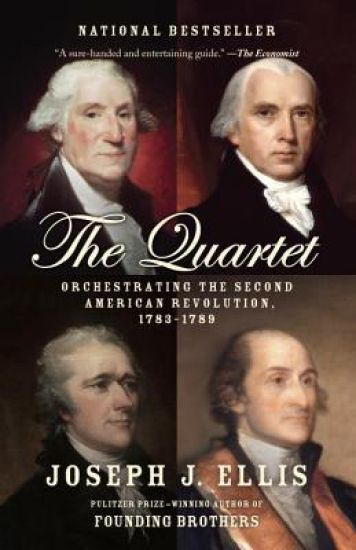
From Pulitzer Prize winning American historian Joseph J. Ellis, the unexpected story of why the thirteen colonies, having just fought off the imposition of a distant centralized governing power, would decide to subordinate themselves anew. We all know the famous opening phrase of Lincoln s Gettysburg Address: Four score and seven years ago our fathers brought forth on this Continent a new Nation. The truth is different. In 1776, thirteen American colonies declared themselves independent states that only temporarily joined forces in order to defeat the British. Once victorious, they planned to go their separate ways. The triumph of the American Revolution was neither an ideological nor a political guarantee that the colonies would relinquish their independence and accept the creation of a federal government with power over their autonomy as states. "The Quartet" is the story of this second American founding and of the men most responsible George Washington, Alexander Hamilton, John Jay, and James Madison. These men, with the help of Robert Morris and Gouverneur Morris, shaped the contours of American history by diagnosing the systemic dysfunctions created by the Articles of Confederation, manipulating the political process to force the calling of the Constitutional Convention, conspiring to set the agenda in Philadelphia, orchestrating the debate in the state ratifying conventions, and, finally, drafting the Bill of Rights to assure state compliance with the constitutional settlement. Ellis has given us a gripping and dramatic portrait of one of the most crucial and misconstrued periods in American history: the years between the end of the Revolution and the formation of the federal government. "The Quartet" unmasks a myth, and in its place presents an even more compelling truth one that lies at the heart of understanding the creation of the United States of America. "From the Hardcover edition.""
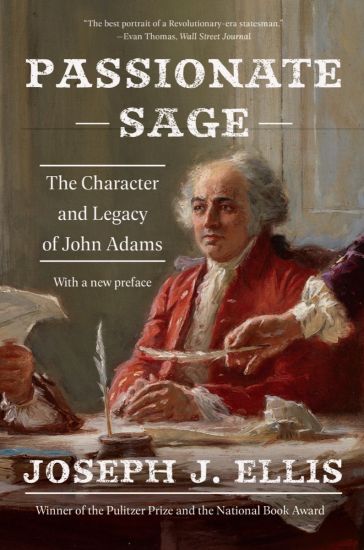
A fresh look at this astute, likably quirky statesman, by the author of the Pulitzer Award-winning Founding Brothers and the National Book Award winning American Sphinx.
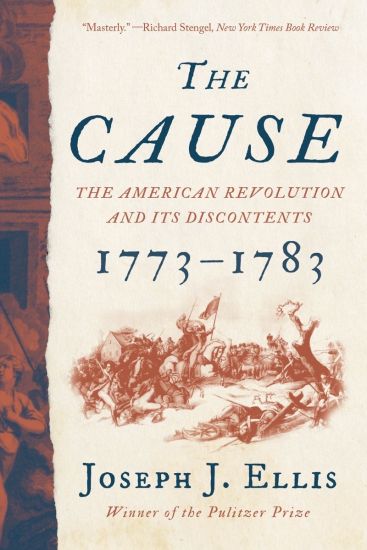
For Pulitzer Prize–winning historian Joseph J. Ellis, The Cause marks the culmination of a lifetime of engagement with the founding era, completing a trilogy of books that began with Founding Brothers. Here Ellis, countering popular histories that romanticize the “Spirit of ’76,” demonstrates through “evocative profiles of British loyalists, slaves, Native Americans and soldiers uncertain of what was being founded” (Christopher Borrelli, Chicago Tribune) that the rebels fought not for a nation but under the mantle of “The Cause,” a mutable, conveniently ambiguous principle all but destined to give rise to the warring factions of later American history. Combining action-packed tales of North American military campaigns with characteristically trenchant insight, The Cause “deftly foreshadows all the issues that would complicate America’s trajectory” (Richard Stengel, New York Times Book Review), forcing us to finally reconsider the story we have long told ourselves about our origins—as a people, and as a nation. “At the intersection of his expertise and our need for coherence about our national founding arrives historian Joseph J. Ellis. . . . Ellis is no apologist, but he is a chronicler of the entire revolution, its best aspirations, its worst contradictions, and its ongoing dilemmas.” —Hugh Hewitt, Washington Post
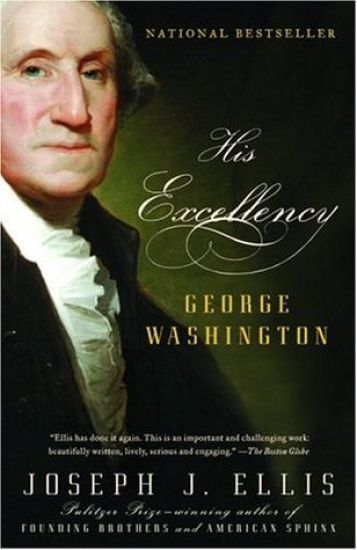
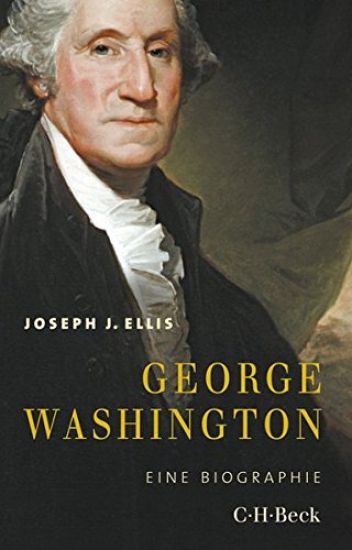
A landmark biography of America's first president draws on the Washington papers from the archives at the University of Virginia to follow George Washington from his military career through his presidential years, discussing his personal life, marriage, struggle to keep an emerging America united, attitude toward slavery, and other accomplishments. Reprint. 350,000 first printing.
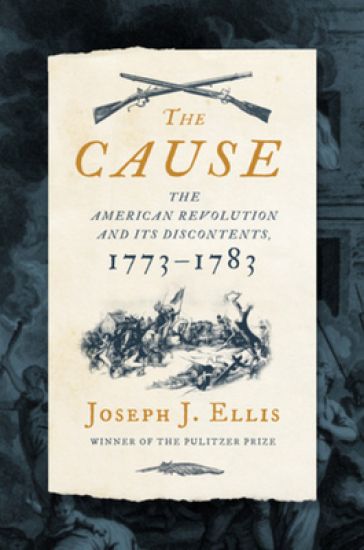
George Washington claimed that anyone who attempted to provide an accurate account of the war for independence would be accused of writing fiction. At the time, no one called it the “American Revolution”: former colonists still regarded themselves as Virginians or Pennsylvanians, not Americans, while John Adams insisted that the British were the real revolutionaries, for attempting to impose radical change without their colonists’ consent. With The Cause, Ellis takes a fresh look at the events between 1773 and 1783, recovering a war more brutal than any in American history save the Civil War and discovering a strange breed of “prudent” revolutionaries, whose prudence proved wise yet tragic when it came to slavery, the original sin that still haunts America. Written with flair and drama, The Cause brings together a cast of familiar and forgotten characters who, taken together, challenge the story we have long told ourselves about our origins as a people and a nation.
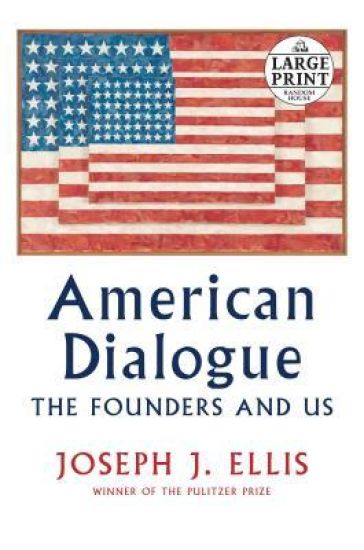
American Dialogue: The Founders and Us
Joseph J. Ellis
Random House Large Print Publishing
2018
nidottu
The award-winning author of Founding Brothers and The Quartet now gives us a deeply insightful examination of the relevance of the views of George Washington, Thomas Jefferson, James Madison, and John Adams to some of the most divisive issues in America today. The story of history is a ceaseless conversation between past and present, and in American Dialogue Joseph J. Ellis focuses the conversation on the often-asked question "What would the Founding Fathers think?" He examines four of our most seminal historical figures through the prism of particular topics, using the perspective of the present to shed light on their views and, in turn, to make clear how their now centuries-old ideas illuminate the disturbing impasse of today's political conflicts. He discusses Jefferson and the issue of racism, Adams and the specter of economic inequality, Washington and American imperialism, Madison and the doctrine of original intent. Through these juxtapositions--and in his hallmark dramatic and compelling narrative voice--Ellis illuminates the obstacles and pitfalls paralyzing contemporary discussions of these fundamentally important issues.
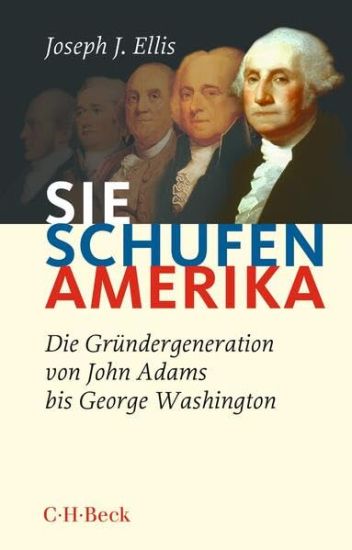
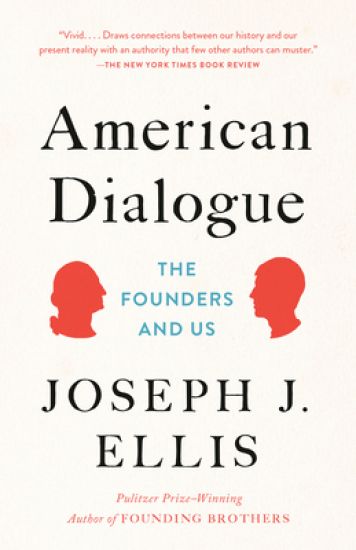
The award-winning author of Founding Brothers and The Quartet now gives us a deeply insightful examination of the relevance of the views of George Washington, Thomas Jefferson, James Madison, and John Adams to some of the most divisive issues in America today. The story of history is a ceaseless conversation between past and present, and in American Dialogue Joseph J. Ellis focuses the conversation on the often-asked question "What would the Founding Fathers think?" He examines four of our most seminal historical figures through the prism of particular topics, using the perspective of the present to shed light on their views and, in turn, to make clear how their now centuries-old ideas illuminate the disturbing impasse of today's political conflicts. He discusses Jefferson and the issue of racism, Adams and the specter of economic inequality, Washington and American imperialism, Madison and the doctrine of original intent. Through these juxtapositions--and in his hallmark dramatic and compelling narrative voice--Ellis illuminates the obstacles and pitfalls paralyzing contemporary discussions of these fundamentally important issues.