Kirjojen hintavertailu. Mukana 12 390 323 kirjaa ja 12 kauppaa.

Kirjahaku

Etsi kirjoja tekijän nimen, kirjan nimen tai ISBN:n perusteella.

5 kirjaa tekijältä Joseph J. Fischel

Screw Consent

Screw Consent

Joseph J. Fischel

University of California Press
2019
sidottu
When we talk about sex—whether great, good, bad, or unlawful—we often turn to consent as both our erotic and moral savior. We ask questions like, What counts as sexual consent? How do we teach consent to impressionable youth, potential predators, and victims? How can we make consent sexy? What if these are all the wrong questions? What if our preoccupation with consent is hindering a safer and better sexual culture? By foregrounding sex on the social margins (bestial, necrophilic, cannibalistic, and other atypical practices), Screw Consent shows how a sexual politics focused on consent can often obscure, rather than clarify, what is wrong about wrongful sex. Joseph J. Fischel argues that the consent paradigm, while necessary for effective sexual assault law, diminishes and perverts our ideas about desire, pleasure, and injury. In addition to the criticisms against consent leveled by feminist theorists of earlier generations, Fischel elevates three more: consent is insufficient, inapposite, and riddled with scope contradictions for regulating and imagining sex. Fischel proposes instead that sexual justice turns more productively on concepts of sexual autonomy and access. Clever, witty, and adeptly researched, Screw Consent promises to change how we understand consent, sexuality, and law in the United States today.
Screw Consent

Screw Consent

Joseph J. Fischel

University of California Press
2019
pokkari
When we talk about sex—whether great, good, bad, or unlawful—we often turn to consent as both our erotic and moral savior. We ask questions like, What counts as sexual consent? How do we teach consent to impressionable youth, potential predators, and victims? How can we make consent sexy? What if these are all the wrong questions? What if our preoccupation with consent is hindering a safer and better sexual culture? By foregrounding sex on the social margins (bestial, necrophilic, cannibalistic, and other atypical practices), Screw Consent shows how a sexual politics focused on consent can often obscure, rather than clarify, what is wrong about wrongful sex. Joseph J. Fischel argues that the consent paradigm, while necessary for effective sexual assault law, diminishes and perverts our ideas about desire, pleasure, and injury. In addition to the criticisms against consent leveled by feminist theorists of earlier generations, Fischel elevates three more: consent is insufficient, inapposite, and riddled with scope contradictions for regulating and imagining sex. Fischel proposes instead that sexual justice turns more productively on concepts of sexual autonomy and access. Clever, witty, and adeptly researched, Screw Consent promises to change how we understand consent, sexuality, and law in the United States today.
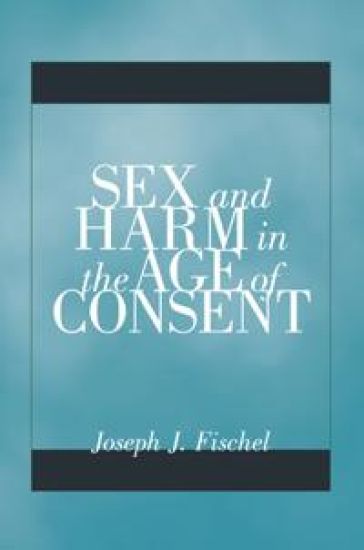
Sex and Harm in the Age of Consent

Sex and Harm in the Age of Consent

Joseph J. Fischel

University of Minnesota Press
2016
nidottu
Sex and Harm in the Age of Consent cautions against the adoption of consent as our primary determinant of sexual freedom. For Joseph J. Fischel, consent is not necessarily always ethically sound. It is, he argues, a moralized fiction, and it churns out figures for its normativity: the predatory sex offender and the innocent child.Examining the representation of consent in U.S. law and media culture, Fischel contends that the figures of the sex offender and the child are consent’s alibi, its negative space, enabling fictions that allow consent to do the work cut out for it under late modern sexual politics. Engaging legal, queer, feminist, and political theory, case law and statutory law, and media representations, Fischel proposes that we change our adjudicative terms from innocence, consent, and predation to vulnerability, sexual autonomy, and “peremption,” which he defines as the uncontrolled disqualification of possibility. Such a shift in theory, law, and life would be less damaging for young people, more responsive to sexual violence, and better for sex.
Sodomy's Solicitations

Sodomy's Solicitations

Joseph J. Fischel

TEMPLE UNIVERSITY PRESS,U.S.
2025
sidottu
Joseph Fischel’s provocative book, Sodomy’s Solicitations, builds out a politics of sexual justice that challenges state sex exceptionalism. By tracing several twenty-first century contestations around Louisiana anti-sodomy laws, Fischel examines patterns and practices of sexual injustice that are too easily eclipsed by our collective focus on marginalized identities. The political stories narrated in Sodomy’s Solicitations are undoubtedly stories of racism, sexism, homophobia, and transphobia, but they are also stories of other political problems-and political possibilities. Fischel indicts U.S. sex offender regulatory regimes as state-sponsored sexual violence; offers a qualified defense for sexual expression in public; and argues that animal sexual abuse laws, with their exemptions for industrial agricultural practices, authorize the suffering they were enacted to deter. He also makes the case that laws criminalizing the exchange of sex for money are unconstitutional, and proposes that the best way to protect trans and queer children might just be to enfranchise them.Sodomy’s Solicitations champions a right to queerness across rather than within identity formations-a right to relatively unpoliced gender, sexual, and intimate pluralism. In the series Sexuality Studies
Sodomy's Solicitations

Sodomy's Solicitations

Joseph J. Fischel

TEMPLE UNIVERSITY PRESS,U.S.
2025
nidottu
Joseph Fischel’s provocative book, Sodomy’s Solicitations, builds out a politics of sexual justice that challenges state sex exceptionalism. By tracing several twenty-first century contestations around Louisiana anti-sodomy laws, Fischel examines patterns and practices of sexual injustice that are too easily eclipsed by our collective focus on marginalized identities. The political stories narrated in Sodomy’s Solicitations are undoubtedly stories of racism, sexism, homophobia, and transphobia, but they are also stories of other political problems-and political possibilities. Fischel indicts U.S. sex offender regulatory regimes as state-sponsored sexual violence; offers a qualified defense for sexual expression in public; and argues that animal sexual abuse laws, with their exemptions for industrial agricultural practices, authorize the suffering they were enacted to deter. He also makes the case that laws criminalizing the exchange of sex for money are unconstitutional, and proposes that the best way to protect trans and queer children might just be to enfranchise them.Sodomy’s Solicitations champions a right to queerness across rather than within identity formations-a right to relatively unpoliced gender, sexual, and intimate pluralism. In the series Sexuality Studies