Kirjojen hintavertailu. Mukana 11 244 527 kirjaa ja 12 kauppaa.

Kirjahaku

Etsi kirjoja tekijän nimen, kirjan nimen tai ISBN:n perusteella.

4 kirjaa tekijältä Joseph Levine

Purple Haze

Purple Haze

Joseph Levine

Oxford University Press Inc
2004
nidottu
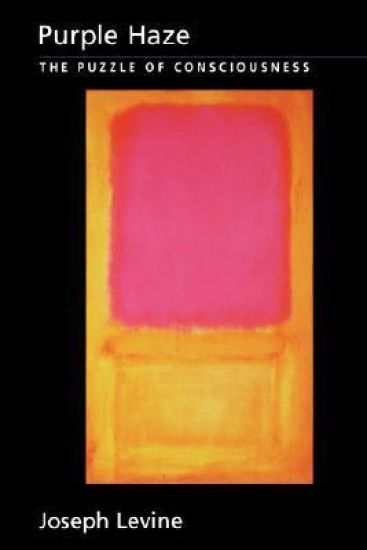
Conscious experience presents a deep puzzle. On the one hand, a fairly robust materialism must be true in order to explain how it is that conscious events causally interact with non-conscious, physical events. On the other hand, we cannot explain how physical phenomena give rise to conscious experience. In this wide-ranging study, Joseph Levine explores both sides of the mind-body dilemma, presenting the first book-length treatment of his highly influential ideas on the 'explanatory gap', the fact that we can't explain the nature of phenomenal experience in terms of its physical realization. He presents a careful argument that there is such a gap, and, after providing intriguing analyses of virtually all existing theories of consciousness, shows that recent attempts to close it fall short of the mark. Levine concludes that in the foreseeable future consciousness will remain a mystery.
Quality and Content

Quality and Content

Joseph Levine

Oxford University Press
2018
sidottu
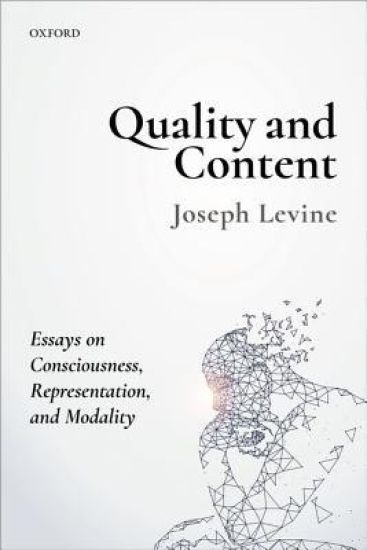
Joseph Levine draws together a series of essays in which he has developed his distinctive approach to philosophy of mind. He explores such topics as the "phenomenal concept strategy" to defend materialism from anti-materialist intuitions, the doctrine of representationalism about phenomenal character, the modal argument against materialism, the nature of demonstrative thought, and cognitive phenomenology. Levine argues that the phenomenal concept strategy cannot work and that representationalism has certain fatal flaws, at least if it is to be joined to a materialist metaphysics. On the other hand, he defends materialism from the modal argument, contending that it relies on a questionable conflation of semantic and metaphysical issues. Levine also provides a naturalistic theory of demonstrative thought, criticizing certain philosophical arguments involving that notion in the process. All of the essays in some way respond to various materialist attempts to close the "explanatory gap" as well as outline a different conception of conscious experience that would accommodate the gap. Levine connects his work with related themes in contemporary psychology and with such hot philosophical topics as cognitive phenomenology.
The Stone Rejected by the Builders

The Stone Rejected by the Builders

Joseph Levine

Arouca Press
2023
pokkari
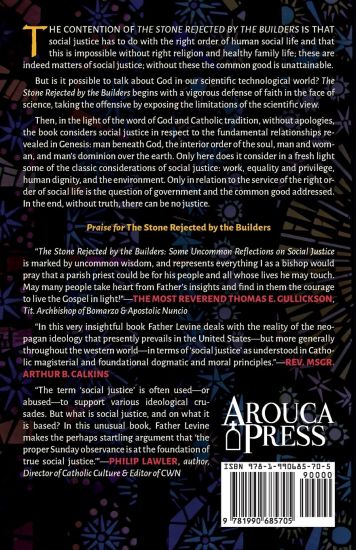
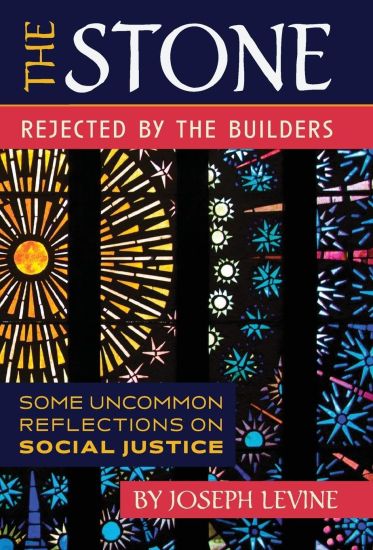
Social justice: the expression evokes images of protests in the streets, economic and political debates about human and civil rights, unions, wages, welfare programs for the poor, foreign aid, immigration, race conflicts, and even climate change. All seemingly intractable problems. Taking the wrong side of the debate can lead to exclusion from our inclusive society.One thing is always missing in our secular, pluralistic society: God and religion. The Church herself seems to enter the debate on the world's terms. Another thing is debated but seen as disconnected from the realm of social justice: marriage and family. In the Church we find a division between "Social justice Catholics" and "Pro-life Catholics." Marriage, family, and children end up losers in the public debate, sacrificed to misconceptions about the common good. The contention of The Stone Rejected by the Builders is that social justice has to do with the right order of human social life and this is impossible without right religion and healthy family life; these are indeed matters of social justice; without these the common good is unattainable.
The Stone Rejected by the Builders

The Stone Rejected by the Builders

Joseph Levine

Arouca Press
2023
sidottu
Social justice: the expression evokes images of protests in the streets, economic and political debates about human and civil rights, unions, wages, welfare programs for the poor, foreign aid, immigration, race conflicts, and even climate change. All seemingly intractable problems. Taking the wrong side of the debate can lead to exclusion from our inclusive society.One thing is always missing in our secular, pluralistic society: God and religion. The Church herself seems to enter the debate on the world's terms. Another thing is debated but seen as disconnected from the realm of social justice: marriage and family. In the Church we find a division between "Social justice Catholics" and "Pro-life Catholics." Marriage, family, and children end up losers in the public debate, sacrificed to misconceptions about the common good. The contention of The Stone Rejected by the Builders is that social justice has to do with the right order of human social life and this is impossible without right religion and healthy family life; these are indeed matters of social justice; without these the common good is unattainable.