Kirjojen hintavertailu. Mukana 11 342 296 kirjaa ja 12 kauppaa.

Kirjahaku

Etsi kirjoja tekijän nimen, kirjan nimen tai ISBN:n perusteella.

32 kirjaa tekijältä Joseph Margolis

The Critical Margolis

The Critical Margolis

Joseph Margolis

State University of New York Press
2021
sidottu
This critical reader covers Joseph Margolis's controversial views of mind, truth, science, and reality, along with his revolutionary theories about culture, art, language, personhood, and morality.Pragmatism's revival since 1980 can be credited to several thinkers, among them the longtime professor of philosophy at Temple University, Joseph Margolis. The Critical Margolis collects within one volume more than a dozen of his essential writings, allowing readers to become familiar with his important contributions to core areas of philosophy, where he has controversially challenged scientistic, analytic, and continental traditions. During a period when sharp divides animate intellectual debates-realism or idealism, matter or mind, causality or freedom, machines or persons, facts or values, cognition or emotion, and the like-Margolis dissolves false dichotomies and reconstructs philosophy itself. Prominent philosophers of the second half of the twentieth century, from Quine, Danto, and Putnam to Derrida, Rorty, and Brandom, along with a host of similarly significant thinkers, are targets of Margolis's critiques.If there could be a comprehensive volume of pragmatism for today and tomorrow, The Critical Margolis shall serve.
The Critical Margolis

The Critical Margolis

Joseph Margolis

STATE UNIVERSITY OF NEW YORK PRESS
2022
pokkari
This critical reader covers Joseph Margolis's controversial views of mind, truth, science, and reality, along with his revolutionary theories about culture, art, language, personhood, and morality.Pragmatism's revival since 1980 can be credited to several thinkers, among them the longtime professor of philosophy at Temple University, Joseph Margolis. The Critical Margolis collects within one volume more than a dozen of his essential writings, allowing readers to become familiar with his important contributions to core areas of philosophy, where he has controversially challenged scientistic, analytic, and continental traditions. During a period when sharp divides animate intellectual debates-realism or idealism, matter or mind, causality or freedom, machines or persons, facts or values, cognition or emotion, and the like-Margolis dissolves false dichotomies and reconstructs philosophy itself. Prominent philosophers of the second half of the twentieth century, from Quine, Danto, and Putnam to Derrida, Rorty, and Brandom, along with a host of similarly significant thinkers, are targets of Margolis's critiques.If there could be a comprehensive volume of pragmatism for today and tomorrow, The Critical Margolis shall serve.
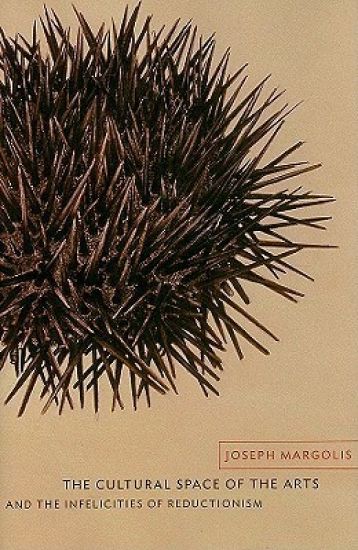
The Cultural Space of the Arts and the Infelicities of Reductionism
Joseph Margolis, known for his considerable contributions to the philosophy of art and aesthetics, pragmatism, and American philosophy, has focused primarily on the troublesome concepts of culture, history, language, agency, art, interpretation, and the human person or self. For Margolis, the signal problem has always been the same: how can we distinguish between physical nature and human culture? How do these realms relate? The Cultural Space of the Arts and the Infelicities of Reductionism identifies a conceptual tendency that can be drawn from the work of the twentieth century's best-known analytic philosophers of art: Arthur Danto, Richard Wollheim, Kendall Walton, Nelson Goodman, Monroe Beardsley, Noel Carroll, and Jerrold Levinson, among others. This trend threatens to impoverish our grasp and appreciation of the arts by failing to do justice to the culturally informed nature of the arts themselves. Through his analysis, Margolis sets out to retrieve an adequate picture of the essential differences between physical nature and human culture--particularly through language, history, meaning, significance, the emergence of the human self or person, and the essential features of human life--all to explain how such difference bears on our perception of paintings and literature. Clearly argued and provocatively engaging, Margolis's work reestablishes what is essential to a productive encounter with art.
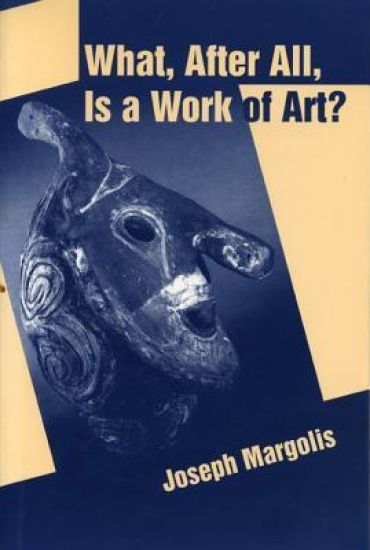
What, After All, Is a Work of Art?

What, After All, Is a Work of Art?

Joseph Margolis

Pennsylvania State University Press
1999
pokkari
What, After All, Is a Work of Art? directs our attention toward historicity, the inherent historied nature of thinking, and the artifactual, culturally emergent nature of both art and human selves. While these are familiar themes in Margolis's well-known studies of art and culture, they are largely neglected in English-language aesthetics and even philosophy in general. Margolis brings these primary themes to bear on a number of strategically selected issues: the modernism/postmodernism dispute; the treatment of modernist and "post-historical" painting in Clement Greenberg and Arthur Danto; the coherence of relativism in interpreting art and the relevance of cultural relativity; the difference between artworks and persons as culturally constituted entities in contrast to natural entities and with regard to the logic of interpretation; the import of film on the theory of the relationship between understanding ourselves and understanding art, with special attention to the views of Walter Benjamin; and the propriety of the analogy between artworks and selves, as cultural entities, by way of treating the arts (also history, action, and language) as a form of human "utterance."Although the argument is largely focused on certain particularly strenuous puzzles in the philosophy of art, the validity of Margolis's claims are more far reaching. If, through incorporating the reality of physical and biological nature, the emergence of art and human selves cannot rest satisfactorily on exemplars selected from nature alone, then certain fashionable views of science, of canons of understanding, conceptual resources, logic, rationality, and the like may well have to yield ground to ampler models that have been largely marginalized or overridden. In particular, the admission of historicity, the nerve of Margolis's argument, invites a decisive conceptual reorientation.What, After All, Is a Work of Art? is based on a series of lectures Margolis delivered at various universities in Japan in the Spring of 1997, while serving as a fellow of the Japan Society for the Promotion of Science.
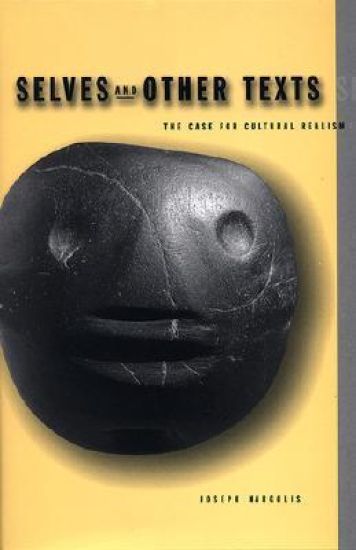
Selves and Other Texts

Selves and Other Texts

Joseph Margolis

Pennsylvania State University Press
2001
sidottu
Extending his well-known investigations into the nature and logic of art and history in the cultural world, Joseph Margolis here offers a sustained account of how selves and the cultural phenomena they generate (language, history, action, art) can be viewed as just as "real" as the physical nature from which they are emergent, while not being reducible to it. The book starts off with a review of prominent philosophies of art over the past half-century, focusing especially on Beardsley, Goodman, and Danto, so as to highlight the need for carefully distinguishing between the metaphysical and epistemological features of physical nature and human culture. The second part of the book builds on the first part's analyses of artworks to propose a theory of selves as "self-interpreting texts." Selves and Other Texts aims to develop new ways of understanding the conceptual inseparability of our analysis of physical nature and our analysis of ourselves.
Selves and Other Texts

Selves and Other Texts

Joseph Margolis

Pennsylvania State University Press
2003
pokkari
Extending his well-known investigations into the nature and logic of art and history in the cultural world, Joseph Margolis here offers a sustained account of how selves and the cultural phenomena they generate (language, history, action, art) can be viewed as just as "real" as the physical nature from which they are emergent, while not being reducible to it. The book starts off with a review of prominent philosophies of art over the past half-century, focusing especially on Beardsley, Goodman, and Danto, so as to highlight the need for carefully distinguishing between the metaphysical and epistemological features of physical nature and human culture. The second part of the book builds on the first part's analyses of artworks to propose a theory of selves as "self-interpreting texts." Selves and Other Texts aims to develop new ways of understanding the conceptual inseparability of our analysis of physical nature and our analysis of ourselves.
Moral Philosophy After 9/11

Moral Philosophy After 9/11

Joseph Margolis

Pennsylvania State University Press
2004
sidottu
Were the perpetrators of the 9/11 attacks courageous "freedom fighters" or despicable terrorist murderers? These opposing characterizations reveal in extreme form the incompatibility between different moral visions that underlie many conflicts in the world today, conflicts that challenge us to consider how moral disputes may be resolved. Eschewing the resort to universal moral principles favored by traditional Anglo-American analytic philosophy, Joseph Margolis sets out to sketch an alternative approach that accepts the lack of any neutral ground or privileged normative perspective for deciding moral disputes.This "second-best" morality nevertheless aspires to achieve an "objectively" valid resolution through a dialectical procedure of reasoning toward a modus vivendi, an accommodation of prudential interests that are rooted in the customs and practices of the societies in conflict. In working out this approach, Margolis engages with a wide range of thinkers, from Plato, Aristotle, Kant, and Hegel through Nietzsche, Heidegger, Levinas, Rawls, Habermas, MacIntyre, Rorty, and Nussbaum, and his argument is enlivened by reference to many specific moral issues, such as abortion, the control of Kashmir, and the continuing struggle between the Muslim world and the West.
Moral Philosophy After 9/11

Moral Philosophy After 9/11

Joseph Margolis

Pennsylvania State University Press
2004
pokkari
Were the perpetrators of the 9/11 attacks courageous "freedom fighters" or despicable terrorist murderers? These opposing characterizations reveal in extreme form the incompatibility between different moral visions that underlie many conflicts in the world today, conflicts that challenge us to consider how moral disputes may be resolved. Eschewing the resort to universal moral principles favored by traditional Anglo-American analytic philosophy, Joseph Margolis sets out to sketch an alternative approach that accepts the lack of any neutral ground or privileged normative perspective for deciding moral disputes.This "second-best" morality nevertheless aspires to achieve an "objectively" valid resolution through a dialectical procedure of reasoning toward a modus vivendi, an accommodation of prudential interests that are rooted in the customs and practices of the societies in conflict. In working out this approach, Margolis engages with a wide range of thinkers, from Plato, Aristotle, Kant, and Hegel through Nietzsche, Heidegger, Levinas, Rawls, Habermas, MacIntyre, Rorty, and Nussbaum, and his argument is enlivened by reference to many specific moral issues, such as abortion, the control of Kashmir, and the continuing struggle between the Muslim world and the West.
Toward a Metaphysics of Culture

Toward a Metaphysics of Culture

Joseph Margolis

Routledge
2019
nidottu
Toward a Metaphysics of Culture provides an initial, minimal, and original analysis of the concept of uniquely enlanguaged cultures of the human world and of the distinctive metaphysical features of whatever belongs to the things of that world: preeminently, persons, language, actions, artworks, products, history, practices, institutions, and norms. Emphasis is placed on the artifactual and hybrid nature of persons, naturalistic and post-Darwinian evolutionary considerations, and the bearing of the account on a range of disputed inquiries largely centered on the relationship between physical nature and human culture and between the natural and human sciences. The schema offered lays a foundation for a closer analysis of the human mind, cognition, interpretation, nomologicality, normativity, intentionality, realism, and related matters. The central thesis advances the heterodox notion, congruent with post-Darwinian studies in paleoanthropology, that the human person is a natural artifact, a functional transform of the primate members of Homo sapiens, by way of a complexly intertwined biological and encultured evolution, primarily dependent on the invention, transmission, and mastery of true language and the novel hybrid abilities that that makes possible. The emergence of persons is taken to be the obverse side of the mastery of language itself.
Interpretation Radical but Not Unruly

Interpretation Radical but Not Unruly

Joseph Margolis

University of California Press
1995
sidottu
With this challenging work, Joseph Margolis continues the project begun in The Flux of History and the Flux of Science (California, 1993). Tackling one of philosophy's master themes, he develops the controversial thesis that the world is a flux. Here he applies this doctrine to Western theories of history and the interpretation of cultural phenomena--offering the first sustained analysis of the logic, methodology, and metaphysics of interpretation committed to a thoroughgoing relativism and the historicized structure of cultural phenomena. Versed in Anglo-American and Continental philosophy, Margolis draws on the best views of Western philosophy to investigate a topic regularly ignored in that tradition. The result is the surprising synthesis of two historically antipathetic approaches to philosophy.
Reinventing Pragmatism

Reinventing Pragmatism

Joseph Margolis

Cornell University Press
2002
sidottu
In contemporary philosophical debates in the United States "redefining pragmatism" has become the conventional way to flag significant philosophical contests and to launch large conceptual and programmatic changes. This book analyzes the contributions of such developments in light of the classic formulations of Charles S. Peirce and John Dewey and the interaction between pragmatism and analytic philosophy. American pragmatism was revived quite unexpectedly in the 1970s by Richard Rorty's philosophical heterodoxy and his running dispute with Hilary Putnam, who, like Rorty, is a professed Deweyan.Reinventing Pragmatism examines the force of the new pragmatisms, from the emergence of Rorty's and Putnam's basic disagreements of the 1970s until the turn of the century. Joseph Margolis considers the revival of a movement generally thought to have ended by the 1950s as both a surprise and a turn of great importance. The quarrel between Rorty and Putnam obliged American philosophers, and eventually Eurocentric philosophy as a whole, to reconsider the direction of American and European philosophy, for instance in terms of competing accounts of realism and naturalism.
The Unraveling of Scientism

The Unraveling of Scientism

Joseph Margolis

Cornell University Press
2003
sidottu
The Unraveling of Scientism, a companion to Joseph Margolis's Reinventing Pragmatism, follows the thread of American analytic philosophy through the second half of the twentieth century, the period of its greatest influence and activity. Margolis finds that the distinctive features of analytic philosophy were effectively altered, at about mid-century, most pointedly by W. V. Quine. Surprisingly, this was a time of declining conceptual invention and originality among the leading strands of philosophy—pragmatism, logical positivism and the unity of science program, and the principal continental European movements. The Unraveling of Scientism centers on the primary commitment of analytic philosophy through the twentieth century to what Margolis calls "scientism"—the conviction that an unyielding reductionism, applied universally but in an exemplary way in the sciences, can provide a convincing account of the most important philosophical puzzles of the human world, those centered on the nature of the objective world, our knowledge of reality, language, and human existence. Margolis examines the principal puzzles that the analytic movement has addressed and argues that in recent years its claims have been effectively stalemated, perhaps even defeated.
The Arts and the Definition of the Human

The Arts and the Definition of the Human

Joseph Margolis

Stanford University Press
2008
sidottu
The Arts and the Definition of the Human introduces a novel theory that our selves—our thoughts, perceptions, creativity, and other qualities that make us human—are determined by our place in history, and more particularly by our culture and language. Margolis rejects the idea that any concepts or truths remain fixed and objective through the flow of history and reveals that this theory of the human being (or "philosophical anthropology") as culturally determined and changing is necessary to make sense of art. He shows that a painting, sculpture, or poem cannot have a single correct interpretation because our creation and perception of art will always be mitigated by our historical and cultural contexts. Calling upon philosophers ranging from Parmenides and Plato to Kant, Hegel, and Wittgenstein, art historians from Damisch to Elkins, artists from Van Eyck to Michelangelo to Wordsworth to Duchamp, Margolis creates a philosophy of art interwoven with his philosophical anthropology which pointedly challenges prevailing views of the fine arts and the nature of personhood.
The Arts and the Definition of the Human

The Arts and the Definition of the Human

Joseph Margolis

Stanford University Press
2008
pokkari
The Arts and the Definition of the Human introduces a novel theory that our selves—our thoughts, perceptions, creativity, and other qualities that make us human—are determined by our place in history, and more particularly by our culture and language. Margolis rejects the idea that any concepts or truths remain fixed and objective through the flow of history and reveals that this theory of the human being (or "philosophical anthropology") as culturally determined and changing is necessary to make sense of art. He shows that a painting, sculpture, or poem cannot have a single correct interpretation because our creation and perception of art will always be mitigated by our historical and cultural contexts. Calling upon philosophers ranging from Parmenides and Plato to Kant, Hegel, and Wittgenstein, art historians from Damisch to Elkins, artists from Van Eyck to Michelangelo to Wordsworth to Duchamp, Margolis creates a philosophy of art interwoven with his philosophical anthropology which pointedly challenges prevailing views of the fine arts and the nature of personhood.
Pragmatism's Advantage

Pragmatism's Advantage

Joseph Margolis

Stanford University Press
2010
sidottu
This book addresses the rift between major philosophical factions in the United States, which the author describes as a "philosophically becalmed" three-legged creature made up of analytic philosophy, continental philosophy, and pragmatism. Joseph Margolis offers a modified pragmatism as the best way out of this stalemate. Whether he is examining Heidegger or rethinking the foibles of Dewey, Rorty, and Peirce, much of nineteenth- and twentieth-century Western philosophy comes into play as Margolis presents his history of philosophy's evolution and defends his views. He does not, however, mean for philosophy to turn to the pragmatism of yore or even to its revival in the 1970s. Rather, he finds in recent approaches to pragmatism a middle ground between analytic philosophy's scientism (and its disinterest in analyzing human nature)and continental philosophy's reliance on attributing transcendental powers to mere mortals.
Pragmatism's Advantage

Pragmatism's Advantage

Joseph Margolis

Stanford University Press
2010
pokkari
This book addresses the rift between major philosophical factions in the United States, which the author describes as a "philosophically becalmed" three-legged creature made up of analytic philosophy, continental philosophy, and pragmatism. Joseph Margolis offers a modified pragmatism as the best way out of this stalemate. Whether he is examining Heidegger or rethinking the foibles of Dewey, Rorty, and Peirce, much of nineteenth- and twentieth-century Western philosophy comes into play as Margolis presents his history of philosophy's evolution and defends his views. He does not, however, mean for philosophy to turn to the pragmatism of yore or even to its revival in the 1970s. Rather, he finds in recent approaches to pragmatism a middle ground between analytic philosophy's scientism (and its disinterest in analyzing human nature)and continental philosophy's reliance on attributing transcendental powers to mere mortals.
Pragmatism Ascendent

Pragmatism Ascendent

Joseph Margolis

Stanford University Press
2012
sidottu
Pragmatism Ascendent is the last of four volumes on the contribution of pragmatism to American philosophy and Western philosophy as a whole. It covers the period of American philosophy's greatest influence worldwide, from the second half of the 20th century through the beginning of the 21st. The book provides an account of the way pragmatism reinterprets the revolutionary contributions of Kant and Hegel, the significance of pragmatism's original vision, and the expansion of classic pragmatism to incorporate the strongest themes of Hegelian and Darwinian sources. In the process, it addresses many topics either scanted or not addressed at all in most overviews of the pragmatism's relevance today. Noting the conceptual stalemate, confusion, and inertia of much of current Western philosophy, Margolis advances a new line of inquiry. He considers a fresh conception of the human agent as a hybrid artifact of enlanguaged culture, the decline of all forms of cognitive privilege, the pragmatist sense of the practical adequacy of philosophical solutions, and the possibilities for a recuperative convergence of the best resources of Western philosophy's most viable movements.
Pragmatism Ascendent

Pragmatism Ascendent

Joseph Margolis

Stanford University Press
2012
pokkari
Pragmatism Ascendent is the last of four volumes on the contribution of pragmatism to American philosophy and Western philosophy as a whole. It covers the period of American philosophy's greatest influence worldwide, from the second half of the 20th century through the beginning of the 21st. The book provides an account of the way pragmatism reinterprets the revolutionary contributions of Kant and Hegel, the significance of pragmatism's original vision, and the expansion of classic pragmatism to incorporate the strongest themes of Hegelian and Darwinian sources. In the process, it addresses many topics either scanted or not addressed at all in most overviews of the pragmatism's relevance today. Noting the conceptual stalemate, confusion, and inertia of much of current Western philosophy, Margolis advances a new line of inquiry. He considers a fresh conception of the human agent as a hybrid artifact of enlanguaged culture, the decline of all forms of cognitive privilege, the pragmatist sense of the practical adequacy of philosophical solutions, and the possibilities for a recuperative convergence of the best resources of Western philosophy's most viable movements.
Introduction to Philosophical Problems

Introduction to Philosophical Problems

Joseph Margolis

Continuum International Publishing Group Ltd.
2006
sidottu
Joseph Margolis is an extremely rare kind of author - a renowned, world-class philosopher who is prepared to write accessibly for the non-specialist reader. Here Margolis introduces the reader to all of the central questions of Western philosophy, showing not only philosophical arguments progress but also how the most fundamental questions relate to each other. This lucid introduction enables the reader to experience a first-rate philosophical intelligence at work. "I have tried to keep the issues clean and bare and to presuppose as little as possible in addressing the attentive reader. My intention is to attract readers, either in agreement or disagreement, either amateurs or professionals, to attend to the issues without the sort of scholarly paraphernalia that positively obscures arguments" - Joseph Margolis