Kirjojen hintavertailu. Mukana 11 475 463 kirjaa ja 12 kauppaa.

Kirjahaku

Etsi kirjoja tekijän nimen, kirjan nimen tai ISBN:n perusteella.

7 kirjaa tekijältä Joseph R. Millichap

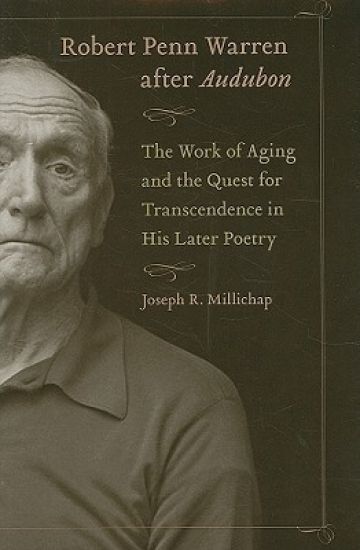
Robert Penn Warren after Audubon

Robert Penn Warren after Audubon

Joseph R. Millichap

Louisiana State University Press
2009
sidottu
Despite nearly universal critical acclaim for Robert Penn Warren's later poetry, much about this large body of work remains unexplored, especially the psychological sources of these poems' remarkable energy. In this groundbreaking work, Warren scholar Joseph R. Millichap takes advantage of current research on developmental psychology, gerontology, and end-of-life studies to offer provocative new readings of Warren's later poems, which he defines as those published after Audubon: A Vision (1969). In these often intricate poems, Millichap sees something like an autobiographical epic focused on the process of aging, the inevitability of death, and the possibility of transcendence. Thus Warren's later poetry reviews an individual life seen whole, contemplates mortality and dissolution, and aspires to the literary sublime.Millichap locates the beginning of Warren's late period in the extraordinary collection Or Else: Poem/Poems 1968-1974, basing his contention on the book's complex, indeed obsessive sequencing of new, previously published, and previously collected poems unified by themes of time, memory, age, and death. Millichap offers innovative readings of Or Else and Warren's five other late gatherings of poems - Can I See Arcturus from Where I Stand?: Poems 1975; Now and Then: Poems 1976-1978, winner of the Pulitzer Prize; Being Here: Poetry 1977-1980; Rumor Verified: Poems 1979-1980; and Altitudes and Extensions 1980-1984.Among the autobiographical elements Millichap brings into his careful readings are Warren's loneliness in these later years, especially after the deaths of family members and friends; his alternating feelings of personal satisfaction and emptiness toward his literary achievements; and his sense of the power, and at times the impotence, of memory. Millichap's analysis explores how Warren often returned to images and themes of his earlier poems, especially those involving youth and midlife, with the new perspective given by advancing age and time's passage. Millichap also relates Warren's work to that of other poets who have dealt profoundly with memory and age, including Robert Frost, T. S. Eliot, Thomas Hardy, and, at times, John Milton, William Wordsworth, and the whole English and American nineteenth-century Romantic tradition.An epilogue traces Warren's changing reputation as a poet from the publication of his last volume in 1985 through his death in 1989 and the centennial of his birth in 2005, concluding persuasively that the finest of all of Warren's literary efforts can be found in his later poetry, concerned as it is with the work of aging and the quest for transcendence.
The Language of Vision

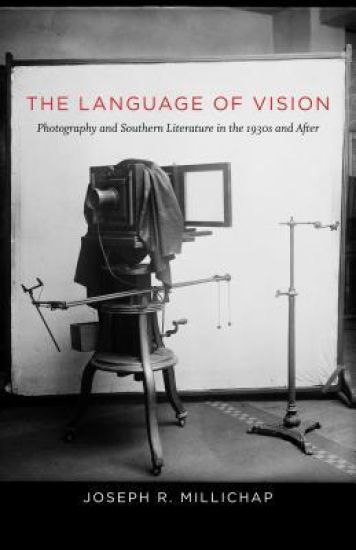
The Language of Vision

Joseph R. Millichap

Louisiana State University Press
2016
sidottu
The Language of Vision celebrates and interprets the complementary expressions of photography and literature in the South. Southern imagery and text affect one another, explains Joseph R. Millichap, as intertextual languages and influential visions. Focusing on the 1930s, and including significant works both before and after this preeminent decade, Millichap uncovers fascinating convergences between mediums, particularly in the interplay of documentary realism and subjective modernism.Millichap's subjects range from William Faulkner's fiction, perhaps the best representation of literary and graphic tensions of the period, and the work of other major figures like Robert Penn Warren and Eudora Welty to specific novels, including Ralph Ellison's Invisible Man and James Agee's Let Us Now Praise Famous Men. Fleshing out historical and cultural background as well as critical and theoretical context, Millichap shows how these texts echo and inform the visual medium to reveal personal insights and cultural meanings. Warren's fictions and poems, Millichap argues, redefine literary and graphic tensions throughout the late twentieth century; Welty's narratives and photographs reinterpret gender, race, and class; and Ellison's analysis of race in segregated America draws from contemporary photography. Millichap also traces these themes and visions in Natasha Trethewey's contemporary poetry and prose, revealing how the resonances of these artistic and historical developments extend into the new century. This groundbreaking study reads southern literature across time through the prism of photography, offering a brilliant formulation of the dialectic art forms.
A Backward Glance

A Backward Glance

Joseph R. Millichap

University of Tennessee Press
2009
sidottu
“Scholars in a number of disciplines (sociology, anthropology, law, Appalachian studies, southern studies Latino studies, labor studies) would find this book useful in both their research and courses.” —Donald E. Davis, coeditor of Voices from the Nueva Frontera: Latino Immigration in Dalton, Georgia “Scholars working on policy questions, demographic concerns, cultural studies, political economy, and 'new destination' will all find this book extremely useful.” —Altha J. Cravey, author of Women and Work in Mexico's Maquiladoras In recent decades, Latino immigration has transformed communities and cultures throughout the southeastern United States-and become the focus of a sometimes furious national debate. Global Connections and Local Receptions is one of the first books to provide an in-depth consideration of this profound demographic and social development. Examining Latino migration at the local, state, national, and binational levels, this book includes studies of southeastern locales and a statewide overview of Tennessee. Leading migration scholar Alejandro Portes offers a national analysis while Raúl Delgado Wise provides a Mexican perspective on the migration issue and its policy implications for both the United States and Mexico. This collection contains a broad base of contributions from legal scholars, sociologists, anthropologists, geographers, and political scientists. Readers will find demographic data charting trends in immigration, descriptions of organizing and of individual experiences, a quantitative comparison of new and old destinations, a critical history of U.S. immigration policy in recent decades, a report on access to housing and efforts to enact anti-immigrant laws, an assessment of how mass outmigration currently affects the national economy and communities in Mexico, analysis of the way dominant ideology frames “black-brown” relationships in southern labor markets, and a concluding essay with detailed recommendations for making U.S. immigration policy just and humane. Frances L. Ansley is Distinguished Professor of Law Emeritus at the University of Tennessee College of Law in Knoxville. She is the author of numerous book chapters and the principal humanities adviser to a documentary film. Her articles have been published in the California Law Review, Cornell Journal of International Law, Georgetown Journal of Poverty Law & Policy, University of Pennsylvania Journal of Labor & Employment Law, and numerous additional publications. Jon Shefner is associate professor of sociology and director of the Interdisciplinary Program in Global Studies at the University of Tennessee, Knoxville. He is the coeditor of Out of the Shadows: Political Action and the Informal Economy in Latin America. His recent book is The Illusion of Civil Society: Democratization and Community Mobilization in Low-Income Mexico.
Robert Penn Warren, Shadowy Autobiography, and Other Makers of American Literature
Toward the end of his career, Robert Penn Warren wrote, “It may be said that our lives are our own supreme fiction.” Although lauded for his writing in multiple genres, Warren never wrote an autobiography. Instead, he created his own “shadowy autobiography” in his poetry and prose, as well as his fiction and nonfiction. As one of the most thoughtful scholars on Robert Penn Warren and the literature of the South, Joseph Millichap builds on the accepted idea that Warren’s poetry and fiction became more autobiographical in his later years by demonstrating that that same progression is replicated in Warren’s literary criticism. This meticulously researched study reexamines in particular Warren’s later nonfiction in which autobiographical concerns come into play—that is, in those fraught with psychological crisis such as Democracy and Poetry.Millichap reveals the interrelated literary genres of autobiography, criticism, and poetry as psychological modes encompassing the interplay of Warren’s life and work in his later nonfiction. He also shows how Warren’s critical engagement with major American authors often centered on the ways their creative work intersected with their lives, thus generating both autobiographical criticism and the working out of Warren’s own autobiography under these influences. Millichap’s latest book focuses on Warren’s critical responses to William Faulkner, John Crowe Ransom, Herman Melville, Nathaniel Hawthorne, John Greenleaf Whittier, and Theodore Dreiser. In addition, the author carefully considers the black and female writers Warren assessed more briefly in American Literature: The Makers and the Making.Robert Penn Warren, Shadowy Autobiography, and Other Makers of American Literature presents the breadth of Millichap’s scholarship, the depth of his insight, and the maturity of his judgment, by giving us to understand that in his writing, Robert Penn Warren came to know his own vocation as a poet and critic—and as an American.
These Vivid American Documents

These Vivid American Documents

Joseph R. Millichap

University of Tennessee Press
2024
sidottu
The story behind the most iconic American photobooks of the twentieth century. In the late 1930s and early 1940s, the Farm Security Administration (FSA) funded a now-famous photography project to document and highlight American rural life and its economic challenges. In time, the project launched a genre of works that incorporated photographic evidence and artistic documentation of rural poverty, highlighting the struggles and resilience of the American people during this period. Nearly a century later, these photographs have become largely synonymous with the Great Depression. In These Vivid American Documents, Joseph R. Millichap presents an illuminating examination of four photobooks born of this FSA project: Archibald MacLeish and Dorothea Lange’s Land of the Free; Walker Evans and Lincoln Kirstein’s American Photographs; Dorothea Lange and Paul Taylor’s An American Exodus; and James Agee and Walker Evans’s Let Us Now Praise Famous Men. Millichap includes in his analysis a curated selection of thirty-two photographs from these four photobooks, showcasing the realities of the social, individual, political, artistic, and economic aspects of that time. Through Millichap’s thorough and insightful study, readers will gain a deeper understanding of the significant cultural and historical impact of this photographic project. Examining what are now historical American icons, like Walker Evans’s portrait of Allie Mae Burroughs and Dorothea Lange’s Migrant Mother, Millichap leans into the intersections, tensions, and meanings that this particular era and medium encapsulate. His close comparison of the documentary and artistic purposes of the photobooks both analyzes how they balance text and imagery and offers a thoughtful study of the photographers and writers who produced them. These Vivid American Documents is an illuminating volume for scholars and general readers alike.
These Vivid American Documents

These Vivid American Documents

Joseph R. Millichap

University of Tennessee Press
2024
nidottu
The story behind the most iconic American photobooks of the twentieth century. In the late 1930s and early 1940s, the Farm Security Administration (FSA) funded a now-famous photography project to document and highlight American rural life and its economic challenges. In time, the project launched a genre of works that incorporated photographic evidence and artistic documentation of rural poverty, highlighting the struggles and resilience of the American people during this period. Nearly a century later, these photographs have become largely synonymous with the Great Depression. In These Vivid American Documents, Joseph R. Millichap presents an illuminating examination of four photobooks born of this FSA project: Archibald MacLeish and Dorothea Lange’s Land of the Free; Walker Evans and Lincoln Kirstein’s American Photographs; Dorothea Lange and Paul Taylor’s An American Exodus; and James Agee and Walker Evans’s Let Us Now Praise Famous Men. Millichap includes in his analysis a curated selection of thirty-two photographs from these four photobooks, showcasing the realities of the social, individual, political, artistic, and economic aspects of that time. Through Millichap’s thorough and insightful study, readers will gain a deeper understanding of the significant cultural and historical impact of this photographic project. Examining what are now historical American icons, like Walker Evans’s portrait of Allie Mae Burroughs and Dorothea Lange’s Migrant Mother, Millichap leans into the intersections, tensions, and meanings that this particular era and medium encapsulate. His close comparison of the documentary and artistic purposes of the photobooks both analyzes how they balance text and imagery and offers a thoughtful study of the photographers and writers who produced them. These Vivid American Documents is an illuminating volume for scholars and general readers alike.
Dixie Limited

Dixie Limited

Joseph R. Millichap

The University Press of Kentucky
2002
sidottu
In the South, railroads have two meanings: they are an economic force that can sustain a town and they are a metaphor for the process of southern industrialization. Recognizing this duality, Joseph Millichap's Dixie Limited is a detailed reading of the complex and often ambivalent relationships among technology, culture, and literature that railroads represent in selected writers and works of the Southern Renaissance. Tackling such Southern Renaissance giants as Thomas Wolfe, Eudora Welty, Robert Penn Warren, and William Faulkner, Millichap mingles traditional American and Southern studies -- in their emphases on literary appreciation and evaluation in terms of national and regional concerns -- with contemporary cultural meaning in terms of gender, race, and class. Millichap juxtaposes Faulkner's semi-autobiographical families with Wolfe's fiction, which represents changing attitudes toward the "Southern Other." Faulkner's later fiction is compared to that of Warren, Welty, and Ellison, and Warren's later poetry moves toward the contemporary post-Southernism of Dave Smith. These disparate examples suggest the subject of the final chapter -- the continuing search for post-Southern patterns of persistence and change that reiterate, reject, and perhaps reconfigure the Southern Renaissance. As we enter the twenty-first century, that we recall how much the twentieth-century South was shaped by railroads built in the nineteenth century. It is also important that we recognize how much our future will be determined by the technological and cultural tracks we lay.