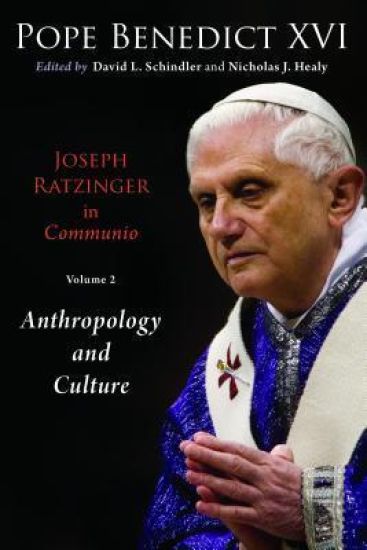
Timely theological insights on culture and humanity from the pen of the Pontiff In this second volume of Joseph Ratzinger in Communio, Pope Benedict XVI speaks to various issues relating to humanity today -- conscience, technological security, the origin of human life, the meaning of Sunday, Christian hope, and more. As editor David L. Schindler notes, -Cardinal Ratzinger (Pope Benedict XVI) rarely writes on any churchly matter that does not manifest its implications for man and culture, and vice versa. Indeed, this indissoluble linking is one of the main distinguishing features of his theology.- This is the second of three volumes; the first deals with themes relating to the Church, and the third volume is to focus on theological renewal.
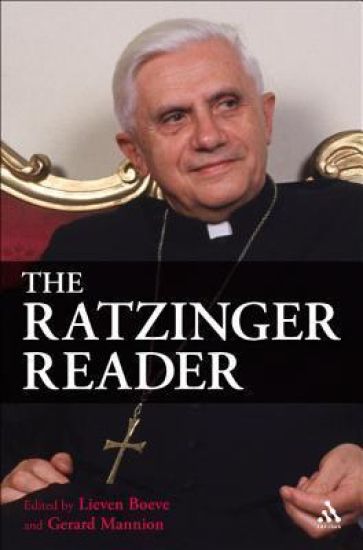
A fascinating and insightful volume collecting together the key writings of Joseph Ratzinger, some of them yet untranslated, from his youthful and more progressive writings, to his ‘transition period' following his disillusionment with the aftermath of Vatican II, to his time as Prefect of the Vatican's Congregation for the Doctrine of the Faith down to 2005. The emphasis will be upon Joseph Ratzinger as ‘private theologian', his many writings released in a personal capacity for such will chart the formation of and comment upon the official statements and texts released under his name in a more informative fashion than the simple inclusion of the formulaic ‘official texts' themselves. Following a section providing insight into the fundamental and systematic theological background and development of Joseph Ratzinger's thought, further thematic sections will also be included, for example, Joseph Ratzinger's writings on Ecclesiology, on Theology and the Role of Theologians, on the Eucharist, on Religious Pluralism, on Sacramental Theology, Ecumenism, on Truth, on the Contemporary Historical Era, on Magisterium and on Faith Morals etc. The volume will open with an introductory essay charting the life and career, the achievements of and the controversies surrounding the new pope. Each reading will be prefaced by a brief introduction to its context and themes and will be followed by recommended further reading on its respective subject matter.
A fascinating and insightful volume collecting together the key writings of Joseph Ratzinger, some of them yet untranslated, from his youthful and more progressive writings, to his ‘transition period' following his disillusionment with the aftermath of Vatican II, to his time as Prefect of the Vatican's Congregation for the Doctrine of the Faith down to 2005. The emphasis will be upon Joseph Ratzinger as ‘private theologian', his many writings released in a personal capacity for such will chart the formation of and comment upon the official statements and texts released under his name in a more informative fashion than the simple inclusion of the formulaic ‘official texts' themselves. Following a section providing insight into the fundamental and systematic theological background and development of Joseph Ratzinger's thought, further thematic sections will also be included, for example, Joseph Ratzinger's writings on Ecclesiology, on Theology and the Role of Theologians, on the Eucharist, on Religious Pluralism, on Sacramental Theology, Ecumenism, on Truth, on the Contemporary Historical Era, on Magisterium and on Faith Morals etc. The volume will open with an introductory essay charting the life and career, the achievements of and the controversies surrounding the new pope. Each reading will be prefaced by a brief introduction to its context and themes and will be followed by recommended further reading on its respective subject matter.
Originally published in English in 1988, Joseph Ratzinger's Eschatology remains internationally recognized as a leading text on the ""last things""—heaven and hell, purgatory and judgment, death and the immortality of the soul. This highly anticipated second edition includes a new preface by Joseph Ratzinger/Pope Benedict XVI and a supplement to the bibliography by theologian Peter A. Casarella.Eschatology presents a balanced perspective of the doctrine at the center of Christian belief- the Church's faith in eternal life. Recognizing the task of contemporary eschatology as ""to marry perspectives, so that person and community, present and future, are seen in their unity,"" Joseph Ratzinger brings together recent emphasis on the theology of hope for the future with the more traditional elements of the doctrine. His book has proven to be as timeless as it is timely.
What did ancient Christians and pagans believe makes the unity of the nations? Just as he began serving as a major adviser at the Second Vatican Council in 1962, Joseph Ratzinger (the future Pope Benedict XVI) studied this question in lectures delivered at Austria's University of Salzburg. These lectures, originally published in German, are now made available in English in this volume.According to Ratzinger, pagan Rome said the Empire was the ""cosmopolis"" which united the world. The church affirmed the goodness of the world, and acknowledged the proper role of the state. But Christian belief that Christ had given birth to the church, the eternal cosmopolis, present now, was revolutionary. Christ was the New Adam, who restores unity to a humanity scattered in the Fall and at Babel. For Origen, Israel was the true state that remained under the one God; other nations were under archons or dark angels, from which Christ came to liberate them. Christ instituted the eternal kingdom of peace, to which Christians belong now, living within and at the service of, their earthly nations. In Ratzinger's view, Origen thought peace between the church and world before the Eschaton - the eternal kingdom - was possible.Augustine responded in two ways to claims by pagans that the Christian God had not protected Rome from being sacked in 410. First, Rome's pagan civic religion was undermined in its function of aiding state security by the fact that it was not true. Second, Christianity, as the truth, was not subordinate to the state, but was a new community. In Ratzinger's view, Augustine saw the church, the City of God, as an alien citizen, but one very much within the City of Man and meant to renew, not take over, that earthly city, until Christ's Second Coming.This early work of Ratzinger's showcases the development of his theology, including themes that will inform his life's work, such as how God's transcendence and the doctrine of creation inform a Christian worldview, and the central role of the Incarnation in understanding how the church relates to the world.
One of Cardinal Ratzinger's most important and widely read books, this volume is a revised second edition with an improved translation and an in-depth 20 page preface by the Cardinal. As he states in the preface, since this book was first published over 30 years ago, many changes and significant events have occurred in the world, and in the Church. But even so, he says he is firmly convinced that his fundamental approach in this book is still very timely and crucial for the spiritual needs of modern man. That approach puts the question of God and the question about Christ in the very center, which leads to a "narrative Christology" and demonstrates that the place for faith is in the Church.Thus, this remarkable elucidation of the Apostle's Creed gives an excellent, modern interpretation of the foundations of Christianity. Ratzinger's profound treatment of Christianity's basic truths combines a spiritual outlook with a deep knowledge of Scripture and the history of theology.
Increasingly, the future is becoming a theme for theological reflection. In the background we can detect a growing concern among many people for the future of faith.How does the promise of an eternal future affect the present? How does faith, our hope for life in the future, affect the way we live and interact with the world today? In order to answer these questions, Joseph Ratzinger reflects on such questions as the following: What precisely is faith? What does it have to do with knowledge, modern philosophical trends, technology, and our modern world? What is faith's relationship to truth? And finally, what consequences do the answers to these questions have for the future of our world and our Church?The problem of the future assails not only the believer. In the ever more rapidly advancing process of technological change, man is confronted with enormous opportunities, but also with colossal perils. For him, the future is not only promising but also a possible nightmare. He cannot avoid asking what part faith can play in building tomorrow's world.Joseph Ratzinger, now Pope Emeritus Benedict XVI, approaches the universal concern for the future from a variety of angles, bringing his deep personal faith and theological brilliance to bear on the serious questions facing mankind."It is precisely in times of vehement historical upheaval, when all the past seems to dissolve and completely new things seem to emerge, that men need to reflect upon history, which enables them to see the unreal exaggeration of the moment in the right perspective and integrates them again into a happening that never repeats itself but, on the other hand, never loses its unity and its context. . . . I maintain that reflection upon history, properly understood, embraces both looking back into the past and, with that as the starting point, reflecting on the possibilities and tasks of the future, which can only become clear if we survey a fairly long stretch of the road and do not naively shut ourselves up in the present." -- Joseph Ratzinger
In these homilies, most of which are previously unpublished, Joseph Ratzinger, now Pope Emeritus Benedict XVI, addresses the theme he has celebrated, pondered, and witnessed by his life more than any other: love. For him, love is the vital nucleus of the Church and to serve Christ is above all a question of love: "Peter, do you love me? Feed my sheep" (Jn 21:15-17).Love is also the quest of every human being on the journey toward eternity. He beautifully states, "Christianity is a movement, a journey; it is not a theory, a sum total of doctrine; Christianity is life, it is a vital impetus that carries us toward true life. . . . Someone who has found love can say: I have found life."Arranged by the liturgical seasons of the Church year, the homilies predate the author's pontificate. The earliest dates from 1970 while he was still a professor of theology. Thus, this collection traces the way Joseph Ratzinger has been enamored of the love of God throughout his years of serving the Church.
It took nearly thirty years for a forgotten box of cassette tapes, mislaid in an abbey in Austria, to be brought to light. On these tapes, recorded in 1985, the voice of Joseph Ratzinger (Pope Benedict XVI) walks his listeners, with small, careful steps, through the thick terrain of contemporary theology. Now, after decades, these lectures have been dusted off, transcribed, and published for readers across the globe.The Divine Project is a study of God the Creator and of man as this Creator's masterpiece. "Ratzinger", as Professor Matthew Levering writes, "guides us through the most difficult domains of modern theology and modern life: how to read the Bible; the Reason of God and the reasonableness of the cosmos; the meaning of original sin; technology, ecology, and creatureliness; the Cross and the Eucharist; and Vatican II, pluralism, the Magisterium, and the nature of the Church."This once-forgotten work offers a short and accessible tour of the whole theological world of Joseph Ratzinger, one of the most important minds of the twentieth and twenty-first centuries.
"Seek out the Lord and his might; constantly seek his face." This concise admonition from the Book of Psalms captures the impetus of Seeking God's Face. In these meditations, Joseph Ratzinger reflects upon the major feasts and the Sundays of the year, inspired by Scripture, the Church Fathers, and the lives of the saints. The seasons of Advent and Christmas receive particular attention, with an address on the mystery of suffering, a sermon on the "Word Made Flesh," and a consideration of the contribution of St. Francis of Assisi to Christmas celebrations, which join "The Lesson of the Christmas Donkey" by Pope John Paul I in honoring the birth of Jesus Christ, in whom we encounter the very face of God.Originally published in English in 1982, Seeking God's Face shines with a spirit of joyful wisdom and serves as a source for much fruitful meditation on the central mysteries of the Catholic faith as they are celebrated over the course of the Church calendar.
Ces m ditations sur le Dieu Trine et sur l'Incarnation de Dieu en Christ constituent un pont jet entre la th ologie et l'annonce de Dieu, entre la th ologie et la pi t , qui aujourd'hui plus que jamais sont troitement d pendantes l'une de l'autre et pourtant courent sans cesse le risque de se dissocier. Les premi res m ditations tentent de transposer la foi au Dieu Trine en la faisant passer d'un article de foi th orique une connaissance spirituelle qui touche les hommes dans leur vie personnelle. Puis l'auteur analyse les formules " Il est descendu du ciel " et " Il s'est fait homme " partir du contenu concret de l'humanit de J sus. Une m ditation sur la R surrection du Seigneur termine la partie christologique. Vient enfin le th me de l'Esprit Saint confront aux r centes exp riences de l'Esprit faites par les mouvements charismatiques et aux esp rances des philosophies de l'histoire.