Kirjojen hintavertailu. Mukana 12 083 983 kirjaa ja 12 kauppaa.

Kirjahaku

Etsi kirjoja tekijän nimen, kirjan nimen tai ISBN:n perusteella.

4 kirjaa tekijältä Joseph Schwartz

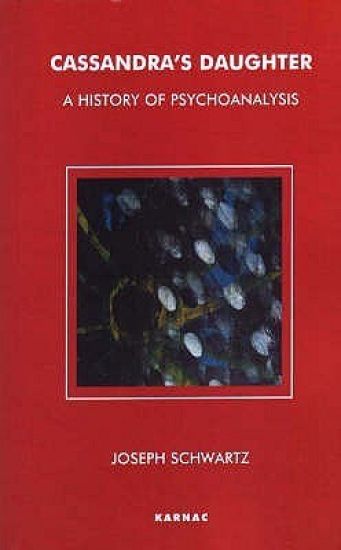
Cassandra's Daughter

Cassandra's Daughter

Joseph Schwartz

Routledge
2019
sidottu
This work presents a complete history of psychoanalysis from its origins in 19th-century medical science to the end of the 20th century. The origins of psychoanalysis as well as the more immediate influences on Freud are explored, as is the way the discipline he founded has developed and changed.Joseph Schwartz first lays out the late Victorian approaches to mental illness and health and explains the context in which Freud's revolution took place. He traces the evolution of Freud's own thought, then shows how and why the rifts and shifts in the analytic community occurred. He then focuses on Freud's colleagues, rivals, successors and detractors - Jung, Adler, Sullivan, Melanie Klein, Erich Fromm to name a few. For once we see how the different schools and interpretations fit together - how they grew in response to each other, and what separate contributions each pioneer made over the last hundred years to create an effective understanding of the world of human subjective experience.
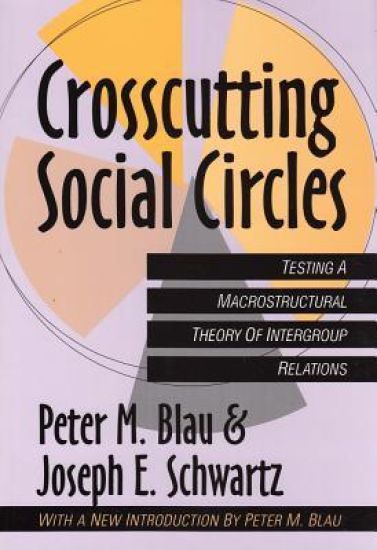
Crosscutting Social Circles

Crosscutting Social Circles

Joseph Schwartz

Routledge
2018
sidottu
Crosscutting Social Circles describes a theory of groups' relations to each other, and tests the theory in the 125 largest metropolitan areas In the United States. The focus is on the Influence social structure exerts on intergroup relations. Blau and Schwartz show how role relations are influenced by how people are distributed among social positions. Examples are a community's racial composition, division of labor, ethnic heterogeneity, income Inequality, or the extent to which educational differences are related to income differences. Blau and Schwartz test their theory by considering its impact on such structural conditions as intermarriage, an important form of intergroup relations.The authors derive the main principles of previously formulated theories of intergroup relations and present them in simpler and clearer form. They empirically test the power of the theory by analyzing its ability to predict how social structure affects intermarriage in the largest American cities, where three-fifths of the American population live. They selected cities because population distribution of a small neighborhood might be affected by casual associations among neighbors; it is much more sociologically interesting if population distribution also affects mate selection in a city of millions.Unlike most theories that emphasize the implications of such cultural orientations as shared values and common norms, this volume focuses on the significance of various forms of inequality and heterogeneity. As one of the few books that supplies a large-scale empirical test of implications of a theory, Crosscutting Social Circles serves as a model. The new introduction by Peter Blau reviews the origins and impact of the book. It will be of immense value to sociologists, psychologists, and group relations specialists.
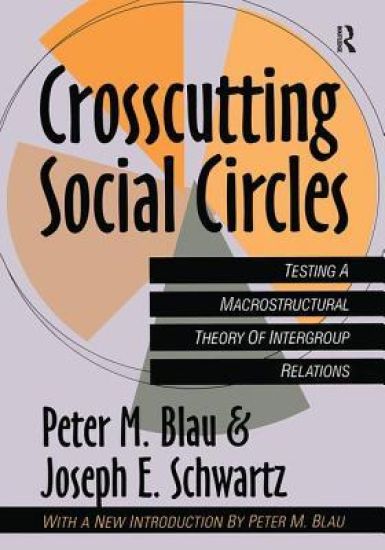
Crosscutting Social Circles

Crosscutting Social Circles

Joseph Schwartz

Transaction Publishers
2021
nidottu
Crosscutting Social Circles describes a theory of groups' relations to each other, and tests the theory in the 125 largest metropolitan areas In the United States. The focus is on the Influence social structure exerts on intergroup relations. Blau and Schwartz show how role relations are influenced by how people are distributed among social positions. Examples are a community's racial composition, division of labor, ethnic heterogeneity, income Inequality, or the extent to which educational differences are related to income differences. Blau and Schwartz test their theory by considering its impact on such structural conditions as intermarriage, an important form of intergroup relations.The authors derive the main principles of previously formulated theories of intergroup relations and present them in simpler and clearer form. They empirically test the power of the theory by analyzing its ability to predict how social structure affects intermarriage in the largest American cities, where three-fifths of the American population live. They selected cities because population distribution of a small neighborhood might be affected by casual associations among neighbors; it is much more sociologically interesting if population distribution also affects mate selection in a city of millions.Unlike most theories that emphasize the implications of such cultural orientations as shared values and common norms, this volume focuses on the significance of various forms of inequality and heterogeneity. As one of the few books that supplies a large-scale empirical test of implications of a theory, Crosscutting Social Circles serves as a model. The new introduction by Peter Blau reviews the origins and impact of the book. It will be of immense value to sociologists, psychologists, and group relations specialists.
Cassandra's Daughter

Cassandra's Daughter

Joseph Schwartz

Karnac Books
2003
nidottu
This work presents a complete history of psychoanalysis from its origins in 19th-century medical science to the end of the 20th century. The origins of psychoanalysis as well as the more immediate influences on Freud are explored, as is the way the discipline he founded has developed and changed.Joseph Schwartz first lays out the late Victorian approaches to mental illness and health and explains the context in which Freud's revolution took place. He traces the evolution of Freud's own thought, then shows how and why the rifts and shifts in the analytic community occurred. He then focuses on Freud's colleagues, rivals, successors and detractors - Jung, Adler, Sullivan, Melanie Klein, Erich Fromm to name a few. For once we see how the different schools and interpretations fit together - how they grew in response to each other, and what separate contributions each pioneer made over the last hundred years to create an effective understanding of the world of human subjective experience.Schwartz probes the relationship between psychoanalysis and the natural sciences, creatively exploring the criticism that psychoanalysisis not a 'legitimate' science and successfully reasserts its importance, not simply as a systematic attempt to describe experience, but to understand it. The real question for humans who suffer mental pain is not whether analysis produces understandings that are 'scientific' - but if they are any good. Whether you are pro- or anti-Freud, you will find this a learned, revelatory, orginal - and humane - book.