Kirjojen hintavertailu. Mukana 11 244 527 kirjaa ja 12 kauppaa.

Kirjahaku

Etsi kirjoja tekijän nimen, kirjan nimen tai ISBN:n perusteella.

7 kirjaa tekijältä Joseph Traugott

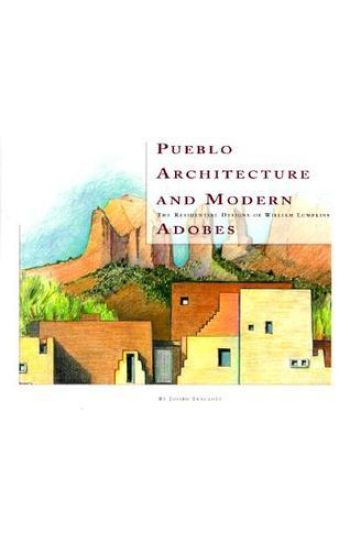
Pueblo Architecture & Modern Adobes

Pueblo Architecture & Modern Adobes

Joseph Traugott

Museum of New Mexico Press
1998
nidottu
William Lumpkin's residential designs speak volumes about the fusion of styles -- Spanish colonial, Pueblo, Art Deco -- in the Southwest. This book shows his distillation of the pure architectural elements of Pueblo style -- the heart of 'Santa Fe' style -- in 47 modern adobe projects. A skilled manipulation of this truly American architectural form. Also demonstrated is Lumpkin's adept talent for incorporating modern living standards into historic architecture with pleasing functional results.
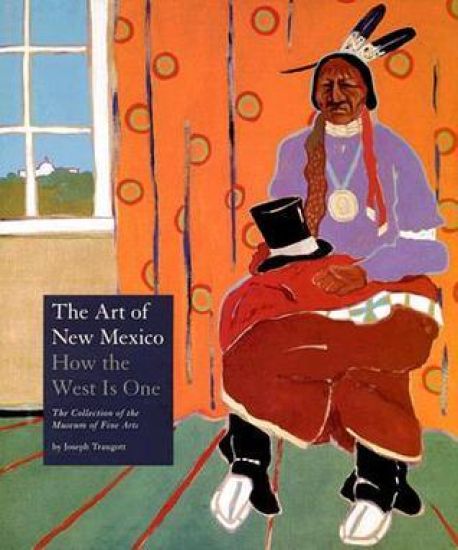
Art of New Mexico

Art of New Mexico

Joseph Traugott

Museum of New Mexico Press
2007
sidottu
This lavishly illustrated book explores the aesthetic and cultural impact of New Mexico art from the 1880s to the present, and highlights a refreshing range of works representing European, native, ethnic, tourist, regional and commercial art. For the past 125 years, art in New Mexico has told a complex story of aesthetic interaction and cultural fusion. Southwest art began with 19th-century documentarians confronting a disappearing Native America and an exotic landscape. Artists who arrived in New Mexico beginning in the 1880s wrestled with the commercialisation of the region and the clash of cultural identities. Native peoples and expedition photographers, tourism and the railroad, artist colonies, the arrival of modernism, Trinity and the end of romanticism, a new generation of native artists challenging ethnic identity -- all have played a part in what we now call New Mexican art. "The Art of New Mexico" provides new perspectives on the evolution of art in the state, and highlights the outstanding collection of the Museum of Fine Arts in Santa Fe, which is the repository for some of the finest works by renowned artists such as Adam Clark Vroman, Marsden Hartley, Robert Henri, John Sloan, Georgia O'Keeffe, and Luis Elijo Tapia. Curator and author Joseph Traugott discusses how Native American and Hispanic artists of the Southwest not only influenced the non-native artists who came to call New Mexico home, but how in turn their work was influenced by these newcomers. By organising key objects from the museum's collection with an intercultural history of New Mexico art, the book makes cogent connections between specific works, aesthetic movements, and cultural traditions. As a result, this book will engage readers who are well versed in the artistic traditions of New Mexico, as well as those new to its aesthetic heritage. The book is published to coincide with a reinstallation of the permanent collection at the Museum of Fine Arts in Santa Fe.
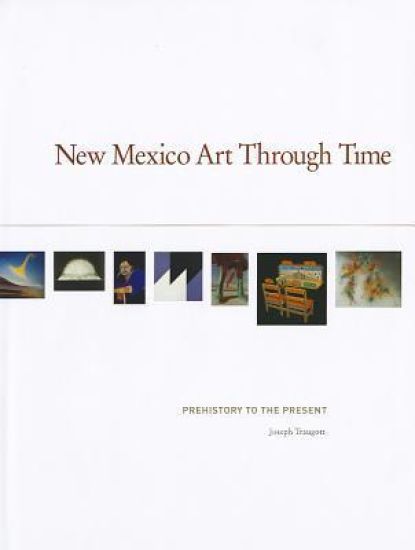
New Mexico Art Through Time

New Mexico Art Through Time

Joseph Traugott

Museum of New Mexico Press
2012
sidottu
This book considers 250 works of art from across a vast timeline of 14,000 years, expanding the definition of what constitutes art to include aestheticised cultural objects extending back to the earliest worked points of the Paleo-Indian Clovis people. The transition from these early works to modern and contemporary art reflects changing economic, ethnic, ideological, religious, and cultural perspectives, while considering the diversity, aesthetic complexity, and cultural breadth that developed in New Mexico and the greater Southwest. The art in this lavishly illustrated publication includes pre-European Native American pottery, baskets, and weavings; Hispanic santero art highlighting religious bultos and retablos; as well as twentieth-century artists, many of whom helped to shape the canon of modern and contemporary art. Examples are drawn from both fine art and anthropology collections and include works by the luminaries of twentieth-century art, including the Santa Fe and Taos colony artists, Georgia O'Keeffe, Paul Strand, Richard Diebenkorn, Agnes Martin, Bruce Nauman, Fritz Scholder, and many more. This comprehensive book is published to coincide with an exhibition at the New Mexico Museum of Art in Santa Fe, New Mexico to open May 2012.
Sole Mates

Sole Mates

Joseph Traugott

Museum of New Mexico Press
2010
sidottu
This book takes a serious and ironic look at popular icons in western American culture -- cowboy boots and masterpieces in western art -- to explore American cultural values and pervasive themes in twentieth century art. Cowboy boots are examined as markers of western life, as works of art, and subjects of works of art. The author has selected stellar examples of boots made by skilled and famous boot makers, including Lucchese, Tony Lama, and C C McGuffin, to offer a counterpoint to the "fine art" more typically considered. He has also selected drawings, paintings, prints, and photographs that reflect the changing attitudes and perceptions of western culture over the past 50 years and raise conceptual issues about western mores and modern life. Featured are works by Barbara Van Cleve, Frederick Hammersley, Bruce Nauman, Hal West, Luis A Jimenez, Jr., and many others whose art define and redefine aspects of Western mythology and culture. The text examines the contemporary art forms that shape the current representation of the cow-boy and the West in modern life and explores the origins of cowboy imagery; the isolation of ranch life; the non-traditional roles of female cobblers; and the depictions of boot wearers (both male and female) as powerful, sexual, and independent.
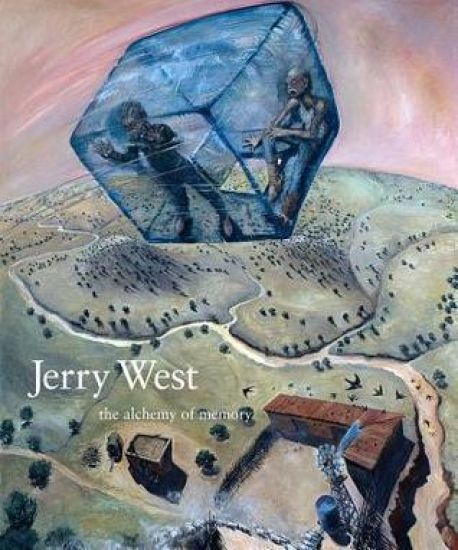
Jerry West

Jerry West

Joseph Traugott

Museum of New Mexico Press
2015
sidottu
Jerry West: The Alchemy of Memory is the long-awaited, richly deserved retrospective of one of Santa Fe and New Mexico's most prominent artists. West was born in 1933 before the war that brought New Mexico into the modern century. His father Harold E. ("Hal") West, a WPA artist, anchored his son in the rugged world of ranch life and an abiding respect for American regionalism. Dreams, memory, prairie, the night sky; demons, family, history; remoteness and the grandeur of the vast windmills, coyotes and low-flying ravens; childhood, manhood, a tiny white kite and an advancing storm; vulnerability and masculinity; the strong, saturated colors of an artist who knows what he knows - a figurative artist of the subconscious nestled in peronal history with the New Mexico roots intact. Featuring ninety painting and some prints and murals that cover the period from early 1960s to the present and narrated by the artist.
Visualizing Albuquerque

Visualizing Albuquerque

Joseph Traugott

Albuquerque Museum of Art and History
2015
sidottu
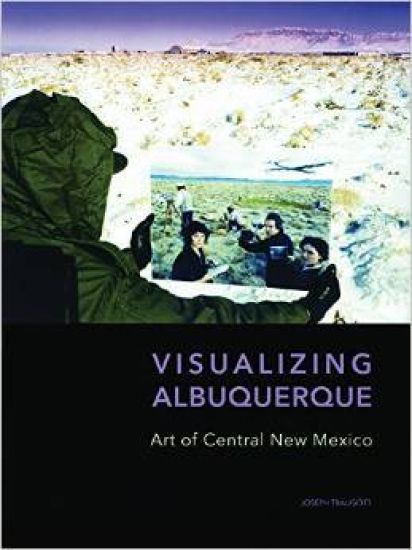
Visualizing Albuquerque is a comprehensive overview of twelve thousand years of artistic activity in the central Rio Grande Valley. From sophisticated Paleo-Indian spear points to Pueblo pottery, from the Spanish and American Colonial periods to the city finding its true voice after World War II, Visualizing Albuquerque reveals the vibrant creativity spawned by the encounter with this unique region.While to the north Santa Fe and Taos built reputations largely based on a retrospective nostalgia, Visualizing Albuquerque demonstrates that Albuquerque has often acted as the more vital art center. Throughout the twentieth century the city became a haven for modern artists who looked eagerly forward, rather than toward an idealized, mythic past.Albuquerque's role as a hub for commerce and cutting-edge technology inspired decades of artistic innovation and activity. Artists in Albuquerque continue to directly confront the city's unique factors of geography, ethnicity, and complex history to overcome divisions, and in doing so they discover political, aesthetic, and spiritual solutions to difficult problems in challenging times.
Visualizing Albuquerque

Visualizing Albuquerque

Joseph Traugott

Albuquerque Museum of Art and History
2015
sidottu
Visualizing Albuquerque is a comprehensive overview of twelve thousand years of artistic activity in the central Rio Grande Valley. From sophisticated Paleo-Indian spear points to Pueblo pottery, from the Spanish and American Colonial periods to the city finding its true voice after World War II, Visualizing Albuquerque reveals the vibrant creativity spawned by the encounter with this unique region.While to the north Santa Fe and Taos built reputations largely based on a retrospective nostalgia, Visualizing Albuquerque demonstrates that Albuquerque has often acted as the more vital art center. Throughout the twentieth century the city became a haven for modern artists who looked eagerly forward, rather than toward an idealized, mythic past.Albuquerque's role as a hub for commerce and cutting-edge technology inspired decades of artistic innovation and activity. Artists in Albuquerque continue to directly confront the city's unique factors of geography, ethnicity, and complex history to overcome divisions, and in doing so they discover political, aesthetic, and spiritual solutions to difficult problems in challenging times.