Kirjojen hintavertailu. Mukana 12 016 292 kirjaa ja 12 kauppaa.

Kirjahaku

Etsi kirjoja tekijän nimen, kirjan nimen tai ISBN:n perusteella.

11 kirjaa tekijältä Josh Cohen

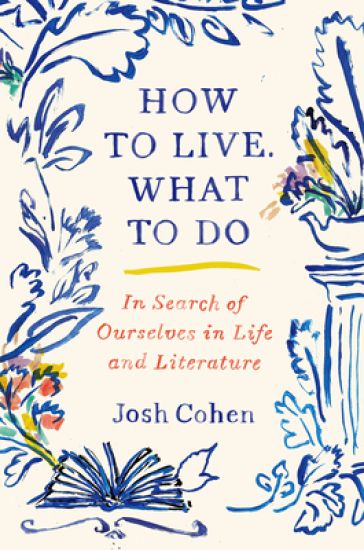
How to Live. What to Do: In Search of Ourselves in Life and Literature
A brilliant psychoanalyst and professor of literature invites us to contemplate profound questions about the human experience by focusing on some of the best-known characters in literature--from how Virginia Woolf's Mrs. Dalloway copes with the inexorability of midlife disappointment to Ruth's embodiment of adolescent rebellion in Kazuo Ishiguro's Never Let Me Go. "So beautiful ... a fantastic book." --Zadie Smith, best-selling author of White Teeth In supple and elegant prose, and with all the expertise and insight of his dual professions, Josh Cohen explores a new way for us to understand ourselves. He helps us see what Lewis Carroll's Alice and Harper Lee's Scout Finch can teach us about childhood. He delineates the mysteries of education as depicted in Jane Eyre and as seen through the eyes of Sandy Stranger in The Prime of Miss Jean Brodie. He discusses the need for adolescent rebellion as embodied in John Grimes in James Baldwin's Go Tell It on the Mountain and in Ruth in Kazuo Ishiguro's Never Let Me Go. He makes clear what Goethe's Young Werther and Sally Rooney's Frances have--and don't have--in common as they experience first love; how Middlemarch's Dorothea Brooke deals with the vicissitudes of marriage. Vis-a-vis old age and death, Cohen considers what wisdom we may glean from John Ames in Marilynne Robinson's Gilead and from Don Fabrizio in Giuseppe Tomasi di Lampedusa's The Leopard. Featuring: - Alice--Lewis Carroll, Alice's Adventures in Wonderland / Through the Looking Glass - Scout Finch--Harper Lee, To Kill a Mockingbird - Jane Eyre--Charlotte Bront , Jane Eyre - John Grimes--James Baldwin, Go Tell It on the Mountain - Ruth--Kazuo Ishiguro, Never Let Me Go - Vladimir Petrovitch--Ivan Turgenev, First Love - Frances--Sally Rooney, Conversations with Friends - Jay Gatsby--F. Scott Fitzgerald, The Great Gatsby - Esther Greenwood--Sylvia Plath, The Bell Jar - Clarissa Dalloway--Virginia Woolf, Mrs. Dalloway - And more
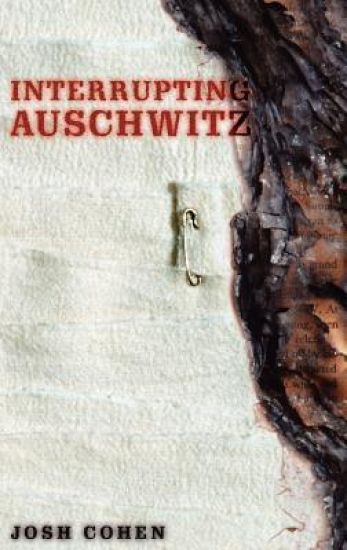
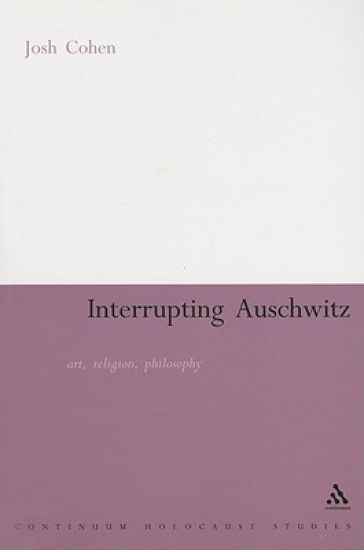
Interrupting Auschwitz

Interrupting Auschwitz

Josh Cohen

BLOOMSBURY PUBLISHING PLC
2003
sidottu
Hitler, wrote Theodor Adorno, imposed a new categorical imperative on humankind...to arrange thoughts and actions so that Auschwitz will not repeat itself. Interrupting Auschwitz argues that what gives this imperative its philosophical force and ethical urgency is the very impossibility of fulfilling it. But rather than being cause for despair, this failure offers a renewed conception of the tasks of thought and action. Precisely because the imperative cannot be fulfilled, it places thought in a state of perpetual incompletion, whereby our responsibility is never at an end and redemption is always interrupted.Josh Cohen argues that both Adorno's own writings on art after Auschwitz and Emmanuel Levinas' interpretations of Judaism reveal both thinkers as impelled by this logic of interruption, by a passionate refusal to bring thought to a point of completion. The analysis of their motifs of art and religion are brought together in a final chapter on the poet-philosopher Edmond JabFs.PHILOSOPHY
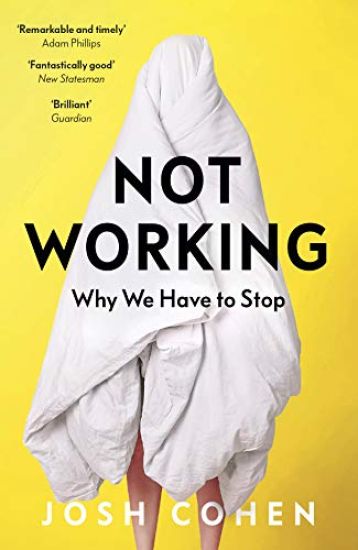
Not Working

Not Working

Josh Cohen

Granta Books
2020
nidottu
'A PROBING EXPLORATION OF THE CREATIVE AND IMAGINATIVE POSSIBILITIES OF INACTIVITY' FINANCIAL TIMES 'To do nothing at all is the most difficult thing in the world.' Oscar Wilde More than ever before, we live in a culture that excoriates inactivity and demonizes idleness. Work, connectivity and a constant flow of information are the cultural norms, and a permanent busyness pervades even our quietest moments. Little wonder so many of us are burning out. In a culture that tacitly coerces us into blind activity, the art of doing nothing is disappearing. Inactivity can induce lethargy and indifference, but is also a condition of imaginative freedom and creativity. Psychoanalyst Josh Cohen explores the paradoxical pleasures of inactivity, and considers four faces of inertia - the burnout, the slob, the daydreamer and the slacker. Drawing on his personal experiences and on stories from his consulting room, while punctuating his discussions with portraits of figures associated with the different forms of inactivity - Andy Warhol, Orson Welles, Emily Dickinson and David Foster Wallace - Cohen gets to the heart of the apathy so many of us feel when faced with the demands of contemporary life, and asks how we might live a different and more fulfilled existence.
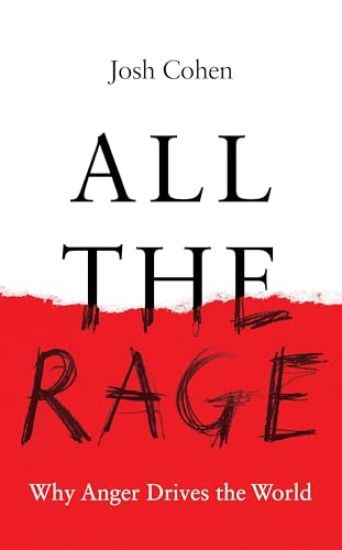
All the Rage

All the Rage

Josh Cohen

GRANTA BOOKS
2024
sidottu
Anger is all around us, from divisive social media arguments and heightened political divides to road rage and personal spats; from Black Lives Matter and climate justice movements to Trump, incels and white supremacists. When it materialises, it seems to cry out for recognition and response. It affects our bodies and can transition into violence. It can be inherited through the generations; it can manifest in criminal acts. What should we do with it, and can it ever be put to good use? Drawing on case studies of patients, developments in neuropsychology, literature, philosophy and recent political events, acclaimed author and psychoanalyst Josh Cohen identifies the different forms of anger, including the most untrammelled and elemental fury, the more cynical anger that works towards political unrest, and the questioning anger of political protest. Rather than an emotion to ignore, he argues that anger is a primary human feeling. It maps itself onto every aspect of our intimate lives while politically and culturally shaping our world. In a time of intense dissatisfactions and spiralling divisions, and with anger a dominating force, All the Rage offers a new and original understanding of anger, so we may better handle the rage within us.
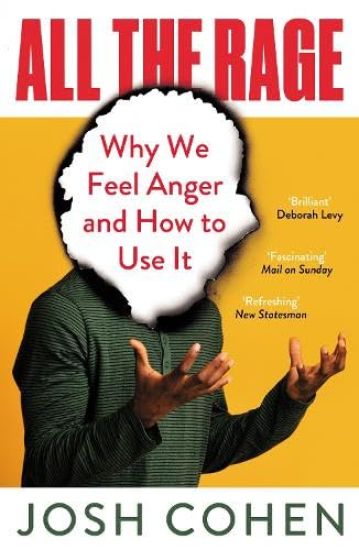
All the Rage

All the Rage

Josh Cohen

GRANTA BOOKS
2025
nidottu
Anger is all around us, from divisive social media arguments and heightened political divides to road rage and personal spats; from Black Lives Matter and climate justice movements to Trump, incels and white supremacists. When it materialises, it seems to cry out for recognition and response. It affects our bodies and can transition into violence. It can be inherited through the generations; it can manifest in criminal acts. What should we do with it, and can it ever be put to good use? Drawing on case studies of patients, developments in neuropsychology, literature, philosophy and recent political events, acclaimed author and psychoanalyst Josh Cohen identifies the different forms of anger, including the most untrammelled and elemental fury, the more cynical anger that works towards political unrest, and the questioning anger of political protest. Rather than an emotion to ignore, he argues that anger is a primary human feeling. It maps itself onto every aspect of our intimate lives while politically and culturally shaping our world. In a time of intense dissatisfactions and spiralling divisions, and with anger a dominating force, All the Rage offers a new and original understanding of anger, so we may better handle the rage within us.
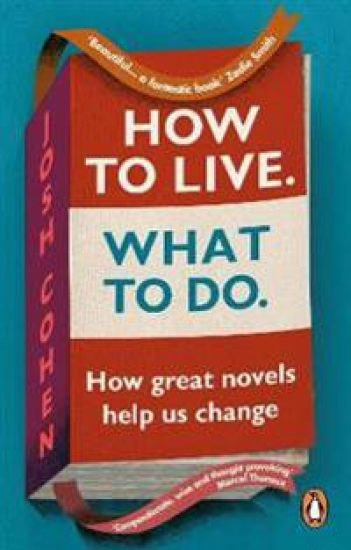
How to Live. What To Do.

How to Live. What To Do.

Josh Cohen

Ebury Publishing
2022
pokkari
What can Alice in Wonderland teach us about childhood? Could reading Conversations with Friends guide us through first love? Does Esther Greenwood’s glittering success and subsequent collapse in The Bell Jar help us understand ambition? And, finally, what can we learn about death from Virginia Woolf?Literature matters. Not only does it provide escapism and entertainment, but it also holds a mirror up to our lives to show us aspects of ourselves we may not have seen or understood. From jealousy to grief, fierce love to deep hatred, our inner lives become both stranger and more familiar when we explore them through fiction. Josh Cohen, a psychoanalyst and Professor of Modern Literary Theory, delves deep into the inner lives of the most memorable and vivid characters in literature. His analysis of figures such as Jay Gatsby and Mrs Dalloway offers insights into the greatest questions about the human experience, ones that we can all learn from. He walks us through the different stages of existence, from childhood to old age, showing that literature is much more than a refuge from the banality and rigour of everyday life – through the experiences of its characters, it can show us ways to be wiser, more open and more self-aware.
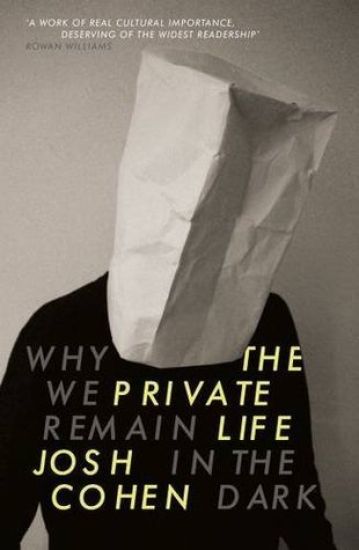
The Private Life

The Private Life

Josh Cohen

Granta Books
2014
nidottu
The war over private life spreads inexorably. Some seek to expose, invade and steal it, others to protect, conceal and withhold it. Either way, the assumption is that privacy is a possession to be won or lost. But what if what we call private life is the one element in us that we can't possess? Could it be that we're so intent on taking hold of the privacy of others, or keeping hold of our own only because we're powerless to do either? In this groundbreaking book, Josh Cohen uses his experience as a psychoanalyst, literature professor and human being to explore the concept of 'private life' as the presence in us of someone else, an uncanny stranger both unrecognisable and eerily familiar, who can be neither owned nor controlled. Drawing on a dizzying array of characters and concerns, from John Milton and Henry James to Katie Price and Snoopy, from philosophy and the Bible to pornography and late-night TV, The Private Life weaves a richly personal tapestry of ideas and experience. In a culture that floods our lives with light, it asks: how is it that we remain so helplessly in the dark?
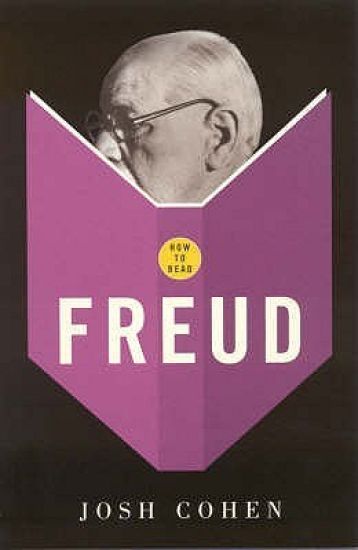
How To Read Freud

How To Read Freud

Josh Cohen

Granta Books
2005
nidottu
In this engaging introduction, Josh Cohen argues that Freud shows above all that any thought, word or action, however apparently trivial, can invite close reading. Indeed, it may be just this insight that provokes so much opposition to psychoanalysis. By reading short extracts from across Freud's work, addressing the neuroses, the unconscious, words, death and (of course) sex, How to Read Freud brings out the paradoxical core of psychoanalytic thinking: that our innermost truths only ever manifest themselves as distortions. Read attentively, our dreams, errors, jokes and symptoms - in short, our everyday lives - reveal us as masters of disguise, as unrecognizable to ourselves as to others.
William F. Buckley Jr.'s Guide to Friendship in a Polarized Era: Lessons in Civility from a Catholic Conservative Icon
Politics is a machine that will forever run on division. This division is the nature of robust, democratic, and pluralist political systems. However, disagreement does not necessarily need to lead to disagreeability. This is an idea that seems to be largely forgotten by vast swathes of both sides of the political aisle. William F. Buckley Jr.'s Guide to Friendship in a Polarized Era seeks to indirectly address this gulf and to assist in promulgating the idea that lifelong and rewarding friendships are possible under the conditions of political and ideological differences. And how civility can be returned to our society. The book also seeks to redress the various machinations in society that contributed to the devastation wrought by tribal vitriol in America. This includes institutions such as academia and journalism, and it advocates-- just as Buckley would have-- for a robust infusion of Christian ethics into these institutions and our broader society.
Losers

Losers

Josh Cohen

Peninsula Press Ltd
2021
nidottu
An essay about politics, humility, and loss You are a loser. For psychoanalysis, this isn’t a personal slight, but an impersonal truth. So why have we come to fear losing? ‘Loser’ was Donald Trump’s favourite insult within a hotly contested field. But while progressives disdain his divisive politics, they have mostly failed to challenge meritocratic values that divide society into winners and losers. How might we truly escape our toxic political culture? In this powerful, wide-ranging essay, psychoanalyst and critic Josh Cohen suggests that the answer may lie in a notion of humility. Far from a sentimental moral virtue, humility may well be the most elusive, precarious, and indeed radical value of all, one which relies upon a full-hearted embrace of one’s inner loser. Enlisting the help of a cast of unlikely comrades – Thomas Bernhard, Franz Kafka, and Robert Walser – Cohen shows how we might move beyond a culture based on enforced positivity, resentment, and humiliation. Praise ‘Josh Cohen has made perhaps the most pernicious, offensive and distracting word in the English language of amazing and illuminating interest. This is a remarkable and clarifying book.’ – Adam Phillips ‘With compassion, skill and verve, Josh Cohen eloquently dismantles societal and personal delusions about winning and losing. This is exactly the conversation we need to be having right now.’ – Deborah Levy ‘Eloquent, urgent, this breath-taking essay, bristles with wit and analytic understanding. Our social settlements, our lying politicians, our very language of winners and losers has never undergone this kind of rigorous dissection before. A tour de force – or should I say a loser’s triumph…’ – Lisa Appignanesi ‘Josh Cohen’s Losers feels necessary: a profound meditation and an ethical salve for a world that wounds us with its increasing ethos of success-at-any-cost. With gentleness, he guides us through the paradoxes of humility, uncertainty, neutrality, and the excess of shame and humiliation that lurks behind today’s peculiar brand of triumphalism.’ – Jamieson Webster