Kirjojen hintavertailu. Mukana 12 016 292 kirjaa ja 12 kauppaa.

Kirjahaku

Etsi kirjoja tekijän nimen, kirjan nimen tai ISBN:n perusteella.

5 kirjaa tekijältä Josh Toth

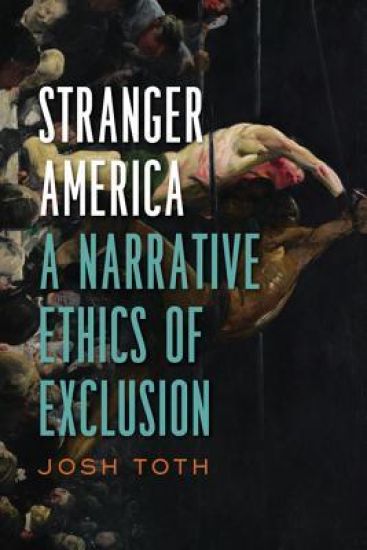
Stranger America

Stranger America

Josh Toth

University of Virginia Press
2018
sidottu
Contradictory ideals of egalitarianism and self-reliance haunt America’s democratic state. We need look no further than Donald Trump’s 2016 presidential campaign and victory for proof that early twentieth-century anxieties about individualism, race, and the foreign or intrusive ""other"" persist today. In Stranger America, Josh Toth tracks and delineates these anxieties in our narrative media, locating in America’s aesthetic production, finally locating a potential narrative strategy for circumnavigating themsuch anxieties.Toth’s central focus is, simply, strangeness--or those characters who adamantly resist being fixed in any given category of identity. As with the theorists employed (Nancy, ?i?ek, Derrida, Freud, Hegel), the subjects and literature considered are as encompassing as possible: from the work of Herman Melville, William Faulkner, James Weldon Johnson, and Nella Larsen to that of Philip K. Dick, Woody Allen, Larry David, and Bob Dylan; from the rise of nativism in the early twentieth century to object-oriented ontology and the twenty-first-century zombie craze; from ragtime and the introduction of sound in American cinema to the exhaustion of postmodern metafiction.Toth argues that American literature, music, film, and television can show us the path toward a new ethic, one in which we organize identity around the stranger rather than resorting to tactics of pure exclusion or inclusion. Ultimately, he provides a new narrative approach to otherness American democracy that seeks to realize a truly democratic form of community.
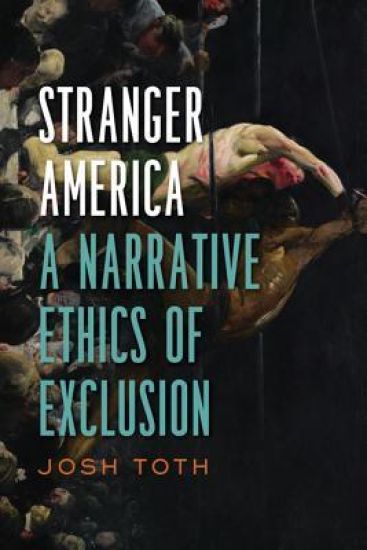
Stranger America

Stranger America

Josh Toth

University of Virginia Press
2018
nidottu
Contradictory ideals of egalitarianism and self-reliance haunt America’s democratic state. We need look no further than Donald Trump’s 2016 presidential campaign and victory for proof that early twentieth-century anxieties about individualism, race, and the foreign or intrusive ""other"" persist today. In Stranger America, Josh Toth tracks and delineates these anxieties in our narrative media, locating in America’s aesthetic production, finally locating a potential narrative strategy for circumnavigating themsuch anxieties.Toth’s central focus is, simply, strangeness--or those characters who adamantly resist being fixed in any given category of identity. As with the theorists employed (Nancy, ?i?ek, Derrida, Freud, Hegel), the subjects and literature considered are as encompassing as possible: from the work of Herman Melville, William Faulkner, James Weldon Johnson, and Nella Larsen to that of Philip K. Dick, Woody Allen, Larry David, and Bob Dylan; from the rise of nativism in the early twentieth century to object-oriented ontology and the twenty-first-century zombie craze; from ragtime and the introduction of sound in American cinema to the exhaustion of postmodern metafiction.Toth argues that American literature, music, film, and television can show us the path toward a new ethic, one in which we organize identity around the stranger rather than resorting to tactics of pure exclusion or inclusion. Ultimately, he provides a new narrative approach to otherness American democracy that seeks to realize a truly democratic form of community.
The Passing of Postmodernism

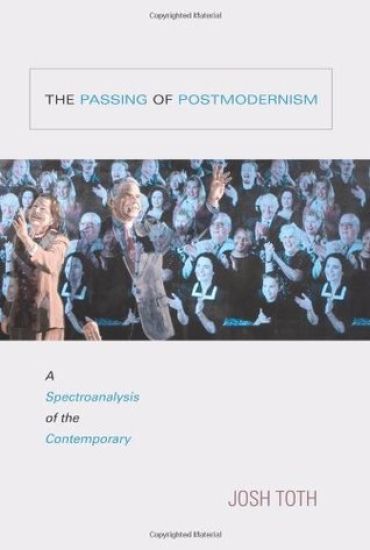
The Passing of Postmodernism

Josh Toth

State University of New York Press
2011
pokkari
Examines the increasingly prevalent assumption that postmodernism is over and that literature and film are once again engaging sincerely with issues of ethics and politics.The Passing of Postmodernism addresses the increasingly prevalent assumption that a period marked by poststructuralism and metafiction has passed and that literature and film are once again engaging sincerely with issues of ethics and politics. In discussions of various twentieth- and twenty-first-century writers, directors, and theorists-from Michel Foucault and Slavoj Žižek to Thomas Pynchon and David Lynch-Josh Toth demonstrates that a certain utopian spirit persisted within, and actually defined, the postmodern project. Just as modernism was animated by an idealistic belief that it could finally realize the utopia beckoning on the horizon, postmodernism was compelled by an equally utopian belief that it could finally reject the possibility of all such illusory ideals. Toth argues that this specter of an impossible future is and must remain both possible and impossible, a ghostly promise of what is always still to come.Josh Toth teaches literature and critical theory at Grant MacEwan College and is coeditor (with Neil Brooks) of The Mourning After: Attending the Wake of Postmodernism.
Truth and Metafiction

Truth and Metafiction

Josh Toth

Bloomsbury Academic USA
2021
sidottu
Metafiction has long been associated with the heyday of literary postmodernism—with a certain sense of irresponsibility, political apathy, or outright nihilism. Yet, if (as is now widely assumed) postmodernism has finally run its course, how might we account for the proliferation of metafictional devices in contemporary narrative media? Does this persistence undermine the claim that postmodernism has passed, or has the function of metafiction somehow changed? To answer these questions, Josh Toth considers a broad range of recent metafictional texts—bywriters such as George Saunders and Jennifer Egan and directors such as Sofia Coppola and Quentin Tarantino. At the same time, he traverses a diffuse theoretical landscape: from the rise of various new materialisms (in philosophy) and the turn to affect (in literary criticism) to the seemingly endless efforts to name postmodernism’s ostensible successor. Ultimately, Toth argues that much contemporary metafiction moves beyond postmodern skepticism to reassert the possibility of making true claims about real things. Capable of combating a “post-truth” crisis, such forms assert or assume a kind of Hegelian plasticity; they actively and persistently confront the trauma of what is infinitely mutable, or perpetually other. What is outside or before a given representation is confirmed and endured as that which exceeds the instance of its capture. The truth is thereby renewed; neither denied nor simply assumed, it is approached as ethically as possible. Its plasticity is grasped because the grasp, the form of its narrative apprehension, lets slip.
Truth and Metafiction

Truth and Metafiction

Josh Toth

Bloomsbury Academic USA
2021
nidottu
Metafiction has long been associated with the heyday of literary postmodernism—with a certain sense of irresponsibility, political apathy, or outright nihilism. Yet, if (as is now widely assumed) postmodernism has finally run its course, how might we account for the proliferation of metafictional devices in contemporary narrative media? Does this persistence undermine the claim that postmodernism has passed, or has the function of metafiction somehow changed? To answer these questions, Josh Toth considers a broad range of recent metafictional texts—bywriters such as George Saunders and Jennifer Egan and directors such as Sofia Coppola and Quentin Tarantino. At the same time, he traverses a diffuse theoretical landscape: from the rise of various new materialisms (in philosophy) and the turn to affect (in literary criticism) to the seemingly endless efforts to name postmodernism’s ostensible successor. Ultimately, Toth argues that much contemporary metafiction moves beyond postmodern skepticism to reassert the possibility of making true claims about real things. Capable of combating a “post-truth” crisis, such forms assert or assume a kind of Hegelian plasticity; they actively and persistently confront the trauma of what is infinitely mutable, or perpetually other. What is outside or before a given representation is confirmed and endured as that which exceeds the instance of its capture. The truth is thereby renewed; neither denied nor simply assumed, it is approached as ethically as possible. Its plasticity is grasped because the grasp, the form of its narrative apprehension, lets slip.