Kirjojen hintavertailu. Mukana 12 085 743 kirjaa ja 12 kauppaa.

Kirjahaku

Etsi kirjoja tekijän nimen, kirjan nimen tai ISBN:n perusteella.

4 kirjaa tekijältä Josh Weisberg

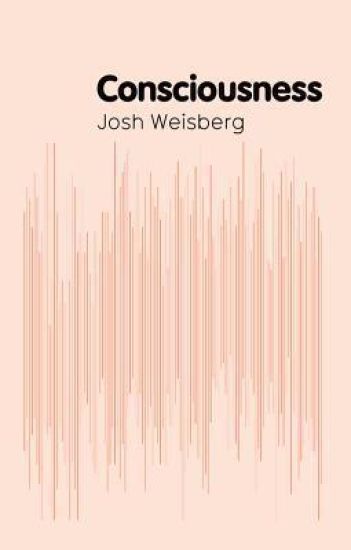
Consciousness

Consciousness

Josh Weisberg

Polity Press
2014
sidottu
Each of us, right now, is having a unique conscious experience. Nothing is more basic to our lives as thinking beings and nothing, it seems, is better known to us. But the ever-expanding reach of natural science suggests that everything in our world is ultimately physical. The challenge of fitting consciousness into our modern scientific worldview, of taking the subjective “feel” of conscious experience and showing that it is just neural activity in the brain, is among the most intriguing explanatory problems of our times. In this book, Josh Weisberg presents the range of contemporary responses to the philosophical problem of consciousness. The basic philosophical tools of the trade are introduced, including thought experiments featuring Mary the color-deprived super scientist and fearsome philosophical “zombies”. The book then systematically considers the space of philosophical theories of consciousness. Dualist and other “non-reductive” accounts of consciousness hold that we must expand our basic physical ontology to include the intrinsic features of consciousness. Functionalist and identity theories, by contrast, hold that with the right philosophical stage-setting, we can fit consciousness into the standard scientific picture. And “mysterians” hold that any solution to the problem is beyond such small-minded creatures as us. Throughout the book, the complexity of current debates on consciousness is handled in a clear and concise way, providing the reader with a fine introductory guide to the rich philosophical terrain. The work makes an excellent entry point to one of the most exciting areas of study in philosophy and science today.
Consciousness

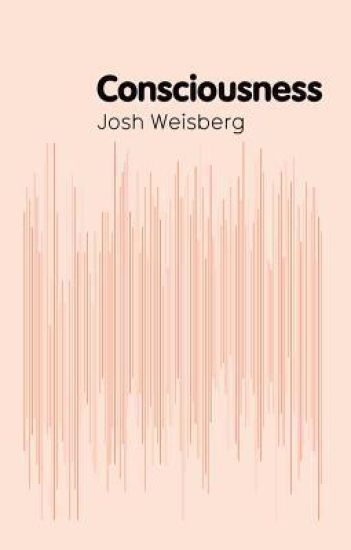
Consciousness

Josh Weisberg

Polity Press
2014
nidottu
Each of us, right now, is having a unique conscious experience. Nothing is more basic to our lives as thinking beings and nothing, it seems, is better known to us. But the ever-expanding reach of natural science suggests that everything in our world is ultimately physical. The challenge of fitting consciousness into our modern scientific worldview, of taking the subjective “feel” of conscious experience and showing that it is just neural activity in the brain, is among the most intriguing explanatory problems of our times. In this book, Josh Weisberg presents the range of contemporary responses to the philosophical problem of consciousness. The basic philosophical tools of the trade are introduced, including thought experiments featuring Mary the color-deprived super scientist and fearsome philosophical “zombies”. The book then systematically considers the space of philosophical theories of consciousness. Dualist and other “non-reductive” accounts of consciousness hold that we must expand our basic physical ontology to include the intrinsic features of consciousness. Functionalist and identity theories, by contrast, hold that with the right philosophical stage-setting, we can fit consciousness into the standard scientific picture. And “mysterians” hold that any solution to the problem is beyond such small-minded creatures as us. Throughout the book, the complexity of current debates on consciousness is handled in a clear and concise way, providing the reader with a fine introductory guide to the rich philosophical terrain. The work makes an excellent entry point to one of the most exciting areas of study in philosophy and science today.
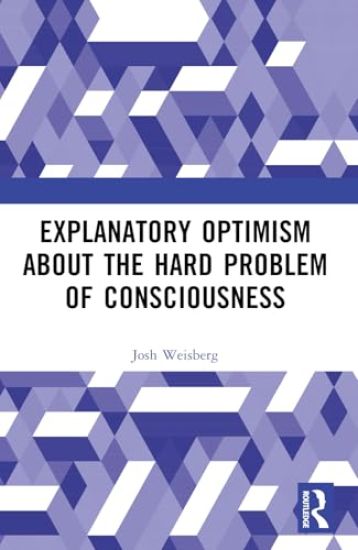
Explanatory Optimism about the Hard Problem of Consciousness
Explanatory Optimism about the Hard Problem of Consciousness argues that despite the worries of explanatory pessimists, consciousness can be fully explained in “easy” scientific terms. The widespread intuition that consciousness poses a hard problem is plausibly based on how consciousness appears to us in first-person access. The book offers a debunking argument to undercut the justificatory link between the first-person appearances and our hard problem intuitions.The key step in the debunking argument involves the development and defense of an empirical model of first-person access: Automated Compression Theory (ACT). ACT holds that first-person access to consciousness is accomplished by automated accessing of compressed sensory information. Because of the distorting nature of this compressed access, it seems to subjects that consciousness possesses “exceptional” properties—properties leading to the hard problem—even though no such properties are present. If there are no exceptional properties to explain, then an explanation in easy terms can fully account for conscious experience. The book presents a range of empirical evidence for ACT and concludes that the burden of proof is now on the pessimists to show why we shouldn’t be optimistic about explaining consciousness.
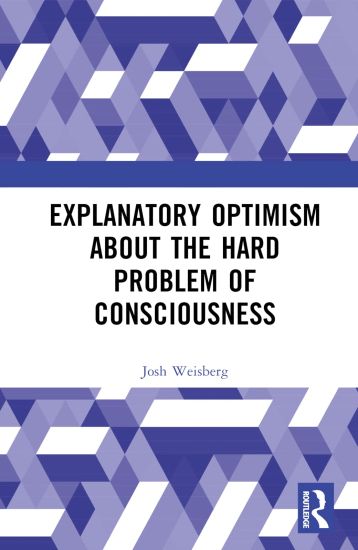
Explanatory Optimism about the Hard Problem of Consciousness
Explanatory Optimism about the Hard Problem of Consciousness argues that despite the worries of explanatory pessimists, consciousness can be fully explained in “easy” scientific terms. The widespread intuition that consciousness poses a hard problem is plausibly based on how consciousness appears to us in first-person access. The book offers a debunking argument to undercut the justificatory link between the first-person appearances and our hard problem intuitions.The key step in the debunking argument involves the development and defense of an empirical model of first-person access: Automated Compression Theory (ACT). ACT holds that first-person access to consciousness is accomplished by automated accessing of compressed sensory information. Because of the distorting nature of this compressed access, it seems to subjects that consciousness possesses “exceptional” properties—properties leading to the hard problem—even though no such properties are present. If there are no exceptional properties to explain, then an explanation in easy terms can fully account for conscious experience. The book presents a range of empirical evidence for ACT and concludes that the burden of proof is now on the pessimists to show why we shouldn’t be optimistic about explaining consciousness.