Kirjojen hintavertailu. Mukana 11 244 527 kirjaa ja 12 kauppaa.

Kirjahaku

Etsi kirjoja tekijän nimen, kirjan nimen tai ISBN:n perusteella.

6 kirjaa tekijältä Joshua Landy

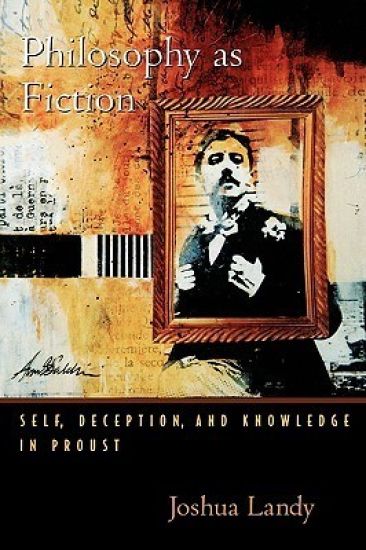
Philosophy As Fiction

Philosophy As Fiction

Joshua Landy

Oxford University Press Inc
2004
sidottu
Philosophy as Fiction reconstructs Proust's powerful, coherent and original outlook on knowledge, self-deception and self-fashioning. In addition, it explains why these ideas had to give rise to a work of art and not a philosophical treatise. Parts of the philosophy serve literary ends, with certain assertions forming part of the novel's intricate lace-work; and aspects of the aesthetics also serve philosophical ends, enabling a reader to engage in an active manner with an alternative art of living.
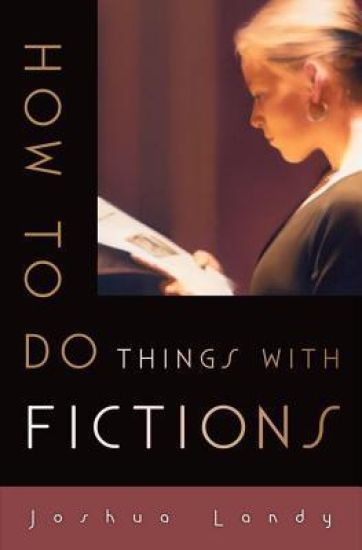
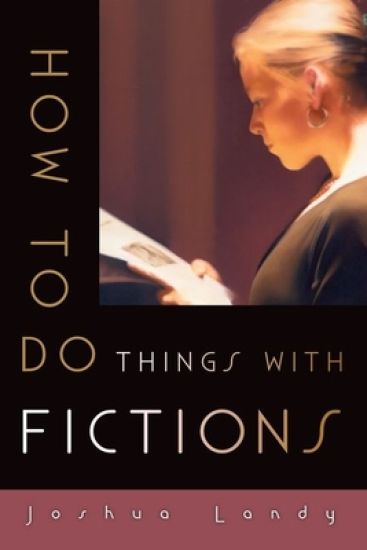
How to Do Things with Fictions

How to Do Things with Fictions

Joshua Landy

Oxford University Press Inc
2012
sidottu
Why did Jesus speak in parables? Why does Plato's Socrates make bad arguments? Why do we root for criminal heroes? In mummy movies, why is the skeptic always the first to go? Why don't stage magicians even pretend to summon spirits any more? Why is Samuel Beckett so confusing? And why is it worth trying to answer questions like these? Witty and approachable, How to Do Things with Fictions challenges the widespread assumption that literary texts must be informative or morally improving to be of any real benefit. It reveals that authors are often best thought of not as entertainers or as educators but as personal trainers of the brain, putting their willing readers through exercises that fortify their mental capacities. This book is both deeply insightful and rigorously argued, and the journey delivers plenty of surprises along the way-that moral readings of literature can be positively dangerous; that the parables were deliberately designed to be misunderstood; that Plato knowingly sets his main character up for a fall; that we can sustain our beliefs even when we suspect them to be illusions; and more. Perhaps best of all, though, the book is written with uncommon verve and a light touch that will satisfy the generally educated public and the specialist reader alike. In How to Do things with Fictions, Joshua Landy convincingly shows how the imaginative writings sitting on our shelves may well be our best allies in the struggle for more rigorous thinking, deeper faith, greater peace of mind, and richer experience.
Philosophy as Fiction

Philosophy as Fiction

Joshua Landy

Oxford University Press Inc
2009
nidottu
Is it possible (or desirable) to live without illusions? Can artistry assist in the project of forging a unified self? What does our use of metaphor have to do with who we are? In this groundbreaking study, Joshua Landy explores Proust's original and sophisticated answers to these and related questions. At the same time, he asks why Proust chose to embed his theories within a work of fiction-one, indeed, in which the narrator's claims cannot always be trusted-rather than a straightforward treatise. What we stand to gain, it turns out, from reading Proust's philosophical narrative is something far more than a new way of thinking: it is also, and more importantly, a new way of living. Provocative and illuminating, Philosophy as Fiction will transform the way we think about the relationship between philosophy, literature, and life.
Marcel Proust

Marcel Proust

Joshua Landy

OXFORD UNIVERSITY PRESS INC
2025
nidottu
100 years after Proust's death, In Search of Lost Time remains one of the greatest works in World Literature. At 3,000 pages, it can be intimidating to some. This short volume invites first-time readers and veterans alike to view the novel in a new way. Marcel Proust (1871-1922) was arguably France's best-known literary writer. He was the author of stories, essays, translations, and a 3,000-page novel, In Search of Lost Time (1913-27). This book is a brief guide to Proust's magnum opus in which Joshua Landy invites the reader to view the novel as a single quest--a quest for purpose, enchantment, identity, connection, and belonging--through the novel's fascinating treatments of memory, society, art, same-sex desire, knowledge, self-understanding, self-fashioning, and the unconscious mind. Landy also shows why the questions Proust raises are important and exciting for all of us: how we can feel at home in the world; how we can find genuine connection with other human beings; how we can find enchantment in a world without God; how art can transform our lives; whether an artist's life can shed light on their work; what we can know about the world, other people, and ourselves; when not knowing is better than knowing; how sexual orientation affects questions of connection and identity; who we are, deep down; what memory tells us about our inner world; why it might be good to think of our life as a story; how we can feel like a single, unified person when we are torn apart by change and competing desires. Finally, Landy suggests why it's worthwhile to read the novel itself-how the long, difficult, but joyous experience of making it through 3,000 pages of prose can be transformative for our minds and souls.
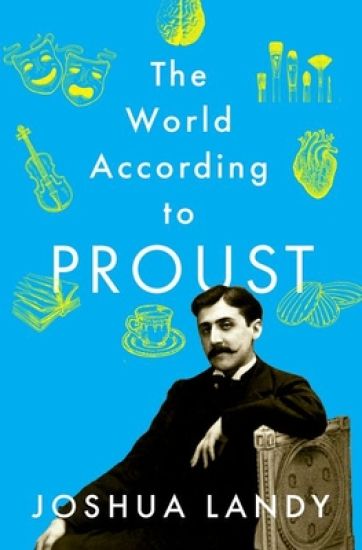
The World According to Proust

The World According to Proust

Joshua Landy

OXFORD UNIVERSITY PRESS INC
2022
sidottu
100 years after Proust's death, In Search of Lost Time remains one of the greatest works in World Literature. At 3,000 pages, it can be intimidating to some. This short volume invites first-time readers and veterans alike to view the novel in a new way. Marcel Proust (1871-1922) was arguably France's best-known literary writer. He was the author of stories, essays, translations, and a 3,000-page novel, In Search of Lost Time (1913-27). This book is a brief guide to Proust's magnum opus in which Joshua Landy invites the reader to view the novel as a single quest-a quest for purpose, enchantment, identity, connection, and belonging- through the novel's fascinating treatments of memory, society, art, same-sex desire, knowledge, self-understanding, self-fashioning, and the unconscious mind. Landy also shows why the questions Proust raises are important and exciting for all of us: how we can feel at home in the world; how we can find genuine connection with other human beings; how we can find enchantment in a world without God; how art can transform our lives; whether an artist's life can shed light on their work; what we can know about the world, other people, and ourselves; when not knowing is better than knowing; how sexual orientation affects questions of connection and identity; who we are, deep down; what memory tells us about our inner world; why it might be good to think of our life as a story; how we can feel like a single, unified person when we are torn apart by change and competing desires. Finally, Landy suggests why it's worthwhile to read the novel itself-how the long, difficult, but joyous experience of making it through 3,000 pages of prose can be transformative for our minds and souls.
How to Do Things with Fictions

How to Do Things with Fictions

Joshua Landy

Oxford University Press Inc
2014
nidottu
Why does Mark's Jesus speak in parables? Why does Plato's Socrates make bad arguments? Why are Beckett's novels so inscrutable? And why don't stage magicians even pretend to summon spirits anymore? In a series of captivating chapters on Mark, Plato, Beckett, Mallarmé, and Chaucer, Joshua Landy not only answers these questions but explains why they are worth asking in the first place. Witty and approachable, How to Do Things with Fictions challenges the widespread assumption that literary texts must be informative or morally improving in order to be of any real benefit. It reveals that authors are sometimes best thought of not as entertainers or as educators but as personal trainers of the brain, putting their willing readers through exercises designed to fortify specific mental capacities, from form-giving to equanimity, from reason to faith. Delivering plenty of surprises along the way--that moral readings of literature can be positively dangerous; that the parables were deliberately designed to be misunderstood; that Plato knowingly sets his main character up for a fall; that metaphor is powerfully connected to religious faith; that we can sustain our beliefs even when we suspect them to be illusions--How to Do Things with Fictions convincingly shows that our best allies in the struggle for more rigorous thinking, deeper faith, richer experience, and greater peace of mind may well be the imaginative writings sitting on our shelves.