Kirjojen hintavertailu. Mukana 12 390 323 kirjaa ja 12 kauppaa.

Kirjahaku

Etsi kirjoja tekijän nimen, kirjan nimen tai ISBN:n perusteella.

13 kirjaa tekijältä Josiah Osgood

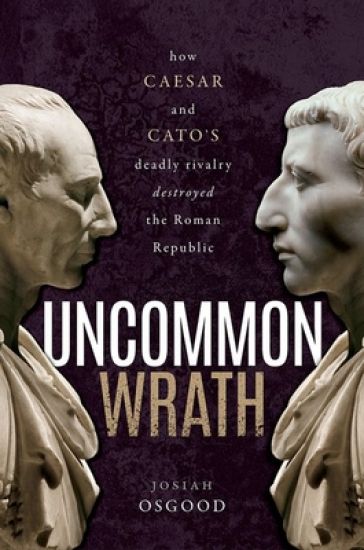
Uncommon Wrath

Uncommon Wrath

Josiah Osgood

Oxford University Press
2022
sidottu
A dual biography of Julius Caesar and Cato the Younger that offers a dire warning: republics collapse when personal pride overrides the common good. In Uncommon Wrath, historian Josiah Osgood tells the story of how the political rivalry between Julius Caesar and Marcus Cato precipitated the end of the Roman Republic. As the champions of two dominant but distinct visions for Rome, Caesar and Cato each represented qualities that had made the Republic strong, but their ideological differences entrenched into enmity and mutual fear. The intensity of their collective factions became a tribal divide, hampering their ability to make good decisions and undermining democratic government. The men’s toxic polarity meant that despite their shared devotion to the Republic, they pushed it into civil war. Deeply researched and compellingly told, Uncommon Wrath is a groundbreaking biography of two men whose hatred for each other destroyed the world they loved.
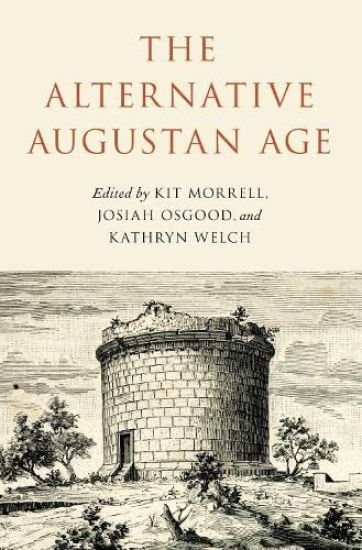
The Alternative Augustan Age

The Alternative Augustan Age

Josiah Osgood

OXFORD UNIVERSITY PRESS INC
2023
nidottu
The princeps Augustus (63 BCE - 14 CE), recognized as the first of the Roman emperors, looms large in the teaching and writing of Roman history. Major political, literary, and artistic developments alike are attributed to him. This book deliberately and provocatively shifts the focus off Augustus while still looking at events of his time. Contributors uncover the perspectives and contributions of a range of individuals other than the princeps. Not all thought they were living in the "Augustan Age." Not all took their cues from Augustus. In their self-display or ideas for reform, some anticipated Augustus. Others found ways to oppose him that also helped to shape the future of their community. The volume challenges the very idea of an "Augustan Age" by breaking down traditional turning points and showing the continuous experimentation and development of these years to be in continuity with earlier Roman culture. In showcasing absences of Augustus and giving other figures their due, the papers here make a seemingly familiar period startlingly new.
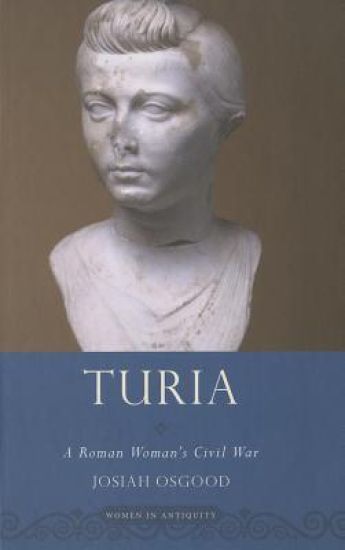
Turia

Turia

Josiah Osgood

Oxford University Press Inc
2014
sidottu
The civil wars that brought down the Roman Republic were fought on more than battlefields. Armed gangs infested the Italian countryside, in the city of Rome mansions were besieged, and bounty-hunters searched the streets for "public enemies." Among the astonishing stories to survive from these years is that of a young woman whose parents were killed, on the eve of her wedding, in the violence engulfing Italy. While her future husband fought overseas, she staved off a run on her father's estate. Despite an acute currency shortage, she raised money to help her fiancé in exile. And when several years later, her husband, back in Rome, was declared an outlaw, she successfully hid him, worked for his pardon, and joined other Roman women in staging a public protest. The wife's tale is known only because her husband had inscribed on large slabs of marble the elaborate eulogy he gave at her funeral. Though no name is given on the inscriptions, starting as early as the seventeenth century, scholars saw saw similarities between the contents of the inscription and the story, preserved in literary sources, of one Turia, the wife of Quintus Lucretius. Although the identification remains uncertain, and in spite of the other substantial gaps in the text of the speech, the "Funeral Speech for Turia" (Laudatio Turiae), as it is still conventionally called, offers an extraordinary window into the life of a high-ranking woman at a critical moment of Roman history. In this book Josiah Osgood reconstructs the wife's life more fully than it has been before by bringing in alongside the eulogy stories of other Roman women who also contributed to their families' survival while working to end civil war. He shows too how Turia's story sheds rare light on the more hidden problems of everyday life for Romans, including a high number of childless marriages. Written with a general audience in mind, Turia: A Roman Woman's Civil War will appeal to those interested in Roman history as well as war, and the ways that war upsets society's power structures. Not only does the study come to terms with the distinctive experience of a larger group of Roman women, including the prudence they had to show to succeed , but also introduces readers to an extraordinary tribute to married love which, though from another world, speaks to us today.
Turia

Turia

Josiah Osgood

Oxford University Press Inc
2014
nidottu
The civil wars that brought down the Roman Republic were fought on more than battlefields. Armed gangs infested the Italian countryside, in the city of Rome mansions were besieged, and bounty-hunters searched the streets for "public enemies." Among the astonishing stories to survive from these years is that of a young woman whose parents were killed, on the eve of her wedding, in the violence engulfing Italy. While her future husband fought overseas, she staved off a run on her father's estate. Despite an acute currency shortage, she raised money to help her fiancé in exile. And when several years later, her husband, back in Rome, was declared an outlaw, she successfully hid him, worked for his pardon, and joined other Roman women in staging a public protest. The wife's tale is known only because her husband had inscribed on large slabs of marble the elaborate eulogy he gave at her funeral. Though no name is given on the inscriptions, starting as early as the seventeenth century, scholars saw saw similarities between the contents of the inscription and the story, preserved in literary sources, of one Turia, the wife of Quintus Lucretius. Although the identification remains uncertain, and in spite of the other substantial gaps in the text of the speech, the "Funeral Speech for Turia" (Laudatio Turiae), as it is still conventionally called, offers an extraordinary window into the life of a high-ranking woman at a critical moment of Roman history. In this book Josiah Osgood reconstructs the wife's life more fully than it has been before by bringing in alongside the eulogy stories of other Roman women who also contributed to their families' survival while working to end civil war. He shows too how Turia's story sheds rare light on the more hidden problems of everyday life for Romans, including a high number of childless marriages. Written with a general audience in mind, Turia: A Roman Woman's Civil War will appeal to those interested in Roman history as well as war, and the ways that war upsets society's power structures. Not only does the study come to terms with the distinctive experience of a larger group of Roman women, including the prudence they had to show to succeed , but also introduces readers to an extraordinary tribute to married love which, though from another world, speaks to us today.
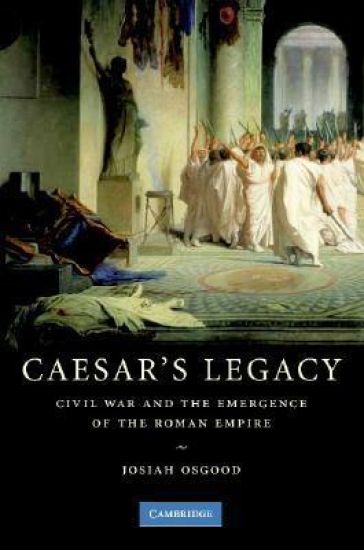
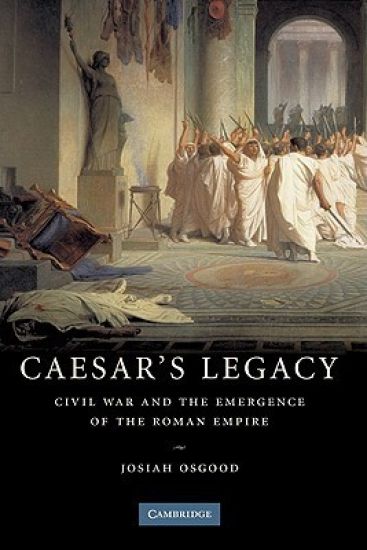
Caesar's Legacy

Caesar's Legacy

Josiah Osgood

Cambridge University Press
2006
pokkari
In April 44 BC the eighteen-year-old Gaius Octavius landed in Italy and launched his take-over of the Roman world. Defeating first Caesar's assassins, then the son of Pompey the Great, and finally Antony and the Egyptian queen Cleopatra, he dismantled the old Republic, took on the new name 'Augustus', and ruled forty years more with his equally remarkable wife Livia. Caesar's Legacy grippingly retells the story of Augustus' rise to power by focusing on how the bloody civil wars which he and his soldiers fought transformed the lives of men and women throughout the Mediterranean world and beyond. During this violent period citizens of Rome and provincials came to accept a new form of government and found ways to celebrate it. Yet they also mourned, in literary masterpieces and stories passed on to their children, the terrible losses they endured throughout the long years of fighting.
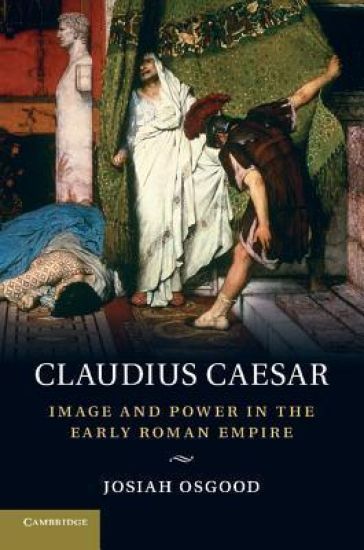
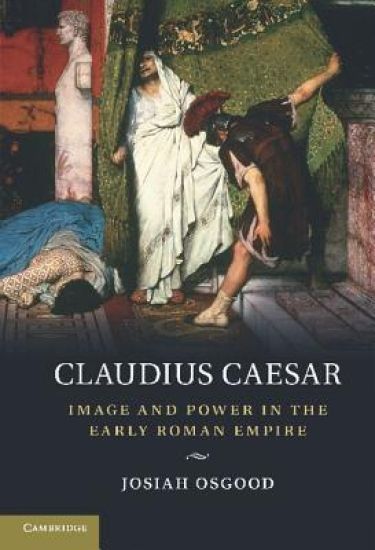
Claudius Caesar

Claudius Caesar

Josiah Osgood

Cambridge University Press
2010
pokkari
The story of Claudius has often been told before. Ancient writers saw the emperor as the dupe of his wives and palace insiders; Robert Graves tried to rehabilitate him as a far shrewder, if still frustrated, politician. In this book, Josiah Osgood shifts the focus off the personality of Claudius and on to what his tumultuous years in power reveal about the developing political culture of the early Roman Empire. What precedents set by Augustus were followed? What had to be abandoned? How could a new emperor win the support of key elements of Roman society? This richly illustrated discussion draws on a range of newly discovered documents, exploring events that move far beyond the city of Rome and Italy to Egypt and Judea, Morocco and Britain. Claudius Caesar provides a new perspective not just on Claudius himself, but on all Roman emperors, the Roman Empire, and the nature of empires more generally.
Caesar's Legacy

Caesar's Legacy

Josiah Osgood

Cambridge University Press
2006
sidottu
In April 44 BC the eighteen-year-old Gaius Octavius landed in Italy and launched his take-over of the Roman world. Defeating first Caesar's assassins, then the son of Pompey the Great, and finally Antony and the Egyptian queen Cleopatra, he dismantled the old Republic, took on the new name 'Augustus', and ruled forty years more with his equally remarkable wife Livia. Caesar's Legacy grippingly retells the story of Augustus' rise to power by focusing on how the bloody civil wars which he and his soldiers fought transformed the lives of men and women throughout the Mediterranean world and beyond. During this violent period citizens of Rome and provincials came to accept a new form of government and found ways to celebrate it. Yet they also mourned, in literary masterpieces and stories passed on to their children, the terrible losses they endured throughout the long years of fighting.
Claudius Caesar

Claudius Caesar

Josiah Osgood

Cambridge University Press
2010
sidottu
The story of Claudius has often been told before. Ancient writers saw the emperor as the dupe of his wives and palace insiders; Robert Graves tried to rehabilitate him as a far shrewder, if still frustrated, politician. In this book, Josiah Osgood shifts the focus off the personality of Claudius and on to what his tumultuous years in power reveal about the developing political culture of the early Roman Empire. What precedents set by Augustus were followed? What had to be abandoned? How could a new emperor win the support of key elements of Roman society? This richly illustrated discussion draws on a range of newly discovered documents, exploring events that move far beyond the city of Rome and Italy to Egypt and Judea, Morocco and Britain. Claudius Caesar provides a new perspective not just on Claudius himself, but on all Roman emperors, the Roman Empire, and the nature of empires more generally.
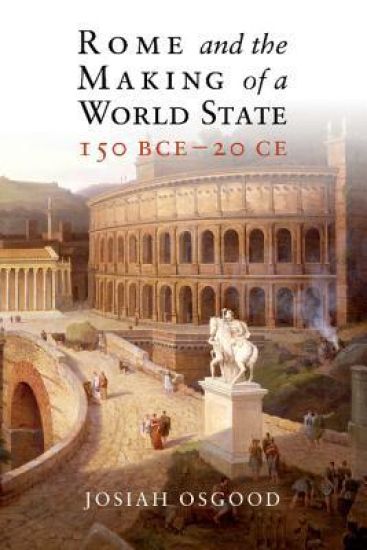
Rome and the Making of a World State, 150 BCE–20 CE

Rome and the Making of a World State, 150 BCE–20 CE

Josiah Osgood

Cambridge University Press
2018
sidottu
In the century following 150 BCE, the Romans developed a coherent vision of empire and a more systematic provincial administration. The city of Rome itself became a cultural and intellectual center that eclipsed other Mediterranean cities, while ideas and practices of citizenship underwent radical change. In this book, Josiah Osgood offers a new survey of this most vivid period of Roman history, the Late Republic. While many discussions focus on politics in the city of Rome itself, his account examines developments throughout the Mediterranean and ties political events more firmly to the growth of overseas empire. The volume includes a broad overview of economic and cultural developments. By extending the story well beyond the conventional stopping date of Julius Caesar's assassination in 44 BCE, Osgood ultimately moves away from the old paradigm of the fall of the Republic. The Romans of the Late Republic emerge less as the disreputable gangsters of popular imagination and more as inspired innovators.
Rome and the Making of a World State, 150 BCE–20 CE

Rome and the Making of a World State, 150 BCE–20 CE

Josiah Osgood

Cambridge University Press
2018
pokkari
In the century following 150 BCE, the Romans developed a coherent vision of empire and a more systematic provincial administration. The city of Rome itself became a cultural and intellectual center that eclipsed other Mediterranean cities, while ideas and practices of citizenship underwent radical change. In this book, Josiah Osgood offers a new survey of this most vivid period of Roman history, the Late Republic. While many discussions focus on politics in the city of Rome itself, his account examines developments throughout the Mediterranean and ties political events more firmly to the growth of overseas empire. The volume includes a broad overview of economic and cultural developments. By extending the story well beyond the conventional stopping date of Julius Caesar's assassination in 44 BCE, Osgood ultimately moves away from the old paradigm of the fall of the Republic. The Romans of the Late Republic emerge less as the disreputable gangsters of popular imagination and more as inspired innovators.
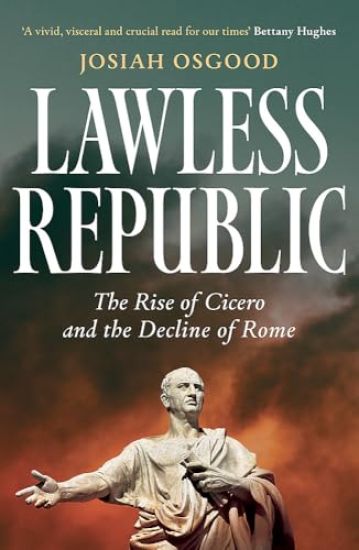
Lawless Republic

Lawless Republic

Josiah Osgood

John Murray Press
2025
sidottu
'A vivid, visceral and crucial read for our times' BETTANY HUGHES'Wonderful and insightful' ADRIAN GOLDSWORTHYThe collapse of law and order in the last years of the Roman Republic told through the rise and fall of its most famous lawyer, Cicero.In its final decades, the Roman Republic was engulfed by crime. Cases of extortion, murder and insurrection gave an ambitious young lawyer named Cicero high-profile opportunities to litigate and forge a reputation as a master debater with a bright political future. In Lawless Republic, leading Roman historian Josiah Osgood recounts the legendary orator's ascent and fall, and his pivotal role in the republic's lurch toward autocracy. Cicero's first appearance in the courts came shortly after the end of a brutal civil war. After leveraging his fame as a lawyer to become a consul, he ruthlessly crushed a coup by suppressing the liberties of Roman citizens. The premiere legal mind of Rome came to argue that the pursuit of a higher justice could sometimes justify sweeping the law aside, laying the groundwork for Roman history's most famous act of political violence - the assassination of Julius Caesar. Lawless Republic vividly resurrects the spectacle of the courts in the time of Cicero and Caesar, showing how politics trumped the rule of law and sealed the fate of Rome.
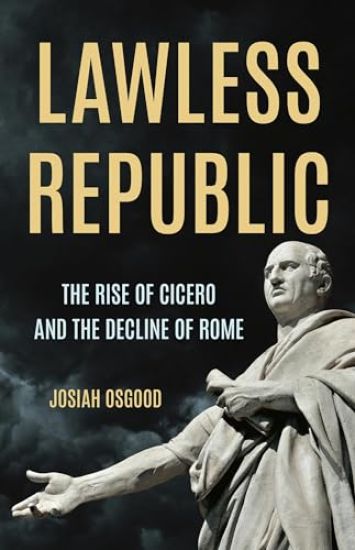
Lawless Republic: The Rise of Cicero and the Decline of Rome
A historian of Rome "at the height of his powers" (Barry Strauss, author of The War That Made the Roman Empire) narrates the erosion of law and order in the last years of the Roman Republic through the rise and fall of its most famous lawyer, Cicero In its final decades, the Roman Republic was engulfed by a crime wave. An epidemic of extortions, murders, and acts of insurrection tested the court system's capacity to maintain order. As case after case filled the docket, an ambitious young lawyer named Cicero seized every opportunity to litigate, forging a reputation as a master debater with a bright future in politics. In Lawless Republic, historian Josiah Osgood recounts the legendary orator's ascent and fall, and his pivotal role in the republic's lurch toward autocracy. Cicero's first appearance in the courts came shortly after the end of a brutal civil war. After leveraging his fame as a lawyer to become a consul, he ruthlessly crushed a coup by suppressing the liberties of Roman citizens. The premiere legal mind of Rome came to argue that the pursuit of a higher justice could sometimes justify sweeping the law aside, laying the groundwork for Roman history's most famous act of political violence--the assassination of Julius Caesar. Lawless Republic vividly resurrects the spectacle of the courts in the time of Cicero and Caesar, showing how politics trumped the rule of law and sealed the fate of Rome.