Kirjojen hintavertailu. Mukana 11 627 220 kirjaa ja 12 kauppaa.

Kirjahaku

Etsi kirjoja tekijän nimen, kirjan nimen tai ISBN:n perusteella.

7 kirjaa tekijältä Joy Porter

Land and Spirit in Native America

Land and Spirit in Native America

Joy Porter

Praeger Publishers Inc
2012
sidottu
This book accurately depicts Native American approaches to land and spirituality through an interdisciplinary examination of Indian philosophy, history, and literature.Indian approaches to land and spirituality are neither simple nor monolithic, making them hard to grasp for outsiders. A fuller, more accurate understanding of these concepts enables comprehension of the unique ways land and spirit have interlinked Native American communities across centuries of civilization, and reveals insights about our current pressing environmental concerns and American history. In Land and Spirit in Native America, author Joy Porter argues that American colonization has been a determining factor in how we perceive Indian spirituality and Indian relationships to nature. Having an appreciation for these traditional values regarding ritual, memory, time, kinship, and the essential reciprocity between all things allows us to rethink aspects of history and culture. This understanding also makes Indian film, philosophy, literature, and art accessible.
Native American Freemasonry

Native American Freemasonry

Joy Porter

University of Nebraska Press
2011
sidottu
Freemasonry has played a significant role in the history of Native Americans since the colonial era-a role whose extent and meaning are fully explored for the first time in this book. The overarching concern of Native American Freemasonry is with how Masonry met specific social and personal needs of Native Americans, a theme developed across three periods: the revolutionary era, the last third of the nineteenth century, and the years following the First World War. Joy Porter positions Freemasonry within its historical context, examining its social and political impact as a transatlantic phenomenon at the heart of the colonizing process. She then explores its meaning for many key Native leaders, for ethnic groups that sought to make connections through it, and for the bulk of its American membership-the white Anglo-Saxon Protestant middle class. Through research gleaned from archives in New York, Philadelphia, Oklahoma, California, and London, Porter shows how Freemasonry’s performance of ritual provided an accessible point of entry to Native Americans and how over time, Freemasonry became a significant avenue for the exchange and co-creation of cultural forms by Indians and non-Indians.
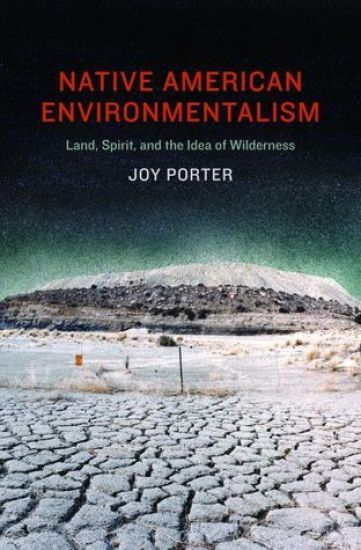
Native American Environmentalism

Native American Environmentalism

Joy Porter

Bison Books
2014
pokkari
In Native American Environmentalism the history of indigenous peoples in North America is brought into dialogue with key environmental terms such as "wilderness" and "nature." The conflict between Christian environmentalist thinking and indigenous views, a conflict intimately linked to the current environmental crisis in the United States, is explored through an analysis of parks and wilderness areas, gardens and gardening, and indigenous approaches to land as expressed in contemporary art, novels, and historical writing. Countering the inclination to associate indigenous peoples with "wilderness" or to conflate everything "Indian" with a vague sense of the ecological, Joy Porter shows how Indian communities were forced to migrate to make way for the nation's "wilderness" parks in the nineteenth century. Among the first American communities to reckon with environmental despoliation, they have fought significant environmental battles and made key adaptations. By linking Native American history to mainstream histories and current debates, Porter advances the important process of shifting debate about climate change away from scientists and literary environmental writers, a project central to tackling environmental crises in the twenty-first century.
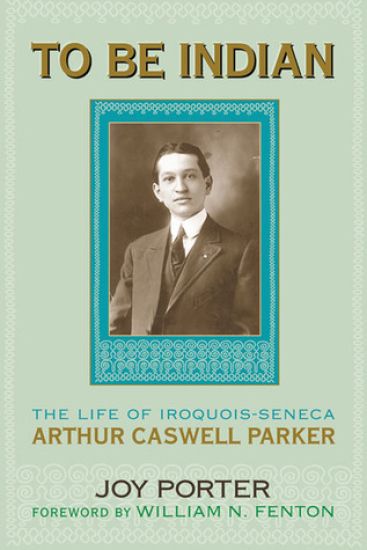
To Be Indian

To Be Indian

Joy Porter

University of Oklahoma Press
2001
sidottu
Born on the Seneca Indian Reservation in New York State, Arthur Caswell Parker (1881-1955) was a prominent intellectual leader both within and outside tribal circles. Of mixed Iroquois, Seneca, and Anglican descent, Parker was also a controversial figure-recognized as an advocate for Indians but criticized for his assimilationist stance. In this exhaustively researched biography-the first book-length examination of Parker's life and career-Joy Porter explores complex issues of Indian identity that are as relevant today as in Parker's time.From childhood on, Parker learned from his well-connected family how to straddle both Indian and white worlds. His great-uncle, Ely S. Parker, was Commissioner of Indian Affairs under Ulysses S. Grant--the first American Indian to hold the position. Influenced by family role models and a strong formal education, Parker, who became director of the Rochester Museum, was best known for his work as a ""museologist"" (a word he coined).Porter shows that although Parker achieved success within the dominant Euro-American culture, he was never entirely at ease with his role as assimilated Indian and voiced frustration at having ""to play Indian to be Indian."" In expressing this frustration, Parker articulated a challenging predicament for twentieth-century Indians: the need to negotiate imposed stereotypes, to find ways to transcend those stereotypes, and to assert an identity rooted in the present rather than in the past.
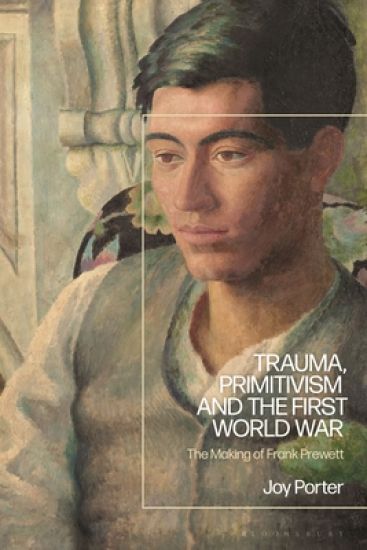
Trauma, Primitivism and the First World War

Trauma, Primitivism and the First World War

Joy Porter

Bloomsbury Academic
2021
sidottu
This book examines the extraordinary life of Frank “Toronto” Prewett and the history of trauma, literary expression, and the power of self-representation after WWI. Joy Porter sheds new light on how the First World War affected the Canadian poet, and how war-induced trauma or “shell-shock” caused him to pretend to be an indigenous North American. Porter investigates his influence of, and acceptance by, some of the most significant literary figures of the time, including Siegfried Sassoon, Edmund Blunden, Wilfred Owen and Robert Graves.In doing so, Porter skillfully connects a number of historiographies that usually exist in isolation from one another and rarely meet. By bringing together a history of the WWI era, early twentieth century history, Native American history, the history of literature, and the history of class Porter expertly crafts a valuable contribution to the field.
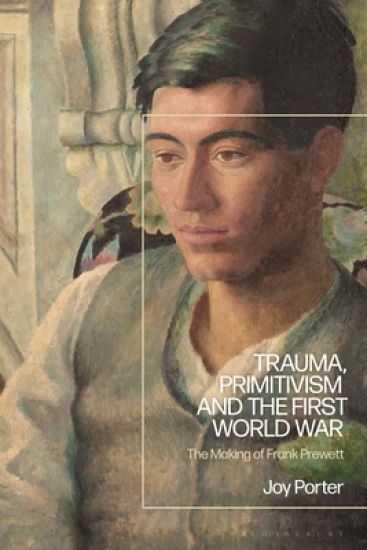
Trauma, Primitivism and the First World War

Trauma, Primitivism and the First World War

Joy Porter

BLOOMSBURY PUBLISHING PLC
2022
nidottu
This book examines the extraordinary life of Frank “Toronto” Prewett and the history of trauma, literary expression, and the power of self-representation after WWI. Joy Porter sheds new light on how the First World War affected the Canadian poet, and how war-induced trauma or “shell-shock” caused him to pretend to be an indigenous North American. Porter investigates his influence of, and acceptance by, some of the most significant literary figures of the time, including Siegfried Sassoon, Edmund Blunden, Wilfred Owen and Robert Graves.In doing so, Porter skillfully connects a number of historiographies that usually exist in isolation from one another and rarely meet. By bringing together a history of the WWI era, early twentieth century history, Native American history, the history of literature, and the history of class Porter expertly crafts a valuable contribution to the field.
Native American Freemasonry

Native American Freemasonry

Joy Porter

University of Nebraska Press
2019
pokkari
Freemasonry has played a significant role in the history of Native Americans since the colonial era-a role whose extent and meaning are fully explored for the first time in this book. The overarching concern of Native American Freemasonry is with how Masonry met specific social and personal needs of Native Americans, a theme developed across three periods: the revolutionary era, the last third of the nineteenth century, and the years following the First World War. Joy Porter positions Freemasonry within its historical context, examining its social and political impact as a transatlantic phenomenon at the heart of the colonizing process. She then explores its meaning for many key Native leaders, for ethnic groups that sought to make connections through it, and for the bulk of its American membership-the white Anglo-Saxon Protestant middle class. Through research gleaned from archives in New York, Philadelphia, Oklahoma, California, and London, Porter shows how Freemasonry’s performance of ritual provided an accessible point of entry to Native Americans and how over time, Freemasonry became a significant avenue for the exchange and co-creation of cultural forms by Indians and non-Indians.